Cover image

Thinking Inside the Gameboard: Evaluating LLM Reasoning Step-by-Step

TL;DR for operators Most AI evaluations still ask the wrongly narrow question: did the model get the answer right? That is useful, but it is not enough when the model is expected to act as an agent, revise plans, obey constraints, and recover from failure without turning the workflow into a procedural bonfire. ...


June 20, 2025 · 16 min · Zelina
Cover image

Mind Over Modules: How Smart Agents Learn What to See—and What to Be

TL;DR for operators Agentic AI is not only a model-selection problem. It is an environment-design problem. Two recent papers make that point from opposite ends of the stack. One studies LLM agents in a controlled repeated routing game and shows that the way history, rewards, and peer actions are represented can significantly change behaviour.1 The other proposes SwarmAgentic, a framework that automatically generates and optimises agent roles, execution policies, and collaboration structures using a language-based version of particle swarm optimisation.2 ...

June 19, 2025 · 14 min · Zelina
Cover image

Good Bot, Bad Reward: Fixing Feedback Loops in Vision-Language Reasoning

TL;DR for operators The useful lesson is not that vision-language models need longer reasoning traces. They already produce plenty of words. Some of them are even adjacent to thought. The useful lesson is that multimodal systems need feedback that can tell where a reasoning path breaks, not merely whether the final answer looks acceptable. ...

June 13, 2025 · 15 min · Zelina
Cover image

From Ballots to Bots: Reprogramming Democracy for the AI Era

TL;DR for operators AI political agents are best understood as a bandwidth upgrade for democratic participation, not as chrome-plated replacements for elected officials. The serious idea is not “let a chatbot run parliament”, which would be a fine way to make bad governance both faster and more confidently worded. The serious idea is that citizens, communities, and institutions may use AI delegates to process policy information, model preferences, negotiate trade-offs, and keep a continuous audit trail of representation. ...

June 10, 2025 · 16 min · Zelina
Cover image

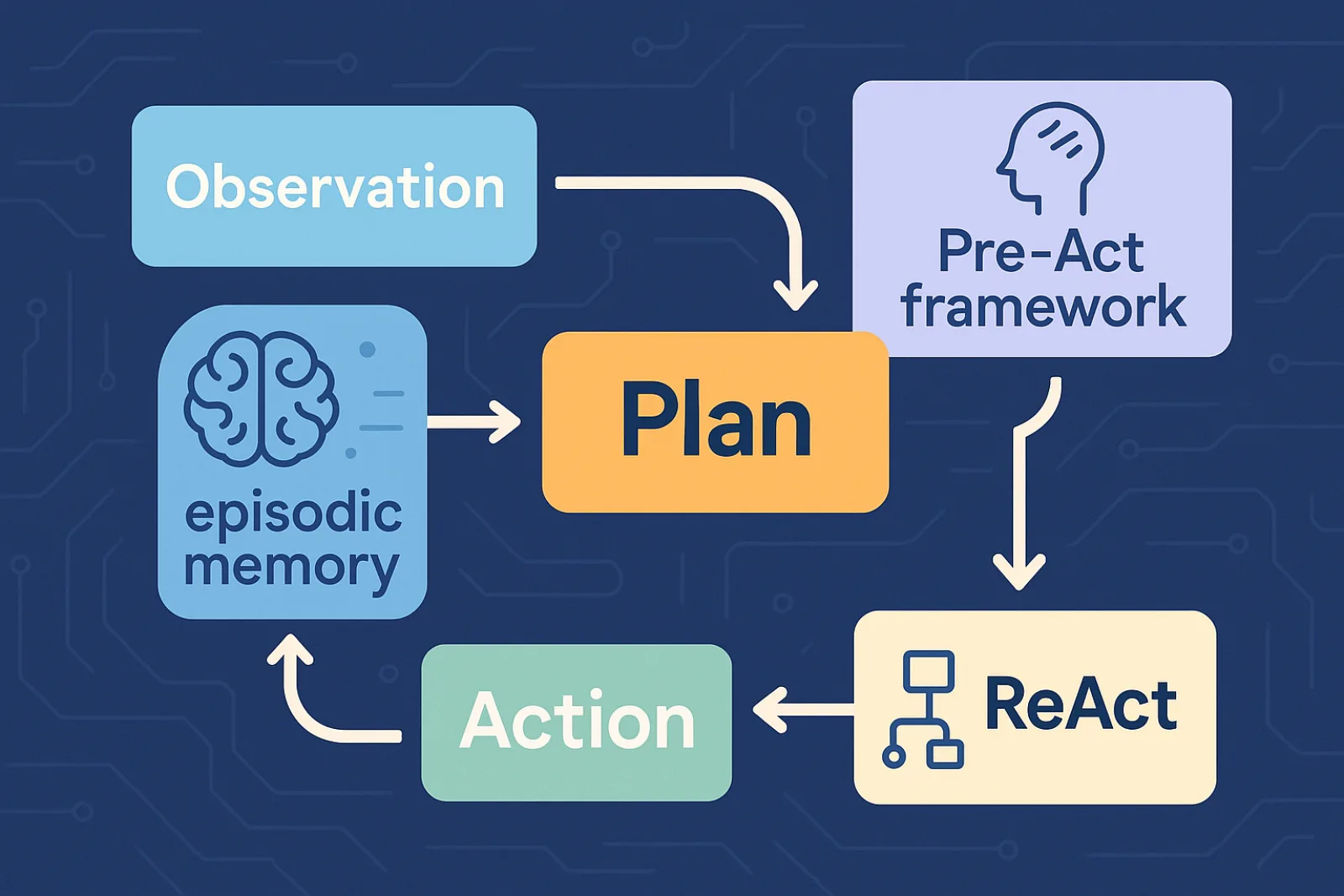
The Memory Advantage: When AI Agents Learn from the Past

TL;DR for operators Memory is usually sold as a comfort feature for AI agents: the assistant remembers your preferences, your workflow, your charming habit of naming files final_final_v7. Fine. But operationally, memory matters less as storage and more as control. The hard question is not whether an agent can remember. It is whether the agent knows when a remembered episode should override fresh exploration. ...

June 3, 2025 · 17 min · Zelina
Cover image

Plans Before Action: What XAgent Can Learn from Pre-Act's Cognitive Blueprint

TL;DR for operators Pre-Act is a useful reminder that enterprise agents do not fail only because they choose the wrong tool. They fail because they lose the plot. A customer asks for help, the agent gathers one fact, calls one API, sees an unexpected result, and then behaves as if the workflow has reset. Charming, in the same way a lift that forgets floors is charming. ...

May 18, 2025 · 18 min · Zelina
Cover image

From Cog to Colony: Why the AI Taxonomy Matters

TL;DR for operators Most organisations do not need “Agentic AI” because it sounds more advanced. They need the smallest reliable architecture that can complete the job without creating a private zoo of semi-autonomous software creatures. The paper behind this article, AI Agents vs. Agentic AI: A Conceptual Taxonomy, Applications and Challenges, argues that AI Agents and Agentic AI are not interchangeable labels.1 An AI Agent is usually a bounded system: it interprets a task, calls tools, uses context, and produces an action or output. Agentic AI is a broader system pattern: multiple specialised agents coordinate, share memory, decompose goals, recover from failures, and work toward higher-level objectives. ...

May 16, 2025 · 16 min · Zelina
Cover image

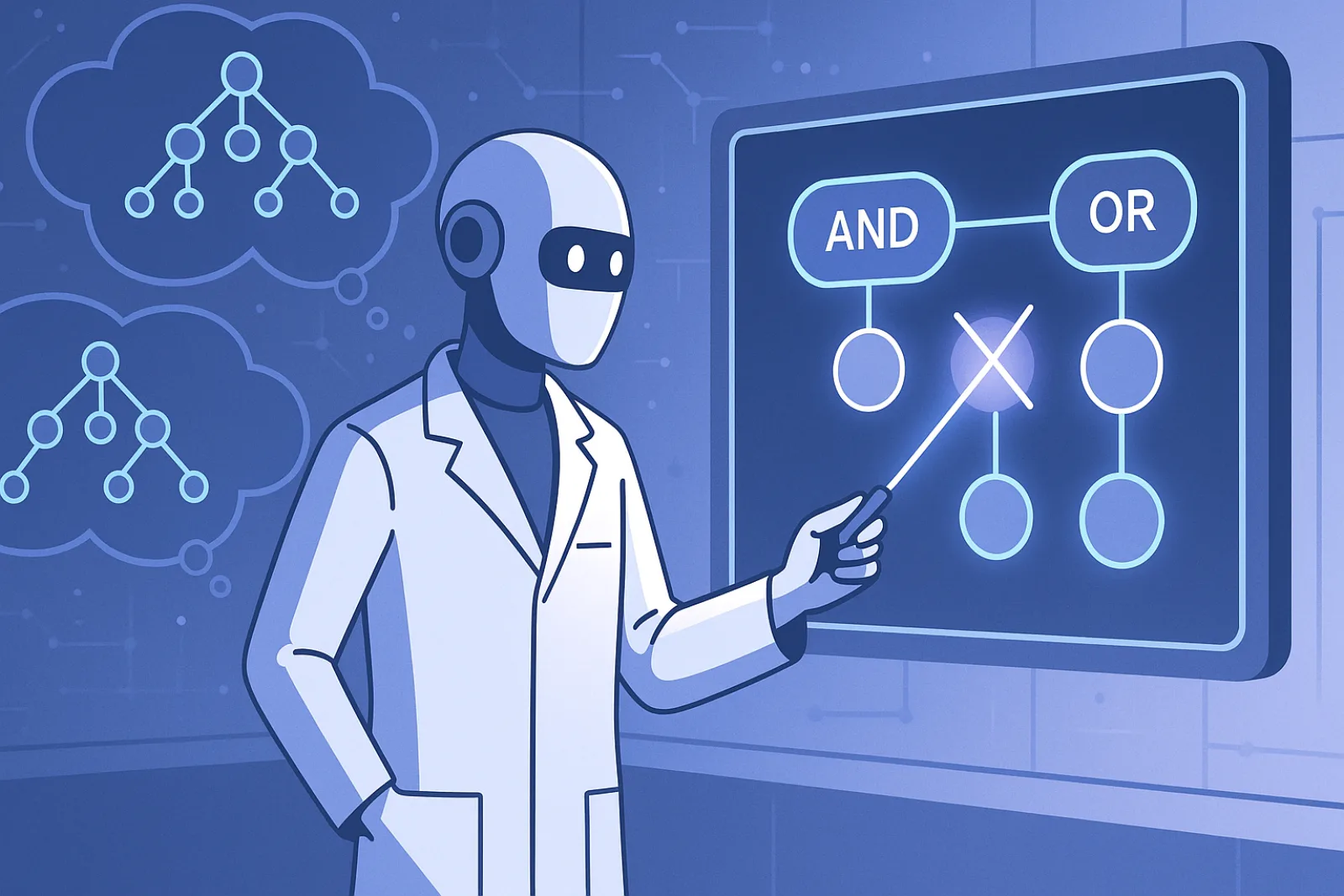
Bias Busters: Teaching Language Agents to Think Like Scientists

TL;DR for operators Language-model agents do not merely make wrong causal guesses. In this paper, they gather evidence in a biased way, then interpret that evidence through the same bias. That is the uncomfortable part. The study turns the classic Blicket Test from developmental psychology into a text-based active exploration game for LM agents. The agent must test objects, observe whether a machine turns on, then infer which objects are “Blickets” and whether the hidden rule is disjunctive — any Blicket activates the machine — or conjunctive — all relevant Blickets must be present together.1 ...

May 15, 2025 · 15 min · Zelina
Cover image

Smart Moves: How SmartPilot is Revolutionizing Manufacturing with a Multiagent CoPilot

TL;DR for operators SmartPilot is not best understood as “ChatGPT for the factory floor.” That would be the lazy reading, and factories already have enough lazy dashboards with heroic colour palettes and no operational courage. The paper proposes a compact, neurosymbolic, multiagent manufacturing copilot that joins three practical functions: anomaly prediction, production forecasting, and domain-specific question answering.1 Its strongest idea is architectural. PredictX watches for anomalies using time-series and image data. ForeSight predicts near-term production using sequence models plus process-specific features. InfoGuide answers operator questions using manuals, retrieval, and real-time data. The system is then connected to live manufacturing infrastructure through OPC-UA and to domain knowledge through manufacturing ontologies. ...

May 14, 2025 · 16 min · Zelina
Cover image

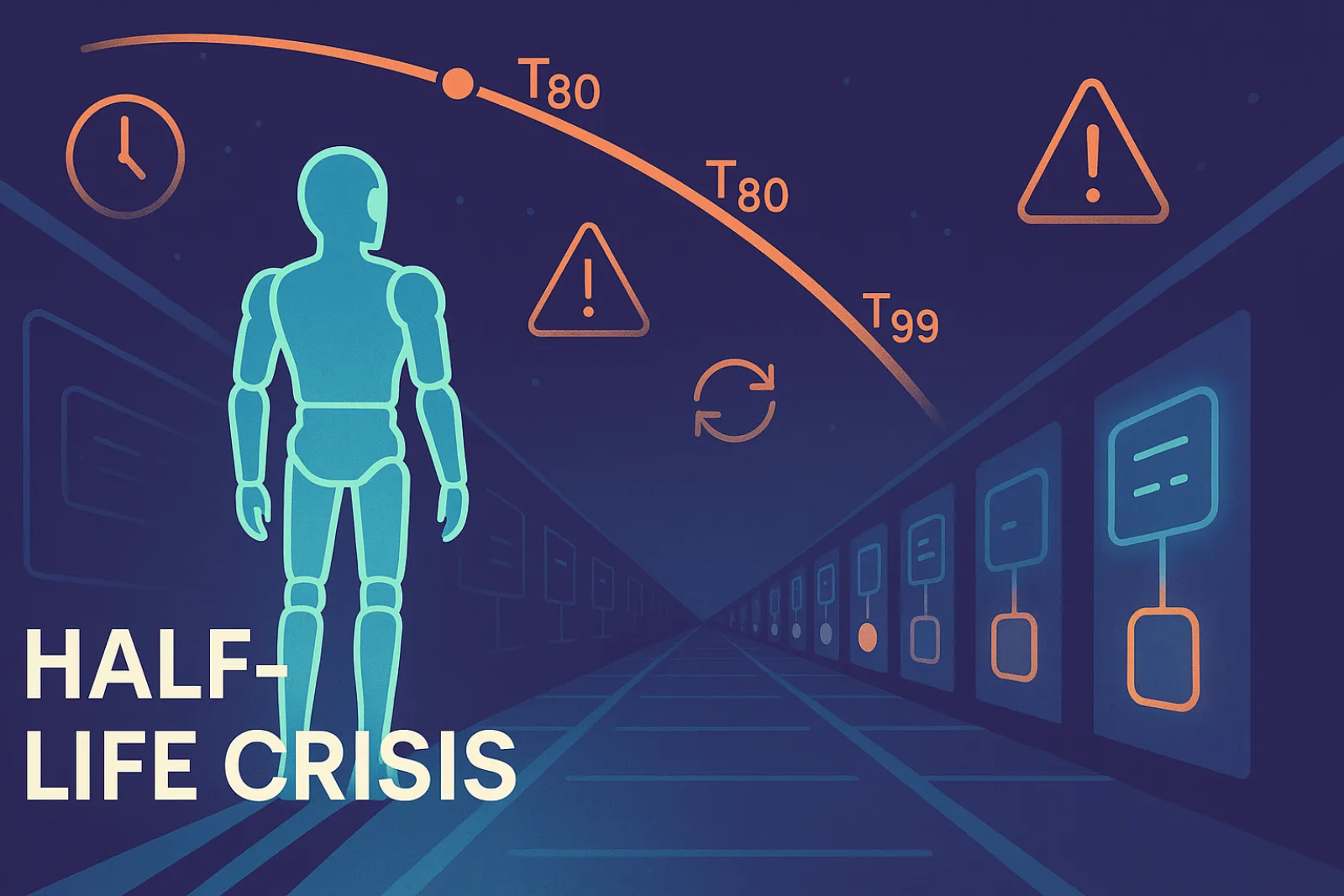
Half-Life Crisis: Why AI Agents Fade with Time (and What It Means for Automation)

TL;DR for operators AI agents may not simply “get worse” on longer tasks. A better mental model is that every additional unit of human-equivalent task time adds another chance for the agent to fail. If that chance is roughly constant, success falls exponentially. That turns a cheerful benchmark number into a much less cheerful deployment number. Under Toby Ord’s constant-hazard interpretation of METR’s long-task data, an agent’s 50% success time horizon is its “half-life”: the point where half of attempts still succeed and half have already failed.1 The awkward part is what happens when a business needs 80%, 90%, or 99% reliability rather than a coin toss with better branding. ...

May 11, 2025 · 17 min · Zelina