Cover image

Reflections in the Mirror Maze: Why LLM Reasoning Isn't Quite There Yet

TL;DR for operators Adding “reasoning” to an LLM agent is not the same as making it reason better. Wong et al. test four open-source models across dynamic SmartPlay tasks using a baseline prompt, reflection, reflection plus an Oracle that mutates heuristics, and reflection plus a Planner that simulates short future trajectories.1 The clean result is not “planning wins” or “bigger models win.” The result is more annoying, therefore more useful: the same scaffold can be a booster, a distraction, or a failure amplifier. ...
May 17, 2025 · 15 min · Zelina
Cover image

From Cog to Colony: Why the AI Taxonomy Matters

TL;DR for operators Most organisations do not need “Agentic AI” because it sounds more advanced. They need the smallest reliable architecture that can complete the job without creating a private zoo of semi-autonomous software creatures. The paper behind this article, AI Agents vs. Agentic AI: A Conceptual Taxonomy, Applications and Challenges, argues that AI Agents and Agentic AI are not interchangeable labels.1 An AI Agent is usually a bounded system: it interprets a task, calls tools, uses context, and produces an action or output. Agentic AI is a broader system pattern: multiple specialised agents coordinate, share memory, decompose goals, recover from failures, and work toward higher-level objectives. ...

May 16, 2025 · 16 min · Zelina

Cutting Hotel Cooling Waste with Supervisory AI Control in Hospitality Operations

A 240-room urban hotel replaced manual precooling, fixed schedules, and reactive engineering overrides with a workflow-aware AI control loop that predicts cooling demand, routes exceptions to humans, and targets lower HVAC waste without weakening guest comfort.

May 15, 2025 · 8 min · Vox
Cover image

Evolving Beyond Bottlenecks: How Agentic Workflows Revolutionize Optimization

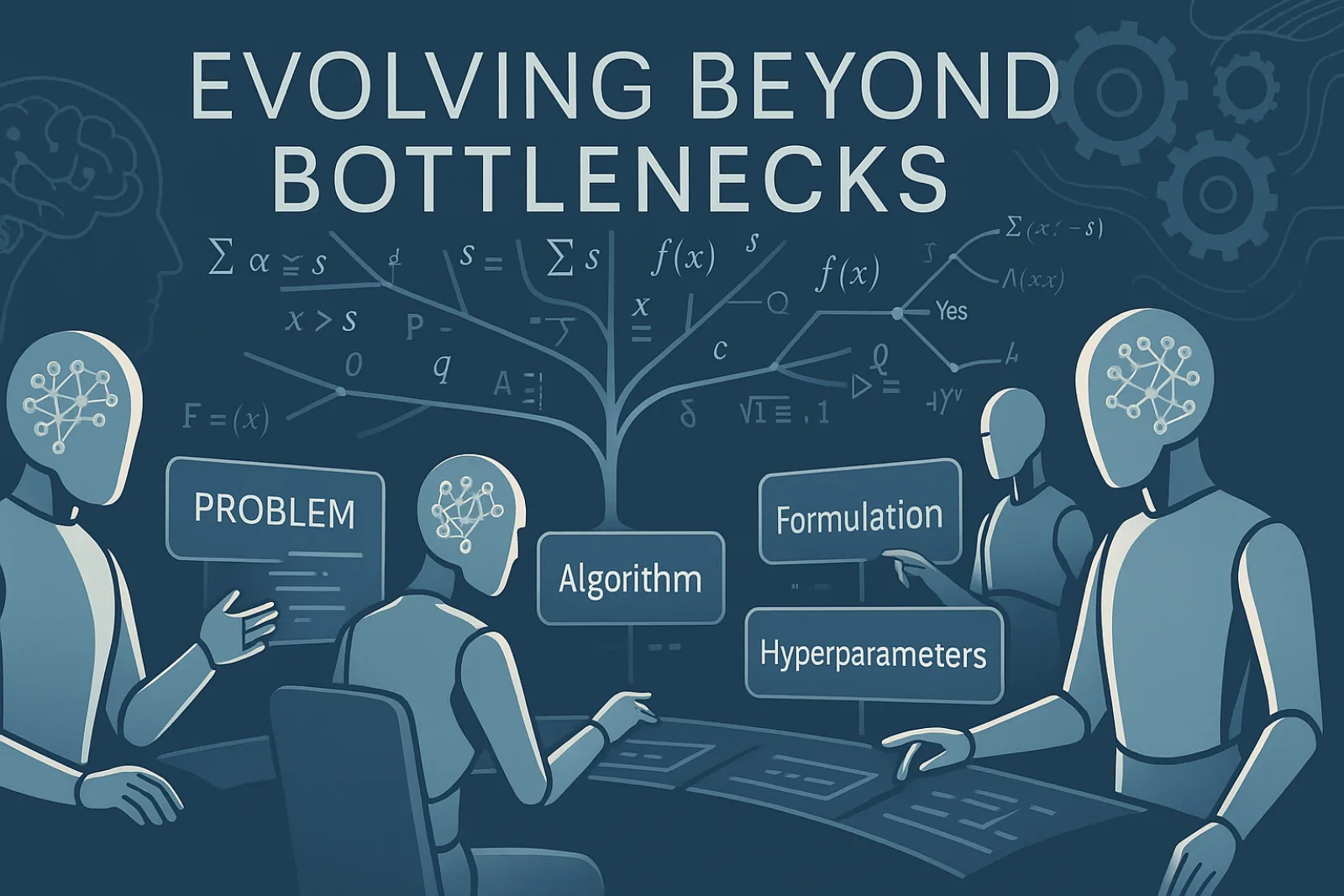
TL;DR for operators Optimization work usually looks technical from the outside: equations, solvers, constraints, tolerances, and someone quietly muttering about convergence. Inside the business, the real bottleneck is often less glamorous. Someone has to decide what the problem actually is, how to formulate it, which algorithm to try, which hyperparameters to tune, and whether the resulting answer is useful or merely mathematically decorative. ...

May 8, 2025 · 15 min · Zelina

From Home Lab to Enterprise-Ready AI: Cognaptus as the Professional-Grade Personal LLM Platform

A privacy-conscious small enterprise moved from a serial, reviewer-led local document workflow to a planned multi-agent Cognaptus workflow that concentrates humans on high-risk decisions instead of routine coordination.

April 30, 2025 · 9 min · Vox
Cover image

Logos, Metron, and Kratos: Forging the Future of Conversational Agents

TL;DR for operators Conversational agents are moving from polite text boxes into operational systems: booking, triaging, recommending, retrieving, judging, escalating, and occasionally making a confident mess with impressive formatting. The useful lesson from these two papers is simple: enterprise agents cannot be trusted just because they can reason, remember, or call tools. Those are necessary capabilities, not sufficient safeguards. A serious agent needs a fourth layer: a way to evaluate whether its own decisions and judgments deserve to be used. ...

April 27, 2025 · 17 min · Zelina

Cognaptus Case: AI Marketing Agent for Personal Wealth Management Networks

An investment-focused marketing operation moved from a serial, human-coordination-heavy reposting workflow to an exception-driven agent system that monitors influencers, verifies context, generates platform-native drafts, and publishes faster without sacrificing control.

April 17, 2025 · 7 min · Vox
Cover image

Two Heads Are Better Than One: How Dual-Engine AI Reshapes Analytical Thinking

TL;DR for operators DEoT is not “a smarter chatbot”. It is a structured analysis workflow for questions where there is no single correct answer: policy impact, market entry, geopolitical risk, crisis response, investment implications, technology disruption, and the usual executive swamp where every answer arrives with a footnote and a headache. The paper’s useful idea is simple: open-ended analysis needs two motions. First, go wide enough not to miss important dimensions. Then go deep enough not to produce a shallow consultant-flavoured smoothie. DEoT formalises this through a Breadth Engine, a Depth Engine, and an Engine Controller that decides when to branch, when to drill, and when to stop. ...

April 12, 2025 · 16 min · Zelina

Cognaptus AI Accounting Demo: Bridging Paper-Based Workflows with Intelligent Automation

A construction-focused accounting workflow moved from document chasing, manual approvals, and fragmented reporting to an AI-agent-enabled process that digitizes receipts, routes decisions, drafts accounting outputs, and shortens human coordination loops without removing managerial control.

April 5, 2025 · 7 min · Vox
Cover image

Judge, Jury, and GPT: Bringing Courtroom Rigor to Business Automation

TL;DR for operators A web agent that looks impressive in a demo may still fail when asked to complete ordinary live tasks across messy websites. That is the central finding of An Illusion of Progress? Assessing the Current State of Web Agents, which introduces Online-Mind2Web, a benchmark of 300 realistic tasks across 136 websites.1 ...

April 4, 2025 · 18 min · Zelina