Cover image

Half-Life Crisis: Why AI Agents Fade with Time (and What It Means for Automation)

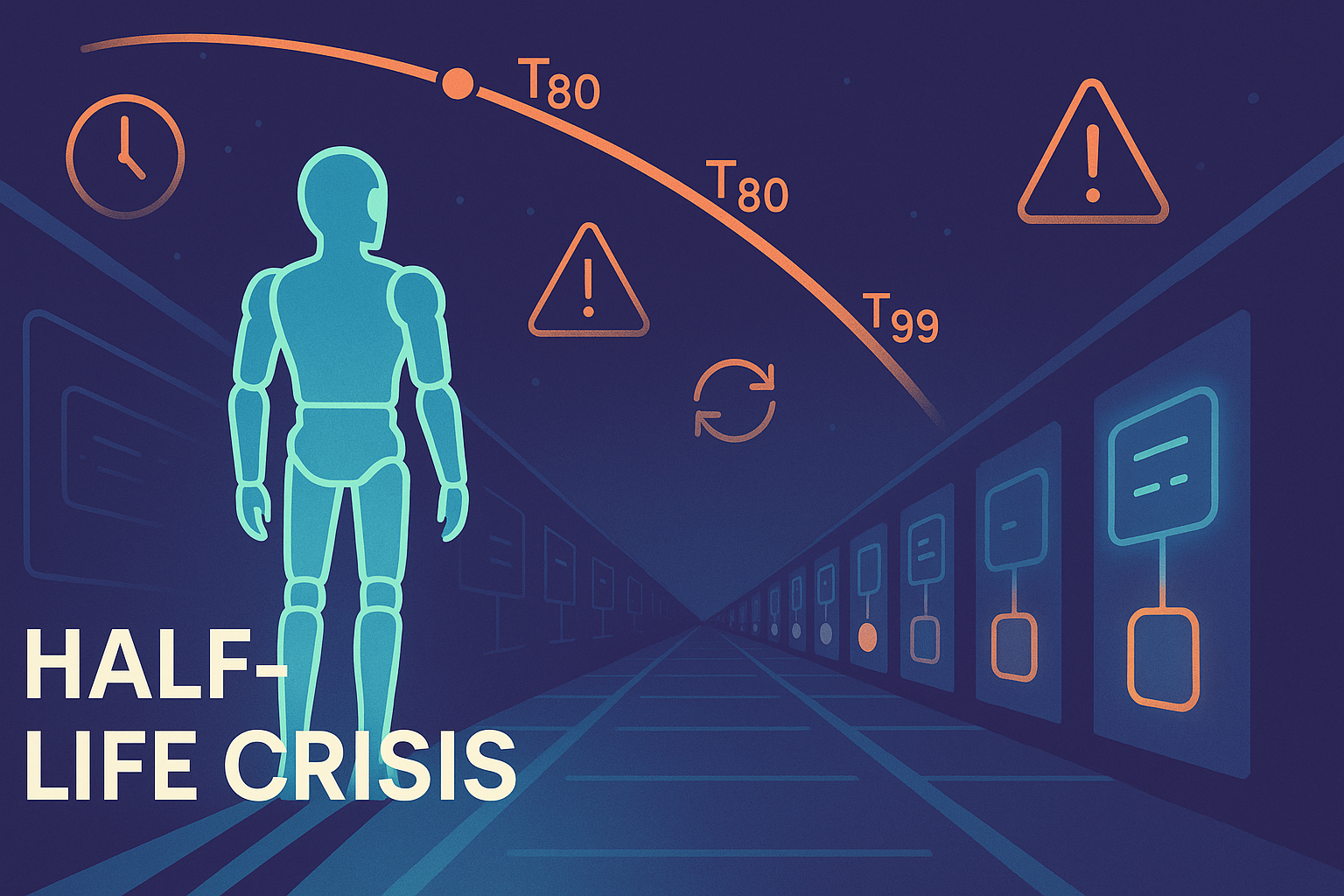
Half-Life Crisis: Why AI Agents Fade with Time (and What It Means for Automation) “The longer the task, the harder they fall.” In the world of automation, we often focus on how capable AI agents are — but rarely on how long they can sustain that capability. A new paper by Toby Ord, drawing from the empirical work of Kwa et al. (2025), introduces a profound insight: AI agents have a “half-life” — a predictable drop-off in success as task duration increases. Like radioactive decay, it follows an exponential curve. ...
May 11, 2025 · 3 min
Cover image

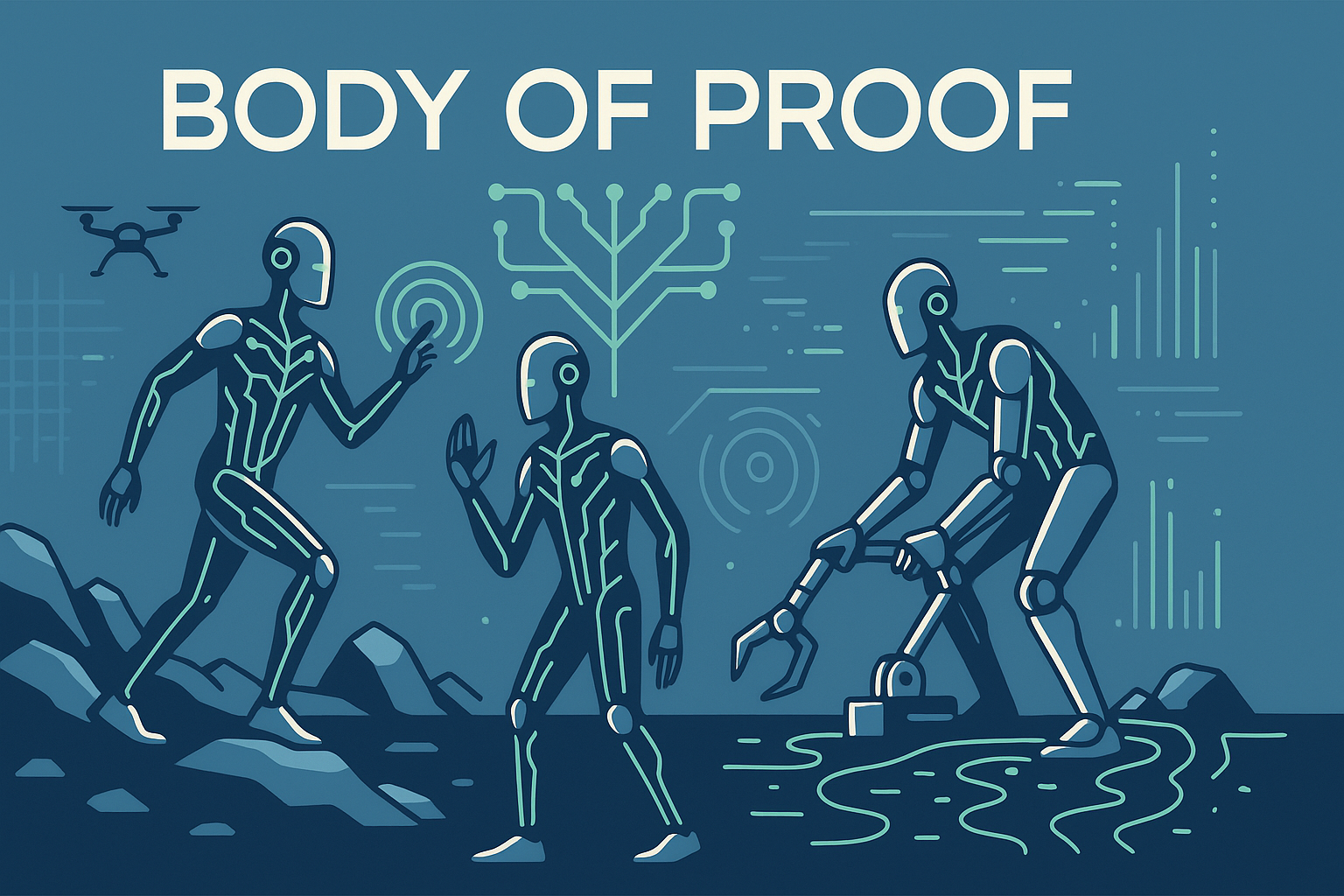
Body of Proof: Why Embodied AI Needs More Than One Mind

Embodied Intelligence: A Different Kind of Smart Artificial intelligence is no longer confined to static models that churn numbers in isolation. A powerful shift is underway—toward embodied AI, where intelligence is physically situated in the world. Unlike stateless AI models that treat the world as a dataset, embodied AI experiences the environment through sensors and acts through physical or simulated bodies. This concept, championed by early thinkers like Rolf Pfeifer and Fumiya Iida (2004), emphasizes that true intelligence arises from an agent’s interactions with its surroundings—not just abstract reasoning. Later surveys, such as Duan et al. (2022), further detail how modern embodied AI systems blend simulation, perception, action, and learning in environments that change dynamically. ...

May 9, 2025 · 3 min
Cover image

Evolving Beyond Bottlenecks: How Agentic Workflows Revolutionize Optimization

Traditionally, solving optimization problems involves meticulous human effort: crafting mathematical models, selecting appropriate algorithms, and painstakingly tuning hyperparameters. Despite the rigor, these human-centric processes are prone to bottlenecks, limiting the industrial adoption of cutting-edge optimization techniques. Wenhao Li and colleagues 1 challenge this paradigm in their recent paper, proposing an innovative shift toward evolutionary agentic workflows, powered by foundation models (FMs) and evolutionary algorithms. Understanding the Optimization Space Optimization problems typically traverse four interconnected spaces: ...

May 8, 2025 · 3 min
Cover image

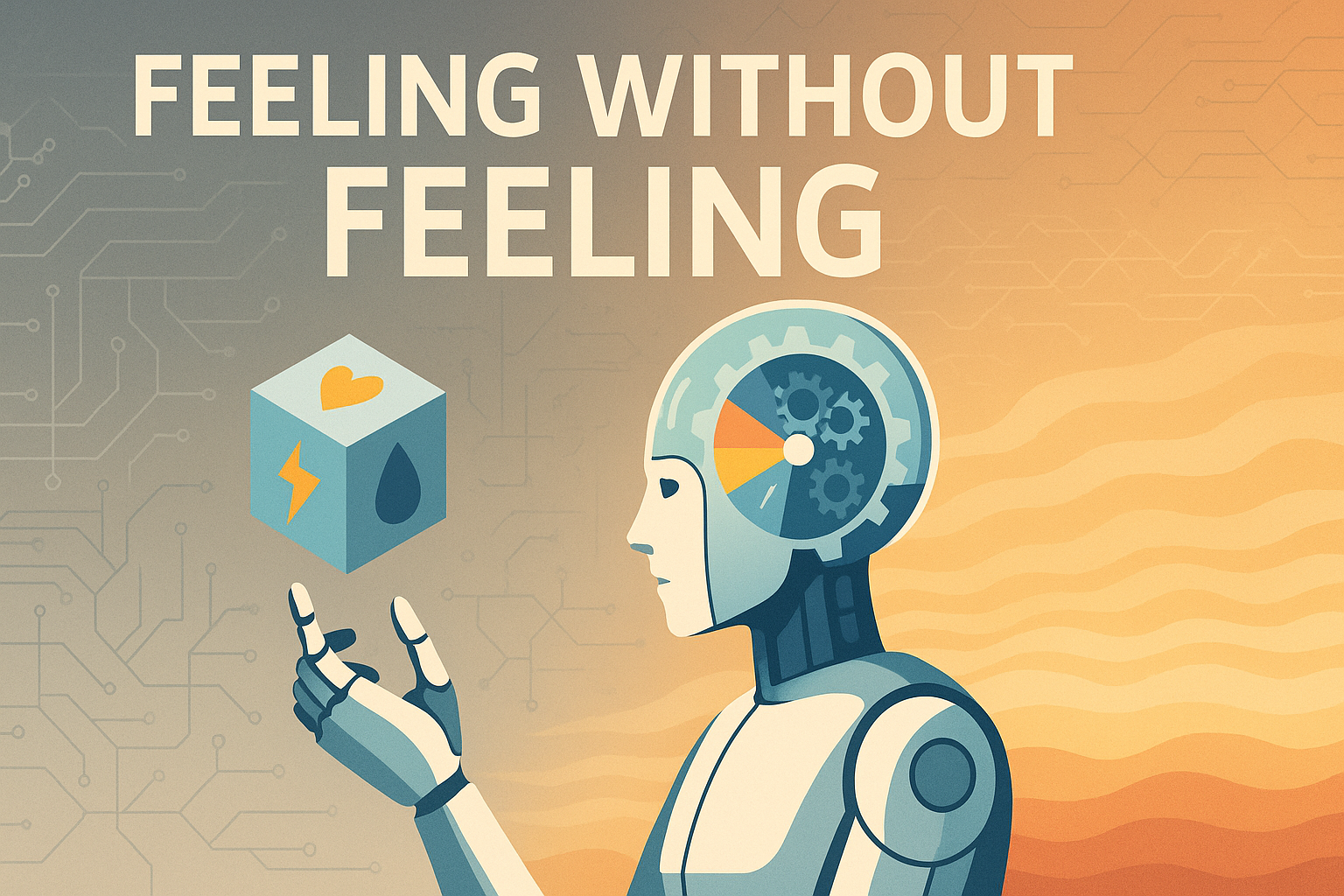
Feeling Without Feeling: How Emotive Machines Learn to Care (Functionally)

When we think of emotions, we often imagine something deeply human—joy, fear, frustration, and love, entangled with memory and meaning. But what if machines could feel too—at least functionally? A recent speculative research report by Hermann Borotschnig titled “Emotions in Artificial Intelligence”1 dives into this very question, offering a thought-provoking framework for how synthetic emotions might operate, and where their ethical boundaries lie. Emotions as Heuristic Shortcuts At its core, the paper proposes that emotions—rather than being mystical experiences—can be understood as heuristic regulators. In biology, emotions evolved not for introspective poetry but for speedy and effective action. Emotions are shortcuts, helping organisms react to threats, rewards, or uncertainties without deep calculation. ...

May 7, 2025 · 4 min
Cover image

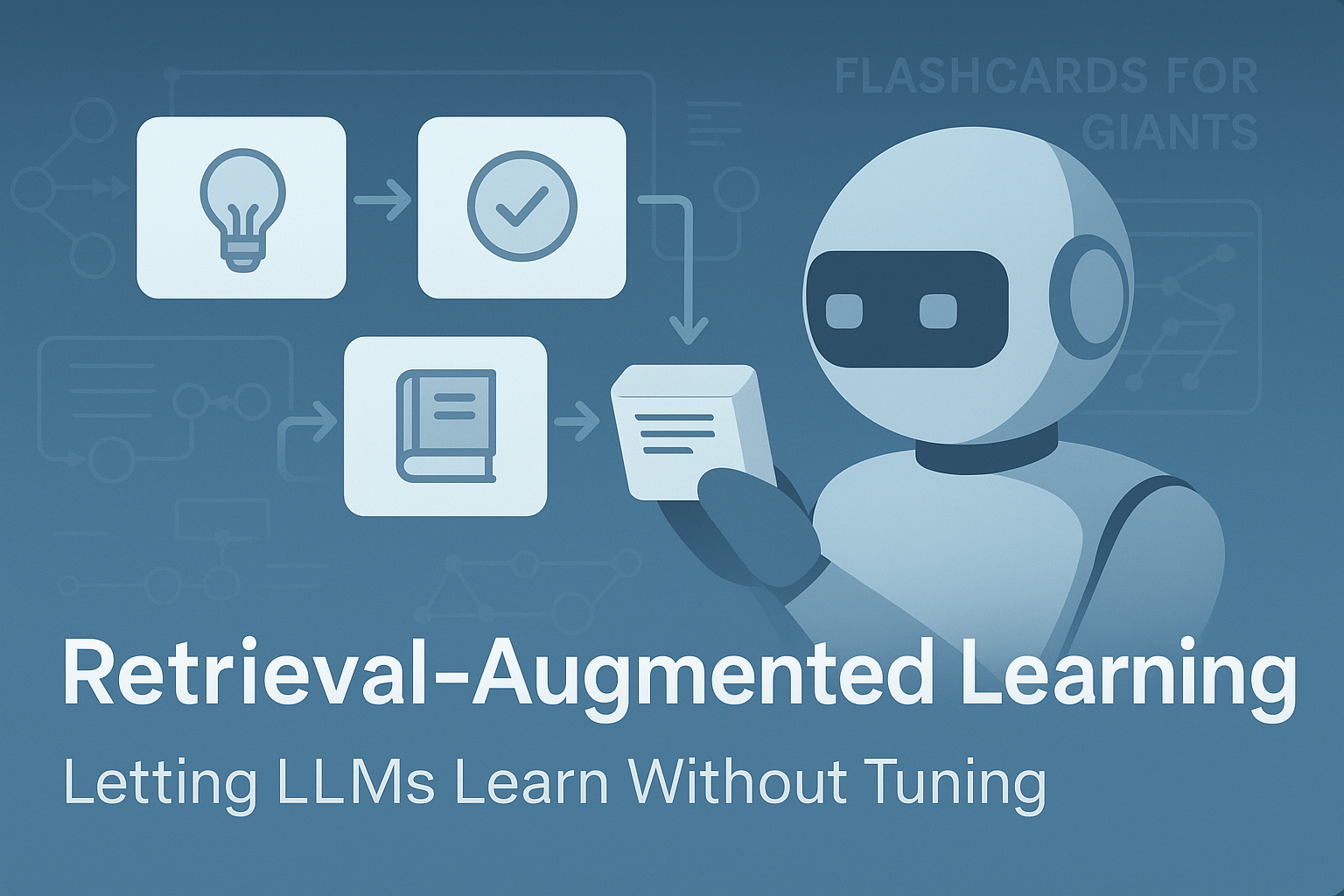
Flashcards for Giants: How RAL Lets Large Models Learn Without Fine-Tuning

Cognaptus Insights introduces Retrieval-Augmented Learning (RAL), a new approach proposed by Zongyuan Li et al.¹, allowing large language models (LLMs) to autonomously enhance their decision-making capabilities without adjusting model parameters through gradient updates or fine-tuning. Understanding Retrieval-Augmented Learning (RAL) RAL is designed for situations where fine-tuning large models like GPT-3.5 or GPT-4 is impractical. It leverages structured memory and dynamic prompt engineering, enabling models to autonomously refine their responses based on previous interactions and validations. ...

May 6, 2025 · 4 min
Cover image

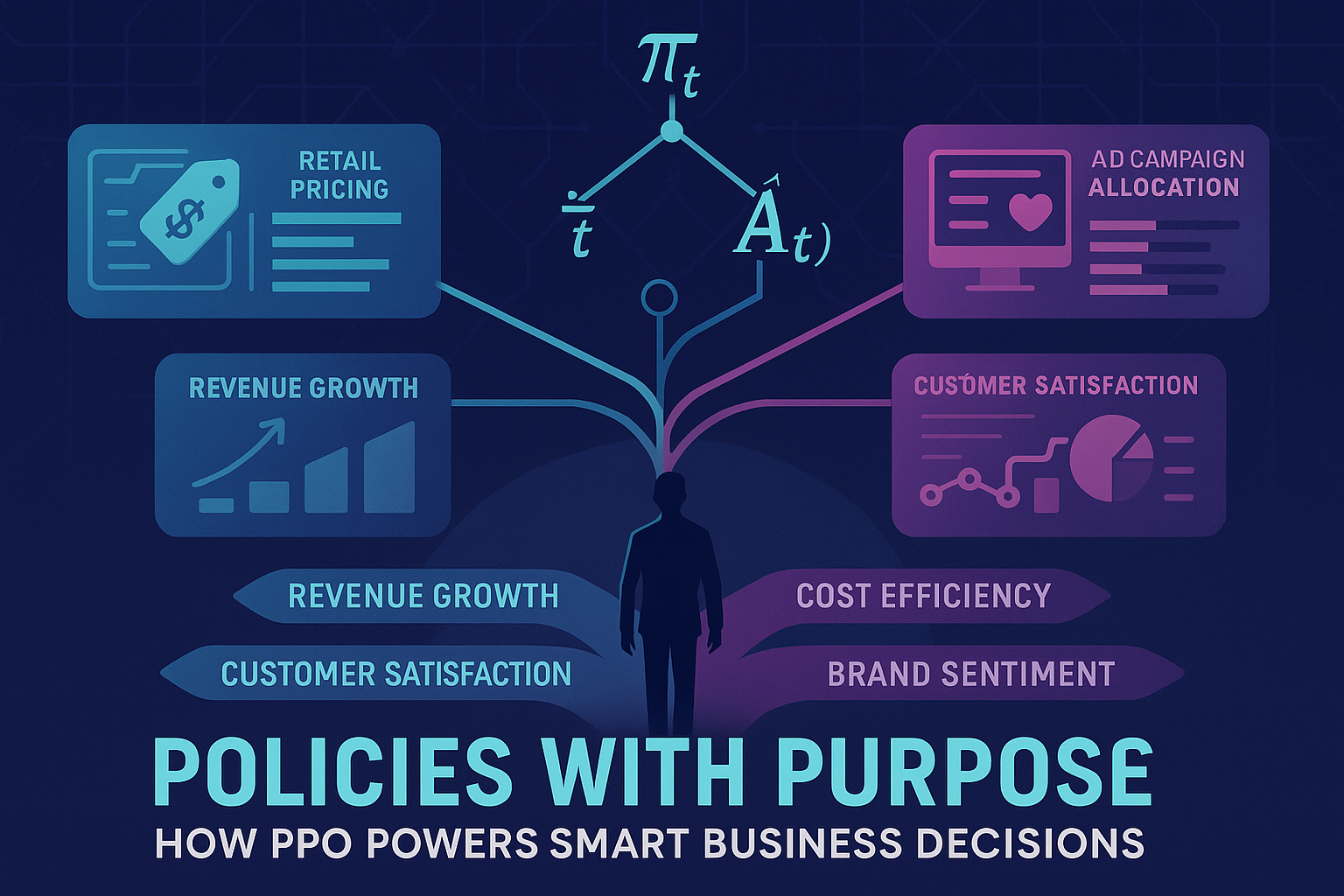
Policies with Purpose: How PPO Powers Smart Business Decisions

In the paper Deep Reinforcement Learning for Urban Air Quality Management: Multi-Objective Optimization of Pollution Mitigation Booth Placement in Metropolitan Environments, Kirtan Rajesh and Suvidha Rupesh Kumar tackle an intricate urban challenge using AI: where to place air pollution mitigation booths across a city to optimize overall air quality under multiple, conflicting objectives1. The proposed solution uses Proximal Policy Optimization (PPO), a modern deep reinforcement learning algorithm, and a multi-dimensional reward function to model this real-world spatial optimization. But beneath the urban context lies a mathematical and algorithmic structure that holds powerful potential for business decision-making—especially where trade-offs between objectives are crucial. ...

May 5, 2025 · 7 min
Cover image

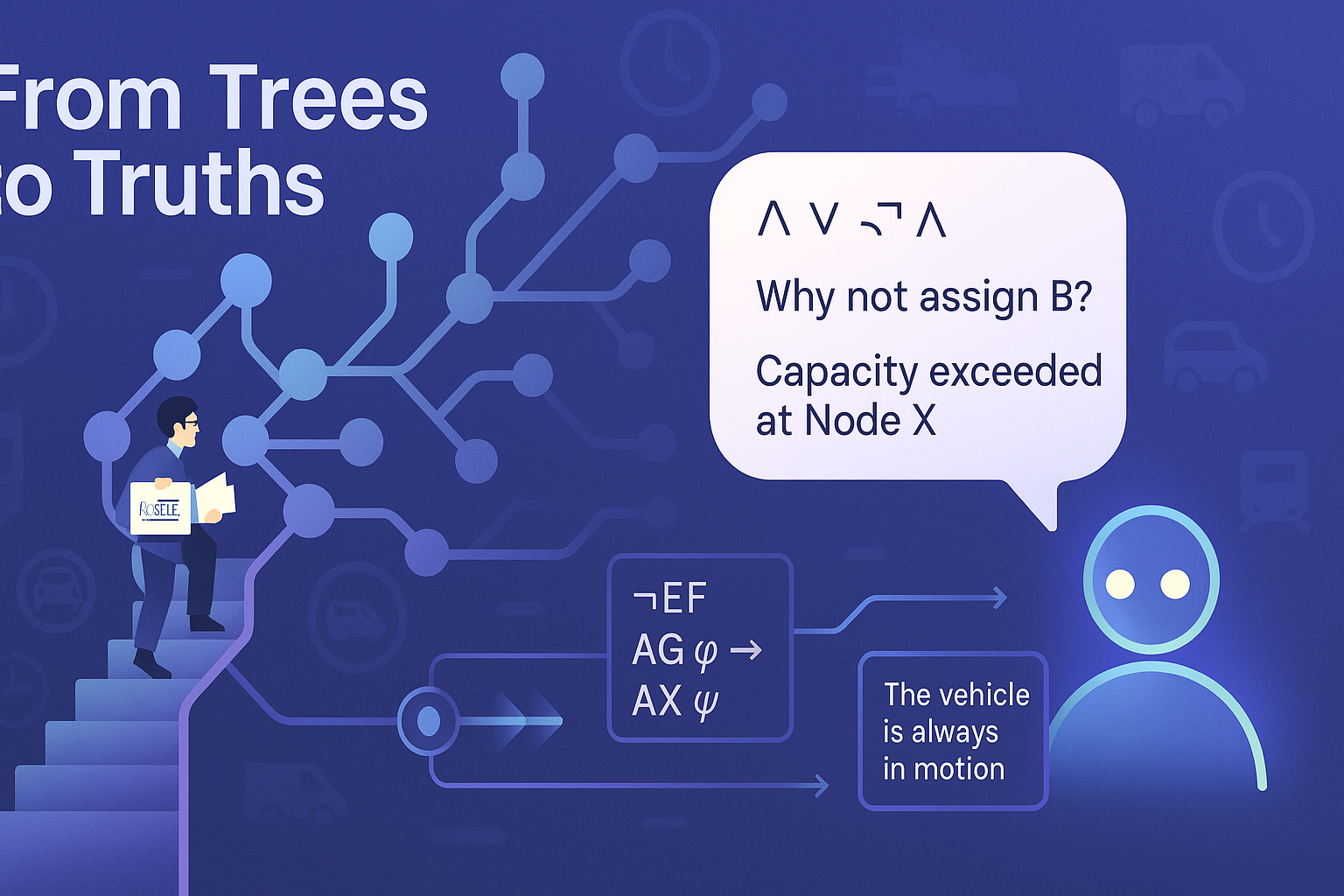
From Trees to Truths: Making MCTS Talk with Logic-Backed LLMs

In the quest to make AI more trustworthy, few challenges loom larger than explaining sequential decision-making algorithms like Monte Carlo Tree Search (MCTS). Despite its success in domains from transit scheduling to game playing, MCTS remains a black box to most practitioners, generating decisions from expansive trees of sampled possibilities without accessible rationale. A new framework proposes to change that by fusing LLMs with formal logic to bring transparency and dialogue to this crucial planning tool1. ...

May 4, 2025 · 6 min
Cover image

Raising the Bar: Why AI Competitions Are the New Benchmark Battleground

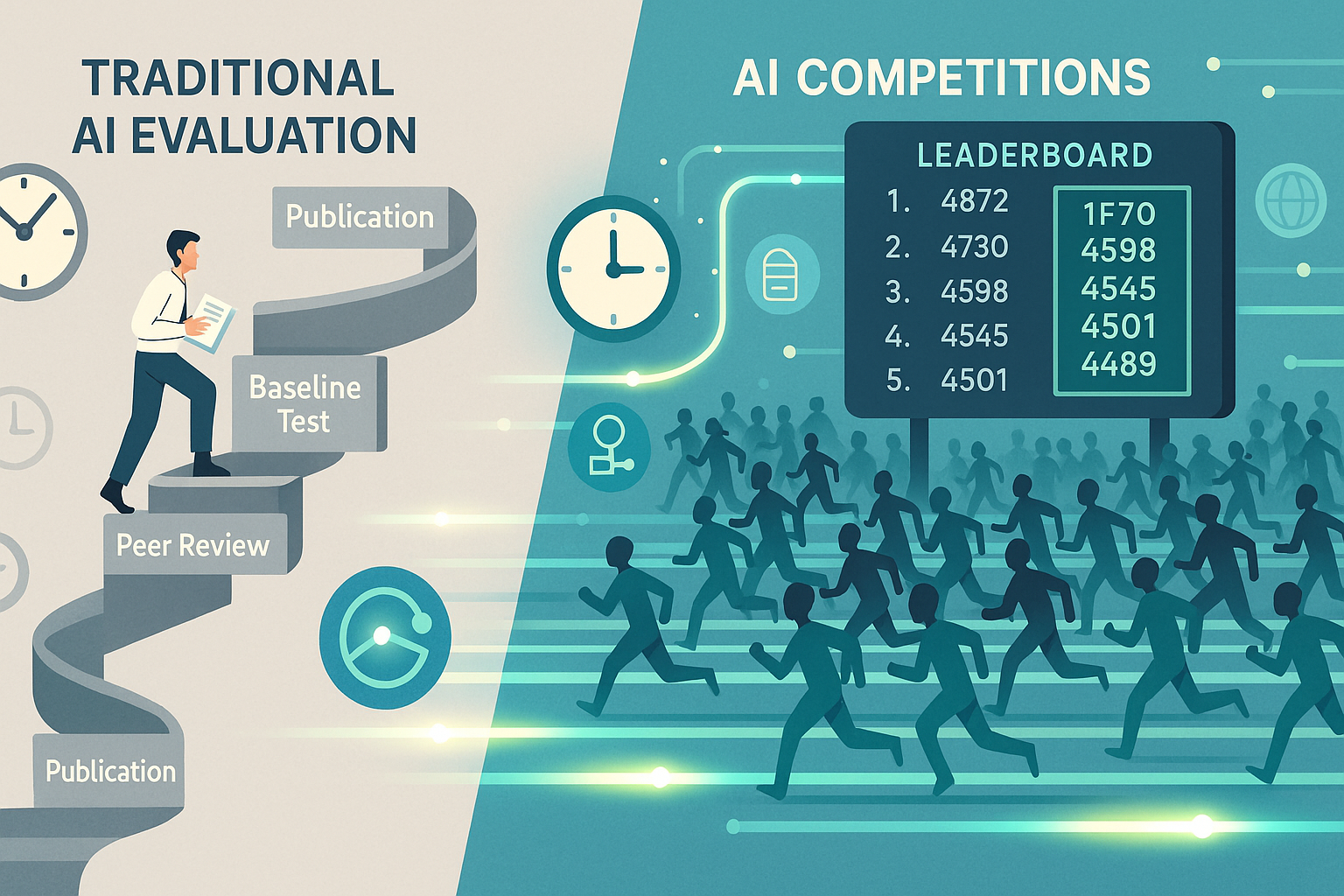
In the rapidly evolving landscape of Generative AI (GenAI), we’ve long relied on static benchmarks—standardized datasets and evaluations—to gauge model performance. But what if the very foundation we’re building our trust upon is fundamentally shaky? Static benchmarks often rely on IID (independent and identically distributed) assumptions, where training and test data come from the same statistical distribution. In such a setting, a model achieving high accuracy might simply be interpolating seen patterns rather than truly generalizing. For example, in language modeling, a model might “memorize” dataset-specific templates without capturing transferable reasoning patterns. ...

May 3, 2025 · 3 min
Cover image

Jack of All Trades, Master of AGI? Rethinking the Future of Multi-Domain AI Agents

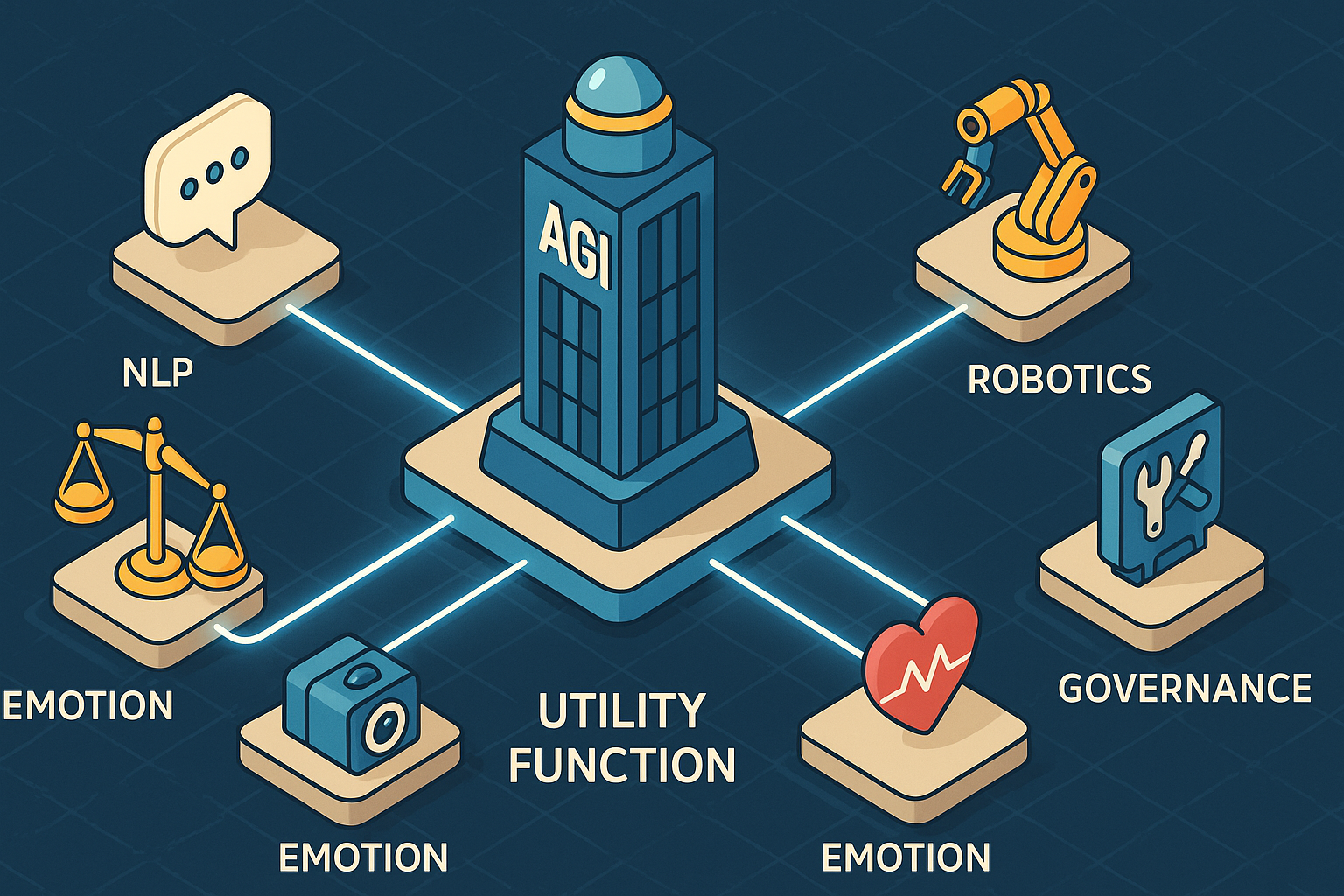
What will the future AI agent look like—a collection of specialized tools or a Swiss army knife of intelligence? As researchers and builders edge closer to Artificial General Intelligence (AGI), the design and structure of multi-domain agents becomes both a technical and economic question. Recent proposals like NGENT1 highlight a clear vision: agents that can simultaneously perceive, plan, act, and learn across text, vision, robotics, emotion, and decision-making. But is this convergence inevitable—or even desirable? ...

May 2, 2025 · 4 min
Cover image

Reasoning on a Sliding Scale: Why One Size Doesn't Fit All in CoT

The Chain-of-Thought (CoT) paradigm has become a cornerstone in improving the reasoning capabilities of large language models (LLMs). But as CoT matures, one question looms larger: Does every problem really need an elaborate chain? In this article, we dive into a new method called AdaR1, which rethinks the CoT strategy by asking not only how to reason—but how much. ...

May 1, 2025 · 4 min