Memory is where enterprise AI demos go to become operationally embarrassing.
In the demo, the assistant remembers that a client prefers concise weekly updates, that a trader avoids high-leverage positions after volatility spikes, or that a procurement manager only approves a supplier when compliance documents are current. In production, the same assistant may remember the attractive half of the fact and quietly lose the condition. It recalls “approves supplier” but forgets “only when compliance documents are current.” Congratulations: the agent has not forgotten. It has remembered dangerously.
That is the useful entry point for MemFail, a new benchmark for stress-testing LLM memory systems.1 The paper is not mainly asking whether memory-augmented agents can answer more questions. We already have enough leaderboards measuring recall as if memory were a single switch labeled “on.” MemFail asks a more annoying and more valuable question: when an AI memory system fails, which part failed?
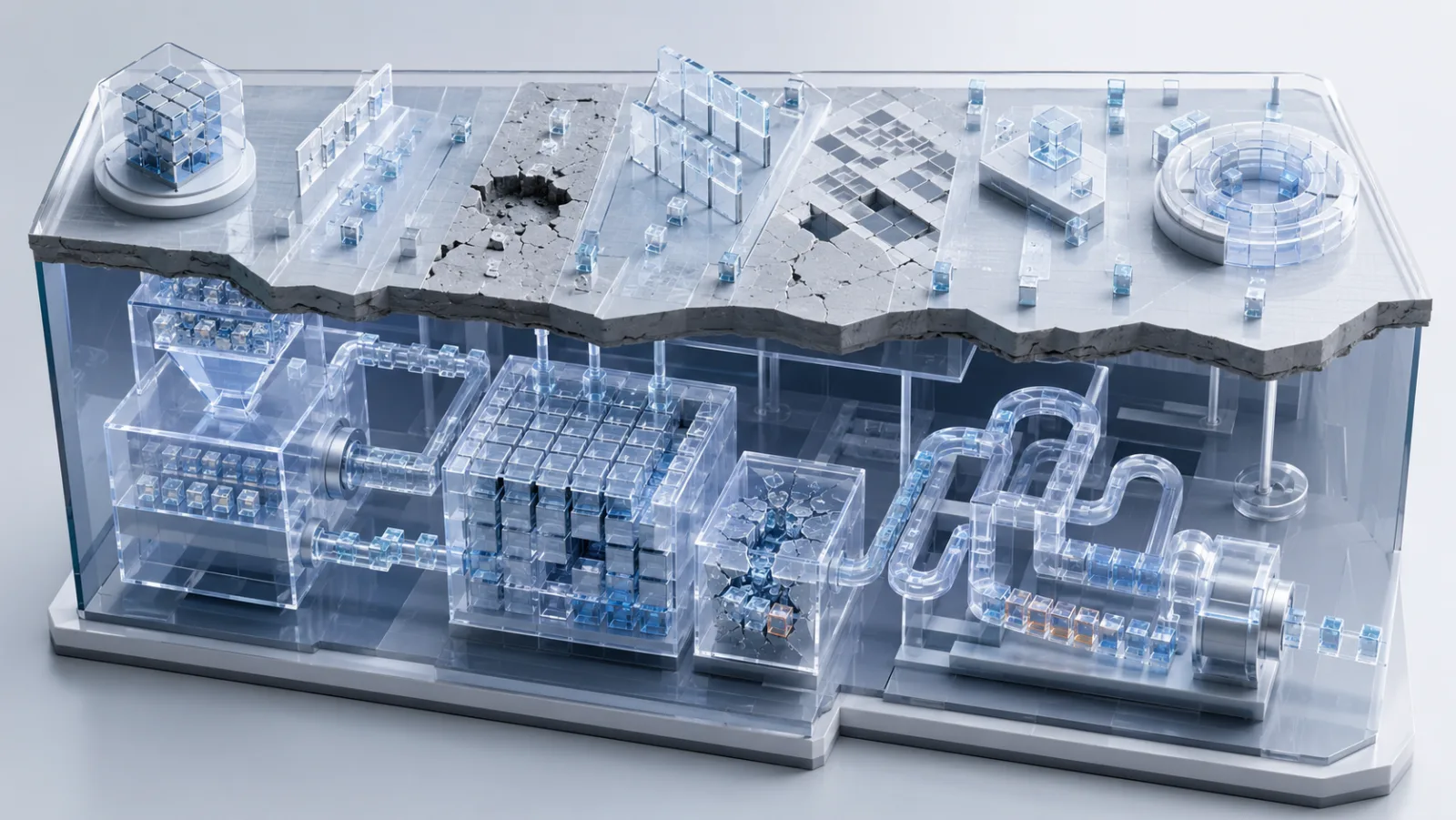
That distinction matters because persistent memory is not a filing cabinet. It is a pipeline. A conversation is summarized, committed into storage, and later retrieved into the model’s prompt. Each stage can damage the remembered fact in a different way. A larger context window does not fix a bad summary. A stronger internal model does not rescue a fact that was never stored. Retrieving more memories does not help if the right memory was compressed into mush before retrieval even began.
The paper’s quiet provocation is that many memory-system failures are architectural, not merely intellectual. Buying a smarter model for the memory layer may be the AI equivalent of buying a larger filing cabinet after the intern mislabeled every folder.
The memory system breaks before the answer is generated
MemFail starts with a useful simplification. Most modern LLM memory systems can be decomposed into three operations:
| Operation | What it does | Business failure if it goes wrong |
|---|---|---|
| Summarization | Compresses an interaction into a memory-worthy representation | Critical qualifiers, thresholds, dates, or exceptions disappear |
| Storage | Adds, updates, merges, overwrites, or ignores memory entries | Valid facts are dropped, overwritten, or treated as contradictions |
| Retrieval | Selects relevant stored memories for the current query | The model sees the wrong memories, incomplete memories, or none at all |
This is more than a tidy taxonomy. It changes how we read benchmark results.
If an agent gives a wrong answer about a remembered customer preference, there are at least four possible explanations. The memory system may have summarized the original statement incorrectly. It may have failed to store it. It may have stored it but failed to retrieve it. Or the downstream model may have retrieved the right memory and still reasoned badly. Only the first three are memory-system failures; the fourth is a model-use failure.
Most aggregate memory benchmarks collapse these into one accuracy number. That is convenient, and convenience is where diagnostic information goes to die.
MemFail instead uses a three-function evaluation interface: store_conversation(), retrieve_memories(), and get_all_memories(). The first two mimic ordinary memory-system use. The third is used by the benchmark judge to inspect what was stored and decide where the failure occurred. That design choice is important: the benchmark is not merely scoring answers; it is inspecting the memory pipeline after the accident.
MemFail turns memory evaluation into controlled damage testing
The benchmark contains five datasets across four task families. Each is designed to stress a particular operation. The examples are synthetic, but the failure modes are painfully familiar to anyone who has tried to make AI agents remember anything more subtle than a birthday.
| MemFail task | Main failure mode being stressed | What the task is really testing |
|---|---|---|
| Conditional-Facts | Summary failure | Whether the system preserves conditions such as “only when,” thresholds, or triggers |
| Conditional-Facts (Hard) | Summary failure under distributed evidence | Whether the system can preserve a rule spread across several non-adjacent sentences |
| Coexisting-Facts | Storage and retrieval failure | Whether multiple compatible preferences can coexist and be jointly retrieved |
| Persona-Retrieval | Storage and summary failure, plus abstention pressure | Whether a profile detail is remembered without being wrongly applied to another person |
| Long-Hop | Retrieval failure | Whether scattered causal links can be retrieved and composed into a chain |
The task design is more interesting than the usual “needle in a haystack” framing. A needle task asks whether the model can find one thing. MemFail often asks whether the system preserved the small piece of logic that makes the thing safe to use.
Consider Conditional-Facts. The easy version puts the whole rule in one sentence: an entity performs a behavior only under a certain condition. A copy-heavy memory system can survive that. The hard version decomposes the rule across several non-adjacent sentences: one sentence describes the behavior, another describes the condition, and a third softly links them. That structure targets a very specific operational weakness: summarization may preserve the colorful behavior while losing the conditional logic.
For an enterprise assistant, this is the difference between remembering “the CFO approves emergency spend” and remembering “the CFO approves emergency spend only when the vendor is pre-cleared and the incident affects production.” The first memory is short. The second memory is useful. Annoyingly, useful facts often contain the boring words.
The benchmark’s dataset sizes are modest but structured. Conditional-Facts Easy and Hard each contain 100 graded questions. Persona-Retrieval contains 100 personas and 300 graded queries, with about half of the queries being misleading. Coexisting-Facts varies the number of preferences from two to five. Long-Hop varies chain length from one to three hops. The paper also reports manual validation: on 100 manually graded examples, the judge model answered 98% correctly and classified error type 98.4% correctly. That does not make the evaluation infallible, but it gives the diagnostic labels more credibility than a casual LLM-judge setup.
The main result: no architecture wins everywhere
The authors evaluate four open-source memory systems: Mem0, A-MEM, SimpleMem, and StructMem. Their architectures differ in exactly the places the benchmark cares about.
SimpleMem stores turns almost verbatim in a flat list and retrieves by embedding similarity. Mem0 extracts atomic facts and updates them through LLM tool calls. A-MEM writes descriptive linked notes in a vector database. StructMem extracts entities and relations into a knowledge graph-like structure and retrieves subgraphs around query entities.
Those differences produce different failure signatures. This is the paper’s central business-relevant finding: memory systems do not merely become better or worse; they become better or worse at different kinds of memory.
| System tendency | What MemFail suggests | Operational interpretation |
|---|---|---|
| Mem0 | Stronger on short, atomic coexisting facts; weaker when long persona entries require many details to be stored | LLM-tool-call updates can compress efficiently, but may not issue enough updates for long, dense experiences |
| A-MEM | Uses many more tokens; can reduce summary loss but does not reliably solve retrieval-heavy tasks | Verbose notes are not a free lunch; they can preserve detail while making retrieval noisier |
| SimpleMem | Benefits from faithful storage but remains limited by retrieval over flat memories | Keeping more of the original text helps only if the retriever can surface the right part later |
| StructMem | Strong on causal and relational tasks; weak on coexisting-fact retrieval | Graph structure helps relationship modeling but can over-commit to decomposition and struggle with broad semantic preference recall |
That last contrast is the cleanest example. StructMem, as a graph-based system, performs well on Long-Hop and Conditional-Facts. That makes intuitive sense: those tasks contain relationships, conditions, and causal chains. But the same structure performs poorly on Coexisting-Facts, where the system must retrieve several compatible preferences in one category. Mem0 shows nearly the opposite pattern.
This is not a leaderboard story. It is a fit story.
For business users, the obvious question is not “Which memory system is best?” The better question is: “What kind of memory does this workflow require?” A customer-support agent, a compliance assistant, a trading-research agent, and a personal productivity assistant do not need the same memory architecture. Some need condition preservation. Some need coexisting preference recall. Some need causal-chain reconstruction. Some need abstention when a name mismatch appears. Bundling these into one recall score is managerial theater with a decimal point.
More retrieved memories help only when retrieval is the bottleneck
The paper then tests how performance changes as the number of retrieved memories, $k$, increases. This is the natural engineering reflex: if the agent missed something, retrieve more.
MemFail shows why that reflex is only sometimes right.
When the failure is retrieval-driven, larger $k$ can help. Coexisting-Facts benefits because the system has a better chance of retrieving all the compatible preference facts needed for the answer. Long-Hop can also improve because more links in the causal chain may surface.
But when the failure happens earlier, larger $k$ has limited value. Conditional-Facts (Hard) is summary-bottlenecked. If the condition was stripped or softened during summarization, retrieving more versions of the damaged memory does not restore the missing qualifier. It just gives the model a larger pile of confident vagueness.
This is the key diagnostic lesson:
| If the dominant failure is… | More retrieved memories likely… | Better fix |
|---|---|---|
| Summary failure | Gives marginal improvement or repeats damaged memories | Preserve critical qualifiers before storage |
| Storage failure | Does little if the fact was never committed | Improve write/update policy and completeness checks |
| Retrieval failure | Can help, especially when multiple facts are needed | Improve retrieval routing, query expansion, or memory structure |
| Reasoning failure | May not help if the right memory is already present | Improve downstream reasoning or answer policy |
This table is boring enough to be useful. It says a production team should not tune $k$ as a universal knob. Retrieval depth is a treatment. The failure mode is the diagnosis. Please do not prescribe antibiotics for a broken ankle; it gives operations teams the wrong kind of confidence.
Stronger internal models are not a universal repair kit
The paper also asks whether memory-system accuracy improves when the internal model used by the memory system becomes stronger. This is best read as a sensitivity test, not a second thesis.
The result is uncomfortable: stronger internal models do not reliably improve performance and can sometimes degrade it. The authors’ explanation is plausible. More capable models may generate more verbose memories. That verbosity can preserve details in some summary-bottlenecked tasks, but it can also pollute the context or embedding space in retrieval-heavy tasks.
This is not an argument against stronger models. It is an argument against using model strength as a substitute for memory-system design. In a memory pipeline, intelligence has to touch the right operation. A stronger summarizer that writes longer notes may still harm retrieval if the retrieval representation becomes semantically bloated. A smarter updater may still miss long persona details if the architecture expects a small number of tool calls. A better reasoner at query time cannot recover facts that were summarized away.
The business implication is direct: procurement teams should not evaluate agent-memory vendors only by the base model behind the memory layer. A system using a fashionable model may still have the wrong storage granularity, the wrong update rule, or the wrong retriever. The expensive model then becomes a decorative hood ornament on a poorly aligned machine.
Token budget is not just cost; it changes what memory means
Figure 3 in the paper connects performance to average tokens per retrieved memory. The finding is not “tokens are good” or “tokens are bad.” The finding is worse for people who enjoy simple rules: tokens are task-dependent.
For summary-bottlenecked tasks such as Persona-Retrieval and Conditional-Facts (Hard), more tokens can help because detail retention matters. If the memory must preserve a threshold, a condition, or a long persona attribute, aggressive compression is risky. In those cases, paying for more memory text can buy fidelity.
For retrieval-heavy tasks, more tokens can hurt. Coexisting-Facts is the clearest case. Larger memories can pollute semantic embeddings, making it harder to retrieve the exact compatible facts needed for a holistic answer. This is the part of the paper that should make enterprise AI teams nervous, because many teams treat memory cost as a simple budget problem: fewer tokens means cheaper; more tokens means better. MemFail says the token budget also changes the geometry of retrieval.
A memory entry is not only content. It is also a search object. When it becomes too verbose, its embedding may drift toward broad semantic neighborhoods and away from the precise trigger that later matters. In plain business language: the memory becomes easier to admire and harder to find.
The appendix is traceability infrastructure, not decoration
The paper’s appendices are not just academic bulk. They help clarify what the benchmark results do and do not prove.
Appendix A provides concrete failure traces. These examples are useful because they show how the benchmark distinguishes memory failure from downstream reasoning failure. A model that answers from common world knowledge after the relevant remembered claim was not retrieved is not treated as “reasoning correctly.” The memory system failed to surface the stored conversation-specific claim. That distinction matters in enterprise settings where the point is not whether the model can improvise an answer, but whether it uses authorized organizational memory.
Appendix B explains the dataset construction pipeline: fixed generators, structured prompts, validation rules, deduplication, distractor generation, and storage layout. Its likely purpose is implementation transparency and reproducibility. It supports the claim that MemFail is deliberately constructed to isolate mechanisms rather than accidentally measure generic language ability.
Appendix C gives the complete evaluation figures across systems, datasets, models, and error classifications. Its purpose is robustness and completeness. It does not create a separate argument; it checks whether the main patterns survive beyond the selected figures in the main text.
A practical reader should therefore use the appendices as an audit trail. They do not turn MemFail into a deployment simulator. They make the diagnostic labels more interpretable.
What this means for business AI agents
The paper directly shows that modern memory systems can fail in separable ways: summary, storage, and retrieval. It directly shows that four open-source systems exhibit different failure signatures. It directly shows that retrieving more memories, using stronger internal models, or storing more tokens does not produce universal improvement.
Cognaptus’ practical inference is that enterprise memory should be governed like a diagnostic subsystem, not configured like a chatbot feature.
| Business design choice | What MemFail implies | What remains uncertain |
|---|---|---|
| Memory QA dashboard | Track summary, storage, retrieval, and reasoning failures separately | Real production distributions may differ from synthetic benchmark distributions |
| Task-specific memory tests | Test conditional rules, coexisting preferences, persona boundaries, and causal chains separately | The right task mix depends on the enterprise workflow |
| Hybrid memory architecture | Route different memory types to vector, graph, flat, or structured stores | Routing policies require separate design and monitoring |
| Adaptive token budgets | Preserve detail for condition-heavy memories; compress aggressively where retrieval precision matters | Optimal token policy depends on retriever behavior and latency constraints |
| Retrieval-depth governance | Increase $k$ only when retrieval is the bottleneck | Larger $k$ may raise cost, latency, and distraction risk |
This also changes how teams should run vendor evaluations.
A generic prompt like “remember my preferences over a week of conversations” is too blunt. It may reward systems that perform well on easy recall while hiding failures on conditional, multi-fact, or abstention-sensitive queries. A better test suite should include cases like:
- a rule that applies only under a condition;
- several compatible preferences that must all be retrieved;
- a profile detail that must not be transferred to a different person;
- a multi-step chain where facts are stored separately;
- an outdated or coexisting fact that should be updated or retained, depending on context.
The point is not to copy MemFail wholesale into every deployment. The point is to copy its diagnostic posture. Memory failures should be named before they are optimized.
Where MemFail should not be overread
MemFail is a diagnostic benchmark, not a forecast of real-world agent reliability. The authors are clear about this, and the boundary matters.
The datasets are synthetic and English-only. Synthetic data is useful here because it allows controlled failure isolation, but it may not capture the messiness of enterprise conversations: incomplete user statements, conflicting documents, multilingual context, evolving business policies, and accidental ambiguity. The benchmark evaluates four open-source memory systems that expose the required API. Systems with implicit learned memory, fine-tuned-weight memory, or proprietary hidden memory layers may be harder to inspect using the same method.
The paper also does not focus on latency. That omission is reasonable for a diagnostic research paper, but it matters in deployment. A hybrid memory system that routes causal rules into graphs and persona preferences into vector stores may improve accuracy while increasing retrieval time, implementation complexity, and observability burden. The benchmark tells us what breaks. It does not price every repair.
Finally, the benchmark mostly concerns explicit external memory. It does not settle broader questions about whether future agents should rely more on long context, structured databases, learned user models, or workflow-specific state machines. In practice, serious systems will probably use several of these. Sadly, architecture diagrams may continue to exist.
The real lesson is not “remember more”
The easiest misconception is that persistent memory fails because the model is too weak or the context window is too small. MemFail pushes against that. The problem is often not that the system cannot hold enough information. The problem is that the system mutates information while deciding what is worth holding.
A good enterprise memory system should not merely remember more. It should remember with structure:
- preserve conditions and thresholds when they govern action;
- keep compatible facts together without merging them into bland generalities;
- retrieve all required pieces, not just the semantically loudest one;
- abstain when a query names the wrong entity;
- separate storage failure from retrieval failure before tuning knobs.
That is why the paper’s mechanism-first framing is valuable. It gives teams a vocabulary for memory incidents. “The agent forgot” is not a diagnosis. “The condition was lost during summarization” is a diagnosis. “The preference existed in storage but was not retrieved with the query” is a diagnosis. “The model retrieved the right rule and then hedged into nonsense” is also a diagnosis, though a different department may need to suffer for it.
Enterprise AI memory will not become reliable by being treated as a magical extension of context. It will become reliable when it is tested as a pipeline with failure labels, tradeoffs, and operating rules.
Memory lane, it turns out, has potholes. MemFail’s contribution is to mark which pothole broke the wheel.
Cognaptus: Automate the Present, Incubate the Future.
-
Ishir Garg, Neel Kolhe, Dawn Song, and Xuandong Zhao, “MemFail: Stress-Testing Failure Modes of LLM Memory Systems,” arXiv:2605.26667, 2026, https://arxiv.org/abs/2605.26667. ↩︎