Build a Small RAG Knowledge Tool
How to build a lightweight retrieval-augmented knowledge tool with grounded answers, source citations, narrow scope, and a realistic MVP.
How to build a lightweight retrieval-augmented knowledge tool with grounded answers, source citations, narrow scope, and a realistic MVP.

TL;DR for operators An agent has a recurring allocation problem: how much of its past should it bring back before answering a question or choosing its next action? More history increases the chance that useful evidence is available, but it also increases the amount of material competing with the information that matters now. ...

TL;DR for operators When a question requires several facts to be connected, improving entity coverage is not enough if the graph still lacks the relations needed to move between those facts. In a 200-query structural-connectivity pilot, pure Freebase connected the required endpoints within three hops in 24.1% of cases. Wikidata raised entity linking from 77.0% to 85.6%, but connectivity reached only 37.6%. Adding document text into the Freebase-based graph raised connectivity to 69.7%. ...

TL;DR for operators A deployed model encounters a familiar operating condition again. Should it relearn the task, search for a saved configuration, or let a trained controller decide which parameters to reuse? The paper’s strongest result points to the simpler mechanism. Removing the searchable store of compressed task-specific configurations increased recovery from 1.27 to 13.33 adaptation steps—close to the 14.27 steps required by a baseline without that store. The component that looks least intelligent therefore accounts for most of the recovery advantage: retaining the small parameter modules that worked before and restoring them when the task returns. The paper calls this store the TaskKnowledgeBank. ...

TL;DR for operators AI learning is usually sold as a volume story: more data, more retrieval, more reasoning tokens, more reinforcement learning. Comforting. Also incomplete. Three recent papers make a more useful point. The model does not merely need more exposure. It needs a better lesson plan. One paper shows that a model can be given a more meaningful difficulty ranking for training examples, yet still fail to beat ordinary full-data training unless scoring and pacing are engineered together. Another shows that travel-planning agents become more factually grounded when forced into retrieval, but that the burden of grounding can damage instruction retention and preference satisfaction. A third shows that legal AI systems can be rewarded for correct prosecution outcomes without learning the underlying discrimination process that separates evidence insufficiency, statutory non-liability, discretionary non-prosecution, and prosecution. ...
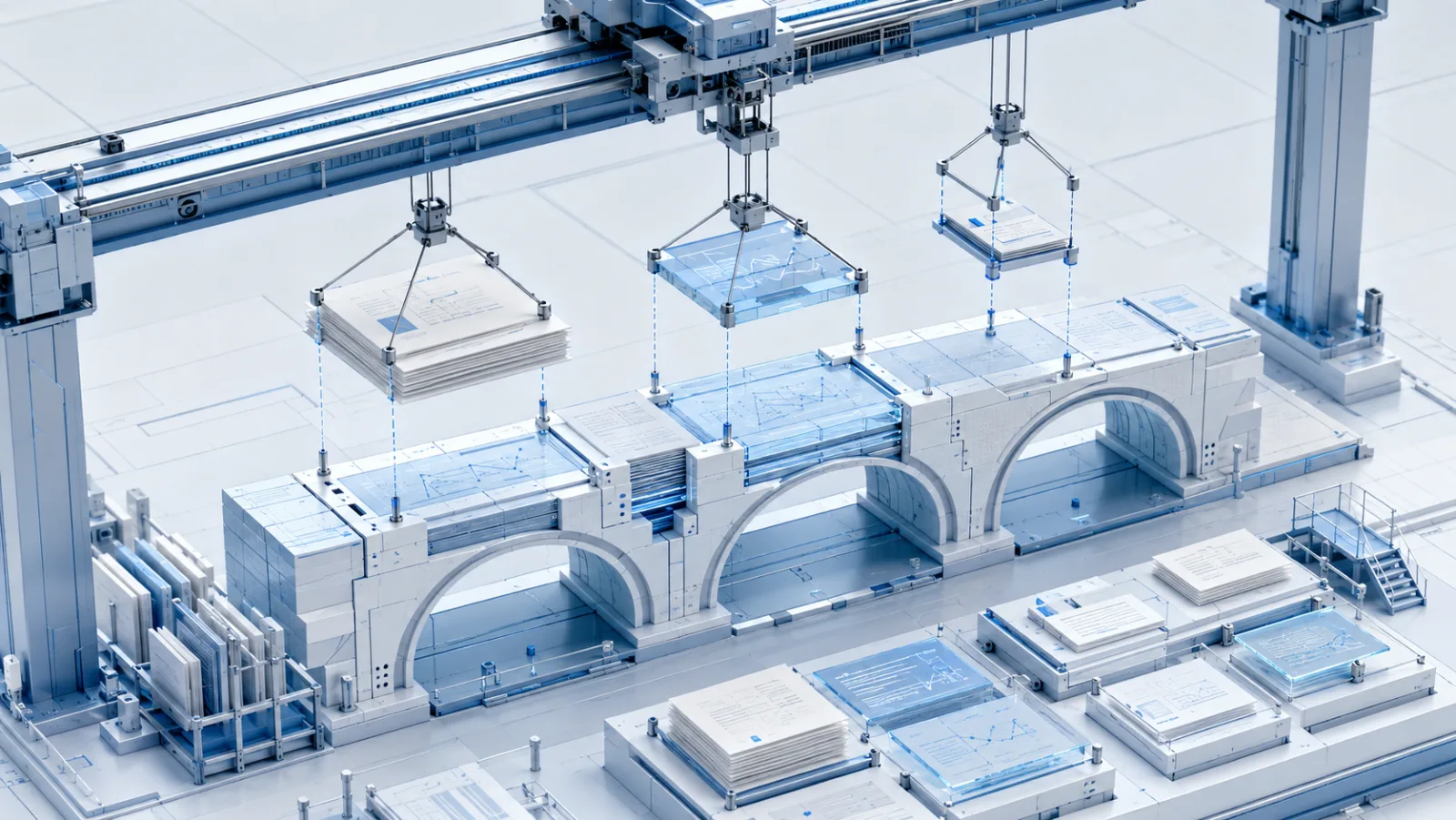
TL;DR for operators The current enterprise RAG conversation still has a charmingly stubborn misconception: if the model hallucinates, buy better embeddings, increase the context window, add an agent, and hope the PowerPoint becomes true. The two papers here point in a less theatrical direction. One paper, Non-negative Elastic Net Decoding for Information Retrieval, argues that dense retrieval has a structural weakness: it scores each candidate independently, so it can retrieve several similar items instead of the complementary set actually needed to answer the query.1 The other, Agentic Hybrid RAG for Evidence-Grounded Muon Collider Analysis, shows what happens when retrieval is treated as a full evidence workflow: sparse and dense retrieval are fused, queries are decomposed under constraints, evidence is deduplicated and budgeted, and answers are judged for coverage, hallucination, and abstention.2 ...

TL;DR for operators RAGA is not another “add a graph and accuracy goes up” paper. That would be too convenient, and therefore suspicious. The useful idea is more operational: treat retrieval-augmented generation as a knowledge management process, not a pile of embeddings with a polite chatbot on top. The paper proposes RAGA, short for Reading-And-Graph-building-Agent, an autonomous system that reads documents, searches existing graph knowledge, verifies whether new entities or relations should be added, and then constructs or updates a knowledge graph with source-linked provenance.1 Its core loop is Read–Search–Verify–Construct, implemented as a ReAct-style tool-calling agent rather than a one-shot extraction pipeline. ...

Search failure is boring until it becomes expensive. A research agent asks for evidence. The retriever returns documents. The reasoning model reads them, continues writing, and eventually produces a confident answer. Somewhere in the middle, the evidence was slightly wrong: not irrelevant enough to trigger an obvious failure, not useful enough to support the next reasoning step. The agent proceeds anyway, because that is what agents do when we dress up uncertainty as workflow automation. ...
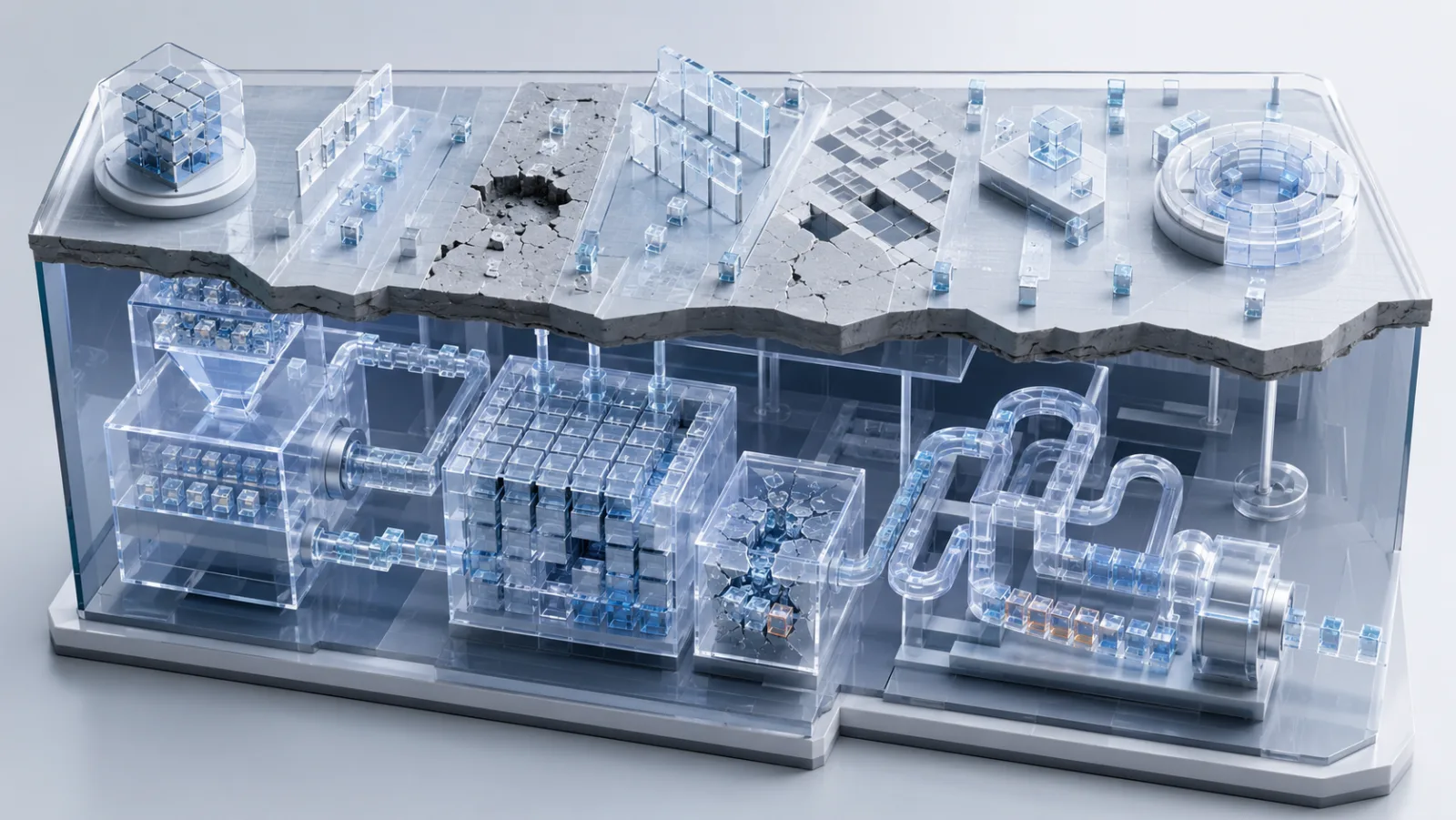
Memory is where enterprise AI demos go to become operationally embarrassing. In the demo, the assistant remembers that a client prefers concise weekly updates, that a trader avoids high-leverage positions after volatility spikes, or that a procurement manager only approves a supplier when compliance documents are current. In production, the same assistant may remember the attractive half of the fact and quietly lose the condition. It recalls “approves supplier” but forgets “only when compliance documents are current.” Congratulations: the agent has not forgotten. It has remembered dangerously. ...

Enterprise search has a very old habit wearing a very modern jacket: it averages. A policy document becomes one vector. A runbook becomes one vector. A postmortem full of operational detail becomes one vector. Then a RAG system asks that one vector whether the document is relevant. This is convenient, fast, and usually defensible — until the relevant answer is a narrow paragraph hiding inside a large document. At that point, the retrieval system is no longer searching for evidence. It is asking a crowd to speak for the witness. ...