Cover image

The Watchdog at the Gates: How HalMit Hunts Hallucinations in LLM Agents

TL;DR for operators HalMit is not another attempt to ask an LLM, “Are you sure?” and then pretend the answer is governance. That theatre has had a decent run, but it was never a control system. The paper proposes a black-box watchdog for LLM-powered agents: before deployment, HalMit actively probes a target agent inside a specific domain, looks for query-response situations where hallucinations appear, stores those risky boundary points in a vector database, and then monitors future queries by checking whether they fall near those learned danger zones.1 ...


July 23, 2025 · 16 min · Zelina
Cover image

Think Twice, Then Speak: Deliberative Searcher and the Future of Reliable LLMs

TL;DR for operators Search-augmented LLMs are not safe merely because they can look things up. They can still retrieve relevant documents, stitch together a plausible answer, and then express high confidence in something wrong. That is the failure mode this paper targets: not hallucination in the abstract, but the operationally poisonous state of being both false and certain. ...

July 23, 2025 · 16 min · Zelina
Cover image

Latent Brilliance: Turning LLMs into Creativity Engines

TL;DR for operators Creative AI systems usually fail in a painfully familiar way: ask for ten ideas, and by idea four the model is politely repainting the same wall. Change the temperature, give it a persona, ask a panel of agents to “debate,” and the system may sound busier, but the semantic spread often remains narrow. The paper behind this article argues that this is not merely a prompt-design inconvenience. It is a structural limitation of how LLMs are conditioned. ...

July 21, 2025 · 18 min · Zelina
Cover image

Beyond Search: RAG’s Awakening to Enterprise Spreadsheets

TL;DR for operators Most enterprise RAG failures do not begin at the chatbot. They begin earlier, when the retrieval system slices policy manuals into arbitrary chunks, flattens tables into textual porridge, ignores metadata, retrieves semantically similar but operationally wrong passages, and then asks an LLM to look confident. Naturally, the LLM obliges. It has excellent manners. ...

July 17, 2025 · 20 min · Zelina
Cover image

The Retrieval-Reasoning Tango: Charting the Rise of Agentic RAG

TL;DR for operators Static RAG is still useful. It is also no longer the whole game. The paper behind this article argues that retrieval and reasoning are converging into a more tightly coupled architecture: reasoning can improve retrieval, retrieval can improve reasoning, and agentic systems can interleave both over multiple steps.1 That sounds like a neat academic symmetry until you put it inside an enterprise workflow, where every extra retrieval call means latency, cost, permissions, ranking risk, and one more place for the machine to confidently ingest rubbish. ...

July 15, 2025 · 18 min · Zelina
Cover image

Chunks, Units, Entities: RAG Rewired by CUE-RAG

TL;DR for operators Enterprise RAG teams often treat retrieval quality as a graph-construction problem: extract more entities, more relationships, more summaries, and hope the answer appears somewhere in the resulting machinery. Clue-RAG suggests a more useful diagnosis: the failure is often not that the graph is too small, but that the system has chosen the wrong semantic unit for the job.1 ...

July 14, 2025 · 16 min · Zelina
Cover image

LLMs Meet Logic: SymbolicThought Turns AI Relationship Guesswork into Graphs

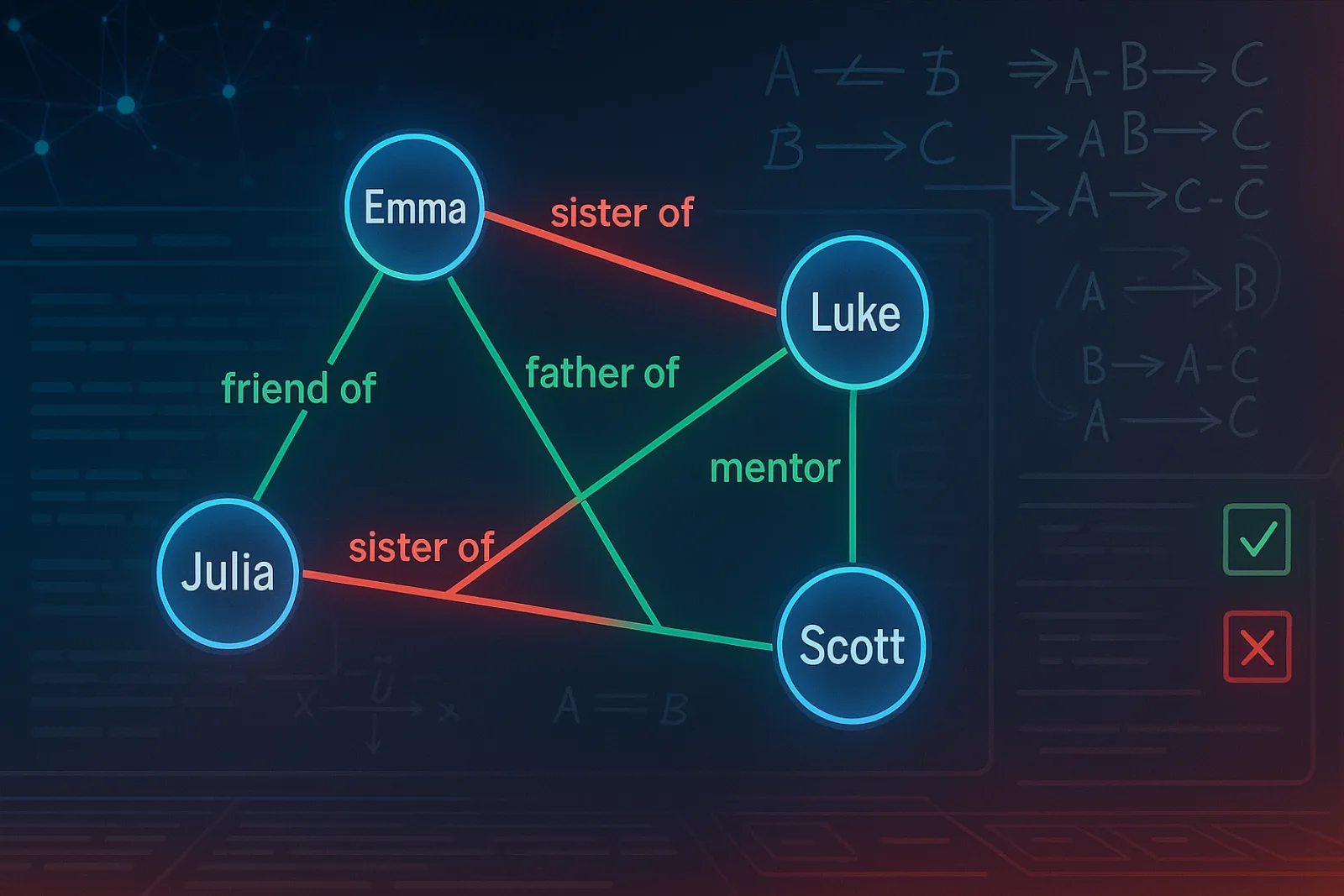
TL;DR for operators SymbolicThought1 is a useful reminder that relationship extraction is not a vibes problem. It is a graph problem wearing a language-model costume. The paper proposes a human-in-the-loop system for extracting character relationships from narrative text. The pipeline lets an LLM propose characters and relations, then applies symbolic rules to infer missing edges, detect contradictions, retrieve supporting evidence, and ask humans to confirm or correct what matters. That is the important mechanism: the LLM is not trusted as a final judge. It is treated as a noisy extractor inside a controlled annotation workflow. ...

July 12, 2025 · 15 min · Zelina
Cover image

The Phantom Menace in Your Knowledge Base

TL;DR for operators The paper’s core warning is simple: a RAG system may not be reading the same document your employee just approved. A PDF, HTML page, or DOCX file can look clean to a human reviewer while carrying hidden text, altered Unicode, poisoned fonts, or layout tricks that a document loader still extracts. ...

July 8, 2025 · 19 min · Zelina
Cover image

Wall Street’s New Intern: How LLMs Are Redefining Financial Intelligence

TL;DR for operators The paper is best read as a menu, not a victory lap. It surveys how recent research has plugged large language models into financial investment workflows across four design patterns: LLM-based pipelines, hybrid LLM-quant systems, fine-tuned financial models, and agent-based architectures.1 That taxonomy is more useful than another breathless “AI beats Wall Street” headline, which is convenient because the latter is usually where rigor goes to die in a nice suit. ...

July 4, 2025 · 18 min · Zelina
Cover image

Grounded and Confused: Why RAG Systems Still Fail in the Enterprise

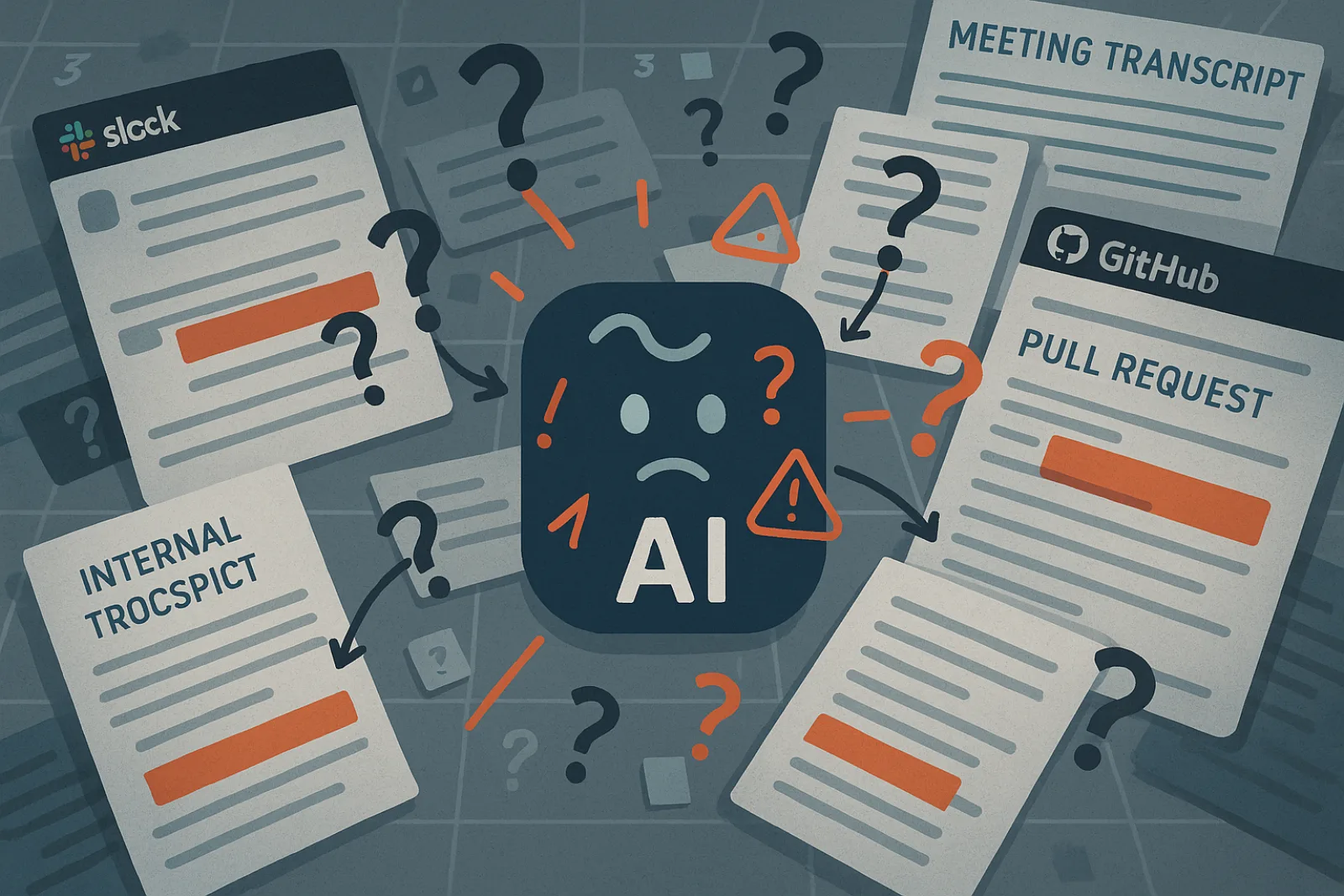
TL;DR for operators Enterprise RAG does not fail because the chatbot forgot to sound confident. It fails because the answer is often scattered across the least glamorous parts of the company: Slack threads, meeting transcripts, pull requests, document revisions, customer reports, employee metadata, and URLs somebody pasted into a chat six weeks ago. ...

July 1, 2025 · 20 min · Zelina