Cover image

Divide and Conquer: How LLMs Learn to Teach

TL;DR for operators The useful finding is not “LLMs can write lessons.” They can, in the same way a junior analyst can write a memo: quickly, plausibly, and with enough confidence to become dangerous if nobody reads it. The paper tests GPT-4o with retrieval-augmented generation (RAG) for creating interactive, scenario-based lessons used to train novice human tutors in online middle-school mathematics.1 The lesson topics are practical rather than ornamental: encouraging student independence, encouraging help-seeking behaviour, and persuading students to turn cameras on during online tutoring. ...
June 24, 2025 · 17 min · Zelina
Cover image

Flashcards for Giants: How RAL Lets Large Models Learn Without Fine-Tuning

TL;DR for operators Training a model is not the only way to make it behave less cluelessly in a specialised environment. The paper behind Retrieval Augmented Learning, or RAL, proposes a cheaper route: let the agent try strategies, validate what happened, and store the resulting lessons as retrievable experience rather than changing the model’s weights.1 ...

May 6, 2025 · 16 min · Zelina
Cover image

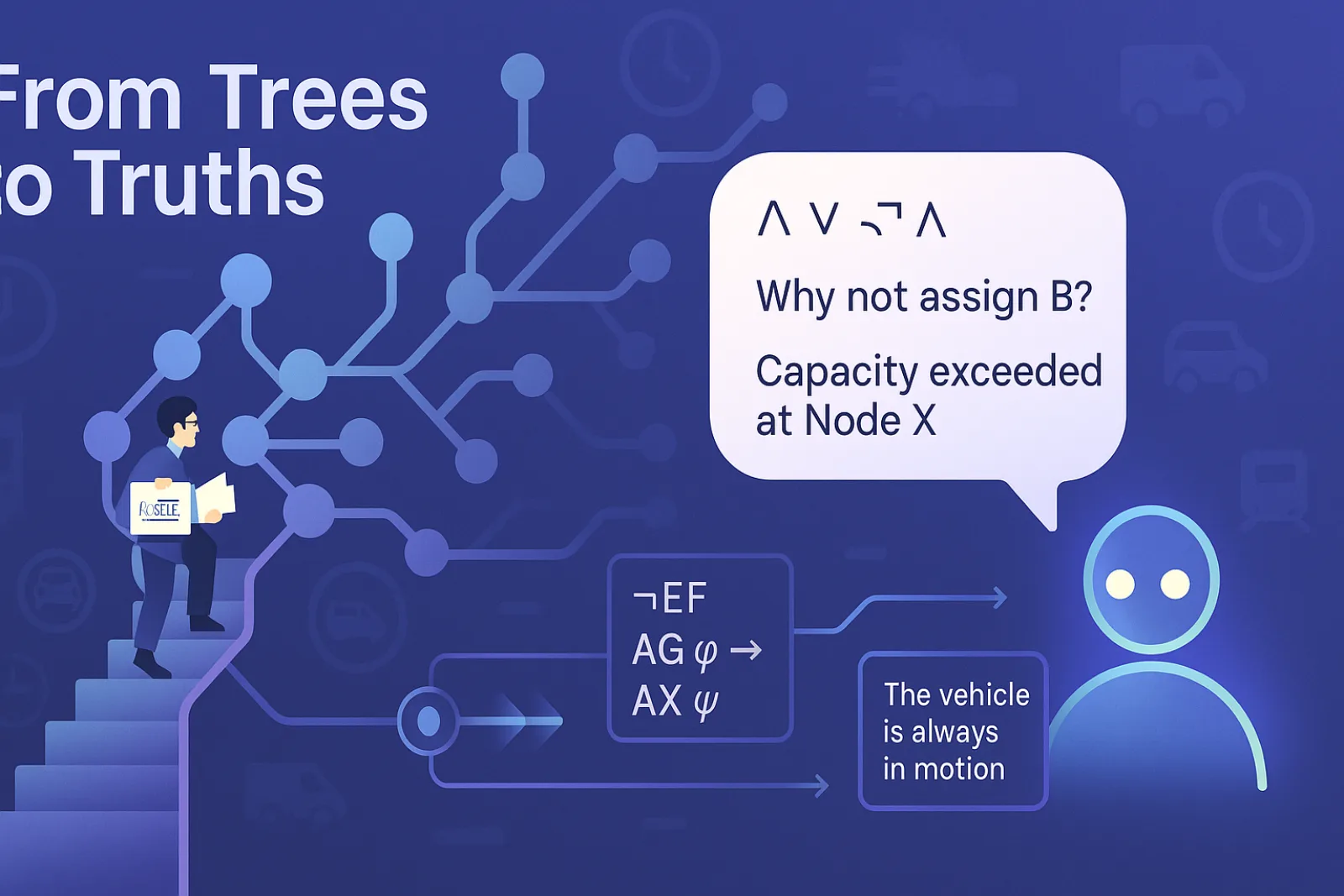
From Trees to Truths: Making MCTS Talk with Logic-Backed LLMs

TL;DR for operators If your optimisation system can choose the route, assign the vehicle, or schedule the job but cannot explain why, the obvious temptation is to bolt on a chatbot and call the matter solved. That is also how one gets fluent nonsense with a user interface. The paper behind this article proposes a better pattern: let the LLM translate a user’s question into formal variables and logic, evaluate those variables against the actual Monte Carlo Tree Search tree, retrieve domain knowledge only when the question calls for it, and then generate the final natural-language explanation.1 The LLM is still useful, but it is no longer allowed to improvise the evidence. A small mercy, really. ...

May 4, 2025 · 16 min · Zelina
Cover image

Remember Like an Elephant: Unlocking AI's Hippocampus for Long Conversations

TL;DR for operators Long-context windows are useful. They are also an expensive way to pretend that memory is just a bigger clipboard. The HEMA paper argues for a more operationally realistic design: keep a compressed summary of the conversation always visible, store detailed past exchanges outside the prompt, and retrieve only the details that matter for the current turn.1 That gives the model two different memory behaviours: continuity from Compact Memory and factual recall from Vector Memory. ...

April 25, 2025 · 18 min · Zelina
Cover image

Case Closed: How CBR-LLMs Unlock Smarter Business Automation

TL;DR for operators Most enterprise AI projects are still built around a polite fantasy: give the model a prompt, attach a vector database, sprinkle in Chain-of-Thought, and somehow the system will behave like an experienced employee. That works until the agent meets a problem where the correct answer depends less on general knowledge and more on organisational precedent. ...

April 10, 2025 · 22 min · Zelina
Cover image

Memory in the Machine: How SHIMI Makes Decentralized AI Smarter

TL;DR for operators Memory is becoming an operations problem, not just a model feature. Once multiple AI agents maintain local context, update independently, and need to coordinate without a central brain, the usual “throw it into a vector database and pray politely” approach starts to creak. SHIMI, short for Semantic Hierarchical Memory Index, proposes a different memory layer for decentralized agent systems.1 Instead of storing knowledge as a flat set of embedding vectors, it organizes memory as a hierarchy of semantic concepts. Retrieval works by descending from broad concepts to specific entities. Synchronization works by exchanging only the parts of local memory trees that have diverged, using Merkle-DAG summaries, Bloom filters, and CRDT-style merging. ...

April 9, 2025 · 17 min · Zelina
Cover image

The CoRAG Deal: RAG Without the Privacy Plot Twist

TL;DR for operators CoRAG is not “RAG, but with more documents.” It is a way to let multiple organizations train a shared retrieval-augmented model while keeping their labeled question-answer data local. That matters because labels are usually the expensive, sensitive, commercially revealing part. Market documents, manuals, policies, public reports, and technical references are often easier to share than the annotations that say which answer was correct, for whom, and under what business condition. Tiny distinction. Large legal bill avoided. ...

April 3, 2025 · 15 min · Zelina
Cover image

How Ultra-Large Context Windows Challenge RAG

TL;DR for operators Ultra-large context windows are not a ceremonial funeral for retrieval-augmented generation. They are a price renegotiation. If your task is to analyse a bounded, self-contained document set — a contract bundle, diligence folder, policy manual, code repository, or technical appendix — a long-context model may now be the cleaner first option. The main benefit is not that it “knows more”. It is that it can inspect more of the original evidence without depending on a retriever to guess which passages matter. ...

March 29, 2025 · 12 min · Zelina
Cover image

Smart, Private AI Workflows for Small Firms to Save Costs and Protect Data

TL;DR for operators Month-end close is not where small firms discover their love of manual labour. It is where invoices arrive half-labelled, clients reply with attachments named final_final_real.xlsx, and a senior accountant spends expensive hours doing work that is intellectually closer to sorting laundry than advising a business. The practical AI opportunity for small accounting and professional service firms is not “give everyone a chatbot and hope the profession becomes futuristic by Friday.” The better architecture is a cost-aware, privacy-first workflow: classify the task, remove or mask sensitive data where possible, retrieve the right firm knowledge, route the easy work to cheap or local tools, escalate uncertain cases to stronger models, and keep humans in charge of outputs that affect filings, financial statements, tax positions, or client advice. ...

March 22, 2025 · 16 min · Zelina
Cover image

Beyond the AI Hype: The Real Direction of AI Development

TL;DR for operators Enterprise AI is not becoming valuable because every company can now bolt a chatbot onto its website and call it “transformation.” That is transformation in the same way repainting a warehouse is supply-chain optimisation. The useful direction is narrower and harder: AI systems are becoming business intelligence layers that connect customer signals, workflow execution, financial planning, and strategic decisions. For a cross-border e-commerce company already using tools such as Duoke for customer service, translation, comment-context analysis, order follow-up, data visualisation, and logistics search, the next step is not “more AI features.” It is AI that improves profitability, cash-flow predictability, and market expansion decisions. ...

March 17, 2025 · 17 min · Zelina