Cover image

Chunks, Units, Entities: RAG Rewired by CUE-RAG

TL;DR for operators Enterprise RAG teams often treat retrieval quality as a graph-construction problem: extract more entities, more relationships, more summaries, and hope the answer appears somewhere in the resulting machinery. Clue-RAG suggests a more useful diagnosis: the failure is often not that the graph is too small, but that the system has chosen the wrong semantic unit for the job.1 ...

July 14, 2025 · 16 min · Zelina
Cover image

LLMs Meet Logic: SymbolicThought Turns AI Relationship Guesswork into Graphs

TL;DR for operators SymbolicThought1 is a useful reminder that relationship extraction is not a vibes problem. It is a graph problem wearing a language-model costume. The paper proposes a human-in-the-loop system for extracting character relationships from narrative text. The pipeline lets an LLM propose characters and relations, then applies symbolic rules to infer missing edges, detect contradictions, retrieve supporting evidence, and ask humans to confirm or correct what matters. That is the important mechanism: the LLM is not trusted as a final judge. It is treated as a noisy extractor inside a controlled annotation workflow. ...

July 12, 2025 · 15 min · Zelina
Cover image

The Phantom Menace in Your Knowledge Base

TL;DR for operators The paper’s core warning is simple: a RAG system may not be reading the same document your employee just approved. A PDF, HTML page, or DOCX file can look clean to a human reviewer while carrying hidden text, altered Unicode, poisoned fonts, or layout tricks that a document loader still extracts. ...

July 8, 2025 · 19 min · Zelina
Cover image

Wall Street’s New Intern: How LLMs Are Redefining Financial Intelligence

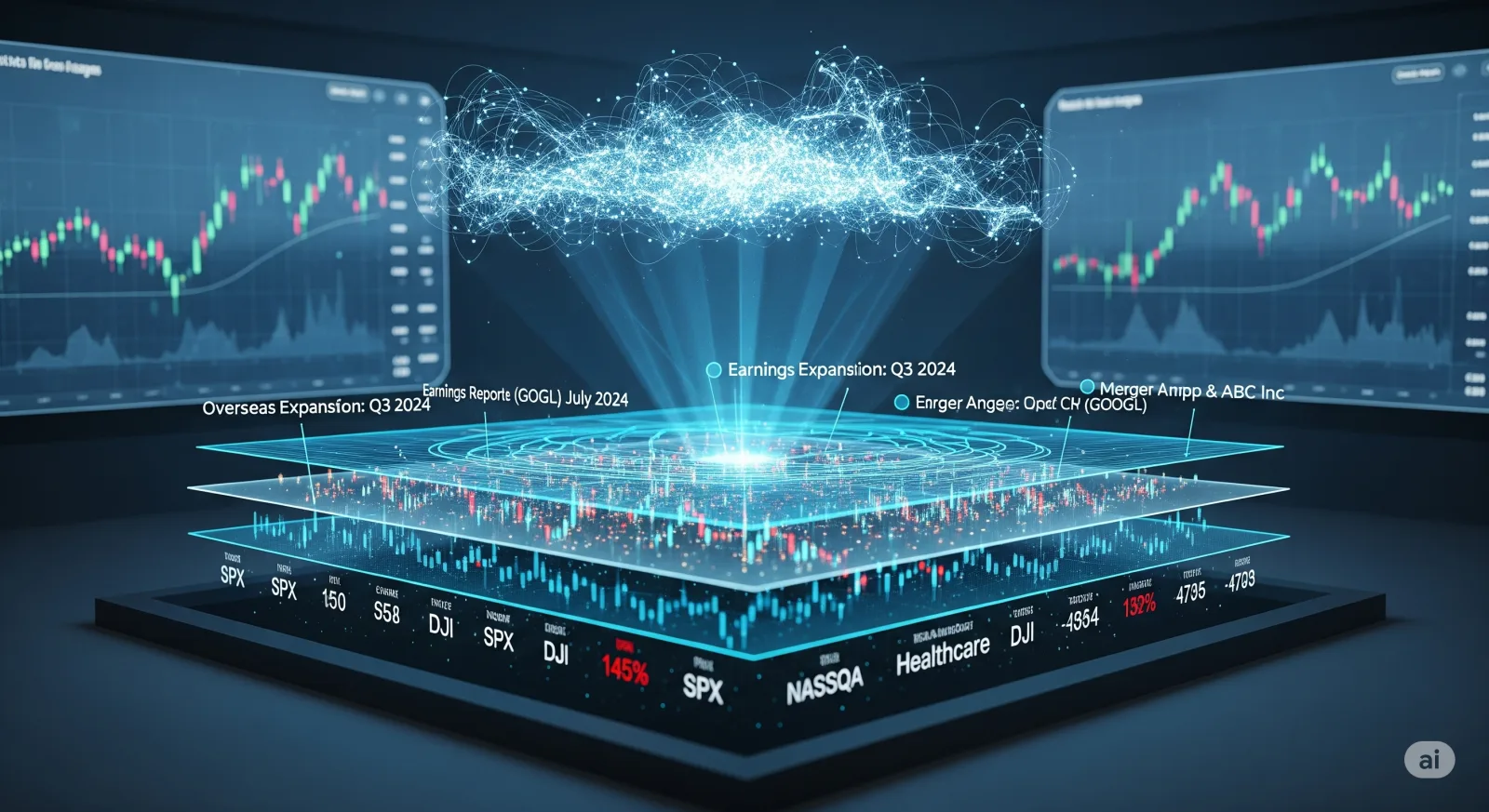
TL;DR for operators The paper is best read as a menu, not a victory lap. It surveys how recent research has plugged large language models into financial investment workflows across four design patterns: LLM-based pipelines, hybrid LLM-quant systems, fine-tuned financial models, and agent-based architectures.1 That taxonomy is more useful than another breathless “AI beats Wall Street” headline, which is convenient because the latter is usually where rigor goes to die in a nice suit. ...

July 4, 2025 · 18 min · Zelina
Cover image

Grounded and Confused: Why RAG Systems Still Fail in the Enterprise

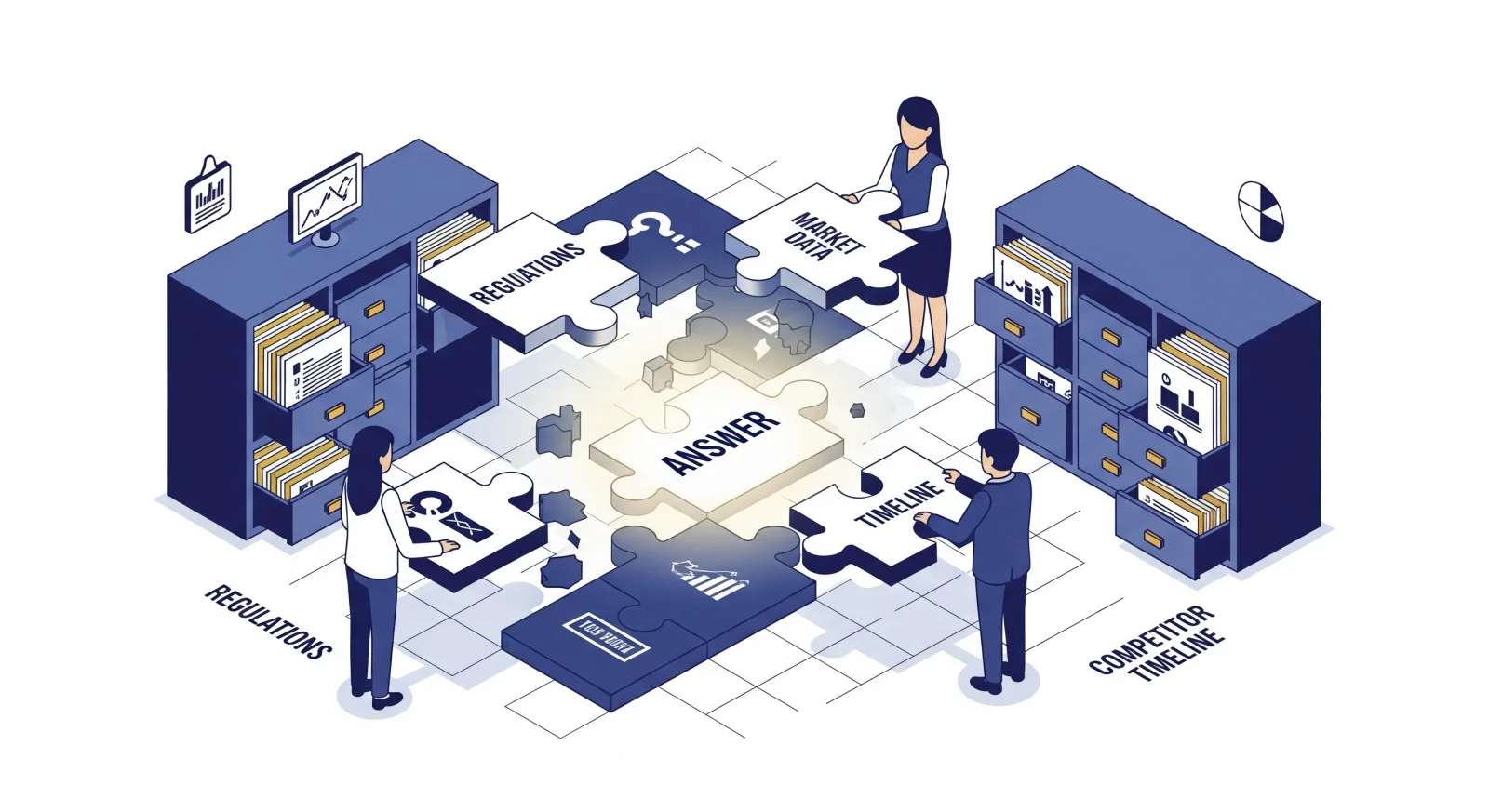
TL;DR for operators Enterprise RAG does not fail because the chatbot forgot to sound confident. It fails because the answer is often scattered across the least glamorous parts of the company: Slack threads, meeting transcripts, pull requests, document revisions, customer reports, employee metadata, and URLs somebody pasted into a chat six weeks ago. ...

July 1, 2025 · 20 min · Zelina
Cover image

Divide and Conquer: How LLMs Learn to Teach

TL;DR for operators The useful finding is not “LLMs can write lessons.” They can, in the same way a junior analyst can write a memo: quickly, plausibly, and with enough confidence to become dangerous if nobody reads it. The paper tests GPT-4o with retrieval-augmented generation (RAG) for creating interactive, scenario-based lessons used to train novice human tutors in online middle-school mathematics.1 The lesson topics are practical rather than ornamental: encouraging student independence, encouraging help-seeking behaviour, and persuading students to turn cameras on during online tutoring. ...

June 24, 2025 · 17 min · Zelina
Cover image

Flashcards for Giants: How RAL Lets Large Models Learn Without Fine-Tuning

TL;DR for operators Training a model is not the only way to make it behave less cluelessly in a specialised environment. The paper behind Retrieval Augmented Learning, or RAL, proposes a cheaper route: let the agent try strategies, validate what happened, and store the resulting lessons as retrievable experience rather than changing the model’s weights.1 ...

May 6, 2025 · 16 min · Zelina
Cover image

From Trees to Truths: Making MCTS Talk with Logic-Backed LLMs

TL;DR for operators If your optimisation system can choose the route, assign the vehicle, or schedule the job but cannot explain why, the obvious temptation is to bolt on a chatbot and call the matter solved. That is also how one gets fluent nonsense with a user interface. The paper behind this article proposes a better pattern: let the LLM translate a user’s question into formal variables and logic, evaluate those variables against the actual Monte Carlo Tree Search tree, retrieve domain knowledge only when the question calls for it, and then generate the final natural-language explanation.1 The LLM is still useful, but it is no longer allowed to improvise the evidence. A small mercy, really. ...

May 4, 2025 · 16 min · Zelina
Cover image

Remember Like an Elephant: Unlocking AI's Hippocampus for Long Conversations

TL;DR for operators Long-context windows are useful. They are also an expensive way to pretend that memory is just a bigger clipboard. The HEMA paper argues for a more operationally realistic design: keep a compressed summary of the conversation always visible, store detailed past exchanges outside the prompt, and retrieve only the details that matter for the current turn.1 That gives the model two different memory behaviours: continuity from Compact Memory and factual recall from Vector Memory. ...

April 25, 2025 · 18 min · Zelina
Cover image

Case Closed: How CBR-LLMs Unlock Smarter Business Automation

TL;DR for operators Most enterprise AI projects are still built around a polite fantasy: give the model a prompt, attach a vector database, sprinkle in Chain-of-Thought, and somehow the system will behave like an experienced employee. That works until the agent meets a problem where the correct answer depends less on general knowledge and more on organisational precedent. ...

April 10, 2025 · 22 min · Zelina