Cover image

Aligning the Unalignable: How CORE Redefines Multistain Image Registration

Slides do not politely stay aligned. A pathology lab may scan an H&E slide for tissue architecture, an IHC slide for protein expression, a PAS slide for renal structure, and a multiplex immunofluorescence slide for cellular markers. The human story is that these images come from the same biopsy. The computational story is less sentimental: the tissue has been sliced, stained, bleached, re-stained, stretched, torn, folded, scanned, and generally treated like a fragile biological object in a world built for rectangles. ...


November 9, 2025 · 14 min · Zelina
Cover image

When ESG Meets LLM: Decoding Corporate Green Talk on Social Media

A corporate sustainability post rarely says, “Please admire our reputational risk management.” It says something friendlier. A tree-planting day. A Pride Month banner. A smiling volunteer team. A solar panel photographed at just the right angle. A line about communities, innovation, opportunity, resilience, or the future. The usual words, freshly laundered. The analytical problem is that these posts are not random fluff. They are corporate communication at scale, and they are increasingly multimodal: text, hashtags, brand imagery, infographics, event photos, symbolic gestures, and occasionally something resembling an operational fact. Reading them one by one is theatre. Ignoring them is also a choice, just not a very intelligent one. ...

November 6, 2025 · 16 min · Zelina
Cover image

Seeing Green: When AI Learns to Detect Corporate Illusions

Advertisement first, evidence later. That is not a moral complaint. It is a business model. A company does not need to lie outright to reshape public perception. It can show a wind turbine, a smiling engineer, a school visit, a research lab, a family cooking dinner, a national flag, or a vague line about “the energy future.” The viewer receives a feeling before receiving a claim. Conveniently, feelings are harder to audit. ...

October 31, 2025 · 19 min · Zelina
Cover image

When Numbers Meet Narratives: How LLMs Reframe Quant Investing

Markets have a talent for embarrassing elegant models. A factor model says a company looks cheap, profitable, revised upward, less volatile, or attractively positioned. A news headline says the company just changed guidance, delayed a merger, won a contract, received a regulatory opinion, or did something else that refuses to fit politely into a spreadsheet. The obvious modern temptation is to feed both into a large language model, add some attention, and let the machine discover alpha. Naturally, because this is finance, the obvious temptation is not quite correct. ...

October 25, 2025 · 17 min · Zelina
Cover image

Fast & Curious: How ‘Speed-First’ LLM Architectures Change the Build vs. Buy Math

TL;DR for operators Efficient LLMs are not just “smaller Transformers with a haircut.” That is the comfortable misconception, and like many comfortable things in enterprise AI, it becomes expensive once real users arrive. The survey reviewed here maps the major architectural routes for making large language models faster, cheaper, and more deployable: linear sequence models, sparse attention, efficient full attention, sparse mixture-of-experts, hybrid architectures, diffusion LLMs, and multimodal extensions.1 Its practical value is not that it declares a single winner. It does something more useful: it tells operators which bottleneck each family is trying to remove. ...

August 16, 2025 · 20 min · Zelina
Cover image

Reasoning with Both Eyes Open: Why Multimodal Chain-of-Thought Still Trips Up LLMs

TL;DR for operators Multimodal chain-of-thought is not automatically “reasoning with images.” In many systems, it is still text reasoning with an image attached for moral support. That is a problem for any business process where the model must inspect a document, chart, screen, medical image, product photo, map, or operational scene and then make several dependent inferences. ...

August 6, 2025 · 14 min · Zelina
Cover image

Seeing Is Deceiving: Diagnosing and Fixing Hallucinations in Multimodal AI

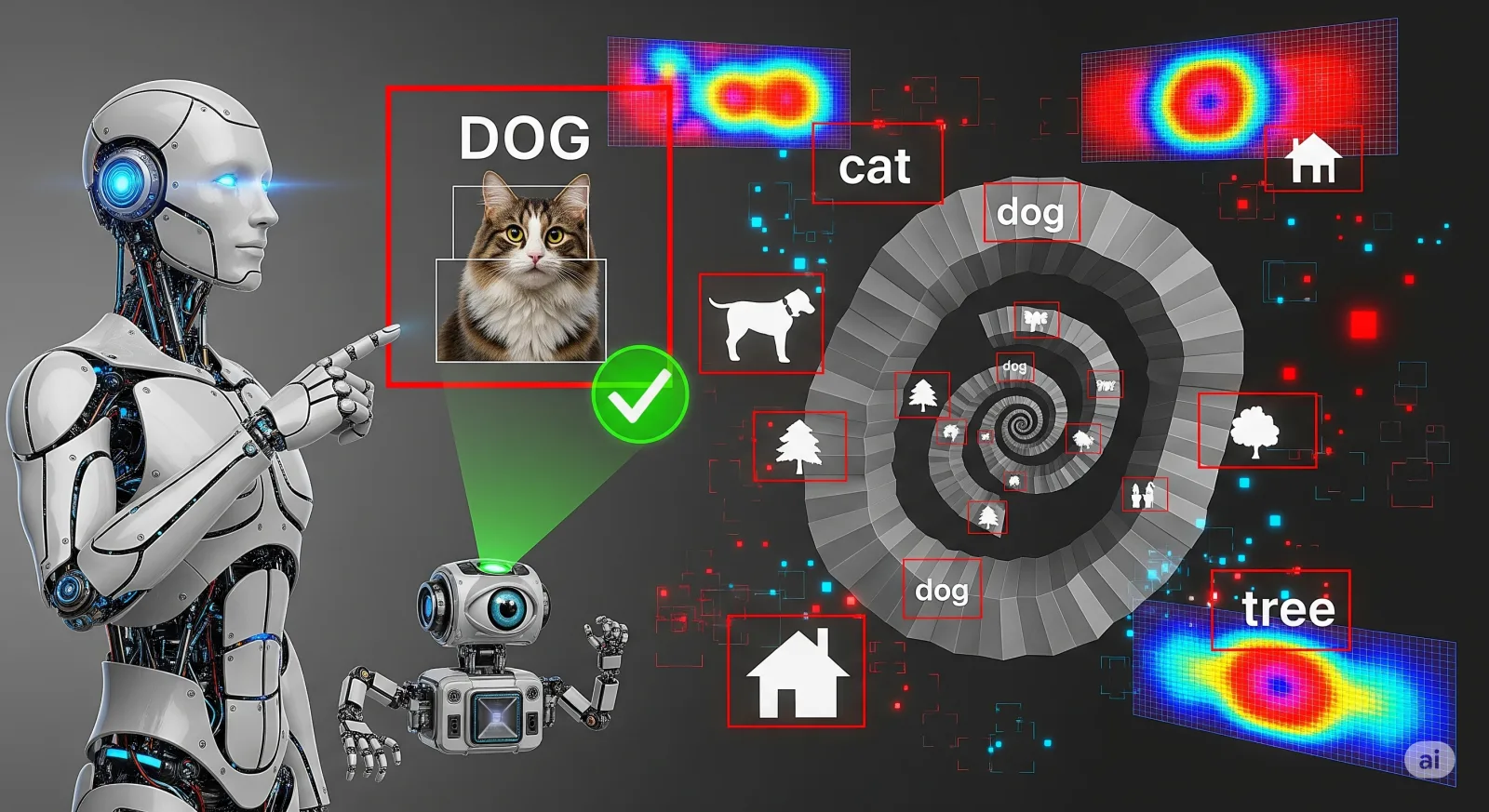
TL;DR for operators A multimodal model can look at an image and still answer from memory, habit, or linguistic guesswork. That is the uncomfortable core of visual hallucination: the output is fluent, relevant-looking, and sometimes even useful, while being only loosely attached to the pixels it claims to describe. The practical lesson is not “never use multimodal AI.” That would be tidy, dramatic, and mostly useless. The lesson is narrower and more valuable: visual hallucinations need to be diagnosed by where grounding fails, not merely counted after the model has embarrassed itself. ...

August 5, 2025 · 14 min · Zelina
Cover image

Beyond Words: Teaching AI to See and Fix Charts with ChartM3

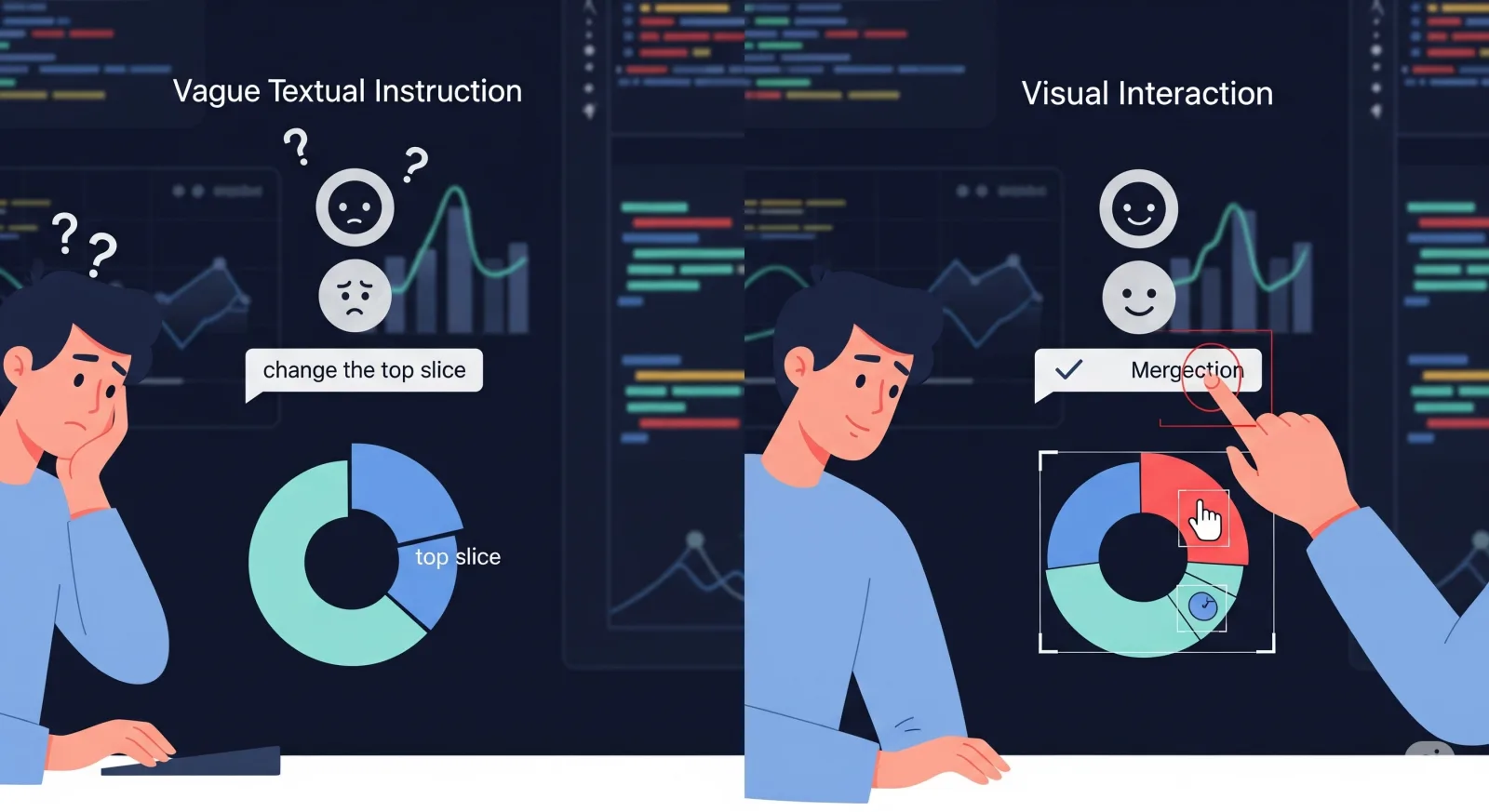
TL;DR for operators ChartM3 is useful because it reframes chart editing as a four-step control problem: identify the visual target, connect that target to code, apply the edit, and avoid damaging everything else. That sounds obvious until one watches a multimodal model obediently edit the wrong pie slice with great confidence. A familiar little tragedy, now with bounding boxes. ...

July 30, 2025 · 18 min · Zelina
Cover image

One Model to Train Them All: How OmniTrain Rethinks Open-Vocabulary Detection

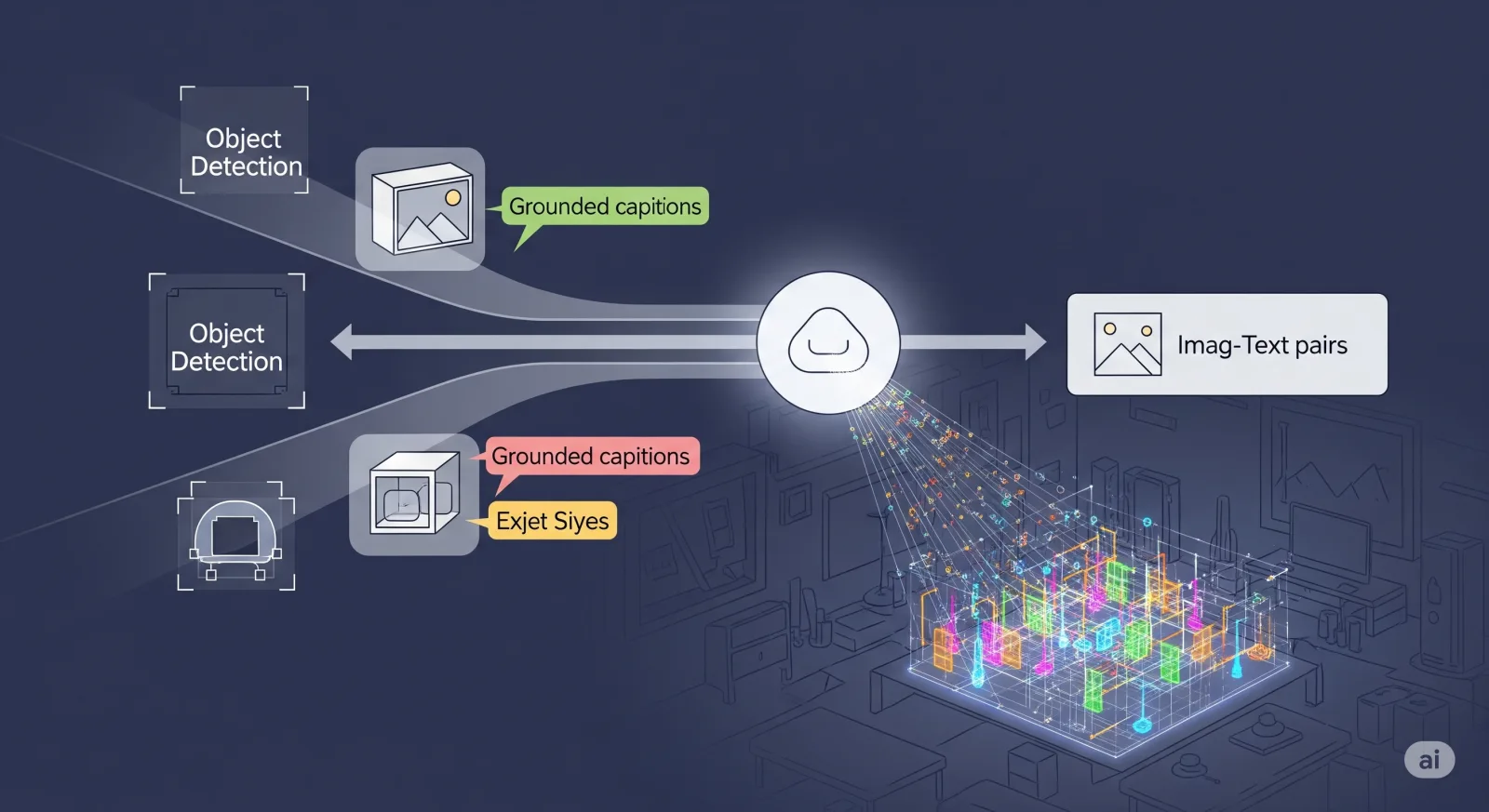
TL;DR for operators OmniTrain’s useful claim is not that open-vocabulary object detection needs a bigger vocabulary, a more theatrical prompt, or yet another detection head with a confident acronym stapled to it. Its claim is simpler and more operational: the training interface is the bottleneck.1 Open-vocabulary detection asks a detector to find categories it may not have seen as boxed labels during training. That promise is attractive for retail shelves, industrial inspection, visual search, robotics, and any business where the object list changes faster than the annotation budget. But many systems still inherit a messy workflow: pre-train a vision-language model, fine-tune a detector, add grounding supervision, reconcile losses, then hope the pieces do not quietly disagree. ...

July 27, 2025 · 13 min · Zelina
Cover image

Trained on Tickers, Tuned for Trust: The New Frontier of FinTech AI

TL;DR for operators Financial foundation models are not one product category. They are three partly overlapping tool families, and confusing them is how firms end up buying a chatbot and expecting a risk engine. The paper reviewed here offers a useful taxonomy of financial foundation models across language, time-series, and visual-language systems, covering architectures, training methods, datasets, applications, and deployment challenges through June 2025.1 Its practical value is not that it declares a winner. It does something more useful: it shows which parts of financial AI are mature enough for workflow adoption, which are still research-shaped, and where the real bottlenecks sit. ...

July 25, 2025 · 21 min · Zelina