Cover image

Structure Matters: Externalities and the Hidden Logic of GNN Decisions

TL;DR for operators GraphEXT is not another attempt to colour a few nodes and declare the model “interpretable”. It makes a sharper claim: in graph neural networks, a node’s importance is partly created by the structure around it. The same node may matter differently when its neighbours, subgraphs, and coalition boundaries change. ...

July 26, 2025 · 15 min · Zelina
Cover image

The Grammar and the Glow: Making Sense of Time-Series AI

TL;DR for operators Time-series AI is getting better at recognising patterns across domains: energy demand, ECG signals, traffic sensors, weather readings, equipment logs, and other data streams that behave nothing like nice, polite spreadsheets. Two recent arXiv papers point to a useful combined thesis. The first argues that time-series foundation models work because they learn a kind of “language of time”: recurring temporal patches become motif tokens; motif frequencies follow long-tail patterns; motif sequences show grammar-like constraints.1 The second tackles the adoption problem: even if a model is accurate, people still need to know why it raised a diagnosis, forecast, alarm, or recommendation. It proposes a hybrid ResNet–Transformer system that fuses local Grad-CAM heatmaps with global attention, then turns salient regions into natural-language explanations.2 ...
July 2, 2025 · 14 min · Zelina
Cover image

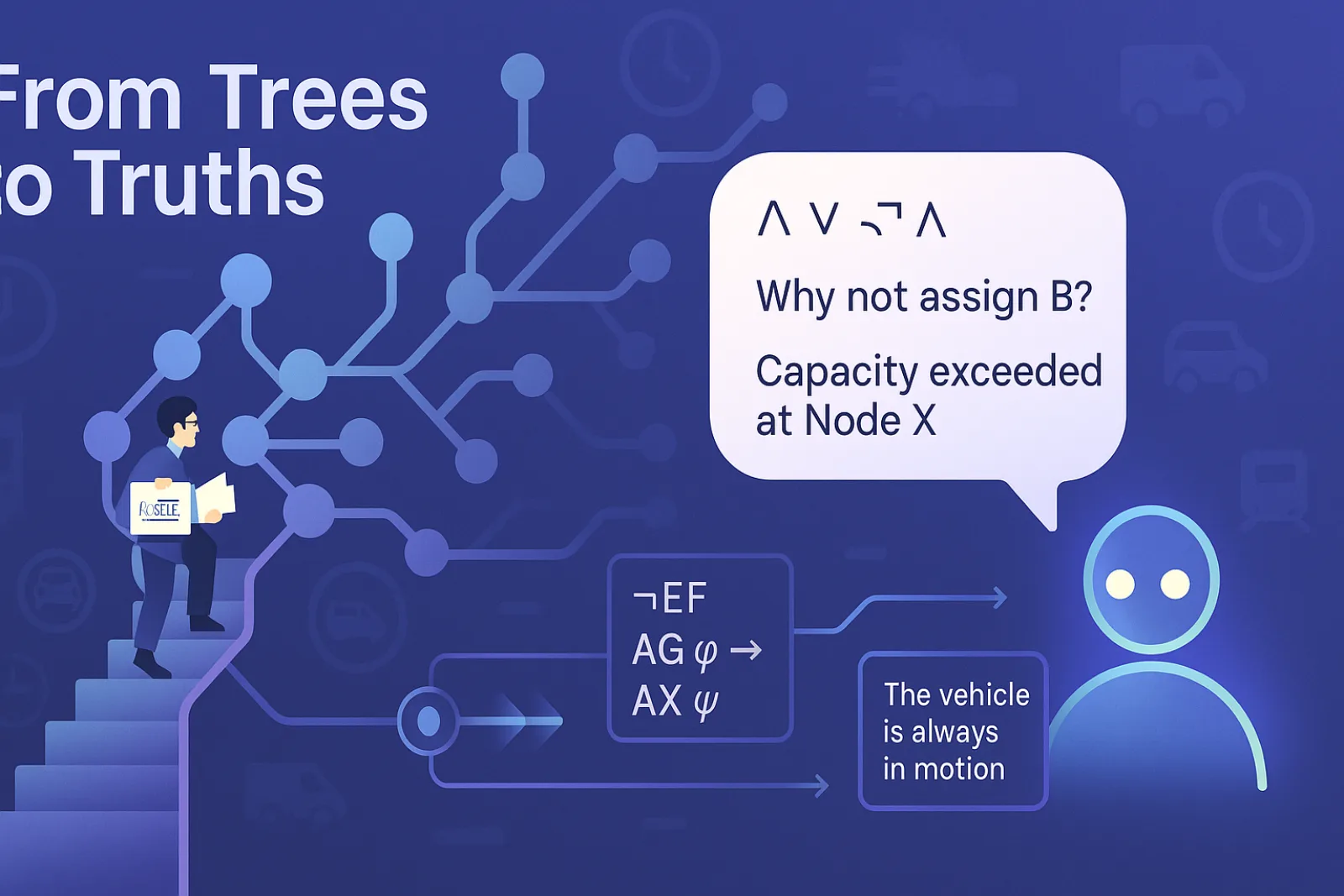
From Trees to Truths: Making MCTS Talk with Logic-Backed LLMs

TL;DR for operators If your optimisation system can choose the route, assign the vehicle, or schedule the job but cannot explain why, the obvious temptation is to bolt on a chatbot and call the matter solved. That is also how one gets fluent nonsense with a user interface. The paper behind this article proposes a better pattern: let the LLM translate a user’s question into formal variables and logic, evaluate those variables against the actual Monte Carlo Tree Search tree, retrieve domain knowledge only when the question calls for it, and then generate the final natural-language explanation.1 The LLM is still useful, but it is no longer allowed to improvise the evidence. A small mercy, really. ...

May 4, 2025 · 16 min · Zelina