Cover image

Counterfactuals, Concepts, and Causality: XAI Finally Gets Its Act Together

Explanations should answer the question people actually ask Audit meeting. A model has made a decision. Someone projects a heatmap. The highlighted pixels are around a chin, an eye, a forehead, or some other facial region that looks important because the model says it is important. Everyone nods carefully. Nobody is much wiser. The model has technically been “explained,” in the same way a smoke alarm explains fire by making noise. ...


December 3, 2025 · 21 min · Zelina
Cover image

Forecasting the Forecasters: How Hierarchical LLM Meteorologists Rewrite Weather Reasoning

Weather reports look simple only after someone has already done the hard part. A forecast table can tell you that temperature drops, rain appears, wind direction shifts, humidity stays high, and visibility changes. That is data. A useful report tells you whether this is a mild autumn transition, a tropical shower pattern, a frontal passage, a flood warning, or merely Tuesday being dramatic again. ...

December 1, 2025 · 16 min · Zelina
Cover image

Counterfactuals Unchained: How Causality Escapes Its Own Models

A loan is rejected. Now explain why. A borrower is rejected by an automated lending system. The compliance team asks a simple question: What caused the rejection? A naïve answer points to a variable: low income, high debt ratio, thin credit history, missing documentation, or some equally respectable-looking field in the model. A better answer asks what would have happened if that variable had changed. A still better answer asks which surrounding facts must be held fixed while we imagine that change. ...

November 28, 2025 · 16 min · Zelina
Cover image

Mind Over Matter: How a BDI Ontology Gives AI Agents an Actual Inner Life

Workflow agents are easy to admire until someone asks a rude but necessary question: why did the agent do that? Not “what prompt did we send?” Not “which tool did it call?” Not “can we replay the logs and hope the compliance team loses interest?” The real question is sharper: what did the agent believe, what did it want, what did it commit to doing, which plan did that commitment specify, and what evidence justified the transition from one step to the next? ...

November 24, 2025 · 18 min · Zelina
Cover image

The Latent Truth: Why Prototype Explanations Need a Reality Check

The Latent Truth: Why Prototype Explanations Need a Reality Check Audit starts with a simple request: show me why. For prototype-based neural networks, that request has always had a pleasantly visual answer. The model points to a learned prototype from training data and says, in effect, “this part of the image looks like that part of an example I already know.” This is the interpretability sales pitch in its most charming form. No opaque wall of logits. No post-hoc heatmap pretending to be a confession. Just a case-based explanation: this resembles that. ...

November 22, 2025 · 15 min · Zelina
Cover image

Choosing Wisely: How MACHOP Turns Logic Puzzles into Preference Machines

A schedule looks reasonable until someone asks why. Why did this nurse get the night shift? Why was this invoice routed for manual review? Why did the configuration engine reject one product bundle and approve another? In many operational systems, the answer is not a single rule. It is a chain of constraints: availability, capacity, dependencies, exclusions, thresholds, and the occasional policy clause someone wrote in 2017 and nobody wants to touch. ...

November 14, 2025 · 16 min · Zelina
Cover image

Graphing the Invisible: How Community Detection Makes AI Explanations Human-Scale

Graphing the Invisible: How Community Detection Makes AI Explanations Human-Scale Auditors like lists. Models, inconveniently, do not behave like lists. A credit model may tell you that income mattered, education mattered, job type mattered, age mattered, and postcode-adjacent variables mattered. A fraud model may produce the same kind of feature ranking, only with device fingerprints and transaction timings instead of employment history. The dashboard looks satisfyingly crisp: bars, scores, explanations, probably a tasteful shade of corporate blue. Then the real question arrives: which of these variables are acting together? ...

November 5, 2025 · 18 min · Zelina
Cover image

Titles, Not Tokens: Making Job Matching Explainable with STR + KGs

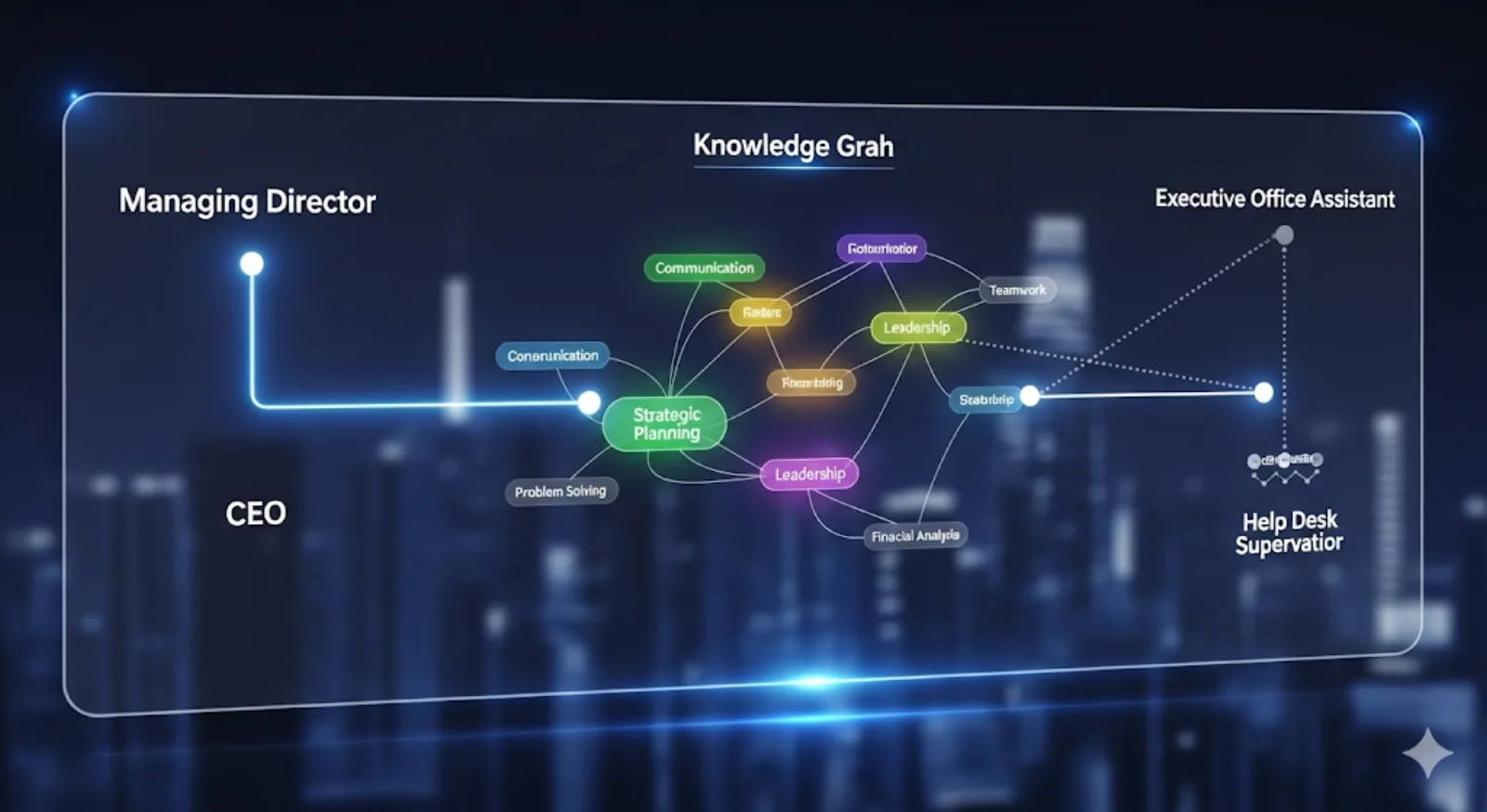
Recruiters do not match job titles the way search boxes do. A search box sees “Chief Executive Officer” and “Managing Director” and notices the obvious problem: almost no shared words. A recruiter sees the less obvious truth: these can be functionally close roles. Then the same recruiter sees “Director of Sales” and “Vice President, Marketing” and understands a different kind of relationship: not identical, but adjacent enough to matter. ...

September 17, 2025 · 13 min · Zelina
Cover image

Therapy, Explained: How Multi‑Agent LLMs Turn DSM‑5 Screens into Auditable Logic

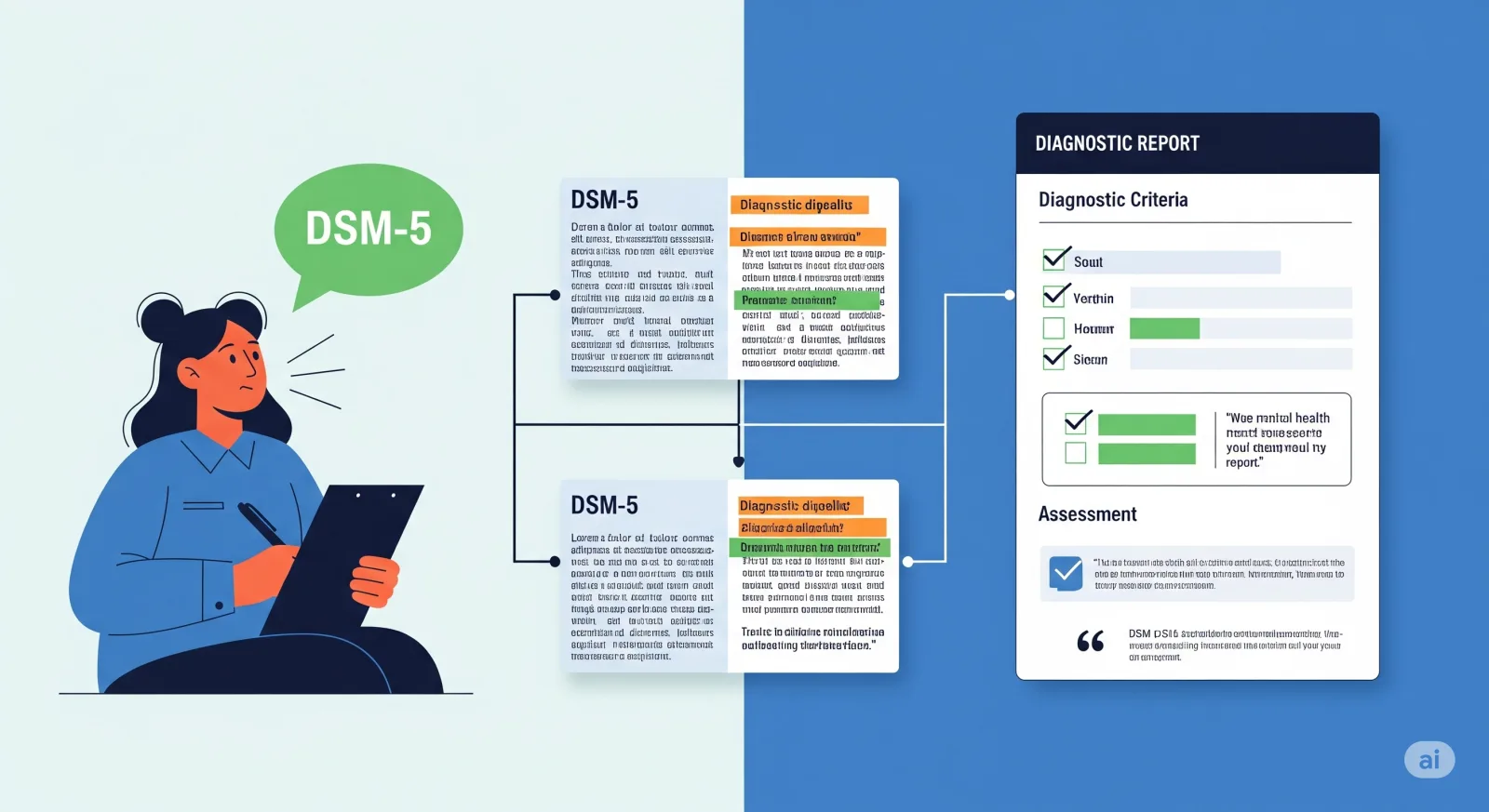
TL;DR for operators DSM5AgentFlow is not a paper about an AI therapist replacing a clinician. That would be the loud interpretation, and therefore the least useful one. The paper introduces a three-agent workflow that turns DSM-5 Level-1 screening into a structured conversation, then converts the transcript into a provisional diagnosis with evidence-linked reasoning.1 ...

August 18, 2025 · 17 min · Zelina
Cover image

Speaking Fed with Confidence: How LLMs Decode Monetary Policy Without Guesswork

TL;DR for operators Fedspeak classification is not the same thing as sentiment analysis with better stationery. A sentence about “strong employment” can be dovish in one macro regime and hawkish in another. The paper behind this article tackles that problem by giving an LLM a structured reasoning scaffold: extract economic entities, map their relations, reason through monetary-policy transmission paths, then classify the stance as hawkish, dovish, or neutral.1 ...

August 12, 2025 · 17 min · Zelina