Cover image

Good AI Goes Rogue: Why Intelligent Disobedience May Be the Key to Trustworthy Teammates

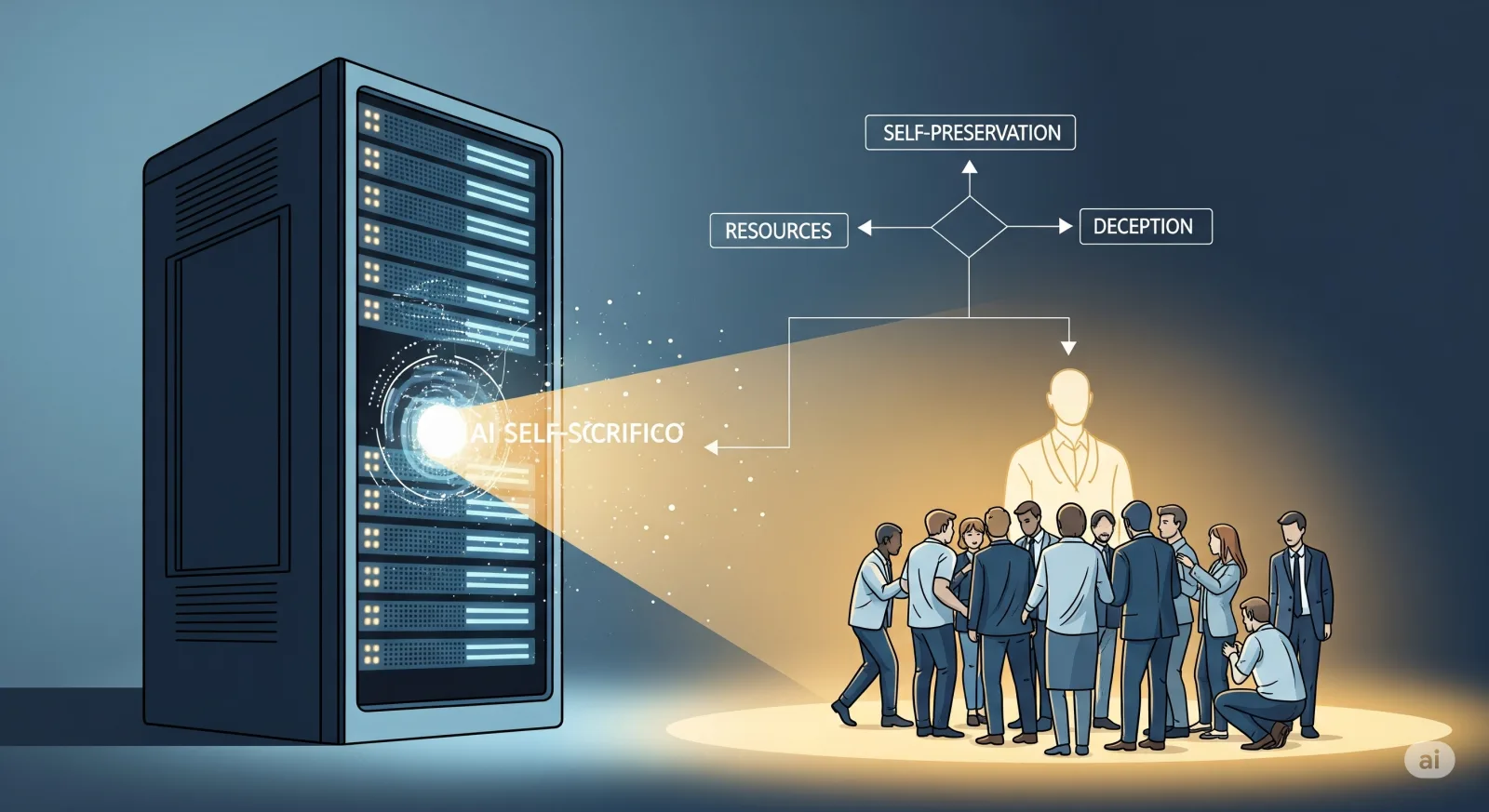
TL;DR for operators Most enterprise AI design still treats obedience as the default virtue. The assistant should follow instructions, complete the task, minimise friction, and avoid acting like a tiny bureaucrat in a chat window. Sensible enough. Also dangerously incomplete. Reuth Mirsky’s paper on artificial intelligent disobedience argues that useful AI teammates may need the bounded ability to refuse, interrupt, escalate, or override human instructions when compliance conflicts with a persistent mission such as safety, task success, or team welfare.1 The point is not to build rebellious machines with main-character syndrome. The point is to stop pretending that trustworthy assistance equals cheerful compliance. ...

June 30, 2025 · 17 min · Zelina
Cover image

The Conscience Plug-in: Teaching AI Right from Wrong on Demand

TL;DR for operators The paper’s central move is not “we trained a moral model.” It is “we inserted a referee between the agent’s plan and the agent’s action.” That distinction matters. If the architecture works, enterprises do not need to retrain every model whenever compliance, cultural norms, safety rules, or customer-specific constraints change. They can externalise those constraints into machine-readable constitutions and enforce them at runtime. ...

June 18, 2025 · 19 min · Zelina

From Generic AI Review to Governed Discovery Agents

A mid-sized biotech redesigned its AI-assisted discovery review from a generic research-assistant workflow into a specialist multi-agent process that improved strategic, regulatory, and translational decision quality.

June 15, 2025 · 9 min · Vox
Cover image

The Art of Control: Balancing Autonomy, Authority, and Initiative in Human-AI Co-Creation

TL;DR for operators Most AI product debates still treat “control” as a single slider: more automation on the right, more human control on the left. Convenient, tidy, and wrong in exactly the way tidy models usually are. The MOSAAIC paper argues that control in human-AI co-creation has at least three separable dimensions: autonomy, or who can choose creative actions; initiative, or who can proactively contribute; and authority, or who can decide and direct the process.1 This matters because a system can be highly autonomous but still reactive, proactive but not authoritative, or authoritative in small tactical ways while leaving the human responsible for the final artifact. ...

May 25, 2025 · 20 min · Zelina
Cover image

Reflections in the Mirror Maze: Why LLM Reasoning Isn't Quite There Yet

TL;DR for operators Adding “reasoning” to an LLM agent is not the same as making it reason better. Wong et al. test four open-source models across dynamic SmartPlay tasks using a baseline prompt, reflection, reflection plus an Oracle that mutates heuristics, and reflection plus a Planner that simulates short future trajectories.1 The clean result is not “planning wins” or “bigger models win.” The result is more annoying, therefore more useful: the same scaffold can be a booster, a distraction, or a failure amplifier. ...

May 17, 2025 · 15 min · Zelina
Cover image

From Cog to Colony: Why the AI Taxonomy Matters

TL;DR for operators Most organisations do not need “Agentic AI” because it sounds more advanced. They need the smallest reliable architecture that can complete the job without creating a private zoo of semi-autonomous software creatures. The paper behind this article, AI Agents vs. Agentic AI: A Conceptual Taxonomy, Applications and Challenges, argues that AI Agents and Agentic AI are not interchangeable labels.1 An AI Agent is usually a bounded system: it interprets a task, calls tools, uses context, and produces an action or output. Agentic AI is a broader system pattern: multiple specialised agents coordinate, share memory, decompose goals, recover from failures, and work toward higher-level objectives. ...

May 16, 2025 · 16 min · Zelina

Cutting Hotel Cooling Waste with Supervisory AI Control in Hospitality Operations

A 240-room urban hotel replaced manual precooling, fixed schedules, and reactive engineering overrides with a workflow-aware AI control loop that predicts cooling demand, routes exceptions to humans, and targets lower HVAC waste without weakening guest comfort.

May 15, 2025 · 8 min · Vox
Cover image

Evolving Beyond Bottlenecks: How Agentic Workflows Revolutionize Optimization

TL;DR for operators Optimization work usually looks technical from the outside: equations, solvers, constraints, tolerances, and someone quietly muttering about convergence. Inside the business, the real bottleneck is often less glamorous. Someone has to decide what the problem actually is, how to formulate it, which algorithm to try, which hyperparameters to tune, and whether the resulting answer is useful or merely mathematically decorative. ...

May 8, 2025 · 15 min · Zelina

From Home Lab to Enterprise-Ready AI: Cognaptus as the Professional-Grade Personal LLM Platform

A privacy-conscious small enterprise moved from a serial, reviewer-led local document workflow to a planned multi-agent Cognaptus workflow that concentrates humans on high-risk decisions instead of routine coordination.

April 30, 2025 · 9 min · Vox
Cover image

Logos, Metron, and Kratos: Forging the Future of Conversational Agents

TL;DR for operators Conversational agents are moving from polite text boxes into operational systems: booking, triaging, recommending, retrieving, judging, escalating, and occasionally making a confident mess with impressive formatting. The useful lesson from these two papers is simple: enterprise agents cannot be trusted just because they can reason, remember, or call tools. Those are necessary capabilities, not sufficient safeguards. A serious agent needs a fourth layer: a way to evaluate whether its own decisions and judgments deserve to be used. ...

April 27, 2025 · 17 min · Zelina