Cover image

Unsolvable by Design: Turning AI Plans Into Security Guarantees

Failure should be boring Approval workflows are supposed to be boring. A client submits documents, a system checks the required conditions, and an approval either happens or does not happen. Boring is good. Boring means the process does not accidentally approve a case while also escalating it as problematic. The trouble begins when a workflow is written as a best-effort model of reality. Someone encodes the actions. Someone else adds an exception. A third person adds a shortcut because the quarterly dashboard prefers speed over philosophy. Eventually, a sequence exists that should not exist. It does not look like a bug when inspected locally. Each action seems defensible. The path as a whole is the problem. ...

April 9, 2026 · 16 min · Zelina
Cover image

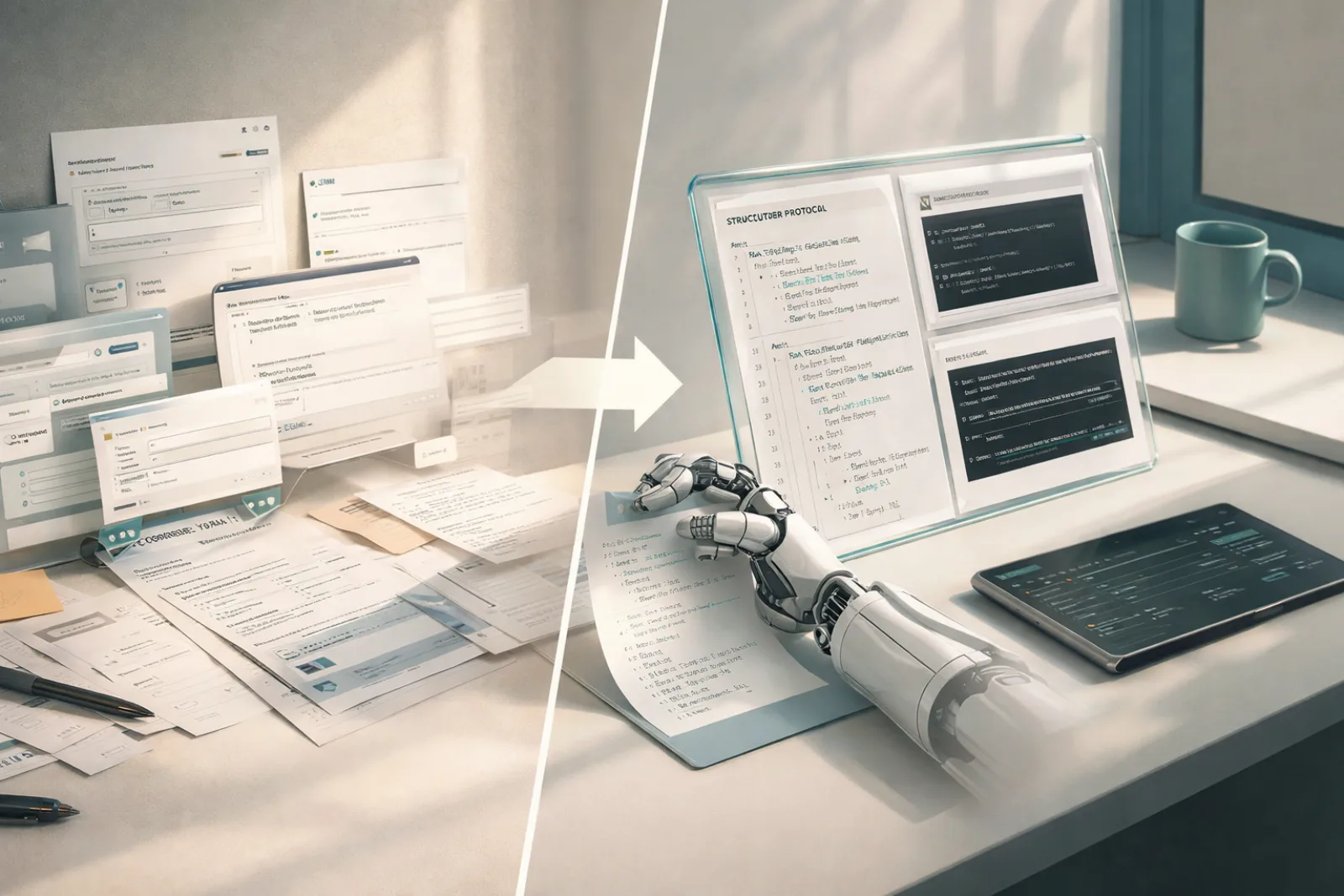
Protocol Over Prompts: Why ANX Rewrites the Rules of AI Agent Interaction

Forms are boring until an AI agent has to fill one. Then the boring form becomes a surprisingly expensive machine. The agent reads the page, interprets the fields, finds the dropdowns, waits for the browser, loads dynamic options, decides what to click, serializes actions, and tries not to leak whatever the user typed into the wrong place. This is not intelligence in the glamorous sense. It is office work wearing a robotic costume. ...

April 7, 2026 · 18 min · Zelina

From Manual Playlists to Governed Programming Intelligence

A local radio station moves from producer-memory-driven coordination to a reviewed AI-agent workflow that structures audience signals, sponsor obligations, host scripts, and digital promotion into one daily operating loop.

March 30, 2026 · 10 min · Vox
Cover image

From YouTube to Execution: How GUIDE Teaches AI Agents to Actually Use Software

Tutorials are where software knowledge goes to become useful, messy, and mildly unbearable. A human trying to learn GIMP, LibreOffice Calc, Thunderbird, or VS Code can survive this mess. We search YouTube, skim a video, ignore the creator’s life story, watch the cursor, and remember that the menu item we need is not where our intuition said it would be. A GUI agent, even a strong vision-language model, has a harder time. It may see the screen. It may understand the instruction. It may even know the general category of action. Then it clicks the wrong menu because the software has its own local customs. Software, regrettably, has culture. ...

March 30, 2026 · 19 min · Zelina
Cover image

Harnessing the Harness: When AI Stops Being a Model Problem

Glue is not glamorous. In most AI product discussions, the model gets the spotlight. The harness—the scripts, prompts, validators, retry rules, state files, tool adapters, and stopping criteria around the model—gets treated as plumbing. Necessary, slightly annoying, and best ignored until it leaks. That habit is becoming expensive. The paper Natural-Language Agent Harnesses argues that the surrounding execution system is no longer a secondary implementation detail. It is often the actual unit of agent performance, reliability, and portability.1 The paper’s useful claim is not that “natural language replaces code.” That would be a lovely fantasy for people who have not debugged parsers, sandboxes, or file permissions lately. The sharper claim is that part of the harness can become an editable natural-language policy object, while exact execution remains in code. ...

March 28, 2026 · 16 min · Zelina
Cover image

Thinking in Libraries: Why Humans (and AI) Solve Hard Problems by Rewriting the Search Space

Templates are usually sold as a convenience feature. Save time. Avoid repetition. Make the next task faster. That is not wrong. It is just a little shallow, which is how many productivity slogans prefer to travel. A better way to think about a template, helper function, saved workflow, reusable prompt, or internal operating procedure is this: it changes the search space. It does not merely shorten the final sequence of actions. It changes what counts as an available move. ...

March 25, 2026 · 16 min · Zelina
Cover image

Aligned, or Just Agreeable? The Quiet Failure Mode of Modern LLMs

A support agent can sound calm, ask polite questions, invoke a few tools, and finish with a reassuring summary. The customer leaves. The dashboard shows completion. Everyone feels civilized. Then someone opens the actual transaction log. The reservation was not cancelled. The reminder was searched before the timestamp was retrieved. The contact update succeeded for the wrong person. The model was not exactly malicious, or even spectacularly wrong. It was simply agreeable in the familiar corporate way: fluent enough to pass the meeting, not reliable enough to run the process. ...

March 17, 2026 · 18 min · Zelina
Cover image

Middleware Matters: Why Your AI Agent Needs a Lifecycle (Not Just a Brain)

Agent demos are easy to like because nothing important is attached to them. A demo agent can call the wrong tool, misread a JSON response, or politely announce that an API failure is actually a useful answer. Everyone smiles, someone says “interesting,” and the team adds another item to the backlog. Very innovative. Very safe. Very far from production. ...

March 17, 2026 · 19 min · Zelina

From Utility Bills to Building Intelligence: AI Energy Consumption Agents for Office Buildings

A commercial building operator moves from monthly bill reviews and fragmented maintenance coordination to a governed AI-agent workflow that monitors energy patterns, protects tenant comfort, flags anomalies, and prepares owner-ready efficiency reports.

March 15, 2026 · 7 min · Vox
Cover image

Talk Freely, Execute Strictly: Why Agentic AI Needs a Schema Gate

A chatbot can say yes to almost anything. That is part of the charm. It is also part of the problem. Ask an agent to “clean this dataset, train a model, compare alternatives, and generate a report,” and the conversation feels wonderfully frictionless. The system can interpret intent, improvise steps, write code, call tools, and explain itself in a tone that suggests adult supervision is somewhere nearby. ...

March 9, 2026 · 15 min · Zelina