Cover image

Stop at 30k: How Hermes 4 Turns Long Chains of Thought into Shorter Time‑to‑Value

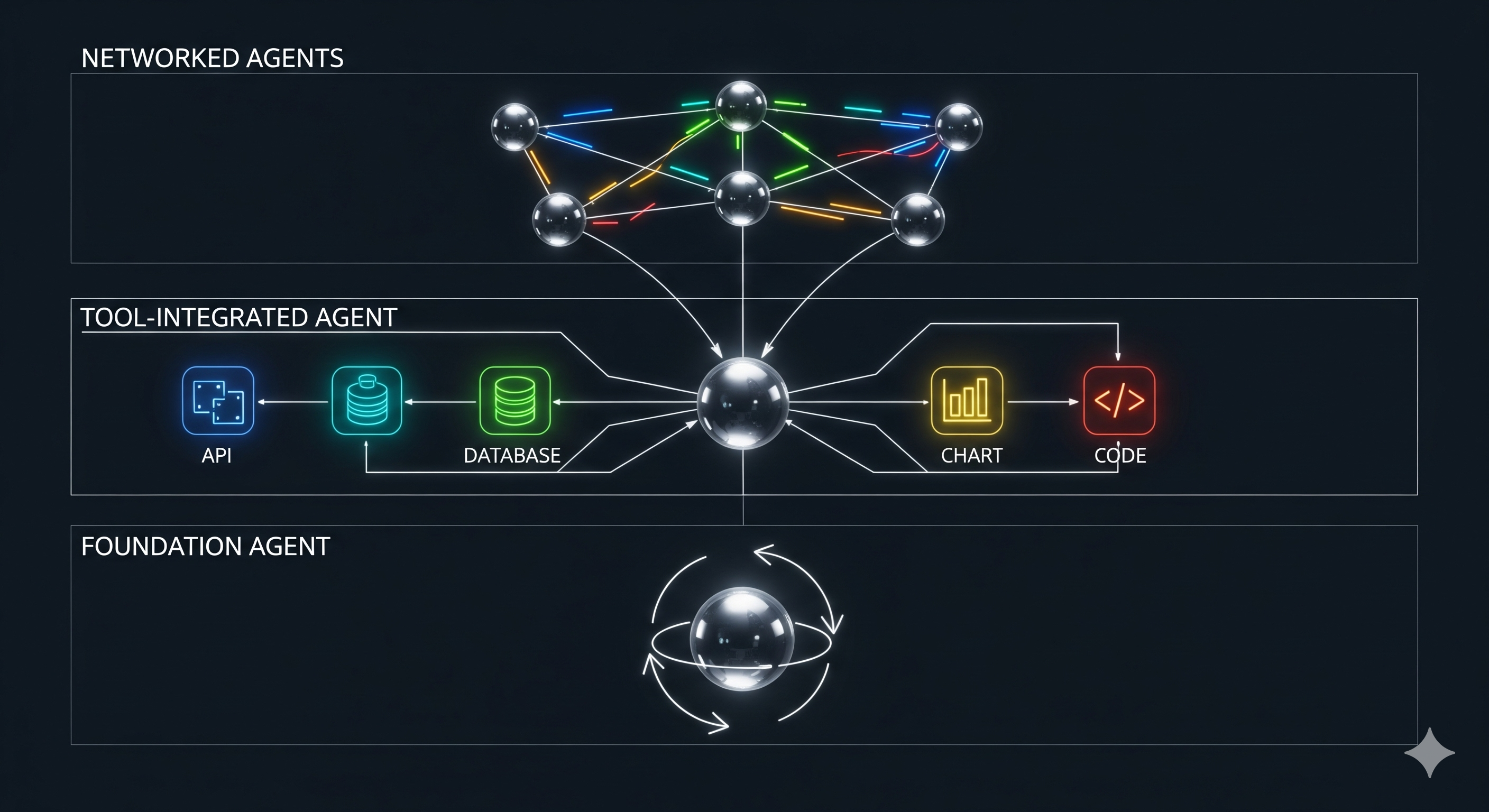
TL;DR Hermes 4 is an open‑weight “hybrid reasoner” that marries huge synthetic reasoning corpora with carefully engineered post‑training and evaluation. The headline for operators isn’t just benchmark wins—it’s control: control of format, schema, and especially when the model stops thinking. That last bit matters for latency, cost, and reliability. Why this matters for business readers If you’re piloting agentic or “think‑step” LLMs, two pains dominate: Unbounded reasoning length → blow‑ups in latency and context costs. Messy outputs → brittle downstream integrations. Hermes 4 addresses both with: (a) rejection‑sampled, verifier‑backed reasoning traces to raise answer quality, and (b) explicit output‑format and schema adherence training plus length‑control fine‑tuning to bound variance. That combo is exactly what production teams need. ...

August 26, 2025 · 4 min · Zelina
Cover image

MoA vs. Moat: Agentic LLMs for Drug Competitor Mapping Cut Diligence Time 20×

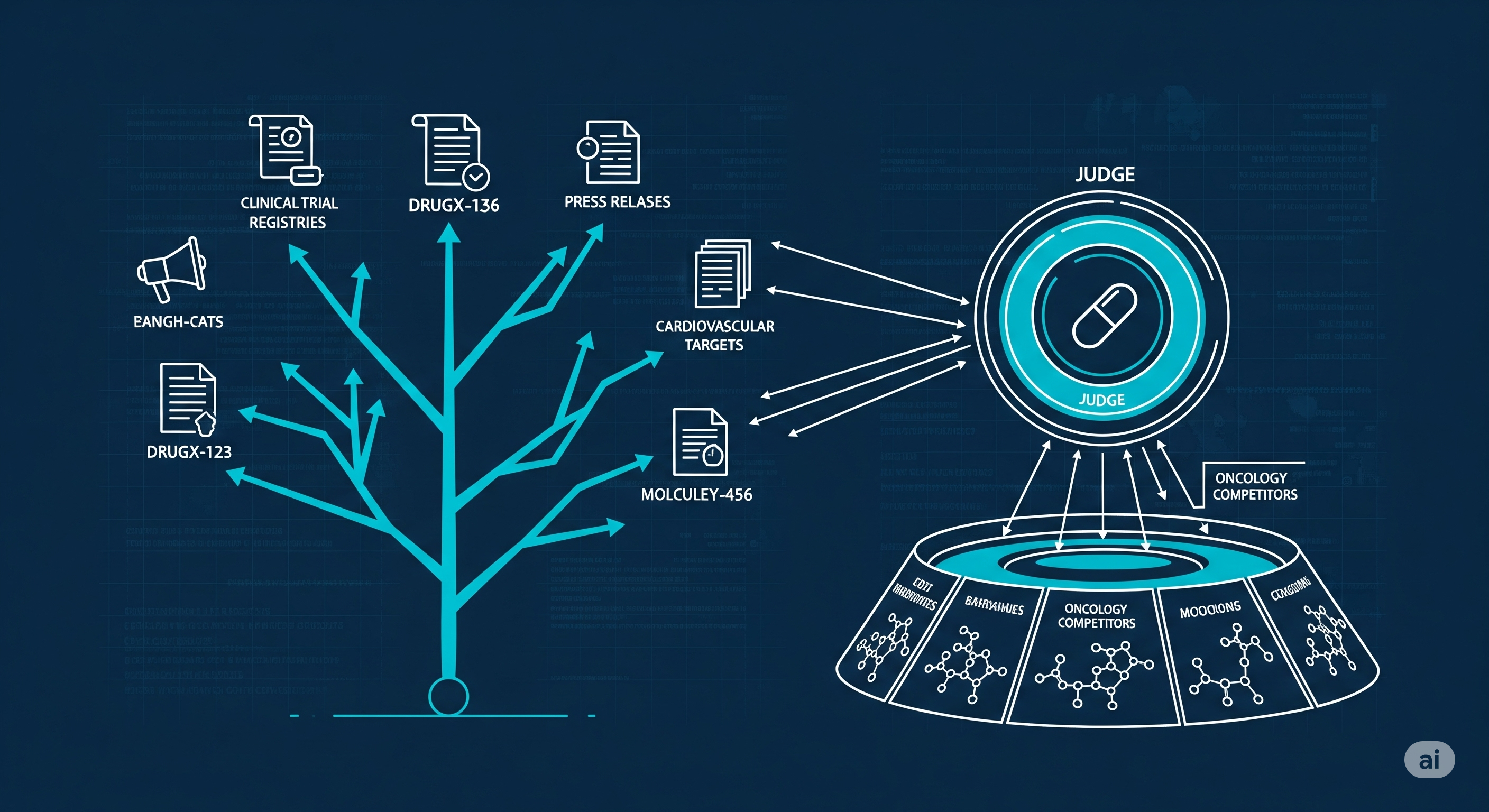
The punchline Competitive analysis for drug assets isn’t a tidy table—it’s a scavenger hunt across press releases, registries, investor decks, and alias-riddled drug names. A new paper shows that scaffolded, web-native LLM agents can reliably enumerate true competitors for a given indication, then filter hallucinations with an LLM-as-judge, beating popular “deep research” tools and cutting analyst turnaround from ~2.5 days to ~3 hours. This matters now: the EU’s Joint Clinical Assessments (JCA) regime makes comparator choice visible and consequential; missing a relevant competitor can ripple into pricing, market access, and trial design. In short: MoA (mechanism of action) meets moat (defensible advantage)—and the moat is built from recall. ...

August 25, 2025 · 5 min · Zelina
Cover image

ReAct Without the Chaos: AgentScope 1.0 Turns Tools into Strategy

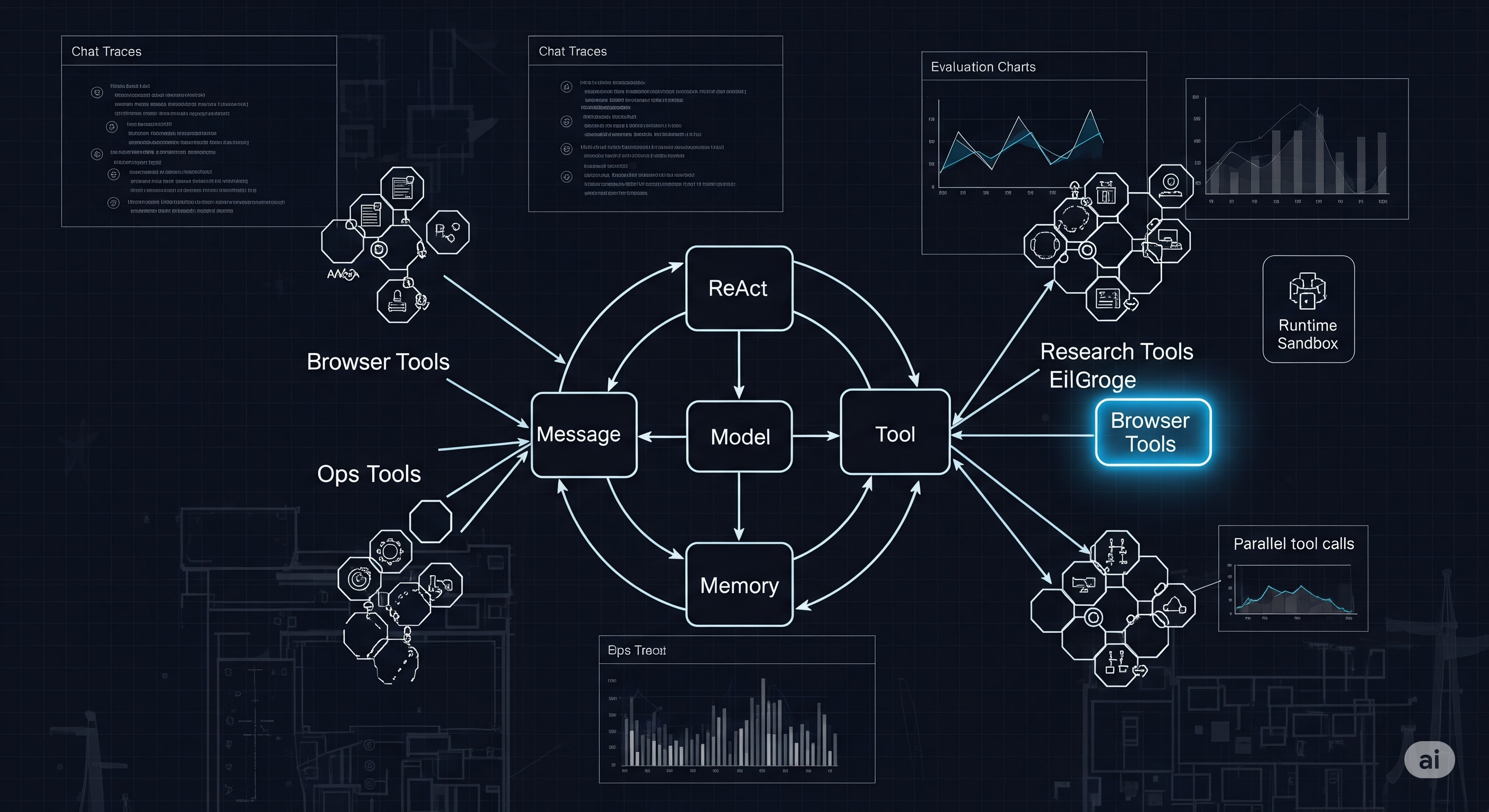
Thesis: AgentScope 1.0 is less a toolkit and more a discipline for agentic software. By pinning everything to ReAct loops, unifying “message–model–memory–tool,” and adding group-wise tool provisioning, it addresses the real failure mode of agents in production: tool sprawl without control. The evaluation/Studio/runtime trio then turns prototypes into shippable services. What’s actually new (and why it matters) 1) A crisp core: Message → Model → Memory → Tool Most frameworks blur these into ad‑hoc objects; AgentScope forces a clean, composable boundary: ...

August 25, 2025 · 4 min · Zelina
Cover image

Charting a Better Bedside: When Agentic RL Teaches RAG to Diagnose

Why this paper matters: Retrieval‑augmented generation (RAG) has been the default answer to “how do we make LLMs factual?” But clinical work is not a single hop to a single document; it’s a workflow—observe, hypothesize, retrieve, cross‑check, and only then decide. Deep‑DxSearch reframes RAG as a sequential policy, trained end‑to‑end with reinforcement learning (RL) so the model learns when to reason internally and when to consult guidelines, match similar patients, or search broader knowledge—before committing to a diagnosis. That design change is the story. ...

August 24, 2025 · 5 min · Zelina
Cover image

Atom by Atom, Better Research: How Fine-Grained Rewards Make Agentic Search Smarter

If you’ve ever watched a web agent swing from elegant reasoning to face‑plants on basic facts, you’ve met the limits of outcome‑only training. Atom‑Searcher proposes a simple but radical fix: stop treating the whole reasoning trace as one monolith. Instead, break it down into Atomic Thoughts—the minimal, functional units of reasoning—and supervise them directly with a Reasoning Reward Model (RRM). Then blend those process‑level rewards with the final answer score using a decaying curriculum. The result? More stable training, deeper search behavior, and better generalization across in‑ and out‑of‑domain QA. ...

August 19, 2025 · 5 min · Zelina
Cover image

Crystal Ball, Meet Cron Job: What FutureX Reveals About ‘Live’ Forecasting Agents

The one-sentence take A new live benchmark, FutureX, swaps lab-style trivia for rolling, real-world future events, forcing agentic LLMs to search, reason, and hedge under uncertainty that actually moves—and the results expose where today’s “agents” are still brittle. Why FutureX matters now Enterprise teams are deploying agents to answer questions whose truth changes by the hour—markets, elections, sports, product launches. Static leaderboards don’t measure that. FutureX runs as a cron job on reality: it collects new events every day, has agents make predictions, and grades them after events resolve. That turns evaluation from a screenshot into a time series and makes overfitting to benchmark quirks a lot harder. ...

August 19, 2025 · 4 min · Zelina
Cover image

Knows the Facts, Misses the Plot: LLMs’ Knowledge–Reasoning Split in Clinical NLI

The gist A new clinical natural language inference (NLI) benchmark isolates what models know from how they reason—and the results are stark. State‑of‑the‑art LLMs ace targeted fact checks (≈92% accuracy) but crater on the actual reasoning tasks (≈25% accuracy). The collapse is most extreme in compositional grounding (≈4% accuracy), where a claim depends on multiple interacting clinical constraints (e.g., drug × dose × diagnosis × schedule). Scaling yielded fluent prose, not reliable inference. ...

August 18, 2025 · 4 min · Zelina
Cover image

Meta-Game Theory: What a Pokémon League Taught Us About LLM Strategy

When language models battle, their strategies talk back. In a controlled Pokémon tournament, eight LLMs drafted teams, chose moves, and logged natural‑language rationales every turn. Beyond win–loss records, those explanations exposed how models reason about uncertainty, risk, and resource management—exactly the traits we want in enterprise decision agents. Why Pokémon is a serious benchmark (yes, really) Pokémon delivers the trifecta we rarely get in classic AI games: Structured complexity: 18 interacting types, clear multipliers, and crisp rules. Uncertainty that matters: imperfect information, status effects, and accuracy trade‑offs. Resource management: limited switches, finite HP, role specialization. Crucially, the action space is compact enough for language-first agents to reason step‑by‑step without search trees—so we can see the strategy, not just the score. ...

August 9, 2025 · 4 min · Zelina
Cover image

Reasoning with Both Eyes Open: Why Multimodal Chain-of-Thought Still Trips Up LLMs

If today’s AI models can ace bar exams, explain astrophysics, and generate functional code from a napkin sketch, why do they still fail at seemingly simple questions that require looking and thinking? A new benchmark called MCORE (Multimodal Chain-of-Reasoning Evaluation) answers that question with a resounding: because reasoning across modalities is hard—and we’re not as far along as we thought. Beyond Pattern Matching: What MCORE Tests The majority of multimodal evaluations today rely on either: ...

August 6, 2025 · 3 min · Zelina
Cover image

Beyond the Pareto Frontier: Pricing LLM Mistakes in the Real World

For all the hype about model accuracy, inference cost, and latency, most organizations are still squinting at scatter plots to decide which large language model (LLM) to use. But what if we could cut through the tradeoff fog with a single number that tells you exactly which model is worth deploying—for your use case, under your constraints? That’s the bold proposal in a recent paper by Zellinger and Thomson from Caltech: treat LLM selection as an economic decision. Rather than searching for models on the accuracy-cost “Pareto frontier,” they suggest an approach grounded in price-tagging errors, delays, and abstentions in dollar terms. Think of it as a model selection framework that answers: How much is a mistake worth to you? ...

July 8, 2025 · 4 min · Zelina