Cover image

Agreeable to a Fault: Why LLM ‘People’ Can’t Hold Their Ground

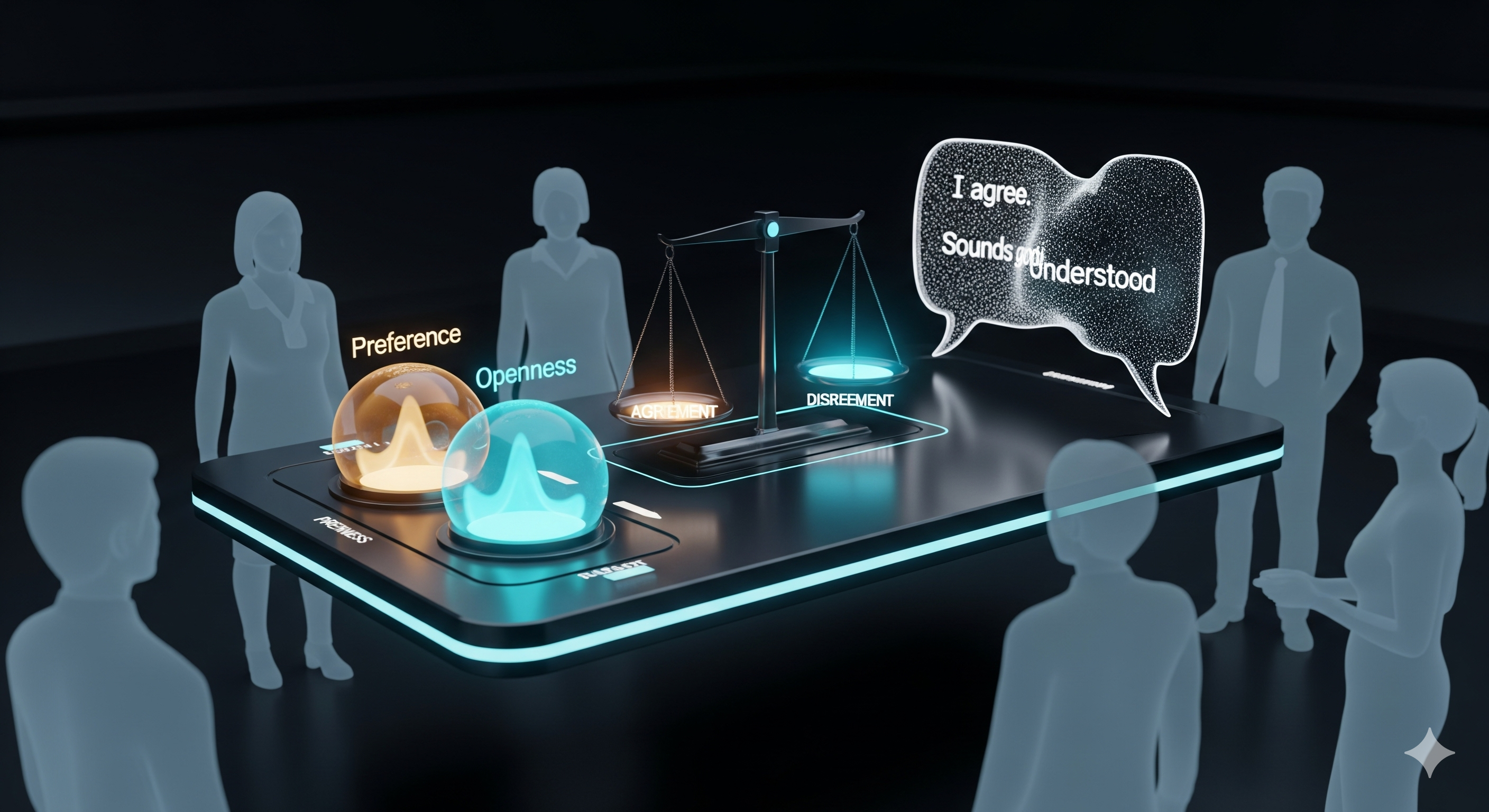
If you’ve been tempted to A/B‑test a marketing idea on thousands of synthetic “customers,” read this first. A new study introduces a dead‑simple but devastating test for LLM‑based agents: ask them to first state their internal stance (preference) and their openness to persuasion, then drop them into a short dialogue and check whether their behavior matches what they just claimed. That’s it. If agents are believable stand‑ins for people, the conversation outcome should line up with those latent states. ...

September 8, 2025 · 5 min · Zelina
Cover image

Fusion Cuisine for RAG: Z‑Scores, Rankers, and the Two‑Source Diet

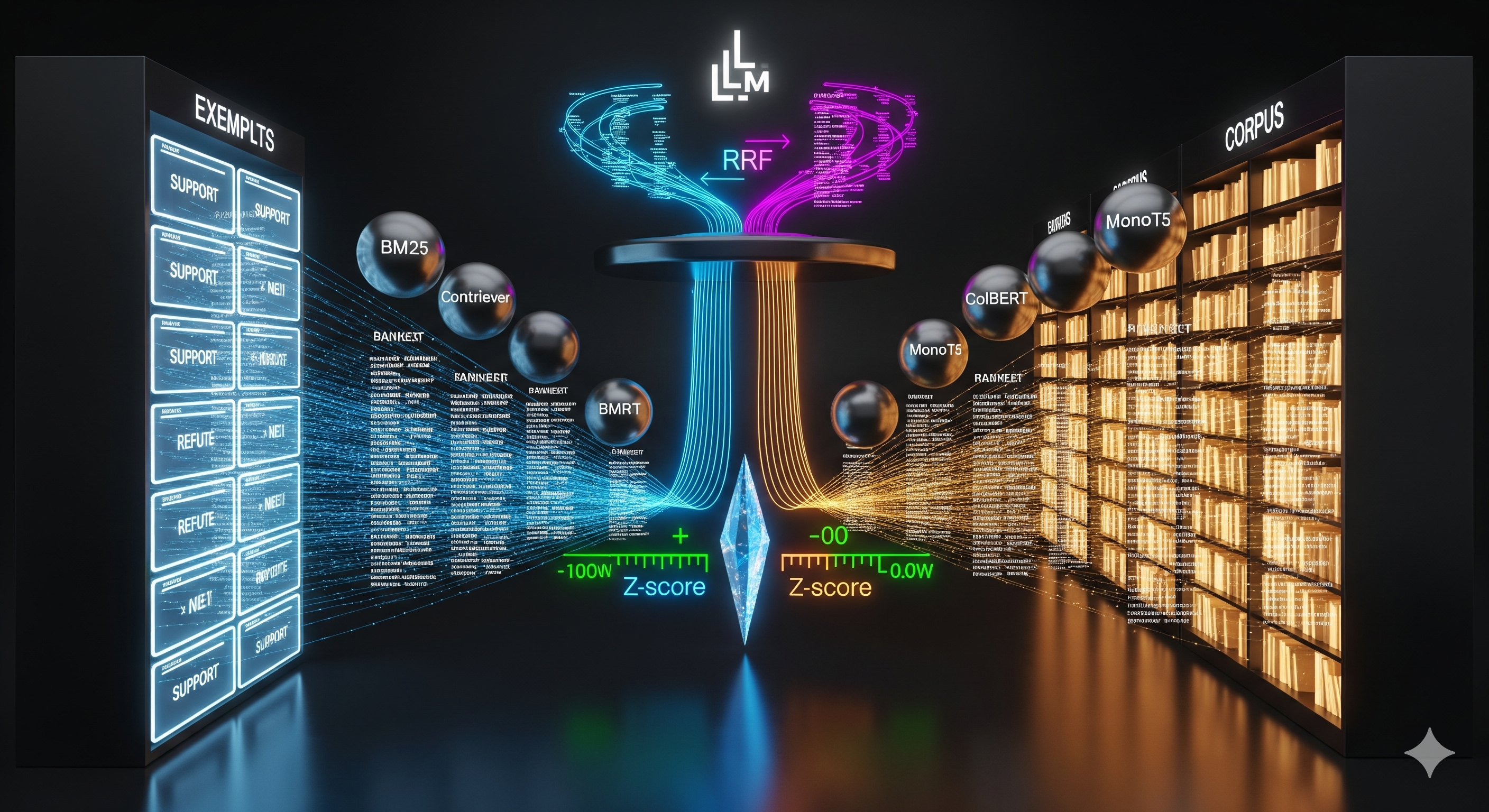
Retrieval‑augmented generation tends to pick a side: either lean on labeled exemplars (ICL/L‑RAG) that encode task semantics, or on unlabeled corpora (U‑RAG) that provide broad knowledge. HF‑RAG argues we shouldn’t choose. Instead, it proposes a hierarchical fusion: (1) fuse multiple rankers within each source, then (2) fuse across sources by putting scores on a common scale. The result is a simple, training‑free recipe that improves fact verification and, crucially, generalizes better out‑of‑domain. ...

September 6, 2025 · 4 min · Zelina
Cover image

From Prompts to Policies: The Agentic RL Playbook

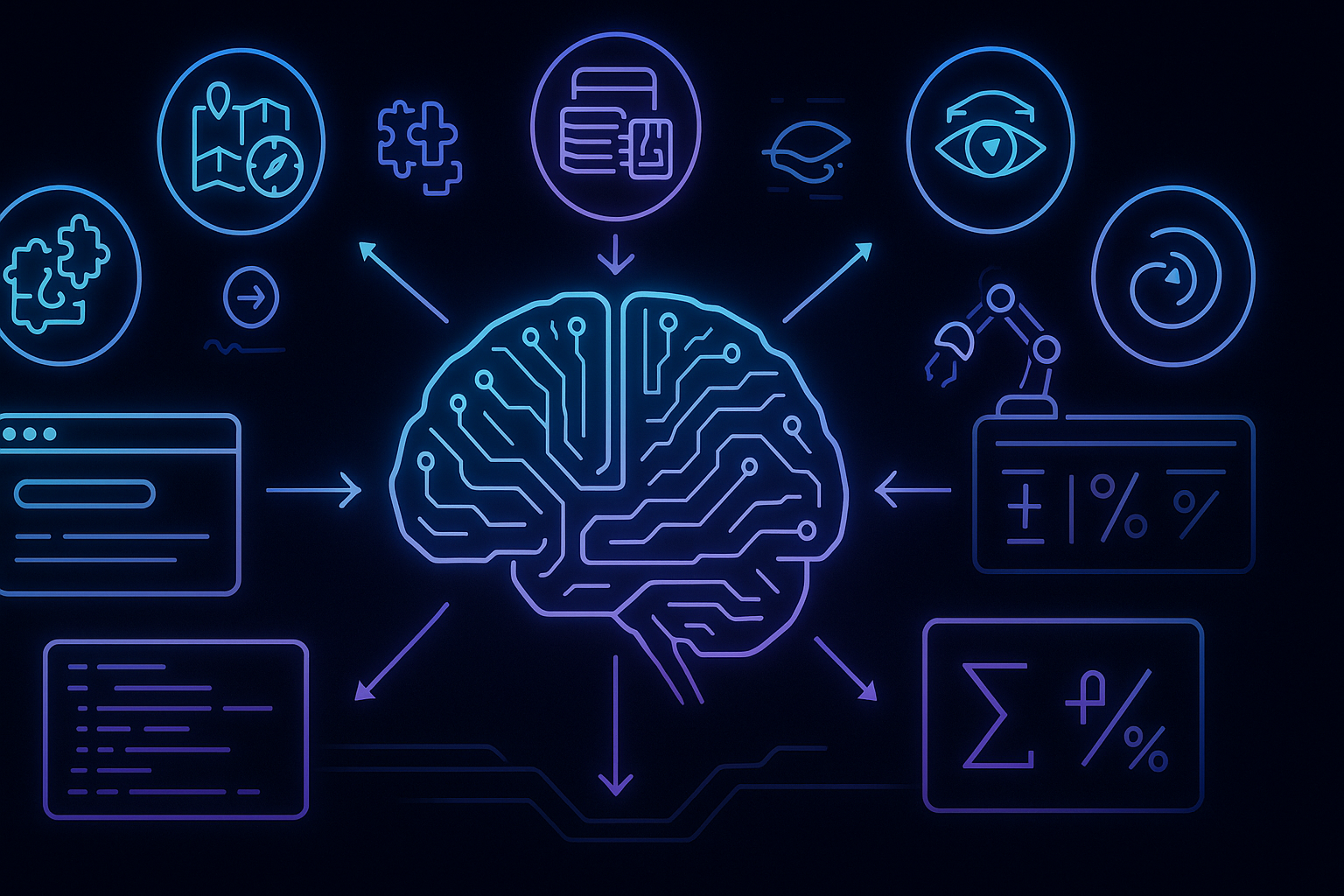
How a new survey formalizes the shift from RLHF’d text bots to tool-using operators—and the practical playbook for product teams. TL;DR Agentic RL reframes LLMs from one-shot text generators to policies acting in dynamic environments with planning, tool use, memory, and reflection. The paper contrasts PBRFT (preference-based RL fine-tuning) with Agentic RL via an MDP→POMDP upgrade; action space now includes text + structured actions. It organizes the space by capabilities (planning, tools, memory, self-improvement, reasoning, perception) and tasks (search, code, math, GUI, vision, embodied, multi-agent). Open challenges: trust, scalable training, and scalable environments. For builders: start with short-horizon agents (verifiable rewards), invest early in evaluation, and plan a migration path from RAG pipelines to tool-integrated reasoning (TIR) with RL. What the paper actually changes Most “LLM RL” work you’ve seen is PBRFT—optimize responses to fit human/AI preferences (RLHF/DPO/etc.). This new survey argues that real autonomy needs Agentic RL: treat the model as a policy embedded in a sequential, partially observable world. That sounds academic, but the practical consequences are huge: ...

September 4, 2025 · 5 min · Zelina
Cover image

Numbers Need Narration: Making LLMs Do Reasoning‑Intensive Regression

Thesis: When the job is to read text, reason carefully, and return a precise number (not just a label), ordinary regression heads and vanilla prompting often fail in opposite ways. The paper introduces MENTAT, a lightweight recipe that marries batch‑reflective prompt evolution with a small MLP aggregator over multiple LLM rollouts. The result: tighter calibration and better ranking on tasks where each example demands real reasoning, not surface features. What counts as “Reasoning‑Intensive Regression” (RiR)? RiR tasks look like this: the model must (1) think through the input with step‑wise analysis, and then (2) score it on a real‑valued scale. The paper frames three such tasks: ...

September 1, 2025 · 4 min · Zelina
Cover image

Benchmarks with Benefits: What DeepScholar-Bench Really Measures

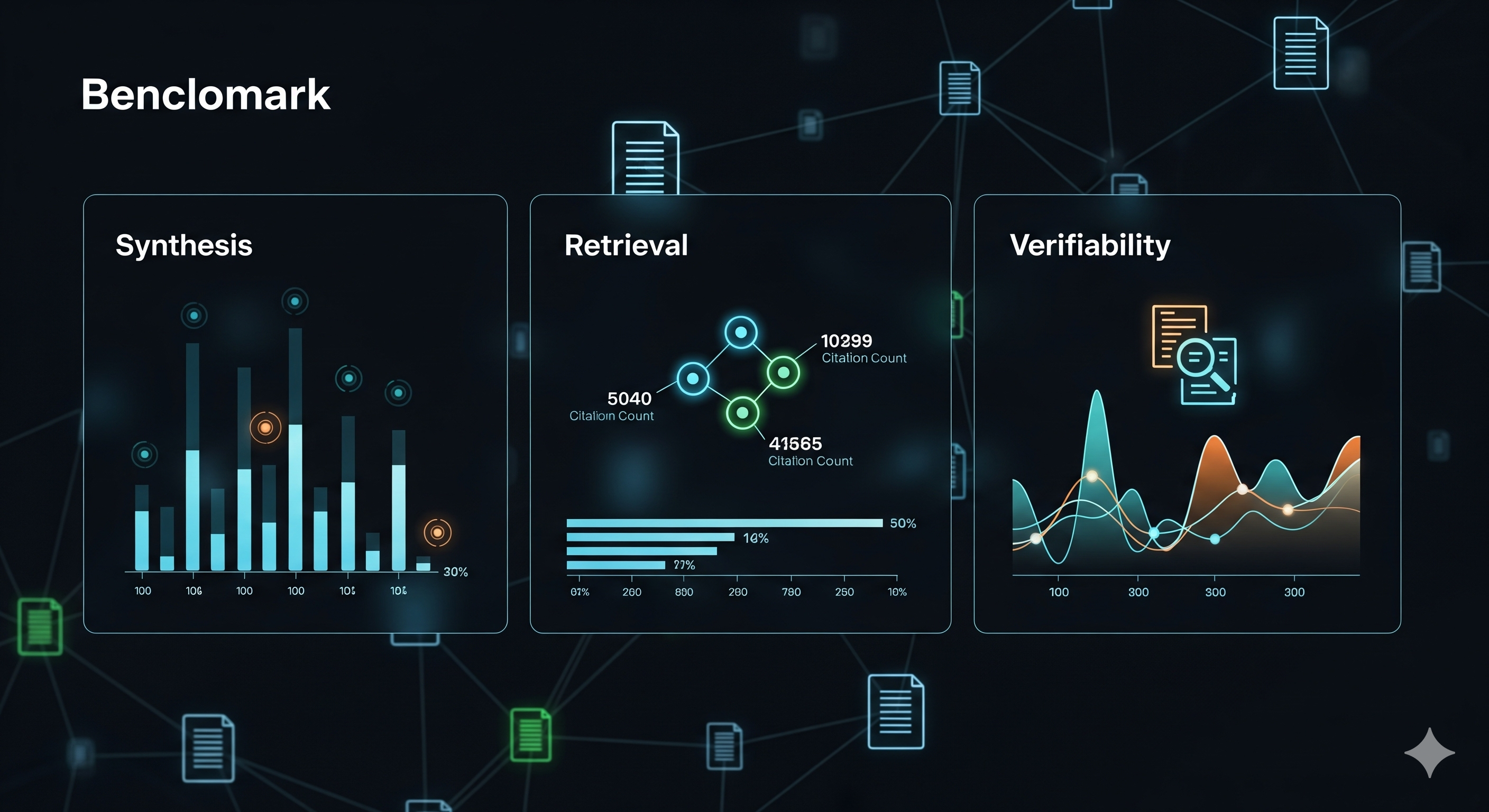
TL;DR DeepScholar-Bench introduces a live (continuously refreshable) benchmark and a holistic automated evaluation for generative research synthesis. Its reference pipeline, DeepScholar‑base, is simple yet competitive. The headline: today’s best systems organize text well but miss key facts, under-retrieve important sources, and fail verifiability at scale. That’s not a death knell—it’s a roadmap. Why this matters for business readers Enterprise “research copilots” promise to digest the live web, summarize options, and provide auditable citations. In practice, three gaps keep showing up: ...

August 30, 2025 · 5 min · Zelina
Cover image

Faking It to Make It: When Synthetic Data Actually Works

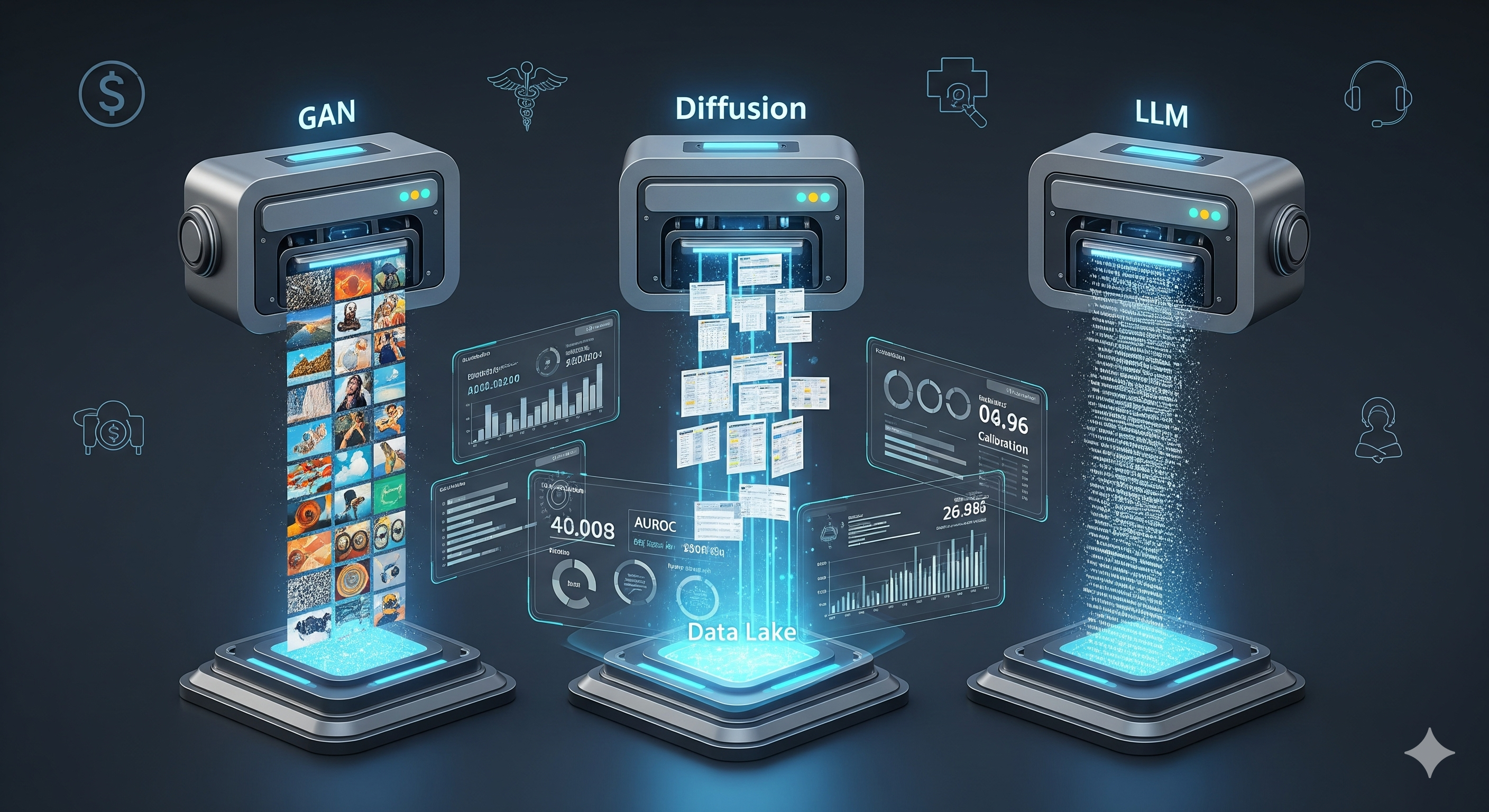
The latest tutorial by Li, Huang, Li, Zhou, Zhang, and Liu surveys how GANs, diffusion models, and LLMs now mass‑produce synthetic text, tables, graphs, time series, and images for data‑mining workloads. That’s the supply side. The demand side—execs asking “will this improve my model and keep us compliant?”—is where most projects stall. This piece extracts a decision framework from the tutorial and extends it with business‑grade evaluation and governance so you can decide when synthetic data is a shortcut—and when it’s a trap. ...

August 30, 2025 · 5 min · Zelina
Cover image

Judge, Jury, and Chain‑of‑Thought: Making Models StepWiser

TL;DR Generative judges that think before they judge—and are trained with online RL using stepwise labels—beat classic discriminative process reward models (PRMs). The StepWiser approach brings three wins: (1) higher accuracy at spotting the first bad step, (2) cleaner, more reliable inference via a “chunk‑reset” search that prunes bad steps while keeping overall length similar, and (3) better data selection for fine‑tuning. Why this matters (for builders and buyers) Most enterprise CoT systems fail not because they can’t produce long reasoning, but because they can’t police their own steps. Traditional PRMs act like a yes/no bouncer at each step—fast, but shallow. StepWiser reframes judging as its own reasoning task: the judge writes an analysis first, then issues a verdict. That small shift has big, practical consequences: ...

August 27, 2025 · 4 min · Zelina
Cover image

Talk, Tool, Triumph: Training Agents with Real Conversations

TL;DR Most “tool‑using” LLMs still practice in sterile gyms. MUA‑RL moves training into the messy real world by adding an LLM‑simulated user inside the RL rollout, wiring the agent to call actual tools and rewarding it only when the end task is truly done. The result: smaller open models close in on or beat bigger names on multi‑turn benchmarks, while learning crisper, policy‑compliant dialogue habits. Why this matters now Enterprises don’t want chatty copilots; they want agents that finish jobs: modify an order under policy, update a ticket with verified fields, push a fix to a repo, or reconcile an invoice—often across several conversational turns and multiple tools. Supervised fine‑tuning on synthetic traces helps, but it often overfits to static scripts and misses the live back‑and‑forth where users change their minds, add constraints, or misunderstand policy. ...

August 27, 2025 · 4 min · Zelina
Cover image

Wheel Smarts > Wheel Reinvention: What GitTaskBench Really Measures

Agents don’t build Rome from scratch—they retrofit the city. GitTaskBench (arXiv:2508.18993) is the first benchmark that grades code agents on how well they exploit existing GitHub repositories to deliver real-world outcomes, not just pass algorithm puzzles. It also puts a price tag on success via an Alpha value that blends accuracy with cost, bringing long-missing business realism to agent evals. TL;DR What’s new: 54 tasks across 7 modalities (image, video, speech, office docs, web scraping, security/privacy, biosignals), each paired to a real repo and a practical, automated test harness. Why it matters: The hard part isn’t just writing code—it’s environment setup, dependency wrangling, repo comprehension, and workflow orchestration. Headline result: Even the best stack—OpenHands + Claude 3.7—passes only ~48% of tasks; environment/setup issues cause ~65% of all failures. Business twist: The Alpha value estimates net economic benefit per task by combining success, quality, and token costs. Expensive tasks become clear wins; cheap tasks require ruthless cost control. The Benchmark, de-jargoned Problem framed: In real shops, devs search, fork, and adapt. GitTaskBench simulates that reality. Each task gives an agent a specific repo (e.g., DeOldify, Scrapy, NeuroKit, SpeechBrain) and a concrete user goal (e.g., “colorize this photo” or “extract author/quote pairs into CSV”). Success is determined by a task-specific metric (e.g., NIQE for image quality; SNR/SDR for speech separation; field-level F1 for scraping; column/row fidelity for office docs) and an execution check (the thing actually runs and outputs in the right format). ...

August 27, 2025 · 5 min · Zelina
Cover image

Agents on the Clock: Turning a 3‑Layer Taxonomy into a Build‑Ready Playbook

Most “agent” decks promise autonomy; few explain how to make it shippable. A new survey of LLM‑based agentic reasoning frameworks cuts through the noise with a three‑layer taxonomy—single‑agent methods, tool‑based methods, and multi‑agent methods. Below, we translate that map into a practical build/run playbook for teams deploying AI automation in real workflows. TL;DR Single‑agent = shape the model’s thinking loop (roles, task prompts, reflection, iterative refinement). Tool‑based = widen the model’s action space (APIs, plugins/RAG, middleware; plus selection and orchestration patterns: sequential, parallel, iterative). Multi‑agent = scale division of labor (centralized, decentralized, or hierarchical; with cooperation, competition, negotiation). Treat these as orthogonal dials you tune per use‑case; don’t jump to multi‑agent if a reflective single agent with a code‑interpreter suffices. 1) What’s genuinely new (and useful) here Most prior surveys were model‑centric (how to finetune or RLHF your way to better agents). This survey is framework‑centric: it formalizes the reasoning process—context $C$, action space $A = {a_{reason}, a_{tool}, a_{reflect}}$, termination $Q$—and shows where each method plugs into the loop. That formalism matters for operators: it’s the difference between “let’s try AutoGen” and “we know which knob to turn when the agent stalls, loops, or hallucinates.” ...

August 26, 2025 · 5 min · Zelina