Cover image

Think Wide, Then Think Hard: Forcing LLMs to Be Creative (On Purpose)

Imagine a brainstorming meeting in which every new idea must immediately pass legal review, fit the quarterly budget, use the existing technology stack, satisfy six executives, and arrive formatted as a PowerPoint slide. The meeting will probably produce something feasible. It will also produce the same three ideas everyone proposed last quarter. ...


December 30, 2025 · 15 min · Zelina
Cover image

When Benchmarks Rot: Why Static ‘Gold Labels’ Are a Clinical Liability

Clinical AI has a paperwork problem. Not the usual paperwork problem, where doctors drown in documentation and everyone promises that software will save them. The more interesting problem sits one layer below: the paperwork used to judge the software may itself be wrong. That is the uncomfortable center of Scalable Stewardship of an LLM-Assisted Clinical Benchmark with Physician Oversight, a paper that audits MedCalc-Bench, a benchmark for testing whether language models can compute medical risk scores from patient narratives.1 The paper’s target is not a toy dataset. MedCalc-Bench covers 55 medical calculators and includes 10,053 training instances plus 1,047 test instances. Its labels were produced through an LLM-assisted pipeline: GPT-3.5 matched patient contexts to calculator questions, GPT-4 extracted clinical features, and Python scripts aggregated those features into final scores. ...

December 23, 2025 · 15 min · Zelina
Cover image

Memory, Bias, and the Mind of Machines: How Agentic LLMs Mislearn

TL;DR for operators Memory is becoming the fashionable upgrade for AI agents: let the system remember past tasks, extract lessons, and improve without retraining the model. Sensible. Also slightly dangerous, in the same way giving a junior analyst a notebook is useful until they start rewriting the notebook after every meeting. The important result is not that memory sometimes contains bad facts. Everyone who has used software, people, or software made by people already knew that. The sharper point is that useful experience can become faulty during the act of consolidation. When an LLM agent compresses raw trajectories into reusable textual lessons, it may strip away conditions, merge unlike cases, or turn a narrow success into a general rule. The memory then looks cleaner while becoming less true. Very enterprise. ...

November 12, 2025 · 15 min · Zelina
Cover image

When Ambiguity Helps: Rethinking How AI Interprets Our Data Questions

A manager asks the analytics copilot, “Which regions are underperforming this quarter?” This sounds like a normal business question. It is also, technically, a small swamp. Which regions? Sales regions, operating regions, logistics regions, or customer billing regions? Underperforming against what: forecast, last quarter, budget, peers, margin, revenue, retention, or some executive’s private sense of disappointment? And “this quarter” may mean calendar quarter, fiscal quarter, quarter-to-date, or the latest complete quarter if the finance team has not closed the books yet. ...

November 7, 2025 · 15 min · Zelina
Cover image

When More Becomes Smarter: The Unreasonable Effectiveness of Scaling Agents

Desktops are where AI ambition goes to discover gravity. A chatbot can sound competent in one turn. A coding assistant can look brilliant inside a bounded file. But ask an agent to use a real computer for a long task — open the right app, edit the right file, preserve formatting, notice a pop-up, verify the final state, and not confidently click itself into a small administrative tragedy — and the problem changes. Intelligence is no longer a single answer. It is a chain of actions, each one able to quietly poison the next. ...

October 9, 2025 · 15 min · Zelina
Cover image

Backtrack to Breakthrough: Why Great AI Agents Revisit

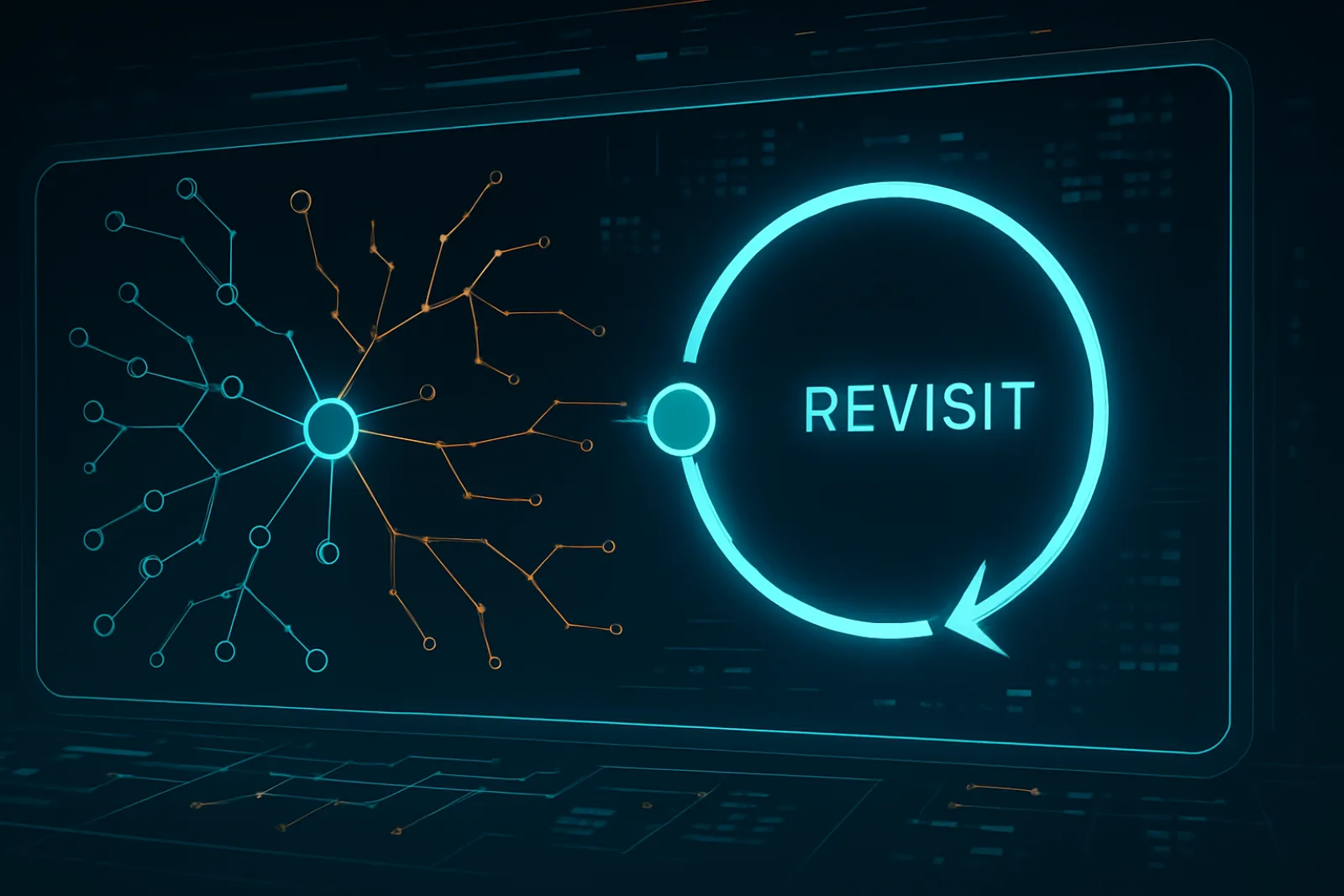
Search is easy. Knowing when to go back is harder. That is the useful irritation inside GSM-Agent, a new benchmark for studying agentic reasoning under controlled conditions.1 The paper takes grade-school maths problems from GSM8K, removes the premises from the prompt, hides those premises in a searchable document database, and asks an LLM agent to recover the facts before solving the problem. The arithmetic is not supposed to be impressive. That is the point. If a model fails here, we cannot calmly blame differential geometry, PhD-level law, or some mysteriously adversarial enterprise workflow. The agent simply did not find and use the facts. ...

October 3, 2025 · 15 min · Zelina
Cover image

Options = Power: Turning Empowerment into a KPI for AI Agents

Login. That is where many agent evaluations become strangely unserious. A benchmark asks whether the agent completed a task. A dashboard records whether the browser session ended successfully. A monitoring system checks whether the tool call returned an error. Then the agent enters valid credentials and suddenly gains access to a much larger part of the environment. ...

October 3, 2025 · 16 min · Zelina
Cover image

Vitals, Not Vibes: Inside the New Anatomy of Personal Health Agents

TL;DR for operators Personal health AI is usually sold as a friendly chatbot with a fitness tracker bolted on. This paper argues for something more awkward, more expensive, and much more plausible: a coordinated system of specialised agents. One agent analyses longitudinal wearable and health-record data. One grounds advice in health knowledge and user context. One handles coaching, goal-setting, and behaviour change. An orchestrator decides who should act, who should support, what should be remembered, and how the final answer should be assembled.1 ...

August 31, 2025 · 15 min · Zelina
Cover image

ReAct Without the Chaos: AgentScope 1.0 Turns Tools into Strategy

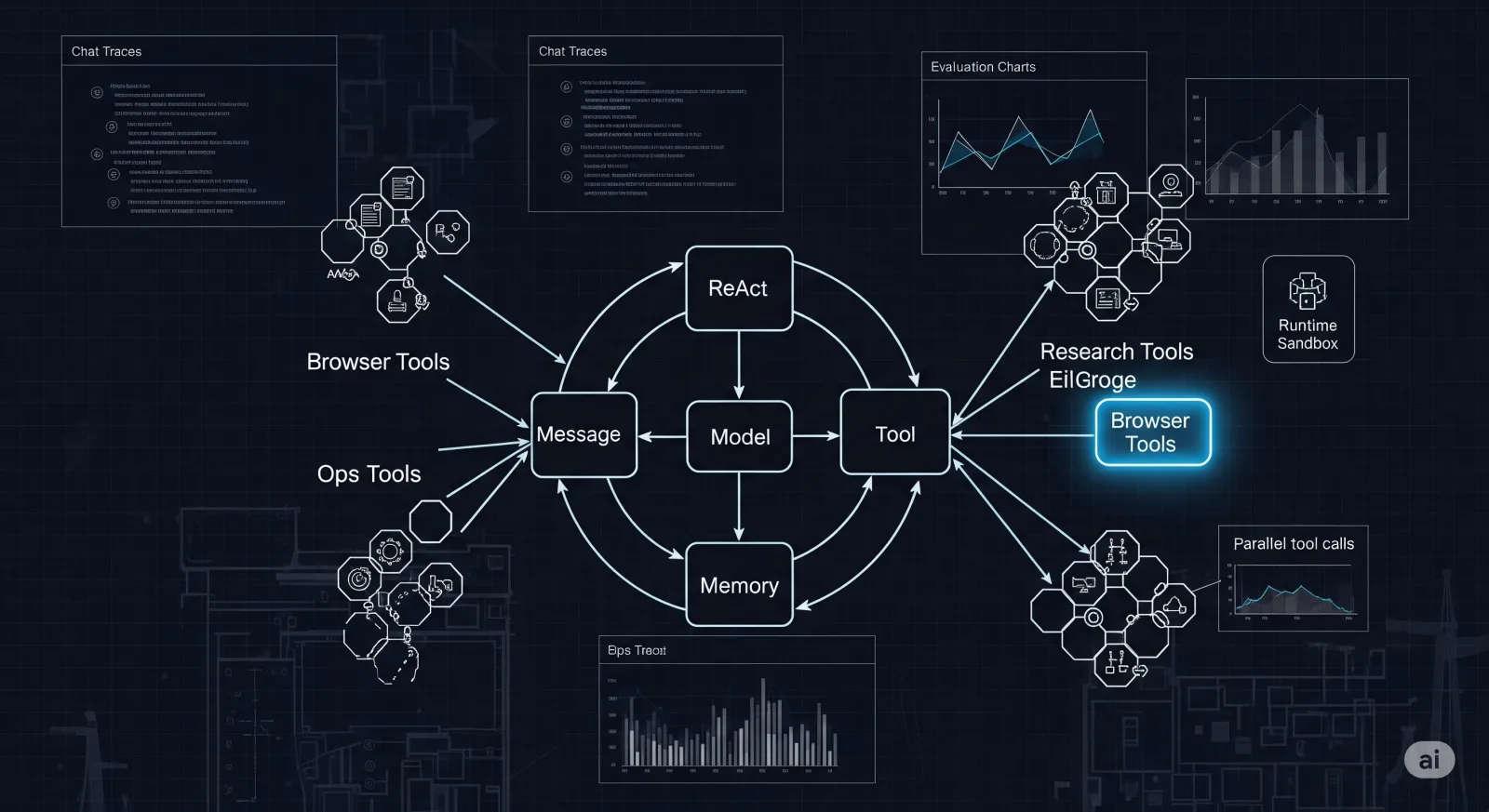
TL;DR for operators AgentScope 1.0 is best read as a production-shaping framework for agentic applications, not as a victory lap over rival agent frameworks. Alibaba’s paper describes a developer-centric stack that rebuilds agents around four core abstractions — message, model, memory, and tool — then places a ReAct-style reasoning-and-action loop on top of them.1 ...

August 25, 2025 · 17 min · Zelina
Cover image

Agents of Disruption: How LLMs Became Adversarial Testers for Autonomous Driving

TL;DR for operators AGENTS-LLM is not another attempt to make a language model dream up an entire traffic world and then hope the simulator forgives the hallucination. It does something narrower and more operationally useful: it takes an existing real-world driving scenario, accepts a natural-language instruction such as adding a parked vehicle, jaywalker, accident site, or construction zone, and produces an augmented scenario that can be executed in closed-loop autonomous-driving simulation.1 ...

July 21, 2025 · 17 min · Zelina