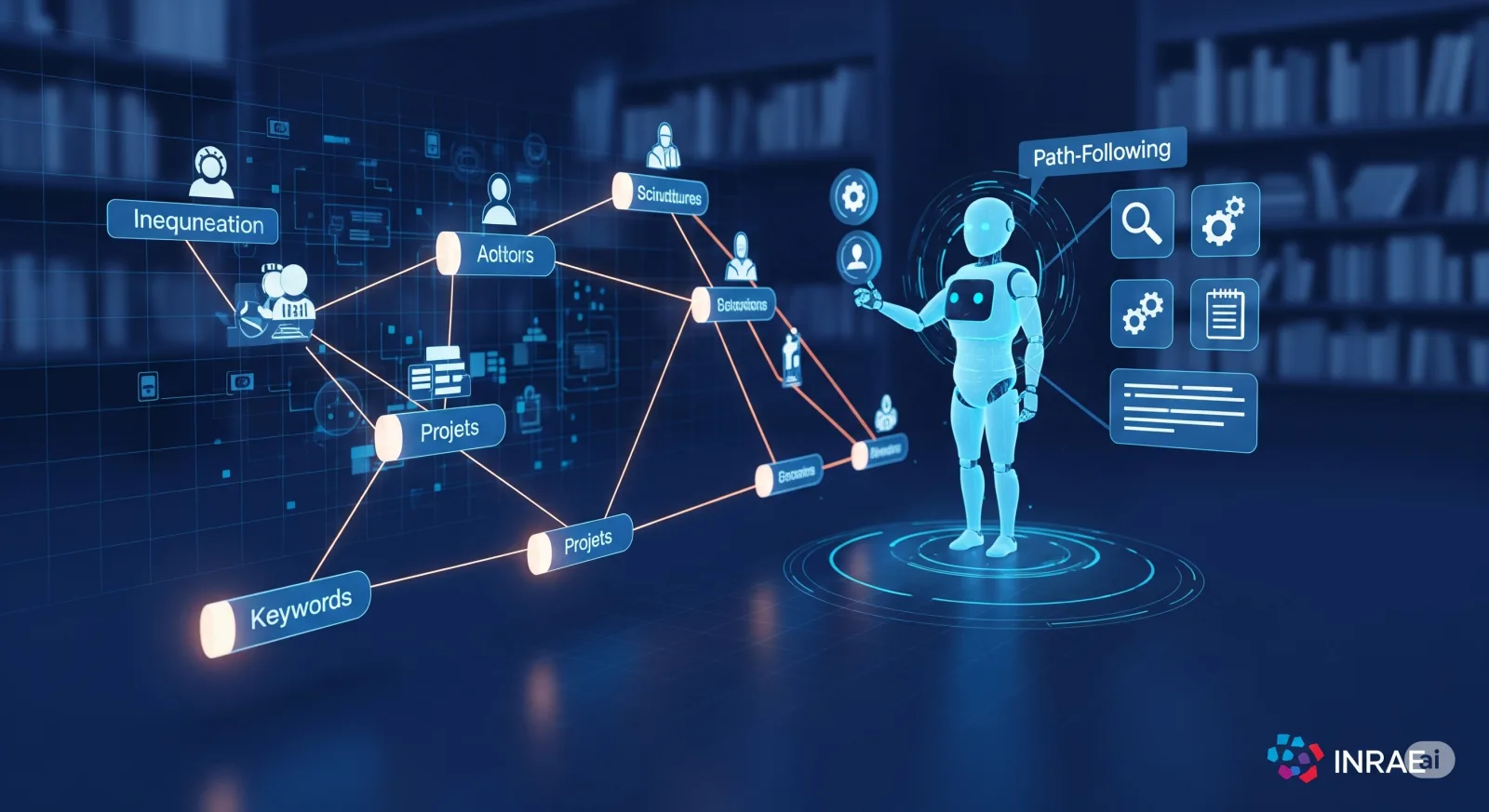
Cover image

From Snippets to Synthesis: INRAExplorer and the Rise of Agentic RAG

TL;DR for operators Most enterprise RAG systems still behave like diligent interns with a search box: they retrieve a handful of plausible snippets, hand them to a language model, and hope the synthesis does not quietly forget half the question. That works for narrow Q&A. It fails when the user asks for a relationship chain, a complete list, or a decision-ready map of who did what, funded by whom, connected to which topic. ...

July 23, 2025 · 15 min · Zelina
Cover image

The Watchdog at the Gates: How HalMit Hunts Hallucinations in LLM Agents

TL;DR for operators HalMit is not another attempt to ask an LLM, “Are you sure?” and then pretend the answer is governance. That theatre has had a decent run, but it was never a control system. The paper proposes a black-box watchdog for LLM-powered agents: before deployment, HalMit actively probes a target agent inside a specific domain, looks for query-response situations where hallucinations appear, stores those risky boundary points in a vector database, and then monitors future queries by checking whether they fall near those learned danger zones.1 ...

July 23, 2025 · 16 min · Zelina
Cover image

Think Twice, Then Speak: Deliberative Searcher and the Future of Reliable LLMs

TL;DR for operators Search-augmented LLMs are not safe merely because they can look things up. They can still retrieve relevant documents, stitch together a plausible answer, and then express high confidence in something wrong. That is the failure mode this paper targets: not hallucination in the abstract, but the operationally poisonous state of being both false and certain. ...

July 23, 2025 · 16 min · Zelina
Cover image

Beyond DNS: Building the Backbone for the Internet of AI Agents

TL;DR for operators If your organisation is building one chatbot, DNS is not your problem. If your organisation expects thousands of autonomous agents to discover one another, verify capabilities, rotate endpoints, respect privacy boundaries, and revoke trust quickly, then DNS starts looking like a filing cabinet in a drone factory. The paper behind NANDA proposes a layered discovery architecture for the “Internet of AI agents”: a lean signed index record called AgentAddr, richer verified metadata called AgentFacts, and optional adaptive resolvers for live endpoint selection.1 The important idea is not that NANDA is “DNS for agents”. That is the tempting headline and, naturally, the least useful one. The paper is really about separating stable identity from dynamic operational metadata and from runtime routing. ...

July 22, 2025 · 16 min · Zelina
Cover image

Tunnel Vision: Why Vision-Language Models Still Miss the Bigger Picture

TL;DR for operators A vision-language model can describe an image, answer a chart question, and still fail at the kind of seeing that a bored intern would perform before lunch. That is the operational lesson from Shmuel Berman and Jia Deng’s paper, VLMs have Tunnel Vision: Evaluating Nonlocal Visual Reasoning in Leading VLMs.1 The paper tests whether leading VLMs can do three basic things: compare two visual objects across an image, follow a sequence of visual clues, and trace a continuous line to its endpoint. Humans find these tasks trivial. Current VLMs do not. ...

July 21, 2025 · 18 min · Zelina
Cover image

Beyond Search: RAG’s Awakening to Enterprise Spreadsheets

TL;DR for operators Most enterprise RAG failures do not begin at the chatbot. They begin earlier, when the retrieval system slices policy manuals into arbitrary chunks, flattens tables into textual porridge, ignores metadata, retrieves semantically similar but operationally wrong passages, and then asks an LLM to look confident. Naturally, the LLM obliges. It has excellent manners. ...

July 17, 2025 · 20 min · Zelina
Cover image

Reasoning at Scale: How DeepSeek Redefines the LLM Playbook

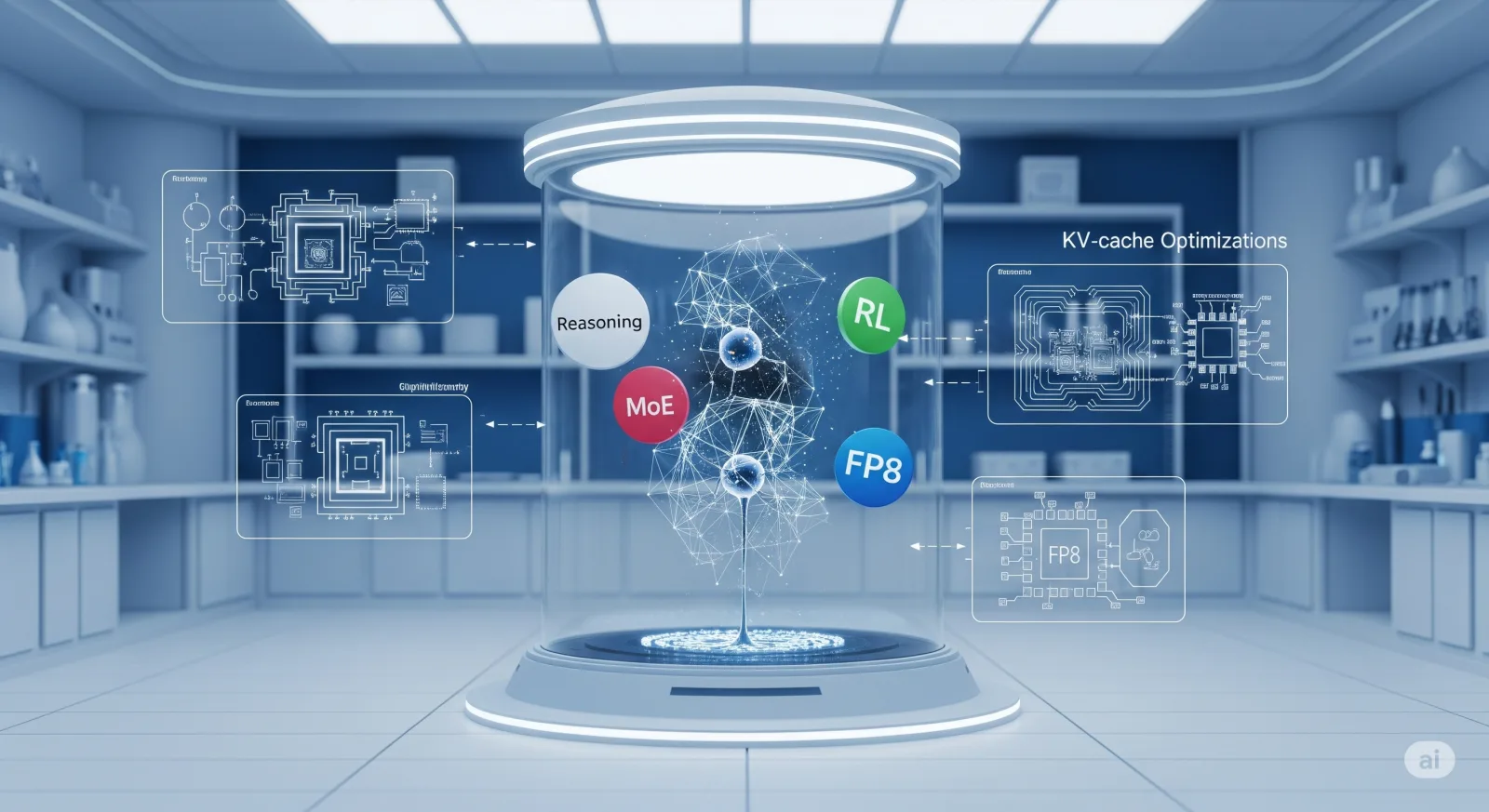
TL;DR for operators DeepSeek-R1 is not a story about one model suddenly becoming clever because someone found the secret lever labelled “reason harder”. It is a systems story: take a strong base model, reward it on problems where correctness can be checked, let longer reasoning traces emerge, repair the ugly parts with cold-start data and alignment, then distil the resulting behaviour into smaller models where deployment economics actually matter.1 ...

July 15, 2025 · 14 min · Zelina
Cover image

Tables Turned: Why LLM-Based Table Agents Are the Next Big Leap in Business AI

TL;DR for operators Most business data does not live in pristine chatbot-friendly prose. It lives in spreadsheets, ledgers, CSV exports, relational databases, dashboards, compliance reports, and those heroic Excel files with merged cells, colour-coded warnings, unexplained abbreviations, and one column called misc. The paper behind this article, Toward Real-World Table Agents, argues that LLM-based table agents should not be judged as smarter versions of Text-to-SQL alone.1 Real-world table work requires an end-to-end workflow: reading table structure, cleaning noisy semantics, retrieving only the relevant parts, executing traceable reasoning steps, and adapting to domains such as finance, healthcare, public administration, and industrial operations. ...

July 15, 2025 · 21 min · Zelina
Cover image

The Retrieval-Reasoning Tango: Charting the Rise of Agentic RAG

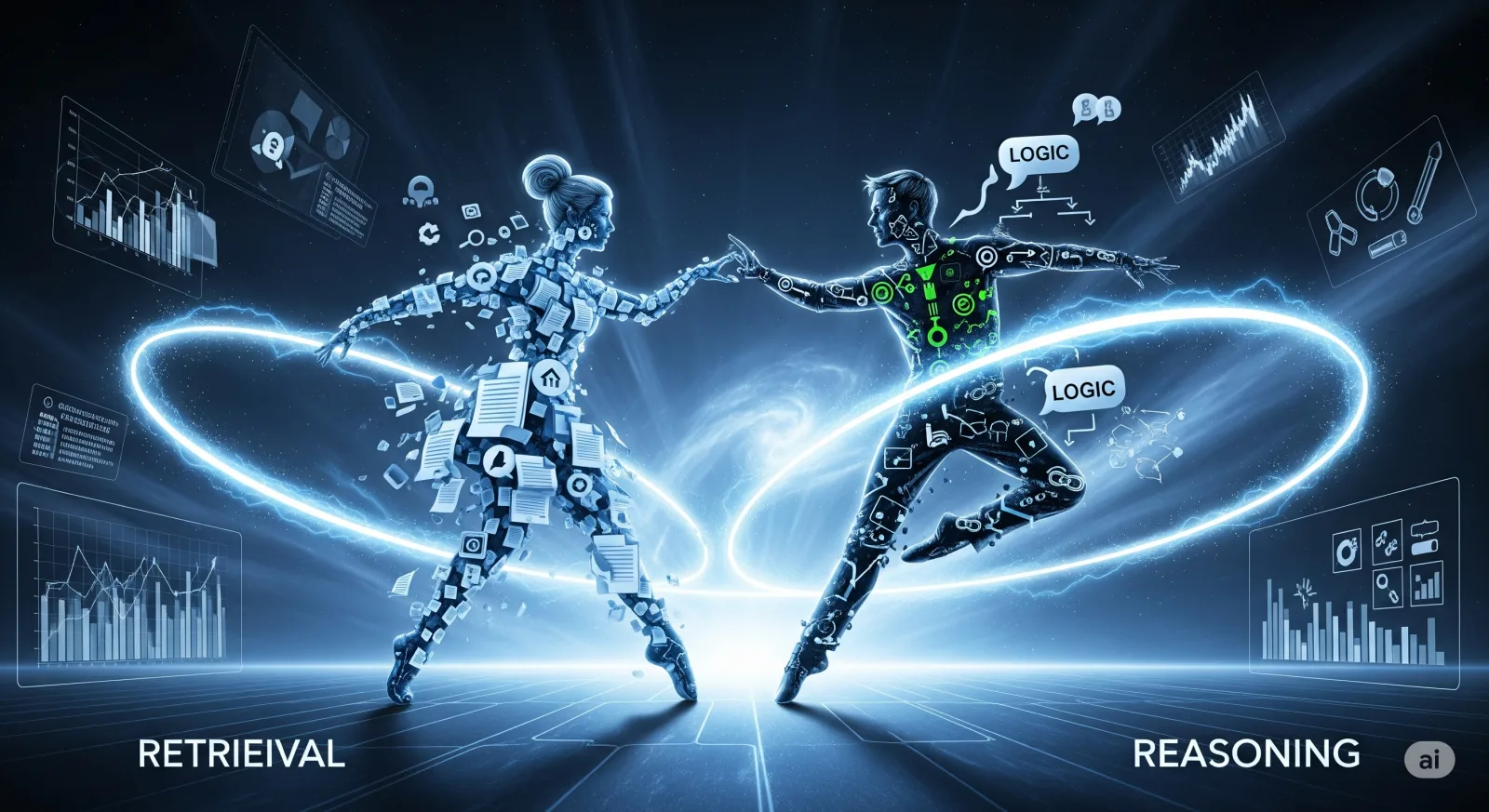
TL;DR for operators Static RAG is still useful. It is also no longer the whole game. The paper behind this article argues that retrieval and reasoning are converging into a more tightly coupled architecture: reasoning can improve retrieval, retrieval can improve reasoning, and agentic systems can interleave both over multiple steps.1 That sounds like a neat academic symmetry until you put it inside an enterprise workflow, where every extra retrieval call means latency, cost, permissions, ranking risk, and one more place for the machine to confidently ingest rubbish. ...

July 15, 2025 · 18 min · Zelina
Cover image

Chunks, Units, Entities: RAG Rewired by CUE-RAG

TL;DR for operators Enterprise RAG teams often treat retrieval quality as a graph-construction problem: extract more entities, more relationships, more summaries, and hope the answer appears somewhere in the resulting machinery. Clue-RAG suggests a more useful diagnosis: the failure is often not that the graph is too small, but that the system has chosen the wrong semantic unit for the job.1 ...

July 14, 2025 · 16 min · Zelina