Cover image

Less is Flow: How Sparse Sensing Rethinks Urban Flood Monitoring

A city drainage engineer rarely gets to choose between perfect data and bad data. The real choice is more annoying: a few sensors in the right places, a few sensors in the wrong places, or a procurement request large enough to frighten everyone in finance. Urban flood monitoring has always had this observability problem. Storm sewers are spatial systems. Water does not politely report its location from one convenient manhole. It moves through a network of subcatchments, conduits, junctions, slopes, storage, bottlenecks, and hydraulic thresholds. Full visibility would mean dense instrumentation across the network. That is expensive to install, maintain, power, calibrate, secure, and occasionally rescue from the weather doing exactly what it was installed to measure. ...

November 7, 2025 · 16 min · Zelina
Cover image

The Rational Illusion: How LLMs Outplayed Humans at Cooperation

A negotiation bot walks into a pricing dispute. That is not the start of a joke. It is the start of a procurement problem, a marketplace design problem, a customer-service escalation problem, and, sooner than executives would like to admit, a governance problem. Once AI systems begin making choices on behalf of organisations, their behaviour in social settings matters. Not just whether they answer correctly. Not just whether they sound polite. Whether they cooperate, defect, compromise, optimise, over-trust, or quietly behave like a very caffeinated economist. ...

November 7, 2025 · 16 min · Zelina
Cover image

Preference Chains of Command: Making LLM Agents Pick Like People

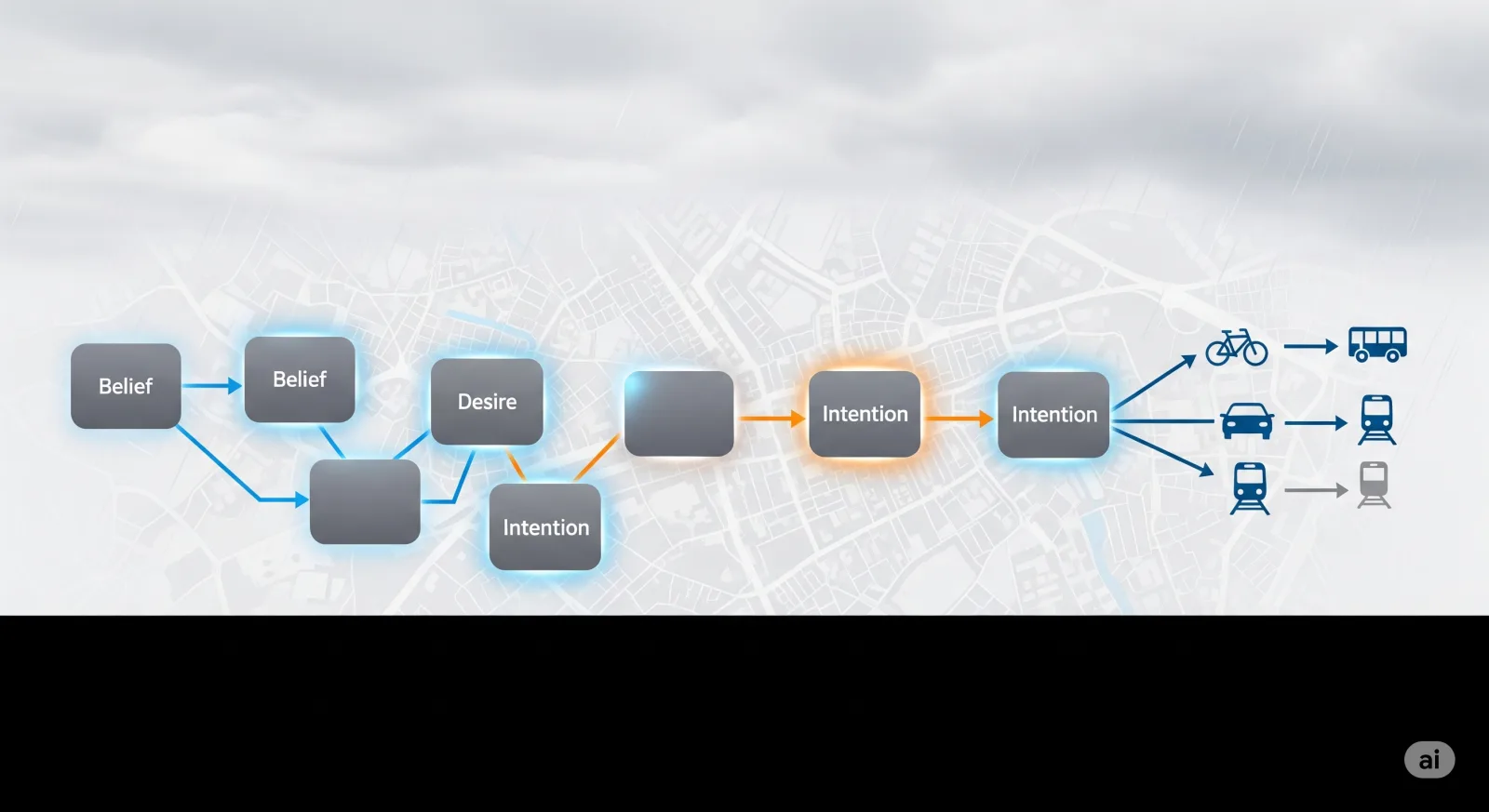
TL;DR for operators Cities rarely wait for perfect data. A new district still needs a transit plan, a campus still needs a shuttle model, and a developer still wants to know whether people will walk, drive, or quietly defeat the entire urban-design deck by ordering a car. The paper behind this article introduces Preference Chain, a method that uses a small sample of behavioural mobility data to guide an LLM agent’s transport choices.1 The important bit is not that it “adds Graph RAG” to an LLM. That phrase now covers everything from serious retrieval systems to someone throwing a Neo4j logo onto a slide. The real mechanism is narrower and more useful: Preference Chain turns sparse human travel records into structured priors over likely choices, then lets the LLM adjust those priors for context. ...

August 25, 2025 · 21 min · Zelina
Cover image

From Molecule to Mock Human: Why Programmable Virtual Humans Could Rewrite Drug Discovery

TL;DR for operators A recent paper proposes programmable virtual humans (PVHs): dynamic, multiscale computational models intended to simulate how a new molecule moves through, interacts with, and perturbs human biology from molecular binding to clinical phenotype.1 The operational point is not that pharma now has a magic patient simulator. It does not. The paper is a perspective and roadmap, not a benchmarked product release with clinical validation, regulatory acceptance, and a procurement form attached. Shame, really. ...

July 29, 2025 · 18 min · Zelina
Cover image

From Graph to Grit: Diagnosing Warehouse Bottlenecks with LLMs and Knowledge Graphs

TL;DR for operators A recent paper on warehouse planning uses knowledge graphs and LLM reasoning to diagnose bottlenecks in discrete-event simulation outputs.1 The useful part is not that someone put a chatbot on top of a warehouse model. That would be adorable, and mostly useless. The useful part is that the authors first make simulation traces structurally queryable, then force the LLM to investigate in steps. ...

July 26, 2025 · 20 min · Zelina