TL;DR for operators
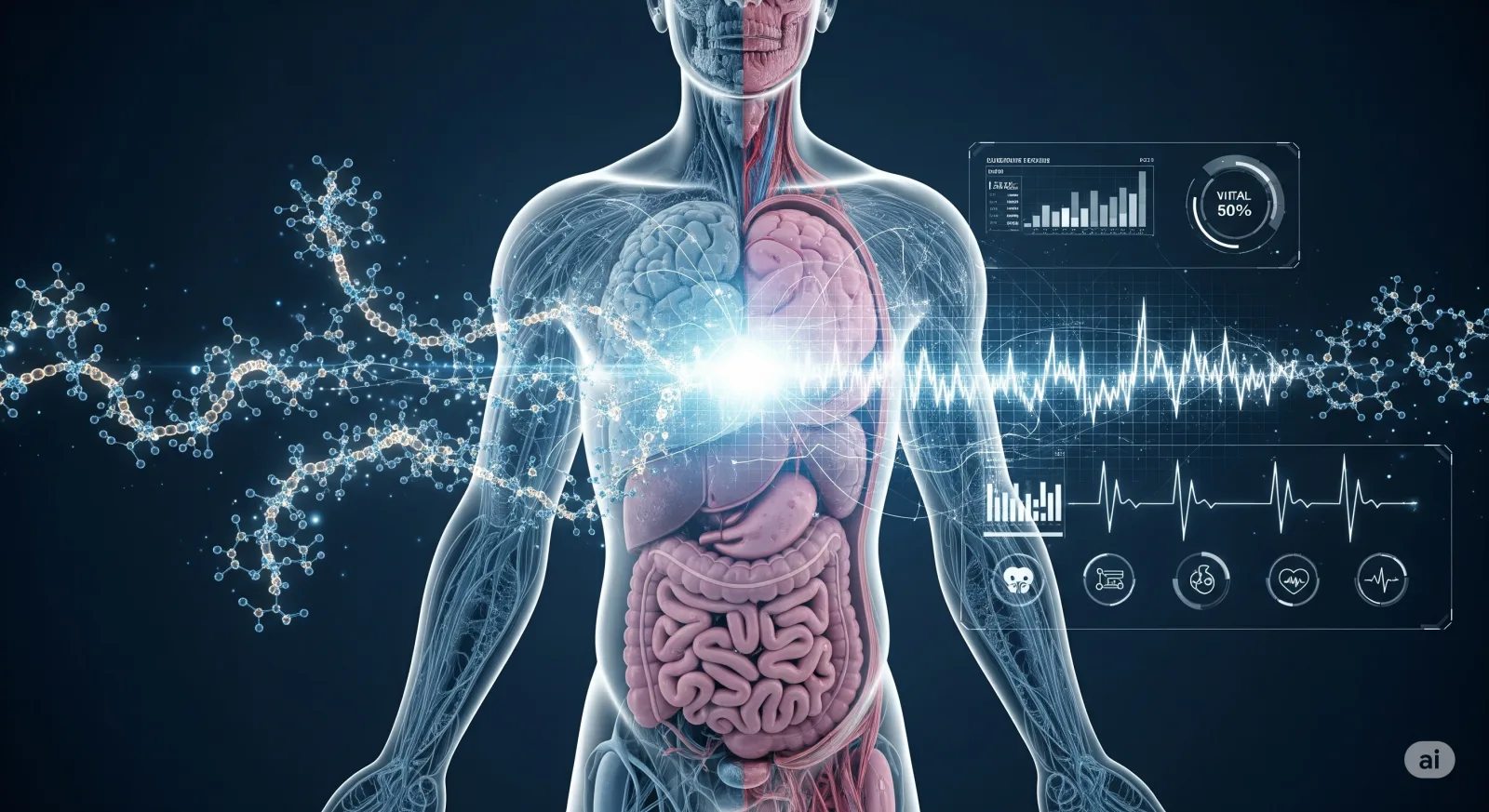
A recent paper proposes programmable virtual humans (PVHs): dynamic, multiscale computational models intended to simulate how a new molecule moves through, interacts with, and perturbs human biology from molecular binding to clinical phenotype.1
The operational point is not that pharma now has a magic patient simulator. It does not. The paper is a perspective and roadmap, not a benchmarked product release with clinical validation, regulatory acceptance, and a procurement form attached. Shame, really.
The useful idea is sharper: much of AI drug discovery still optimizes proxies inside the old pipeline. Binding affinity. Target ranking. Cell morphology. Trial design. Each proxy can improve while the final drug still fails in humans because the pipeline never modeled the full physiological cascade. Faster proxy optimization can therefore produce faster, cheaper failure.
PVHs are positioned as a bridge between two currently separate worlds. On one side, early-stage AI drug discovery works with molecules, proteins, omics, screens, and disease models. On the other, biomedical digital twins tend to work later, using clinical data, tissue-level models, and patient monitoring. The gap between them is exactly where many drug candidates die: after they looked plausible in models, cells, or animals, but before they behaved usefully in humans.
For executives and R&D leaders, the near-term business reading is this: PVH-inspired infrastructure is more likely to help with translational risk ranking, failure detection, mechanism triangulation, and portfolio prioritization than with fully automated drug invention. The technology stack matters, but the bigger issue is architectural. A company that keeps molecular modeling, perturbation assays, PBPK/QSP models, single-cell omics, and clinical evidence in separate silos will struggle to build anything resembling a PVH. It may still own excellent tools. It will not own the system.
The old pipeline optimizes proxies, then acts surprised when humans object
Drug discovery has always had a proxy problem. A molecule binds a target. A cell line changes phenotype. An organoid responds. An animal model improves. A clinical trial then quietly informs everyone that biology was not impressed.
The paper’s complaint is not that target-based or phenotype-based discovery is useless. It is that both can be locally rational and globally misleading. Target-based discovery narrows disease biology into a gene or protein and then asks the molecule to modulate it. Phenotype-based discovery shifts attention from the target to observable effects in cells or disease models. Better, but still limited: in vitro pharmacokinetics and pharmacodynamics do not behave like in vivo pharmacology, and many disease models do not faithfully reproduce human disease.
This is where the authors place most current AI drug discovery. They argue that AI frequently digitizes and accelerates existing experimental workflows rather than changing the underlying discovery paradigm. Structure-based models, reinforcement learning for molecular design, foundation models for molecular properties, image-based screens, and single-cell predictors can all improve individual steps. But if those steps are still proxies for human therapeutic effect, the bottleneck has merely moved. The conveyor belt is shinier. The cliff is still there.
The paper’s proposed alternative is physiology-based drug discovery: optimize the candidate against expected efficacy and safety in the human body, not merely against target affinity or disease-model potency. Since direct human experimentation at early discovery is impossible and unethical, the proposed substitute is a programmable virtual human.
A PVH is not simply a larger model. It is meant to represent a full causal chain:
| Stage of drug action | What the PVH would need to model | Why isolated tools struggle |
|---|---|---|
| Molecular entry and exposure | Pharmacokinetics, tissue distribution, cellular concentration | Early compounds often lack human PK data |
| Target engagement | Binding pose, thermodynamics, kinetics, functional selectivity, off-targets | Binding affinity alone misses context and downstream effect |
| Cellular response | Transcriptomic, proteomic, metabolic, morphological, and spatial state changes | Single modalities capture only partial cell state |
| Tissue and organ interaction | Cell-cell signaling, organ-level feedback, systemic physiology | Disease biology often crosses cell types and organs |
| Clinical phenotype | Efficacy, toxicity, biomarkers, patient-level response | Clinical data are scarce or unavailable for unseen molecules |
The shift is conceptual but important. The PVH asks whether a molecule can move a diseased physiological state toward a healthier one. That is different from asking whether it binds beautifully to a target that may or may not matter. Biology, inconveniently, does not award prizes for elegant docking poses.
PVHs are not digital twins with a fresh coat of venture paint
The obvious misconception is that programmable virtual humans are just digital twins with better branding. The paper’s distinction is more specific.
Biomedical digital twins usually model known or observed patient states. They often rely on clinical data, imaging, biomarkers, electronic health records, wearable data, or tissue/organ-level mechanistic models. That makes them useful for healthcare, personalized medicine, trial simulation, and treatment monitoring. But for a brand-new molecule early in discovery, the most important data may not exist yet. There may be no human exposure data, no pharmacokinetic profile, no clinical response, and no mature pharmacological record.
That is the authors’ critique: existing digital twins tend to be too late-stage for early drug discovery. They may simulate disease progression or treatment response when human evidence is already available, but they are not designed to predict the full physiological effect of a molecule no human has taken.
PVHs are meant to be earlier and more molecularly resolved. They would integrate molecular models with physiological and real-world models so that a candidate can be tested in silico before expensive biological commitments accumulate.
| System type | Main question | Typical evidence base | Primary weakness for early discovery |
|---|---|---|---|
| Target-based AI | Does this molecule modulate the chosen target? | Protein structures, binding data, QSAR, omics target ranking | The target may not be causal, sufficient, safe, or contextually relevant |
| Phenotype-based AI | Does this molecule change a disease model phenotype? | Cell lines, organoids, imaging, perturbation assays | The model may not translate to human physiology |
| Biomedical digital twin | How does this patient or disease state behave under known conditions? | Clinical data, biomarkers, imaging, EHR, mechanistic organ models | New molecules may lack the human data needed to simulate them |
| Programmable virtual human | What physiological cascade would an unseen molecule trigger in humans? | Multi-omics, perturbation data, PBPK/QSP, molecular models, spatial omics, clinical links | Requires reliable OOD prediction across vast biological and chemical spaces |
The paper is therefore not asking readers to admire a larger digital twin. It is asking for a different computational object: a model that can connect molecular perturbation to human phenotype under conditions where direct human data are sparse or absent.
That is ambitious. It is also the point. A drug discovery system that only becomes informative after human data are available is helpful, but late. In pharma, late truth is often expensive truth.
Category one: the body must see the molecule before the model predicts the patient
The first technical category is the fate of unseen molecules in the human body. This includes pharmacokinetics and pharmacodynamics: where the molecule goes, how much reaches each tissue or cell type, how long it stays there, and what it does when it arrives.
Traditional PBPK and QSP models already matter in drug development and regulatory decision-making. The paper does not dismiss them. It argues that they are limited for early discovery because they depend on mechanistic equations and parameters that may not be known for new molecules. Machine learning can help predict molecular properties relevant to pharmacokinetics, while physics-informed neural networks may help combine biological constraints with data-driven approximation.
But the molecule’s journey is only the first step. Once the compound reaches a cell, the PVH must model what it touches and how it behaves. Here the paper highlights protein-small molecule complex prediction, genome-wide protein-chemical interaction prediction, binding kinetics, molecular dynamics, machine-learned force fields, and functional selectivity.
That last point matters. Drug behavior is not exhausted by “binds” or “does not bind.” Binding kinetics can matter more for efficacy and toxicity than static affinity. Functional selectivity, especially in receptor systems such as GPCRs, can determine whether a ligand activates, blocks, partially activates, or biases signaling pathways. The paper frames this as a missing piece in simulating drug action.
The business implication is straightforward: molecular AI that only ranks compounds by affinity is not enough for translational decision-making. It may still be valuable, but it is not sufficient. A PVH-inspired workflow would ask a more expensive question earlier: not simply “does it bind?” but “what physiological cascade does this interaction plausibly initiate, and how uncertain are we?”
That changes investment logic. A molecule with slightly less glamorous binding affinity but better predicted exposure, selectivity, kinetic profile, and downstream cell-state behavior may be more valuable than a molecule that wins the binding leaderboard and loses the patient.
Category two: cell states are not a transcriptomics spreadsheet
The second category is cell-state modeling. The paper treats cell state as a multi-faceted molecular landscape: DNA, RNA, proteins, metabolites, lipids, glycans, microbiome signals, morphology, and other biomolecules. Single-cell and spatial omics provide the technical foundation, but the authors are careful about the integration problem. Each modality is partial. A transcriptome is informative, but it is not the cell.
This is a useful corrective for business readers. “We have omics data” is not a strategy. It is inventory.
A PVH would need to integrate information across molecular levels and biological hierarchies: molecule, cell, tissue, organ, human, and population. It would also need to move across species and model systems, because much early evidence comes from cell lines, animal models, organoids, or microphysiological systems rather than directly from patients.
The paper identifies deep learning as useful because it can use labeled and unlabeled multimodal data, build foundation models for biological entities, fuse modalities into shared representation spaces, and model information flow across biological levels. But this is not a blank cheque for foundation-model enthusiasm. The difficult part is not producing embeddings. The difficult part is making those embeddings biologically meaningful under perturbation, across contexts, and under distribution shift.
The authors also emphasize body-level interconnection. Cells do not live in PowerPoint boxes. Organ systems interact; tissue context matters; microbiome-human interactions can influence disease; kidney and cardiovascular dysfunction can reinforce one another. Spatial omics and multi-organ single-cell models are relevant because they begin to show how cell states are organized and coordinated across tissues.
For operators, the message is that PVH infrastructure cannot be built by buying one modality at a time and stapling dashboards together. The minimum viable architecture needs a data model that respects hierarchy and interaction. Otherwise, the company owns a molecular scrapbook. Potentially expensive. Certainly decorative.
Category three: perturbation data gives PVHs their training signal, not their proof
The third category is clinical response prediction from novel perturbations. This is where the PVH idea becomes most seductive: if one can systematically perturb cells, measure the response, and learn how molecular interventions move biological states, perhaps one can simulate new therapies before they reach humans.
The paper points to perturbation functional genomics and image-based profiling techniques, including perturb-seq, epigenome editing, drug-seq, cell painting, and human microphysiological systems. These technologies generate structured evidence about what happens when genes, pathways, or compounds are perturbed. AI models such as ChemCPA, GEARS, and MultiDCP are discussed as examples of methods for predicting cellular responses, unseen perturbation combinations, dosage-specific drug responses, and multi-omics effects.
But this is where the paper’s boundary matters most. Perturbation assays are not patients. Organs-on-chips are not complete human bodies. Disease models are useful precisely because direct human experimentation is limited, but the translational gap does not disappear because the assay is sophisticated.
The paper’s answer is not to pretend that perturbation data directly proves clinical response. Instead, it argues for integration: PBPK modeling can address pharmacokinetic differences between in vitro systems, animal models, and humans; multi-omics profiling can reveal target transferability, mode of action, and pharmacokinetic clues; foundation models and transfer-learning techniques may help translate from disease models to clinical response.
That makes perturbation data a training signal and a mechanistic probe, not a final verdict. The distinction is not academic. If a biotech uses perturbation models as if they were clinical evidence, it will overfit strategy to the assay. If it uses them as part of a translational inference system, it may catch failure modes earlier.
The paper’s evidence is a convergence argument, not a platform validation
Because this paper is a perspective, its evidence structure is not experimental. There are no benchmark tables, no ablation studies, no robustness experiments, no appendix tests, and no numeric claim that PVHs improve hit rates or reduce development cost. The paper instead builds a convergence argument from existing advances in AI, omics, perturbation assays, PBPK/QSP, systems biology, biophysics, and digital twin research.
That matters for how the article should be read.
| Paper element | Likely purpose | What it supports | What it does not prove |
|---|---|---|---|
| Figure 1 comparison of target-based, phenotype-based, and physiology-based paradigms | Conceptual framing | PVH is positioned as a distinct discovery paradigm, not just another model inside the old pipeline | That PVHs currently outperform existing discovery workflows |
| Discussion of PBPK/QSP, PINNs, molecular property models, and binding prediction | Technical feasibility mapping | Components exist that could contribute to simulating unseen molecule fate | That these components can be reliably integrated end to end |
| Review of single-cell, spatial, and multimodal omics | Data foundation argument | Richer cell and tissue state representations are increasingly available | That available data are complete, unbiased, or sufficient for clinical prediction |
| Review of perturbation methods and models such as ChemCPA, GEARS, and MultiDCP | Training-signal argument | Perturbation data can help models learn biological response to interventions | That cell or organoid perturbations translate directly to patient outcomes |
| Roadmap on OOD learning, uncertainty, mechanism-based modeling, and scale integration | Risk and implementation framing | The authors identify the core technical blockers | That those blockers are solved |
This is not a weakness by itself. Perspective papers are allowed to propose architectures. But for business use, the distinction is crucial. The paper does not say, “Here is a working PVH platform; observe the validated economics.” It says, “Here is the architecture drug discovery may need if AI is to address the translational gap rather than decorate it.”
That is a different kind of value. Less immediately bankable. More strategically useful.
The roadmap is really an out-of-distribution problem wearing a lab coat
The hardest technical problem in the paper is not model size. It is out-of-distribution prediction.
Drug discovery lives in OOD territory. A new chemical may differ from the training compounds. An understudied protein may have little labeled data. A rare cell type may lack clean reference labels. A patient subgroup may not resemble historical cohorts. A combination of perturbations may never have been observed. The PVH has to answer “what if?” precisely where standard supervised learning is least comfortable.
The authors identify three families of response.
First, new machine learning techniques are needed for OOD generalization, uncertainty quantification, and interpretability. Causal representation learning is attractive because it aims to learn stable causal factors rather than distribution-specific correlations. Uncertainty quantification matters because drug discovery is cost-sensitive and safety-critical. A model that says “this compound is promising” is less useful than one that says “this compound is promising, but the prediction is epistemically fragile because the target class is underrepresented.”
Second, data-driven models must be integrated with mechanism-based models. Mechanistic models encode biological processes explicitly and can generalize under data scarcity when the mechanisms are known. They also offer interpretability. But they are computationally demanding, assumption-heavy, and difficult to parameterize at whole-human scale. Machine learning can help with approximation and parameter prediction; mechanism can discipline machine learning. Neither side gets to be smug.
Third, molecular models must be connected to physiological and real-world models. Clinical data, EHRs, wearables, lifestyle information, and population biobanks are essential for macro-scale modeling, but they are not sufficient for early drug discovery unless linked back to molecular perturbation. Conversely, molecular models are insufficient unless their outputs can propagate upward into tissue, organ, and patient-level predictions.
This is why PVHs are an infrastructure problem, not merely a modeling problem. The model is only as useful as the integration fabric beneath it.
The business value is earlier translational diagnosis, not instant virtual trials
For pharma and biotech leaders, the temptation is to ask whether PVHs will replace wet labs, animal studies, or clinical trials. That is the wrong first question. It is also the kind of question that keeps consultants hydrated.
The more practical question is: where would a PVH-inspired system reduce uncertainty earlier than today’s workflow?
The near-term value is likely diagnostic:
| Business decision | How a PVH-inspired system could help | What remains uncertain |
|---|---|---|
| Target prioritization | Identify whether target modulation plausibly changes disease-relevant physiological state | Causal biology may still be incomplete |
| Hit-to-lead selection | Rank compounds by combined exposure, target engagement, off-target risk, and downstream perturbation profile | Early PK/PD and binding kinetics predictions may be uncertain |
| Translational risk review | Compare disease-model response with predicted human physiological response | Disease models may still fail to capture key human mechanisms |
| Portfolio triage | Flag candidates whose evidence is strong locally but weak across the full cascade | Commercial value depends on validation and organizational adoption |
| Biomarker strategy | Link molecular and cell-state changes to organism-level biomarkers | Clinical biomarker relevance may need prospective confirmation |
| Partnering and due diligence | Assess whether a platform company owns integrated translational evidence or merely isolated AI tools | External claims may exceed available validation |
The return on investment would not come from declaring the lab obsolete. It would come from avoiding expensive false confidence. A platform that kills weak candidates earlier, explains why a model-system hit is unlikely to translate, or identifies safer compound profiles before preclinical spending escalates could be commercially meaningful.
But this is Cognaptus inference, not a direct result shown by the paper. The paper provides the architectural argument. The business case still requires validation: retrospective studies, prospective benchmarks, disease-area-specific pilots, regulatory engagement, and evidence that PVH-derived decisions outperform standard translational workflows.
What to build first if the full PVH is too large
A full programmable virtual human is a moonshot. Sensible organizations should not begin by attempting to simulate all biology from molecule to population. That way lies budget theatre.
The practical starting point is a bounded PVH-like module in a disease or modality area where data density, mechanism, and decision value align. For example:
-
A compound exposure and target-engagement module for a specific therapeutic class, integrating predicted PK, tissue distribution, off-target profiles, and binding kinetics.
-
A perturbation-to-cell-state module for a specific cell type or disease model, using single-cell or multi-omics perturbation data to predict response to novel interventions.
-
A disease-model translation module that compares in vitro, organoid, animal, and human evidence to estimate where model-system response is likely to fail.
-
An uncertainty layer that separates data noise from model ignorance and reports when a candidate is outside the system’s competent prediction range.
-
A biomarker-linking module connecting molecular or cell-state shifts to clinical readouts that matter for trial design and patient stratification.
These modules do not need to be marketed as “virtual humans.” In fact, please do not make that the first slide unless everyone in the room has unusually high tolerance for conceptual fog. The more credible path is to build translational decision systems that gradually connect molecular perturbation to human-relevant outcomes.
In other words: start with the part of the mock human that can answer a real R&D question. Leave the theatrical full-body avatar for the investor demo. It can wave later.
The boundary: PVHs are a research programme, not yet a procurement category
The paper’s ambition is useful precisely because it is not modest. But operators should keep the boundary clear.
First, PVHs require data that are heterogeneous, sparse, noisy, biased, and distributed across institutions, species, assays, and biological scales. Integration is not a formatting exercise. It is a scientific and governance problem.
Second, OOD prediction is not a minor technical detail. It is the central condition of early discovery. A PVH that works only near its training distribution is a very expensive way to rediscover known chemistry.
Third, uncertainty quantification must become operational. A model’s confidence needs to be tied to decision rules: when to synthesize, when to test, when to pause, when to escalate, and when to kill a programme. Otherwise uncertainty becomes another colourful dashboard that everyone admires before ignoring.
Fourth, interpretability is not optional. Drug discovery decisions require mechanistic explanation, regulatory defensibility, and internal scientific trust. A black-box model that predicts clinical phenotype without a plausible causal story will face adoption problems even if its benchmark results look attractive.
Fifth, whole-human simulation raises validation questions. What counts as success? Retrospective recovery of known failures? Prospective ranking of candidate compounds? Improved animal-to-human translation? Better biomarker selection? Reduced clinical attrition? Each metric tests a different claim. A PVH vendor or internal platform team should not be allowed to swap among them casually.
The useful conclusion is not “AI will discover drugs”
The paper’s best contribution is not a slogan about AI replacing drug discovery. It is a cleaner diagnosis of why much AI in drug discovery can be impressive and insufficient at the same time.
If a model improves target binding, but the target is not causal, the result is local success. If a screen predicts a cell-line phenotype, but the disease model does not translate, the result is local success. If a trial simulator optimizes enrollment around a weak biological assumption, the result is local success. Pharma has suffered enough local successes.
Programmable virtual humans are proposed as a way to connect those local successes into a physiology-first system: molecule to exposure, exposure to engagement, engagement to cell state, cell state to tissue interaction, tissue interaction to clinical phenotype. That is the architecture needed if AI is to do more than accelerate the old pipeline’s failure modes.
For Cognaptus readers, the practical takeaway is disciplined ambition. Do not buy the fantasy of immediate virtual humans replacing discovery. Do not dismiss the concept as digital twin rebranding either. The paper is pointing to a real strategic gap: early discovery tools and late-stage patient models remain poorly connected.
The companies that make progress here will probably not be the ones with the loudest “AI drug discovery” slide. They will be the ones that build translational infrastructure patiently enough to make molecular predictions answerable to human physiology. Less glamorous. More useful. Biology has always preferred the second option.
Cognaptus: Automate the Present, Incubate the Future.
-
You Wu, Philip E. Bourne, and Lei Xie, “Programmable Virtual Humans Toward Human Physiologically-Based Drug Discovery,” arXiv:2507.19568, 2025, https://arxiv.org/abs/2507.19568. ↩︎