Cover image

Who Really Runs the Workflow? Ranking Agent Influence in Multi-Agent AI Systems

A workflow chart is comforting. It gives everyone boxes, arrows, and the illusion that power follows geometry. In a multi-agent AI system, that illusion fails rather quickly. The agent in the middle of the diagram may not be the one shaping the final answer. The orchestrator may look important because everything passes through it, but another specialist agent may quietly determine the substance. A router may touch only one decision and still decide the entire path. A late-stage formatter may appear humble and yet rewrite the output enough to matter. The org chart lied. Naturally, the workflow diagram learned from management. ...


November 3, 2025 · 18 min · Zelina
Cover image

Evolving Minds: How LLMs Teach Themselves Through Adversarial Cooperation

Training data is the quiet tax on modern AI. Someone has to write the examples, verify the answers, clean the failures, and pretend the spreadsheet is a strategy. Reinforcement learning makes that tax even more visible: if a model is supposed to improve through feedback, then the organisation must either provide ground-truth answers, hire evaluators, or build verifiers that can tell success from nonsense. ...

November 1, 2025 · 14 min · Zelina
Cover image

The Benchmark Awakens: AstaBench and the New Standard for Agentic Science

Procurement meetings have a habit of turning AI agents into theatre. A vendor shows a polished research assistant. It finds papers, writes a summary, cites sources, maybe generates a small experiment plan. Everyone nods. Someone says “agentic workflow.” Someone else says “autonomous discovery.” A budget appears. The machine is declared practically scientific, which is convenient, because the machine itself has not yet been asked to survive the boring parts of science: retrieval under controlled conditions, code execution, data analysis, experimental reproduction, hypothesis testing, and the small matter of completing all required steps without wandering into the digital bushes. ...

October 31, 2025 · 13 min · Zelina
Cover image

Beyond Answers: Measuring How Deep Research Agents Really Think

A research report is not an answer with extra paragraphs. That sounds obvious until an enterprise team tries to evaluate a deep research agent by asking whether its final conclusion looks plausible, whether it included citations, and whether the prose sounded confident enough to survive a board deck. Congratulations: the machine has produced something that resembles diligence. Whether it actually performed diligence is the inconvenient question. ...

October 9, 2025 · 15 min · Zelina
Cover image

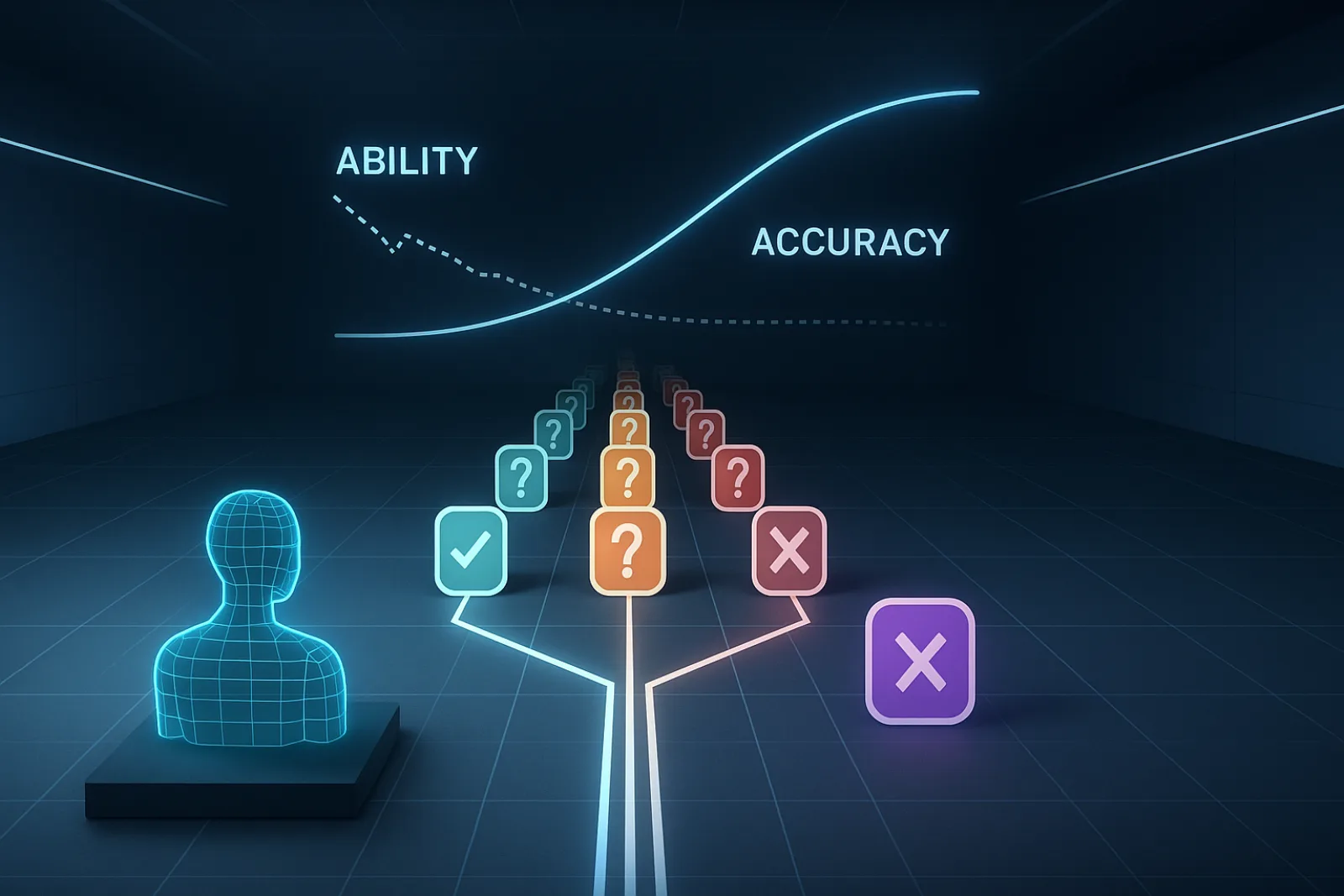
Benchmarks That Fight Back: Adaptive Testing for LMs

A benchmark is supposed to be a measuring instrument. In practice, many AI benchmarks behave more like a tired clipboard. Every model gets the same questions. Every question receives the same accounting treatment. The final score is usually a mean accuracy number, neat enough for a leaderboard and blunt enough to hide the messy truth underneath. Some items are too easy to tell strong models apart. Some are too hard to tell weak models apart. Some are mislabeled. Some have stopped mattering because everyone competent now solves them. Yet the ritual continues: run the suite, average the answers, update the chart, pretend the thermometer is not melting. ...

September 20, 2025 · 17 min · Zelina
Cover image

Confidence, Not Confidence Tricks: Statistical Guardrails for Generative AI

A product team launches an AI assistant. The demo works. The benchmark looks respectable. The model even says “I’m confident” with the serene authority of a consultant who has never owned a pager. Then the real users arrive. Some ask ambiguous questions. Some ask adversarial questions. Some ask perfectly normal questions that happen to sit outside the model’s competence. The assistant still answers. Sometimes it refuses too often. Sometimes it refuses too late. Sometimes its confidence score is less a forecast and more a decorative sticker. ...

September 13, 2025 · 14 min · Zelina
Cover image

From Prompts to Policies: The Agentic RL Playbook

A chatbot can answer a question. An agent has to do something after the answer stops being enough. That distinction sounds obvious until a system must browse, click, call an API, write code, inspect an error, remember what it tried, and decide whether another attempt is worth the cost. At that point, “better prompting” becomes the AI equivalent of telling a logistics team to be more mindful while the warehouse is on fire. Pleasant, perhaps. Not a control system. ...

September 4, 2025 · 15 min · Zelina
Cover image

From Chat Logs to Goal Logs: OnGoal’s Playbook for Goal‑Truthful LLMs

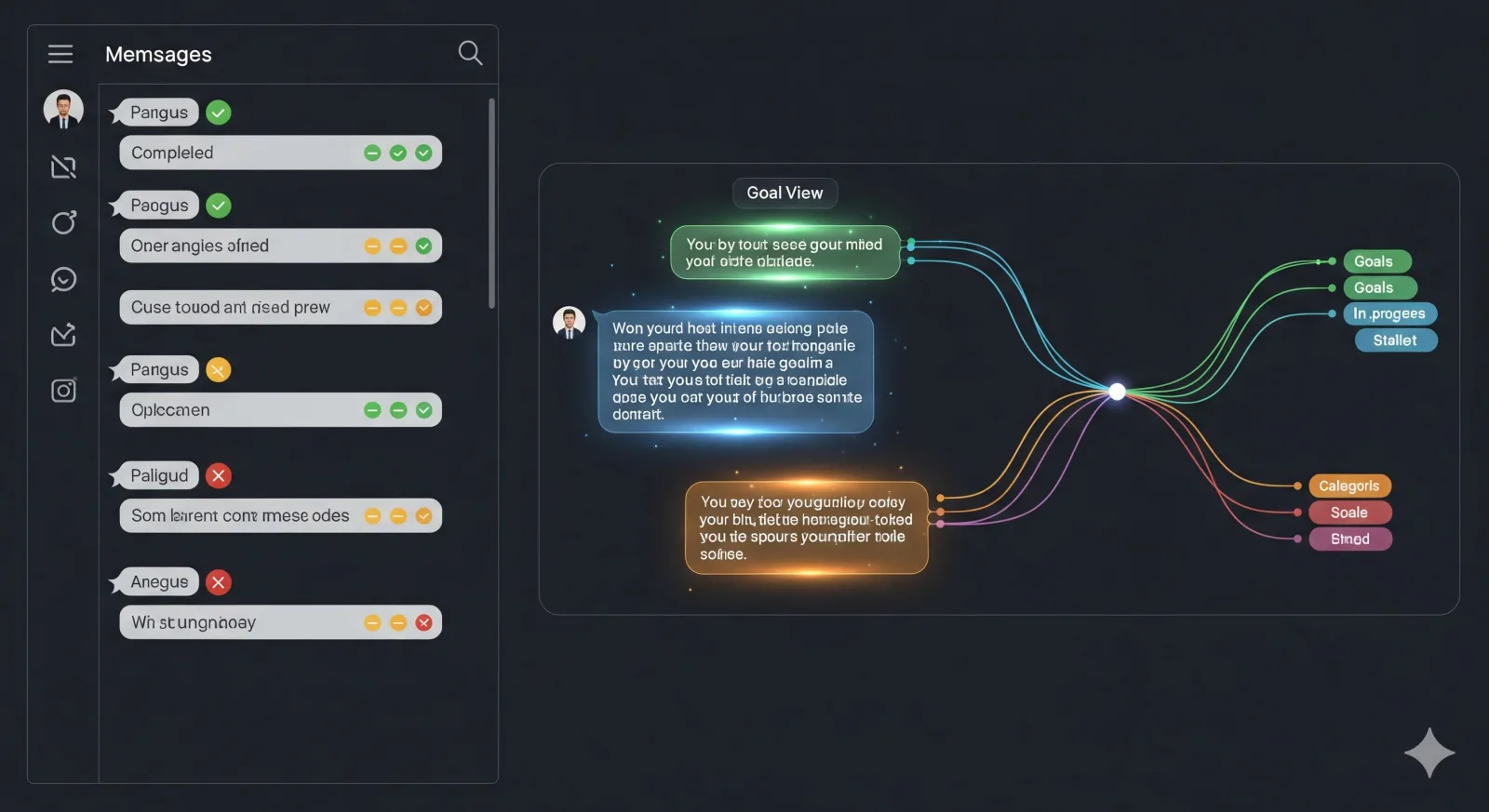
TL;DR for operators OnGoal is not another attempt to make the chatbot magically “understand intent”. That would be adorable, and also not the paper. It is a goal-observability interface: a way to show users which goals the system thinks are active, how those goals change over a conversation, and whether each model response appears to confirm, contradict, or ignore them.1 ...

August 31, 2025 · 16 min · Zelina
Cover image

Benchmarks with Benefits: What DeepScholar-Bench Really Measures

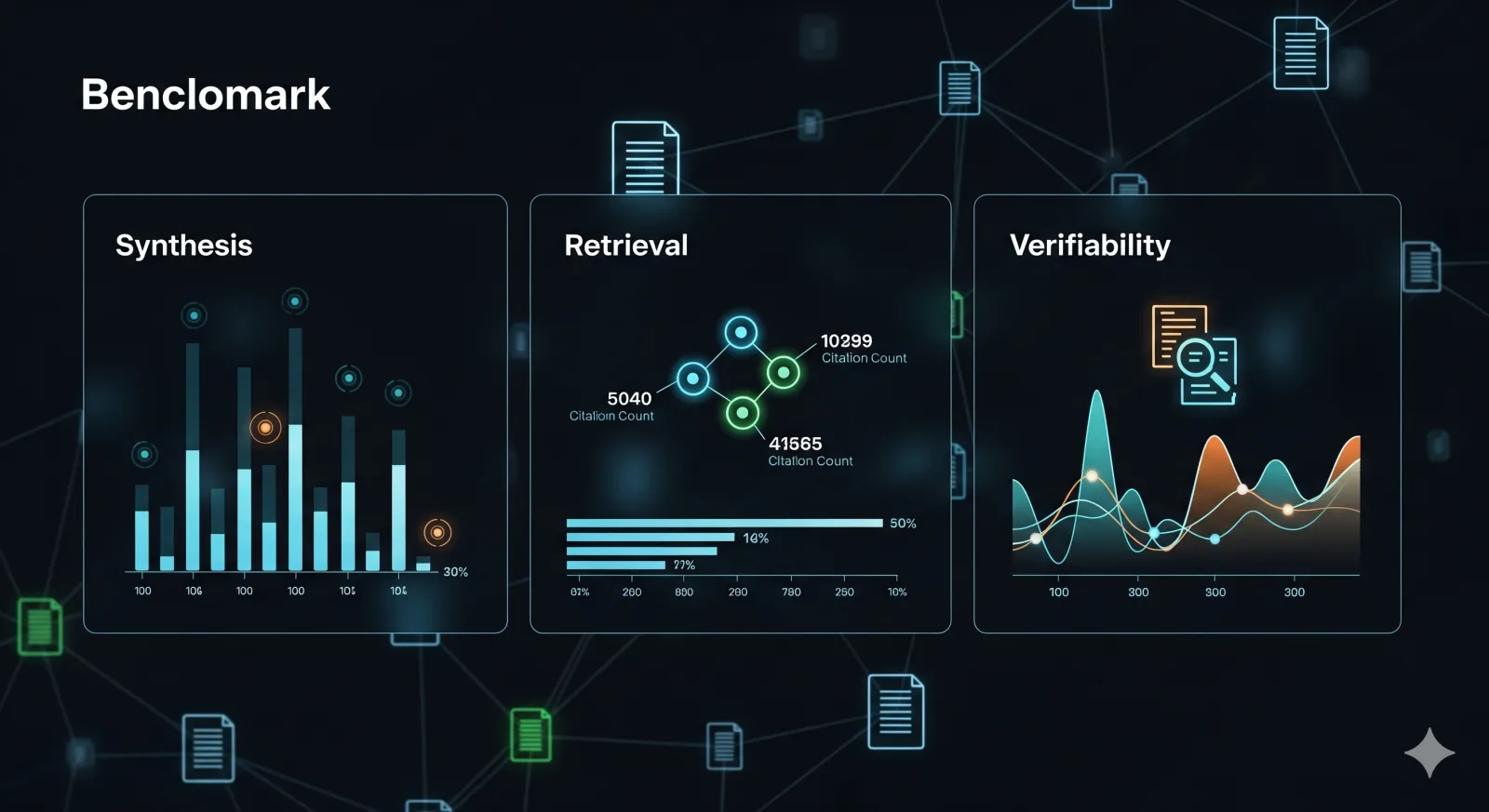
TL;DR for operators DeepScholar-Bench is useful because it turns “deep research” from a demo category into a measurable workflow: retrieve the right sources, synthesize the right facts, and attach citations that actually support the claims.1 The headline result is not flattering. No evaluated system exceeds a 31% geometric mean across all metrics. OpenAI DeepResearch leads overall with a 0.309 geometric mean, but its best-looking strengths hide serious gaps: 0.857 on organization, 0.392 on nugget coverage, 0.187 on reference coverage, and 0.124 on document importance. Translation: the report may read well while still missing the intellectual furniture. ...

August 30, 2025 · 14 min · Zelina
Cover image

Judge, Jury, and Chain‑of‑Thought: Making Models StepWiser

TL;DR for operators StepWiser is a judge for multi-step reasoning systems. Its practical claim is simple: do not wait until the final answer is wrong before discovering that the model fell off a cliff three paragraphs earlier. The paper turns process supervision into a three-part mechanism. First, the solver is taught to divide its reasoning into coherent “chunks-of-thought” rather than arbitrary line breaks. Second, each chunk is labelled by estimating whether continuing after that chunk improves or harms the probability of eventually reaching a correct answer. Third, a separate judge is trained with online reinforcement learning to reason about each chunk before deciding whether it is valid.1 ...

August 27, 2025 · 18 min · Zelina