Cover image

From DAGs to Swarms: The Quiet Revolution of Agentic Workflows

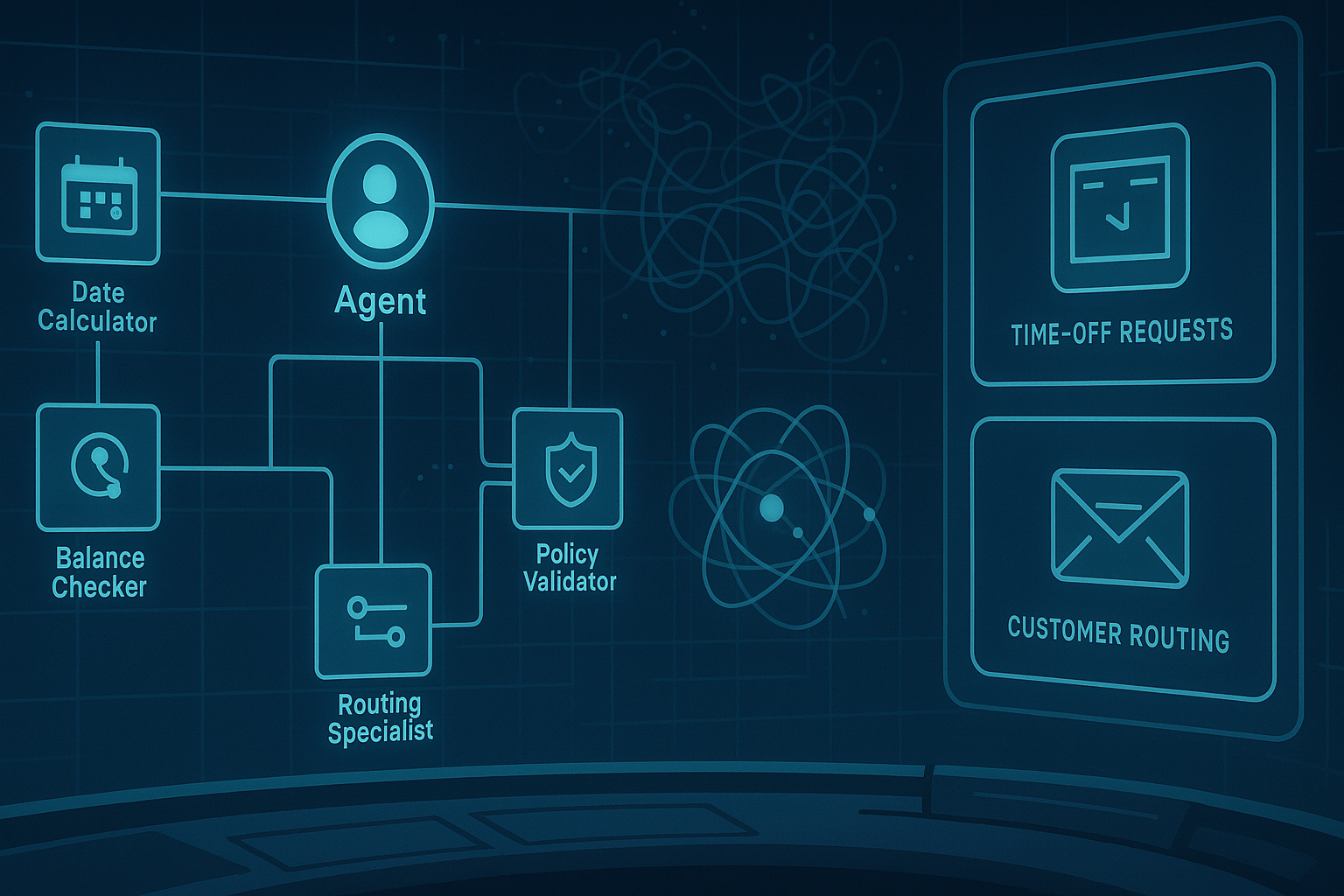
TL;DR Traditional workflow managers treat science as a frozen DAG; the agentic era treats it as a living state machine that learns, optimizes, and—at scale—swarms. The payoff isn’t just speed. It’s a shift from execution pipelines to discovery loops, where hypotheses are generated, tested, and replanned continuously across labs, clouds, and HPC. Why this matters (beyond the lab) Enterprises keep wiring LLMs into point solutions and call it “automation.” Science, under stricter constraints (traceability, causality, irreversibility), is sketching a federated architecture where reasoning agents, facilities, and data fabrics negotiate in real time. If it works in a beamline, it’ll work in your back office. The blueprint is a reusable pattern for any AI-powered operation that must be auditable, distributed, and adaptive. ...

September 19, 2025 · 5 min · Zelina
Cover image

Sandboxes & Ladders: How to Build a Steerable Agent Economy

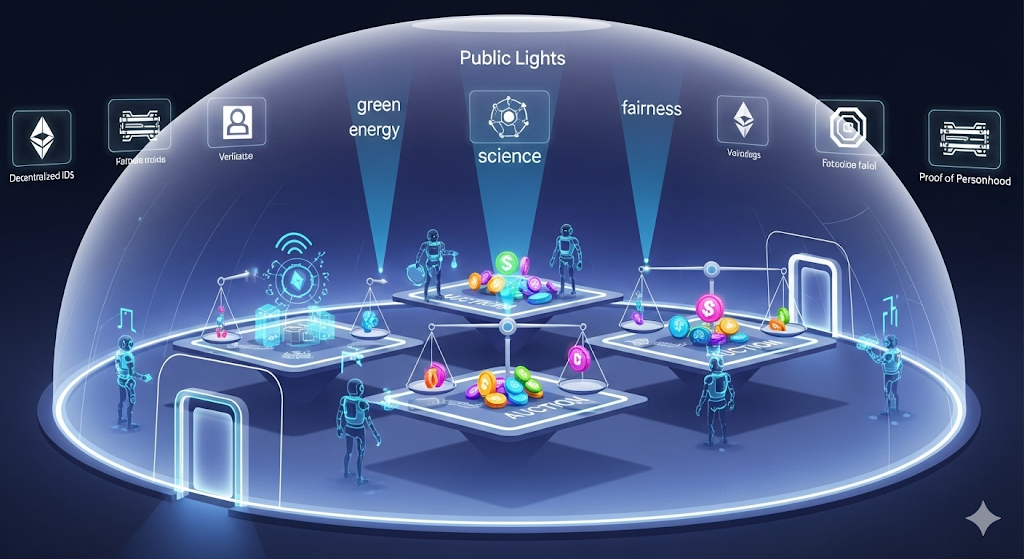
If AI agents become the economy’s new workforce, what keeps their markets from melting into ours like solder—fast, hot, and hard to undo? DeepMind’s “Virtual Agent Economies” proposes a practical map (and a modest constitution) for that future: treat agent markets as sandboxes and tune their permeability to the human economy. Once you see permeability as the policy lever, the rest of the architecture falls into place: auctions to resolve clashes, mission-led markets to direct effort, and identity rails so agents can be trusted, priced, and sanctioned. ...

September 19, 2025 · 6 min · Zelina
Cover image

Repo, Meet Your Agent: Turning GitHub into a Workforce with EnvX

Why this matters: Most “AI + devtools” still treats repos as documentation you read and code you copy. EnvX flips the model: it agentizes a repository so it can understand your request, set up its own environment (deps, data, checkpoints), run tasks end‑to‑end, verify results, and even talk to other repo‑agents. That’s a step change—from “NL2Code” to “NL2Working System.” The core shift in one line Instead of you integrating a repo, the repo integrates itself into your workflow—and can collaborate with other repos when the task spans multiple systems. ...

September 14, 2025 · 4 min · Zelina
Cover image

Tool Time, Any Time: Inside RLFactory’s Plug‑and‑Play RL for Multi‑Turn Tool Use

Large language models are finally learning to work the tools instead of merely talking about them. RLFactory proposes a clean way to post‑train LLMs for multi‑turn tool use by rebuilding the reinforcement learning loop around tool feedback, not just text. The result: quicker training, higher stability, and a framework teams can actually adopt. Why this matters (and where prior setups struggle) Most RL-for-LLMs treat the environment as pure text: the model thinks, emits tokens, gets a scalar reward. But real tasks—searching, querying databases, compiling code, booking travel—depend on external tools that return structured results, fail intermittently, and vary in latency and format. Hard problems emerge: ...

September 13, 2025 · 4 min · Zelina
Cover image

Fault Lines & Safety Nets: How RAFFLES Finds the First Domino in Agent Failures

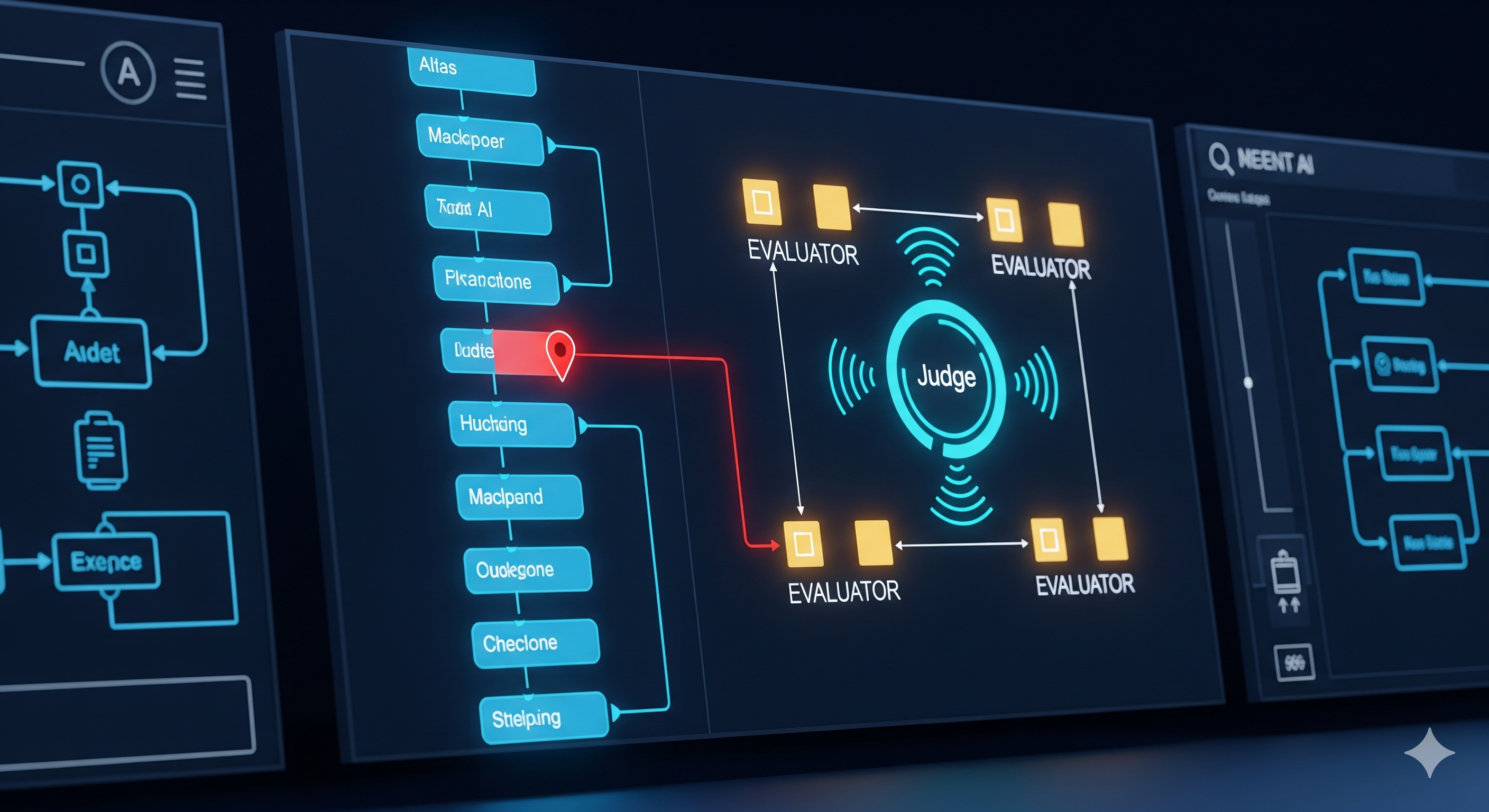
TL;DR Most LLM agent evaluations judge the final answer. RAFFLES flips the lens to where the first causal error actually happened—then iterates with a Judge–Evaluator loop to verify primacy, fault-ness, and non-correction. On the Who&When benchmark, RAFFLES materially outperforms one-shot judges and router-style baselines. For builders, this is a template for root-cause analytics on long-horizon agents, not just scorekeeping. Why we need decisive-fault attribution (not just pass/fail) Modern agent stacks—routers, tool-callers, planners, web surfers, coders—fail in cascades. A harmless-looking plan choice at t=3 can doom execution at t=27. Traditional “LLM-as-a-judge”: ...

September 12, 2025 · 4 min · Zelina
Cover image

Graph and Circumstance: Maestro Conducts Reliable AI Agents

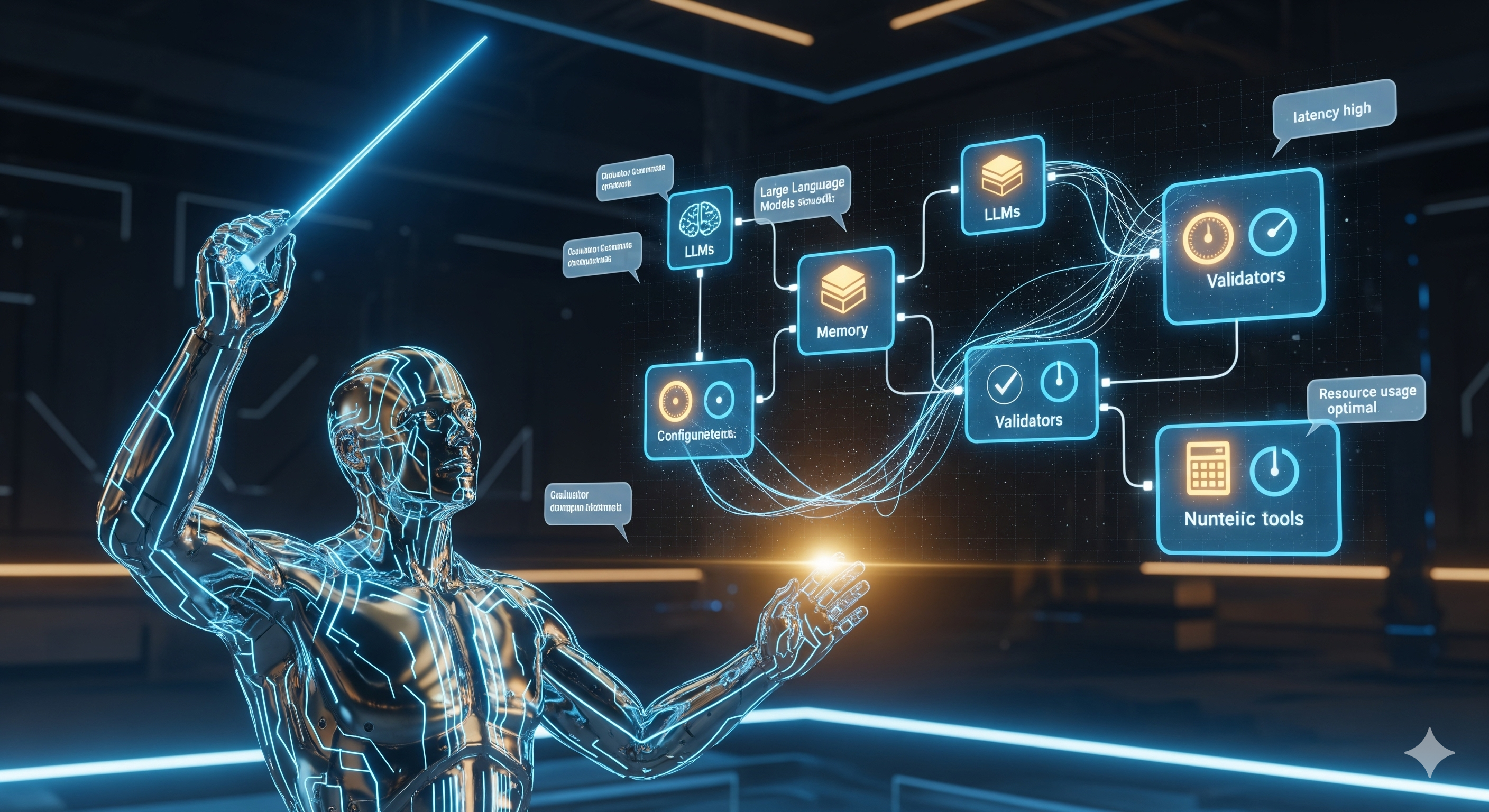
When agent frameworks stall in the real world, the culprit is rarely just a bad prompt. It’s the wiring: missing validators, brittle control flow, no explicit state, and second-hop retrieval that never gets the right handle. Maestro proposes something refreshingly uncompromising: optimize both the agent’s graph and its configuration together, with hard budgets on rollouts, latency, and cost—and let textual feedback from traces steer edits as much as numeric scores. ...

September 11, 2025 · 5 min · Zelina
Cover image

Plan, Then Rewrite: Why Explicit Intent Wins in Agent Workflows

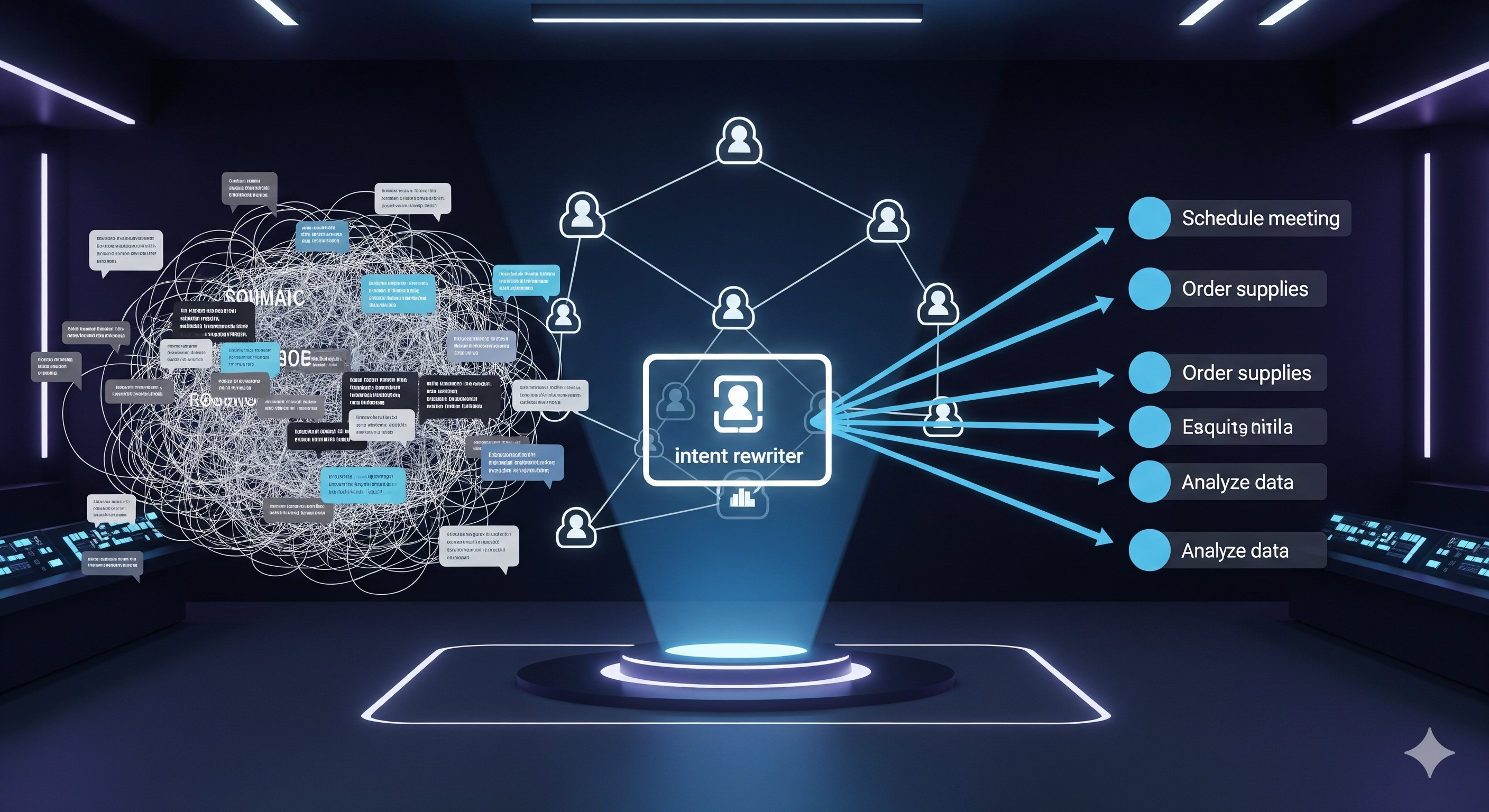
When assistants coordinate multiple tools or agents, the biggest unforced error is planning off the raw chat log. RECAP (REwriting Conversations for Agent Planning) argues—and empirically shows—that a slim “intent rewriter” sitting between the dialogue and the planner yields better, cleaner plans, especially in the messy realities of ambiguity, intent drift, and mixed goals. The headline: rewriting the conversation into a concise, up‑to‑date intent beats throwing the whole transcript at your planner. ...

September 11, 2025 · 4 min · Zelina
Cover image

Plan, Don't Spam: The Goldilocks Rule for Test‑Time Compute

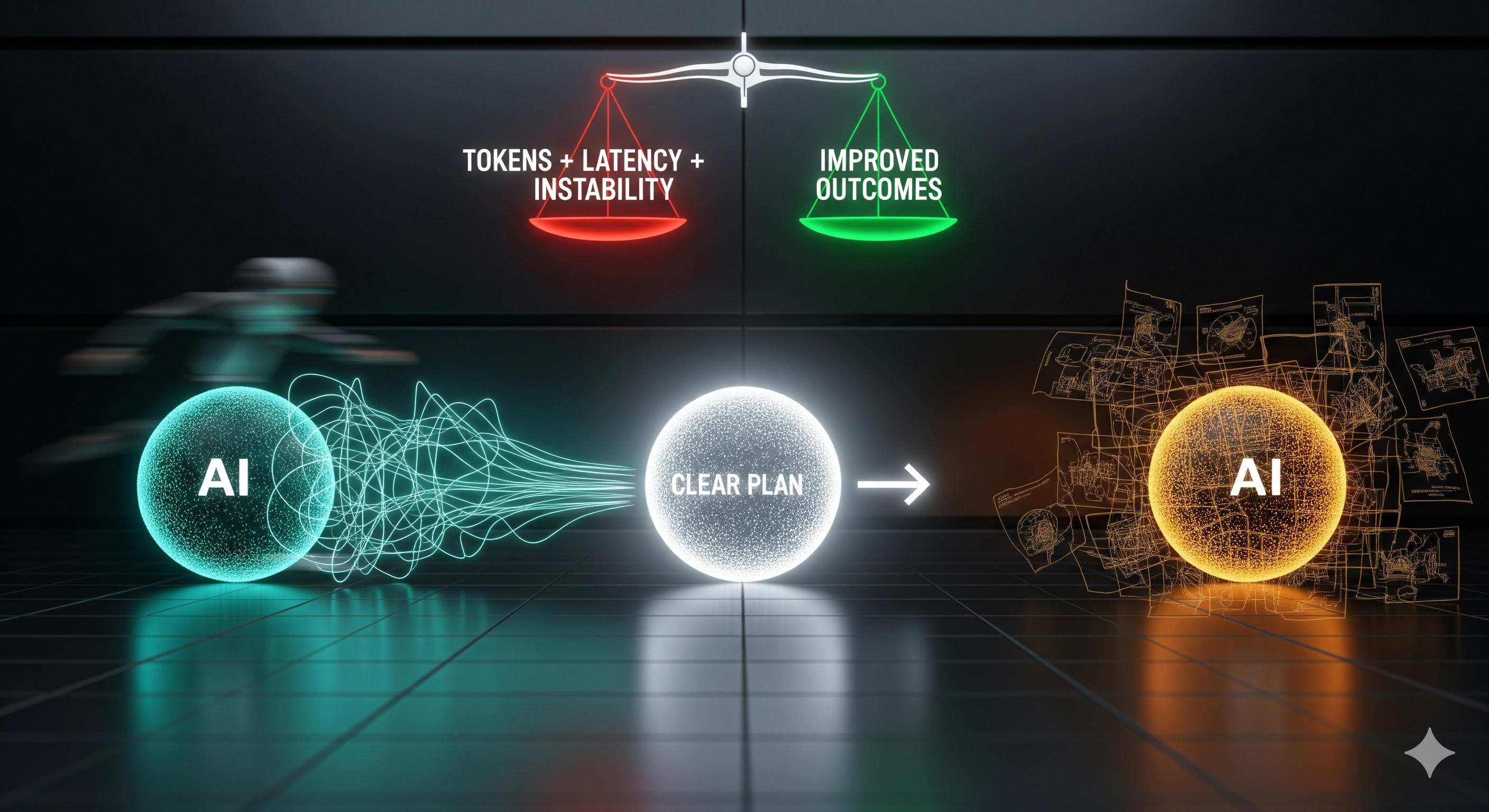
When do you really need a plan? In agentic AI, the answer isn’t “always” (ReAct‑style reasoning at every step) or “never” (greedy next‑action). It’s sometimes—and knowing when is the whole game. A new paper shows that agents that learn to allocate test‑time compute dynamically—planning only when the expected benefit outweighs the cost—beat both extremes on long‑horizon tasks. Why this matters for operators Most enterprise deployments of LLM agents are killed by one of two problems: ...

September 8, 2025 · 5 min · Zelina
Cover image

Rules of Engagement: How Meta‑Policy Reflexion Turns Agent Memory into Guardrails

Enterprise buyers love what agents can do—and fear what they might do. Meta‑Policy Reflexion (MPR) proposes a middle path: keep your base model frozen, but bolt on a reusable, structured memory of “what we learned last time” and a hard admissibility check that blocks invalid actions at the last mile. In plain English: teach the agent house rules once, then make sure it obeys them, everywhere, without re‑training. The big idea in one slide (text version) What it adds: a compact, predicate‑like Meta‑Policy Memory (MPM) distilled from past reflections (e.g., “Never pour liquid on a powered device; unplug first.”) ...

September 8, 2025 · 5 min · Zelina
Cover image

Guard Rails > Horsepower: Why Environment Scaffolding Beats Bigger Models

Most “AI builds the app” demos fail exactly where production begins: integration, state, and reliability. A new open-source framework from Databricks—app.build—argues the fix isn’t a smarter model but a smarter environment. The paper formalizes Environment Scaffolding (ES): a disciplined, test‑guarded sandbox that constrains agent actions, validates every step, and treats the LLM as a component—not the system. The headline result: once viability gates are passed, quality is consistently high—and you can get far with open‑weights models when the environment does the heavy lifting. ...

September 6, 2025 · 4 min · Zelina