Executive Snapshot
- Client type: Government-facing construction contractor working with a mix of in-house teams and subcontractors
- Industry: Construction
- Core problem: The company was trying to scale a high-compliance, multi-project operating model that depended on manual bid preparation, manual subcontractor coordination, spreadsheet cash-flow planning, and after-the-fact compliance reporting.
- Why agentic AI: The workflow crossed multiple functions, required judgment under incomplete information, and generated recurring exceptions that could not be handled well by a static script, dashboard, or chatbot alone.
- Deployment stage: Pilot operating model with workflow redesign and governed AI automation layer
- Primary result: The redesigned workflow was expected to cut administrative effort, improve forecast quality, reduce human process errors, and shift managers away from repetitive coordination toward exception handling and decision making.
1. Business Context
The firm operated in a project business where each tender, subcontractor update, invoice, safety issue, and compliance obligation could affect delivery, cash flow, and government reporting. In the legacy model, project managers, procurement staff, finance controllers, and compliance officers each worked from their own documents, status updates, and spreadsheets. The same project facts were often re-collected and re-explained several times as work moved from bidding to execution to payment and reporting. Delays mattered because missed milestones could weaken bid quality, push out project revenue, create liquidity pressure, increase audit exposure, and raise on-site risk. As volume increased, the real bottleneck was not only labor; it was the growing cost of human communication, manual checking, and cross-functional governance.
2. Why Simpler Automation Was Not Enough
A simple script could not resolve this workflow because the work did not follow one fixed path. Bid decisions depended on past win patterns and current tender conditions. Schedule decisions depended on live subcontractor availability and project status. Finance needed to infer liquidity stress from invoice timing, progress, and payment-cycle behavior. Compliance needed traceable, role-appropriate records, not just auto-filled forms. Safety and quality issues also emerged unevenly and required escalation logic. In other words, the workflow branched, accumulated state over time, and required different actions for routine updates versus business-critical exceptions. What the company needed was not a chatbot layered on top of documents, but a governed operating layer that could observe, interpret, draft, trigger, and escalate across functions.
3. Pre-Agent Workflow
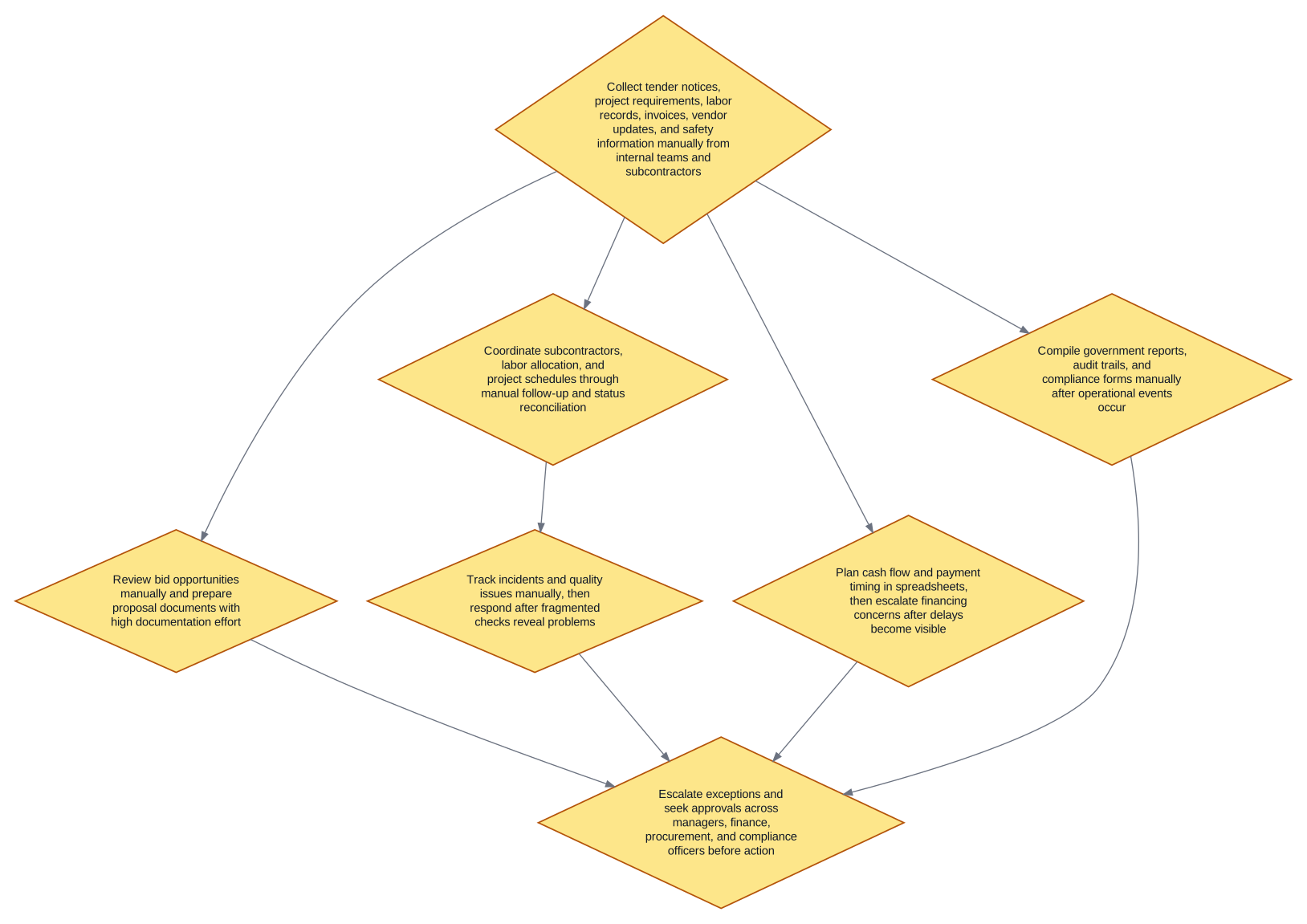
- Operating teams and subcontractors sent tender materials, project updates, invoices, vendor information, and safety notes through fragmented channels.
- Project managers and procurement staff manually reviewed bid opportunities, assembled proposal content, and chased missing inputs before a submission could be finalized.
- Project managers reconciled labor availability and subcontractor status by repeated follow-up, then adjusted schedules manually when delays surfaced.
- Finance controllers updated cash-flow spreadsheets and only escalated liquidity concerns once payment delays or cost pressure became visible.
- Compliance officers and managers compiled reports, audit trails, and incident records after the fact, then circulated them for review and approval before action or submission.
Key pain points
- The same information was touched repeatedly by different people, which increased human process errors and slowed response time.
- Managers spent too much time on communication, approvals, and status reconciliation rather than on decision quality.
- Compliance, safety, and financial risks were often recognized late because the workflow was reactive and document-heavy.
4. Agent Design and Guardrails
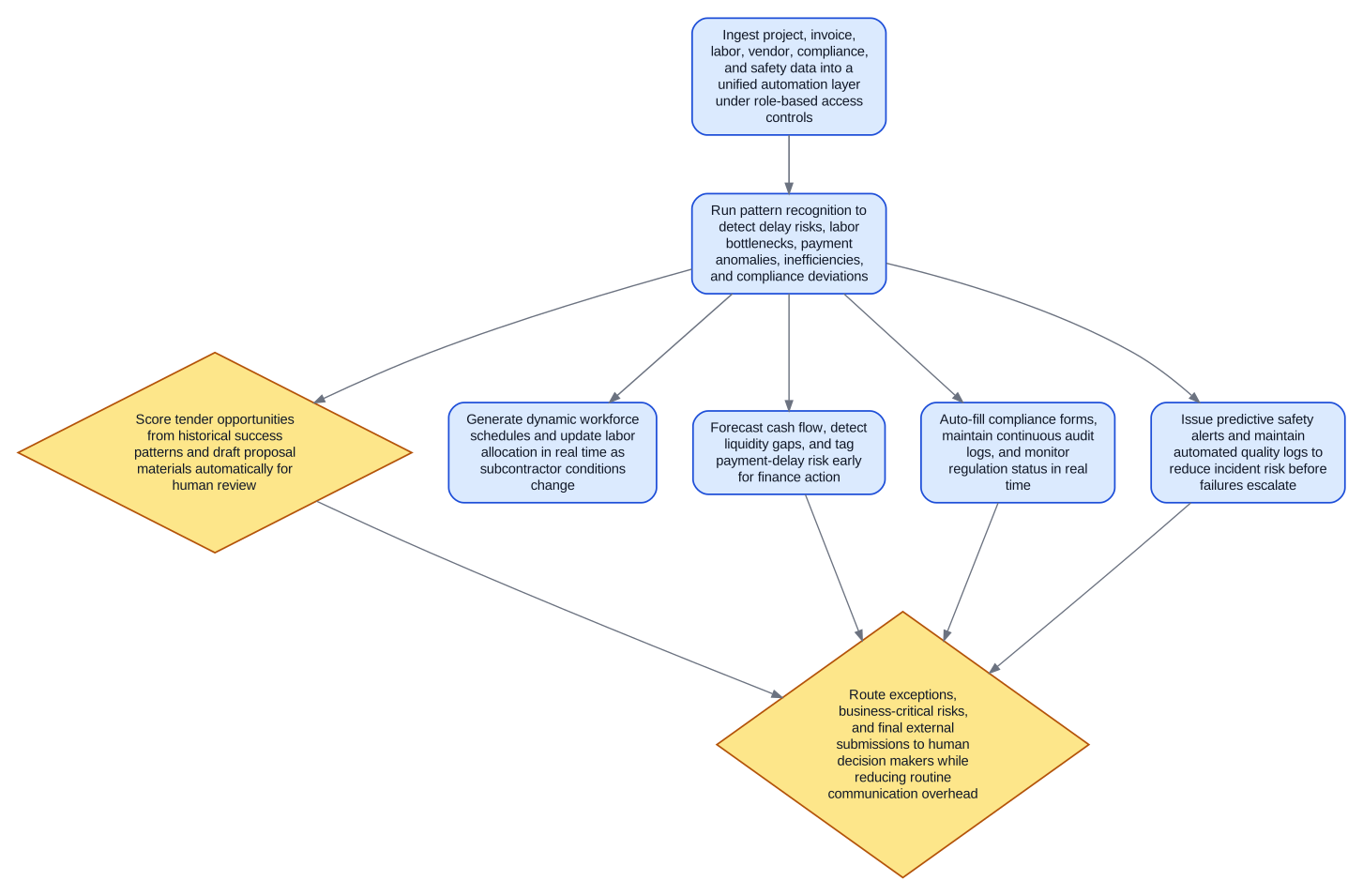
The redesigned system was built as an integrated AI automation layer sitting across bidding, scheduling, finance, compliance, and safety rather than as isolated tools.
- Inputs: Tender documents, project records, labor updates, vendor and procurement data, invoices, payment status, compliance logs, and safety or quality records
- Understanding: Structured ingestion, tagging, anomaly detection, and role-aware retrieval of relevant context
- Reasoning: Tender scoring, schedule-risk detection, payment-risk forecasting, compliance status checks, threshold-based exception routing, and policy-aware prioritization
- Actions: Draft bid materials, update workforce plans, trigger alerts, prepare compliance documents, maintain audit logs, and surface exception queues
- Memory/state: The system maintained a running view of project status, delay signals, invoice timing, compliance state, and previously triggered exceptions
- Human review points: Final bid submission, external compliance actions, and business-critical exceptions remained under human control
- Out-of-scope actions: Autonomous contractual commitment, unrestricted access to sensitive finance data, and unreviewed external submission
The most important design choice was governance. Role-based access control limited who could see budget forecasts, labor details, procurement records, or compliance logs. The AI layer worked on governed views of the data rather than on unrestricted raw access. This reduced privacy risk while still allowing the system to detect cross-functional patterns. It also reduced communication among human staff because the system could convert shared operational signals into function-specific actions without requiring every team to re-brief every other team. Faster response did not require lower standards; the redesign aimed to preserve or improve quality by reducing manual re-entry, late handoffs, and inconsistent judgment across staff.
5. One Workflow Walkthrough
When a subcontractor delay began to threaten a government project milestone, the system first detected the issue from updated labor and project-status signals. It then checked supporting context: the current schedule, the affected work package, invoice timing, and any compliance obligations linked to the milestone. Based on that combined view, it generated a revised staffing plan, flagged potential payment-delay risk to finance, and prepared a draft record for compliance tracking. Because the schedule change could affect an externally visible project commitment, the case was routed to the project manager and finance controller rather than executed silently. The project manager reviewed the proposed labor change, finance reviewed the liquidity warning, and the system then updated the project state, logged the decision, and preserved the audit trail. The outcome was a faster response with fewer manual handoffs and a more consistent decision record than the old process could deliver.
6. Results
- Baseline period: Legacy manual workflow before the AI-agent redesign
- Evaluation period: Initial post-redesign assessment stage
- Workflow scope/sample: Bid management, workforce coordination, finance forecasting, compliance reporting, and safety logging across the contractor’s operating process
- Process change: Administrative effort was estimated to fall by about 25% because drafting, monitoring, and routine coordination moved into the governed AI workflow
- Decision/model change: Finance forecast accuracy was estimated to improve by about 35%, and risk recognition moved earlier because the workflow became predictive instead of reactive
- Business effect: Audit readiness improved, and on-site incidents were estimated to decline by around 20% through earlier detection and logging discipline
- Evidence status: Estimated, based on the redesigned workflow and reported impact targets rather than a long published production benchmark
The most meaningful shift was organizational, not just technical. The new workflow dramatically improved automation of repetitive coordination work, reduced human process errors caused by manual re-entry and fragmented updates, and maintained a high-quality operating response even as the company moved faster. Just as important, it cut the communication burden among human staff. In the old model, managers consumed time in follow-up, reconciliation, and approval routing. In the new model, managers could spend more of their energy on exception handling, commercial judgment, and resource decisions.
7. What Failed First and What Changed
The first design risk was obvious: if every anomaly became an alert, the new system would simply automate noise. In a construction environment, incomplete site updates or delayed data entry can easily produce false urgency. The fix was to separate routine automation from business-critical exception handling. Low-risk items could be drafted, logged, or queued automatically, while high-impact cases required threshold checks and role-specific review. This preserved trust in the system and kept managers from being flooded with low-value escalations. A remaining limitation is that output quality still depends on the timeliness and consistency of source data from projects and subcontractors.
8. Transferable Lesson
- Agentic AI works best when the real bottleneck is cross-functional coordination, not just document generation.
- The highest-value design move is often to automate routine interpretation and drafting while keeping consequential approvals with humans.
- In high-compliance industries, the winning architecture is not maximum autonomy; it is governed autonomy with memory, thresholds, and explicit exception routing.
This case shows that agentic AI works best where organizations need to replace repeated human coordination with a faster, more reliable operating layer without giving up accountability.