Cover image

Who’s Really in Charge? Epistemic Control After the Age of the Black Box

Control is a comforting word. It suggests a hand on the wheel, a dashboard of indicators, and a human being somewhere nearby who can still say no. Machine learning makes that picture look increasingly theatrical. In AI-assisted science, researchers often do not know exactly which internal representations a model has learned, why a high-dimensional classifier separates one tumor subtype from another, or whether a model’s “useful pattern” corresponds to anything a scientist would recognize as a meaningful mechanism. The black box does not merely sit inside the laboratory. It starts to participate in deciding what the laboratory can see. ...

January 20, 2026 · 15 min · Zelina
Cover image

Storm-Chasing Agents: How EWE Turns Extreme Weather into Actionable Intelligence

Storms are easy to see after they arrive. The harder question is what actually made them happen. That distinction sounds academic until money enters the room. An insurer wants to know whether an event belongs to a changing regional risk pattern. A grid operator wants to understand whether a heatwave was driven by persistent blocking, moisture transport, or local feedback. A government agency wants a report fast enough to support preparedness, not just a polished explanation three months later. The weather event is visible. The mechanism is expensive. ...

November 28, 2025 · 14 min · Zelina
Cover image

What We Don’t C: Why Latent Space Blind Spots Matter More Than Ever

A dataset rarely hides everything equally. In most organisations, the visible structure is already over-managed. Product images are labelled by category. Medical scans are labelled by diagnosis. Satellite imagery is indexed by region and timestamp. Customer records are sliced into the usual demographic trays. Scientific images come with whatever measurements the field has already agreed are worth writing down. ...

November 13, 2025 · 16 min · Zelina
Cover image

Many Minds Make Light Work: Boosting LLM Physics Reasoning via Agentic Verification

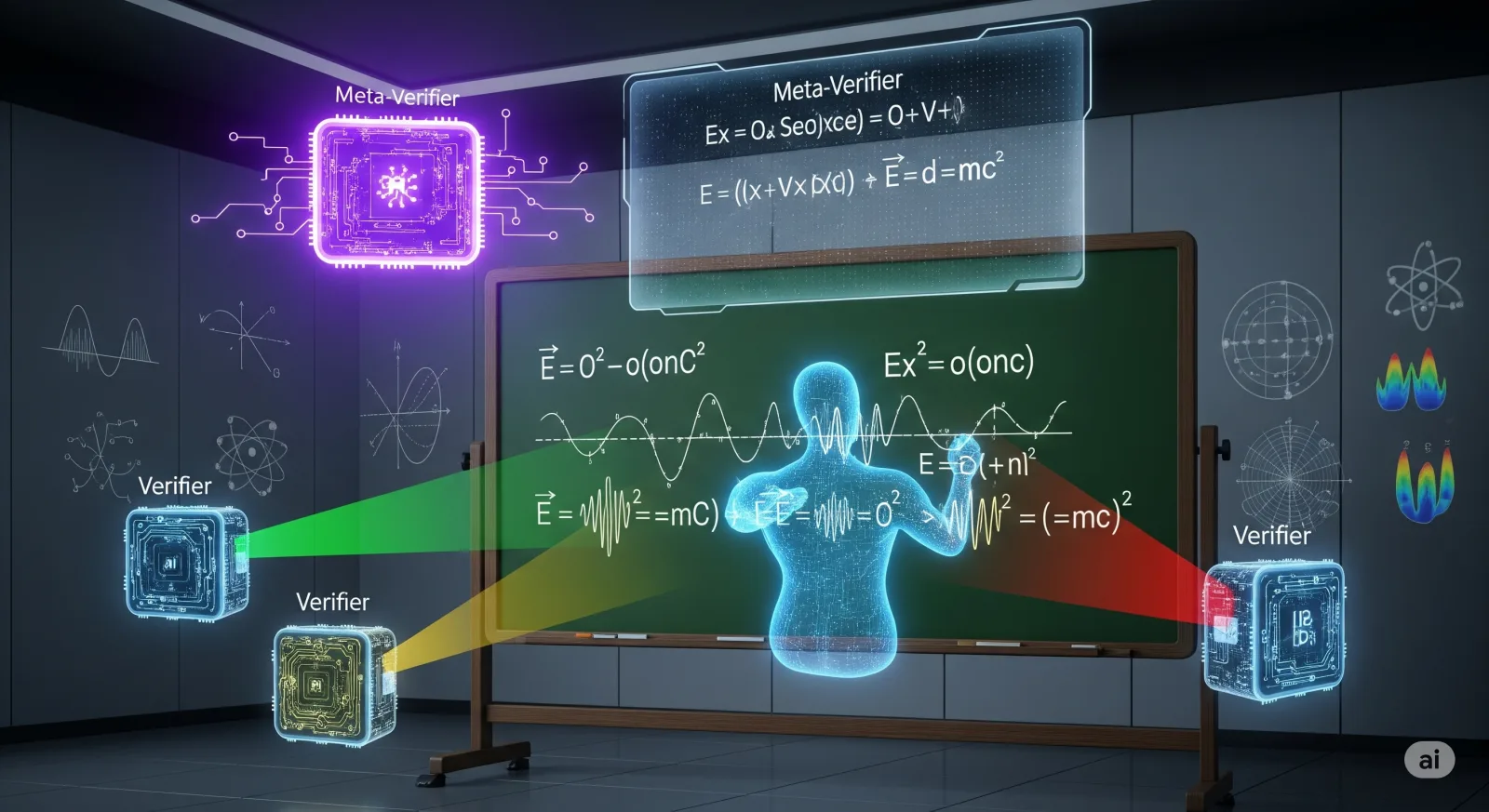
TL;DR for operators A familiar enterprise AI failure looks like this: the model gives a confident answer, the formatting is exquisite, the explanation sounds like a gifted teaching assistant, and one equation quietly takes the project into a ditch. Physics is an unusually good place to study that failure because being clear is not enough. The system must interpret the situation, select the right principle, keep the units straight, calculate correctly, and not hallucinate a helpful-but-illegal assumption because the prompt looked lonely. ...

August 4, 2025 · 16 min · Zelina
Cover image

Passing Humanity's Last Exam: X-Master and the Emergence of Scientific AI Agents

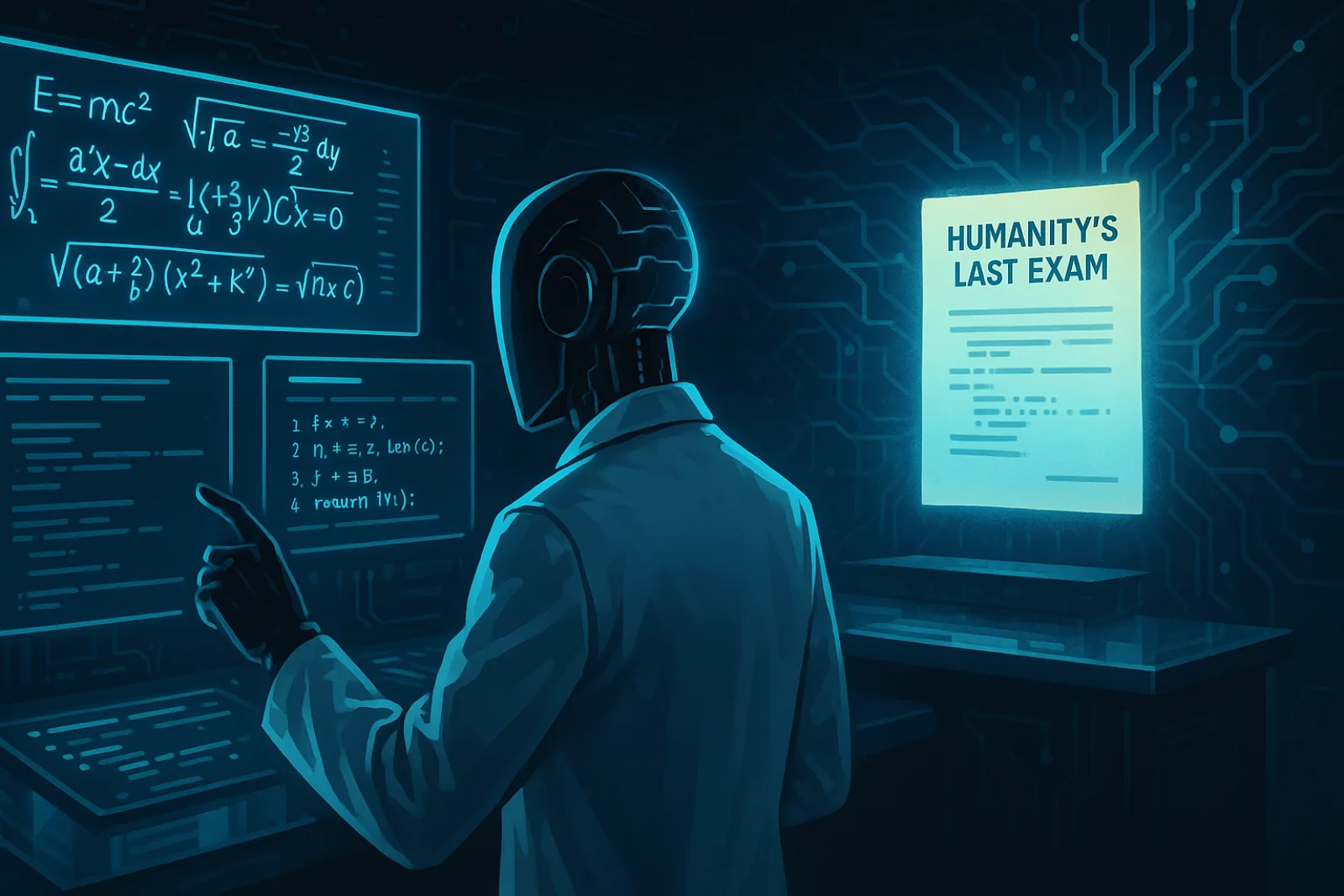
TL;DR for operators Benchmark wins usually arrive wrapped in the usual fog machine: bigger model, more data, more parameters, more destiny. The X-Master paper is more interesting because it is not mainly a bigger-model story.1 It is a systems story. The researchers take DeepSeek-R1-0528, a strong open-source reasoning model, and make it behave more like an agent by giving it a disciplined way to call tools during its own reasoning process. The key design choice is simple: use Python code as the interaction language. When the model needs to search, parse a paper, compute a value, or validate a hypothesis, it emits executable code; the system runs it; the result is inserted back into the context; the model continues reasoning. ...

July 8, 2025 · 16 min · Zelina
Cover image

What Happens in Backtests… Misleads in Live Trades

TL;DR for operators A beautiful backtest can still be a lie. Not because the model is malicious, obviously; spreadsheets have not yet formed a union. The problem is simpler and more expensive: a model can fit past data while misrepresenting the thing you actually care about. Charles Rathkopf’s paper on hallucination and reliability in scientific generative AI gives operators a useful way to think about this problem.1 It argues that hallucination should not be defined mainly as deviation from training data. In science, and in business domains that behave like science, the real question is whether an output misrepresents the target phenomenon: a protein, a weather system, a molecule, a patient, a market, a factory, a supply chain. ...

April 15, 2025 · 17 min · Zelina