Cover image

The Scaling Law Got a Data Manager

TL;DR for operators A useful scaling law does not merely say “bigger is better.” That is not a law; that is a purchasing department with a GPU account. The paper behind this article studies whether the composition of pretraining data can change the compute-optimal balance between model size and downstream data in jet classification.1 The answer, in this setting, is yes. Training from scratch on JetClass produces a nearly balanced scaling rule: as compute grows, the optimal model size and dataset size grow at roughly similar rates. But after pretraining on a JetClass-II corpus augmented with Beyond Standard Model resonance decays, the compute-optimal rule shifts sharply toward downstream data. More of the next compute budget should be spent processing more examples, not inflating the model. ...

June 22, 2026 · 16 min · Zelina
Cover image

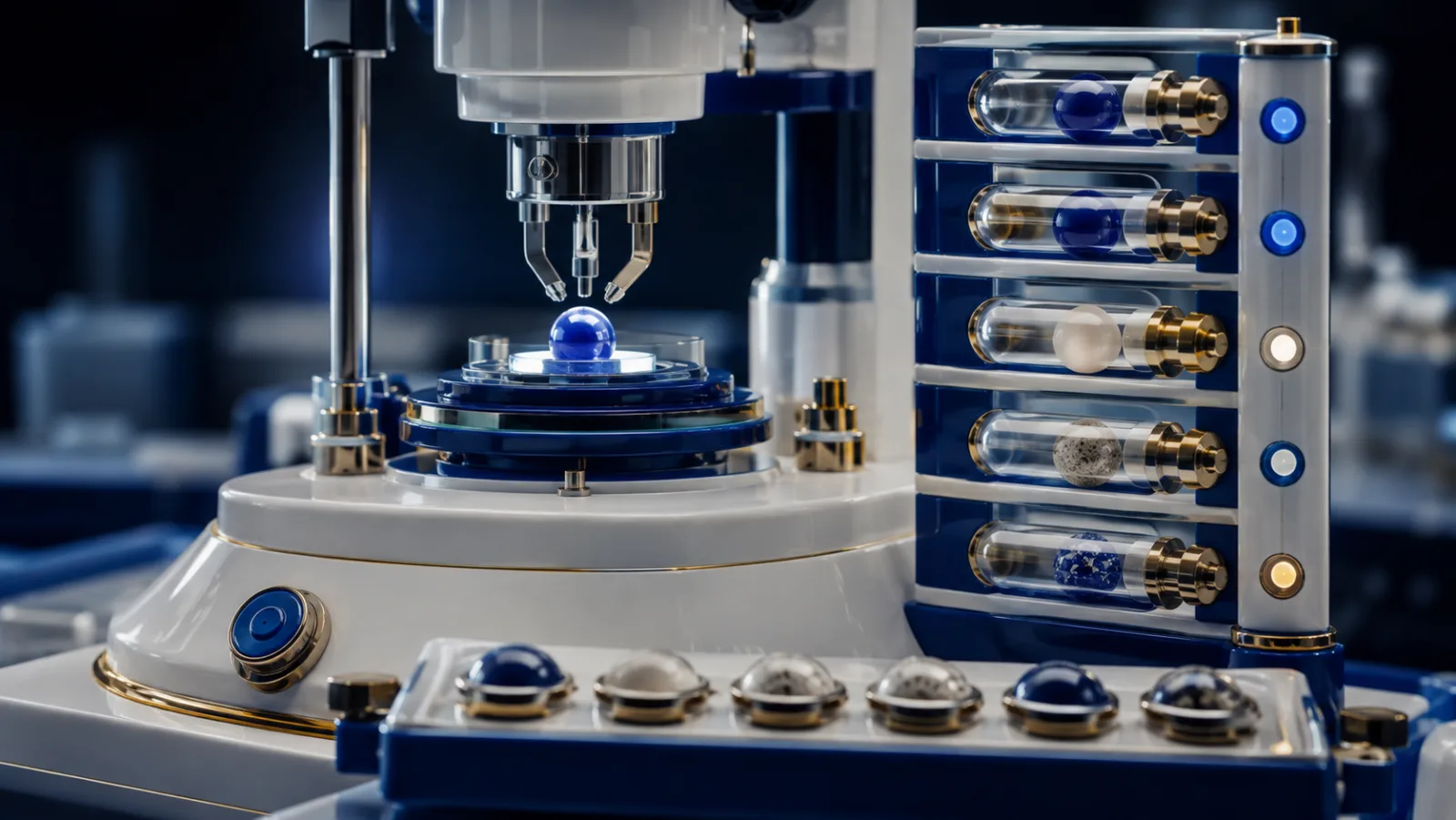
Bench Press: LabVLA Turns Lab Protocols into Robot Supervision

TL;DR for operators LabVLA is best read as an operating system for laboratory robot supervision, not as another paper claiming the robot scientist has arrived. The authors argue that laboratory automation is constrained by data and embodiment: most vision-language-action models have learned household and tabletop manipulation, but not pipettes, beakers, heaters, transparent liquids, instrument buttons, protocol steps, or the awkward fact that different robots have different bodies.1 ...

June 21, 2026 · 18 min · Zelina
Cover image

Protocol Over Hype: Why AI Drug Discovery Agents Need Memory, Not Just Models

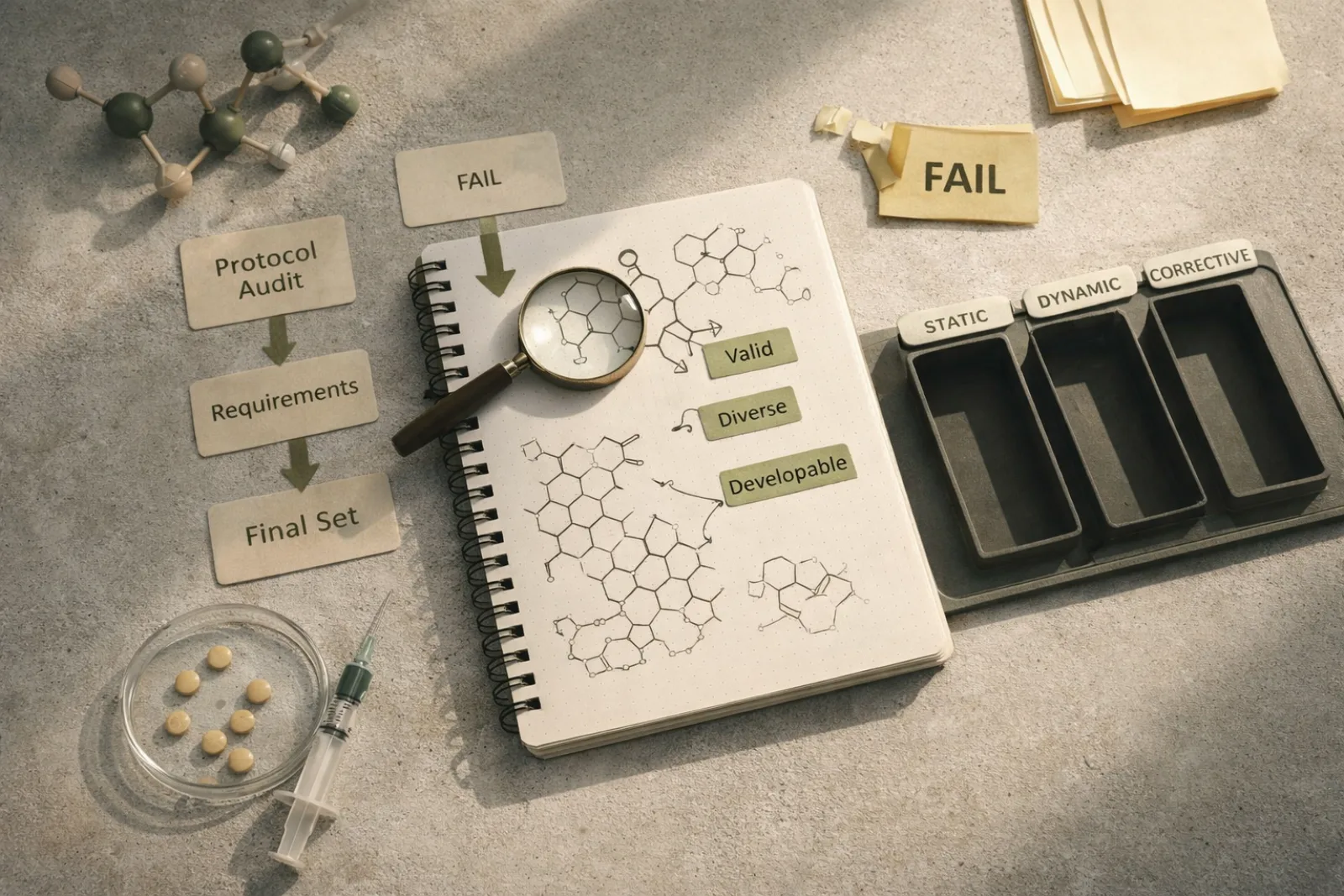
Drug discovery is a wonderful place for AI demos. The model proposes a molecule, the molecule looks plausible, a docking score improves, and the slide deck starts to glow with that familiar color: almost-commercial blue. Then the evaluation protocol arrives and ruins the party. The problem is simple, and therefore easy to underestimate. A drug discovery agent is rarely asked to return one impressive molecule. It is asked to return a set of molecules that jointly satisfies several requirements: enough candidates, enough diversity, acceptable binding proxies, drug-likeness, synthetic accessibility, novelty, and other threshold-style constraints. One molecule can look good. A few molecules can look good. The final returned pool can still fail. ...

April 13, 2026 · 15 min · Zelina
Cover image

The Likelihood Illusion: When Gaussian Comfort Meets Reality

Confidence is cheap. Calibration is expensive. That is the uncomfortable lesson behind a new arXiv paper on earthquake source inversion, a domain that sounds safely remote until one notices the pattern: a complex physical simulator, uncertain model inputs, high-dimensional observations, and a decision-maker who wants a probability distribution rather than a shrug.1 Replace “earthquake waveform” with “financial stress scenario,” “robot sensor stream,” “industrial digital twin,” or “clinical simulator,” and the problem becomes less geological and more familiar. ...

March 22, 2026 · 18 min · Zelina
Cover image

From Data to Atoms: How CliqueFlowmer Turns AI Into a Materials Inventor

A materials lab does not need an AI system that can politely imitate the periodic table. It needs one that can search. That difference sounds small until money enters the room. In materials discovery, every serious candidate eventually asks for simulation time, specialist review, density functional theory validation, and—if it survives long enough—lab synthesis. A model that produces many plausible crystals is useful. A model that pushes candidates toward a target property before the expensive validation begins is more useful. Less glamorous, perhaps. But so is a good spreadsheet, and civilization somehow survives. ...

March 9, 2026 · 17 min · Zelina
Cover image

Bending the Beam, Not the Brain: What RL with Perfect Rewards Still Can’t Teach LLMs

Beams are honest objects. Push them, load them, move their supports, and they obey equilibrium equations without theatrical ambiguity. Language models, unfortunately, are less well-behaved. That is what makes BeamPERL a useful paper. It does not test LLM reasoning on a vague benchmark where “correctness” means pleasing a judge, matching a rubric, or sounding sufficiently graduate-school. It asks a compact reasoning model to solve a classical beam statics task: calculate support reactions for a loaded beam. The answers can be checked by a symbolic solver. The reward can be exact. No vibes, no partial credit, no “the answer feels plausible.”1 ...

March 5, 2026 · 16 min · Zelina
Cover image

From Simulation to Strategy: When Autonomous Systems Start Auditing Themselves

A lab is full of reviews. A candidate molecule is screened, criticized, scored, filtered, re-ranked, re-tested, and then quietly abandoned because one property looked promising while three others looked inconvenient. Drug discovery has never lacked opinions. It has lacked a clean way to convert those opinions into a machine-readable optimization process. That is the useful point in MAC-AMP: A Closed-Loop Multi-Agent Collaboration System for Multi-Objective Antimicrobial Peptide Design.1 The paper is easy to misread as another “LLM designs molecules” story. That would be tidy, familiar, and slightly wrong. ...

February 17, 2026 · 16 min · Zelina
Cover image

PDE Family Reunion: When Symbolic AI Learns the Skeleton, Not Just the Skin

Simulation teams know the ritual. Change the material coefficient, rerun the solver. Change the viscosity, rerun the solver. Change the flow velocity, rerun the solver. The physical system is still recognizably the same, but the computation behaves like a forgetful intern: every parameter setting is treated as a fresh assignment. This is not because finite element, finite volume, or spectral methods are bad. Quite the opposite. Their reliability is precisely why serious engineering organizations still use them. The problem is that parameterized simulation often asks the same mathematical family of questions again and again. The expensive part is not always solving one equation. It is solving a family of related equations while pretending they are strangers. ...

February 14, 2026 · 16 min · Zelina
Cover image

Think Like a Scientist: When LLMs Stop Guessing and Start Reasoning

Factory dashboards are full of curves. Temperature curves, vibration curves, pressure curves, yield curves, defect curves. Most AI systems are happy to predict the next point on the curve and call it intelligence. Useful, yes. Scientific, not quite. Engineers often want something more stubbornly old-fashioned: an equation. Not because equations look elegant in a slide deck, although they do help meetings feel temporarily civilized. They want equations because equations can be inspected, simulated, challenged, simplified, embedded into control systems, and argued over by humans who still prefer causes to vibes. ...

February 13, 2026 · 15 min · Zelina
Cover image

DeltaEvolve: When Evolution Learns Its Own Momentum

Memory is usually where agentic systems go to become expensive. That is not the glamorous failure mode. It is not the cinematic robot rebellion, nor the slightly more realistic spreadsheet full of hallucinated invoices. It is quieter: an LLM agent keeps improving a program, stores previous attempts, retrieves a few “good” ones, and then spends half its context window rereading code scaffolding that no longer explains anything useful. ...

February 5, 2026 · 16 min · Zelina