Cover image

When AI Packs Too Much Hype: Reassessing LLM 'Discoveries' in Bin Packing

A warehouse manager, a cloud scheduler, and a container-ship planner all know the same unpleasant truth: fitting things into limited capacity is where tidy strategy goes to die. That is why bin packing remains such a useful test case. The problem is easy to explain and difficult to solve optimally. Items arrive. Bins have fixed capacity. The objective is to use as few bins as possible. In the online version, the system must decide where to place each item as it arrives, without seeing the future. This is not just a toy puzzle. It resembles production scheduling, memory allocation, server placement, freight consolidation, and every other operational setting where tomorrow’s workload has the bad manners not to disclose itself in advance. ...

November 5, 2025 · 15 min · Zelina
Cover image

Circuits of Understanding: A Formal Path to Transformer Interpretability

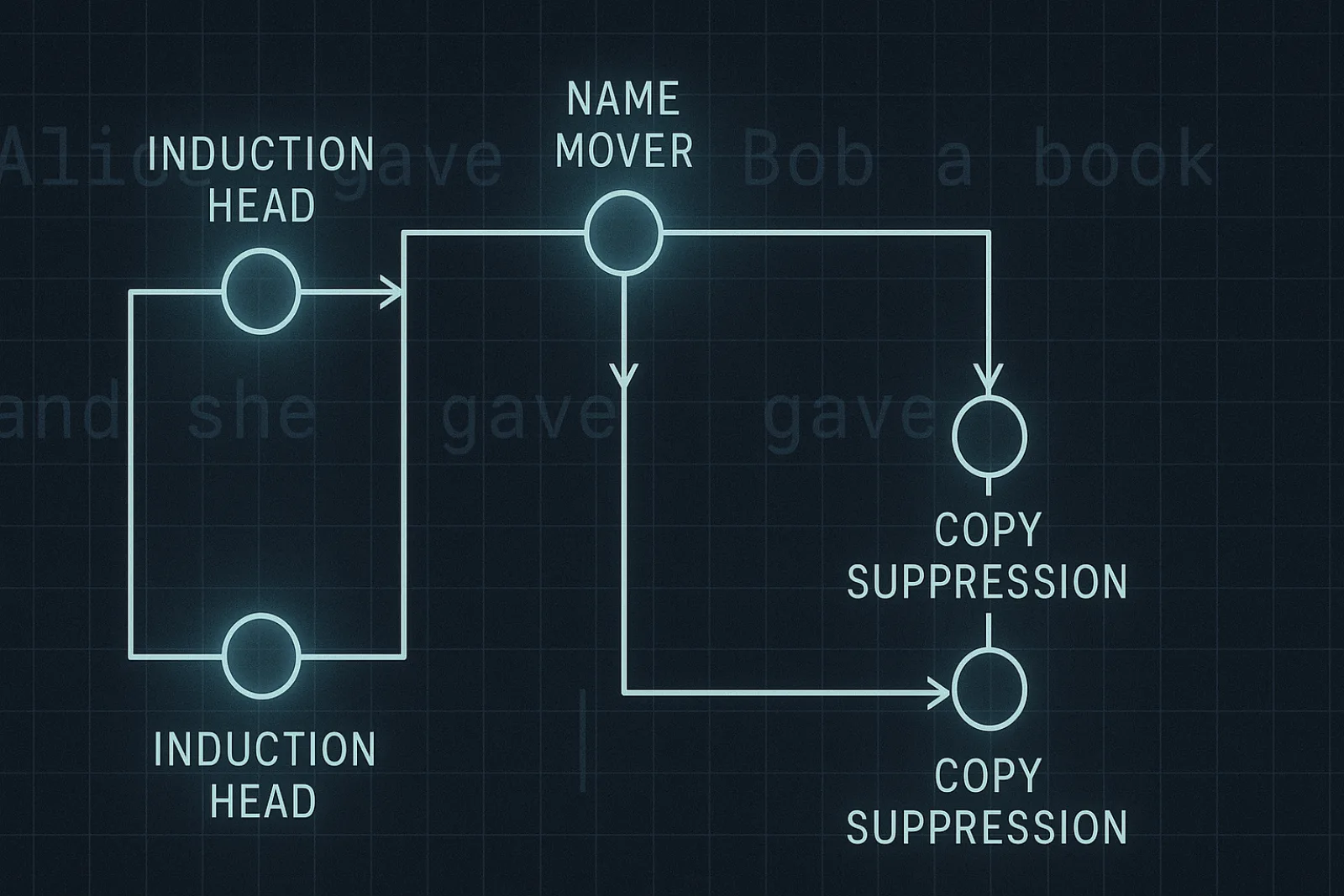
TL;DR for operators Debugging. That is the useful mental entry point, not “AI transparency,” which has become a conference badge phrase with slightly better lighting. The paper at the centre of this article, Interpretability in the Wild: a Circuit for Indirect Object Identification in GPT-2 small, shows that a real linguistic behaviour in a transformer can be decomposed into a circuit of internal components, then tested using causal interventions rather than admired through colourful attention maps.1 The task is indirect object identification: given a sentence where two names appear and one is repeated, the model predicts the other name. Small grammar problem, large interpretability bill. ...

July 30, 2025 · 14 min · Zelina
Cover image

Steering by the Token: How GRAINS Turns Attribution into Alignment

TL;DR for operators GRAINS is not “fine-tuning, but cheaper.” That framing misses the point and commits the usual business sin of turning a mechanism into a procurement slogan. The paper’s useful claim is more specific: token-level attribution can be converted into an inference-time steering signal. Instead of retraining model weights, GrAInS identifies which text or image tokens most strongly push the model toward preferred or dispreferred outputs, builds layer-wise steering vectors from those activation shifts, and applies normalized edits during inference.1 ...

July 26, 2025 · 16 min · Zelina