Cover image

XAI, But Make It Scalable: Why Experts Should Stop Writing Rules

Churn is a wonderfully inconvenient business problem. Customers do not leave in one elegant, universal way. Some leave because price finally annoyed them. Some leave because support failed at exactly the wrong moment. Some leave because a monthly contract made exit frictionless. Some leave because they were already mentally gone and the invoice merely made it official. ...


December 23, 2025 · 15 min · Zelina
Cover image

You Know It When You See It—But Can the Model?

Review queue. Someone has to decide whether an image is “unsafe,” “misleading,” “healthy,” “premium,” “clickbait,” “brand-safe,” or “not really our vibe.” The label sounds simple until the first borderline case appears. A salad with too much cream. A gaming ad that hints at easy money but never quite says it. A before-and-after photo where the “achievement” is visible only if one is feeling generous. ...

December 12, 2025 · 15 min · Zelina
Cover image

Crowds, Codes, and Consensus: When AI Learns the Language of Science

A lab has data. Lots of data. Spectra, simulations, microscopy images, code outputs, experimental notes, model prompts, maybe three versions of a spreadsheet called final_final_revised.xlsx, because civilization remains fragile. Then someone asks a simple question: what does this variable mean? That is when the machinery slows down. The word looked obvious when one team wrote it. It becomes less obvious when another team tries to reuse it. It becomes actively annoying when a model retrieves the wrong dataset because two groups used the same term differently, or different terms for the same concept. At that point, metadata stops being administrative wallpaper and becomes infrastructure. ...

December 11, 2025 · 16 min · Zelina
Cover image

Order in the Court: Why XIL Doesn’t Panic Over Human Bias

Review queue. That is where many enterprise AI governance dreams quietly become manual work. A model makes a decision. An explanation highlights the evidence. A human reviewer approves it, rejects it, or corrects it. The system then learns from that feedback. In theory, this is how explainable AI becomes operational governance rather than a dashboard for admiring colorful heatmaps. ...

December 6, 2025 · 13 min · Zelina
Cover image

Choosing Wisely: How MACHOP Turns Logic Puzzles into Preference Machines

A schedule looks reasonable until someone asks why. Why did this nurse get the night shift? Why was this invoice routed for manual review? Why did the configuration engine reject one product bundle and approve another? In many operational systems, the answer is not a single rule. It is a chain of constraints: availability, capacity, dependencies, exclusions, thresholds, and the occasional policy clause someone wrote in 2017 and nobody wants to touch. ...

November 14, 2025 · 16 min · Zelina
Cover image

When Compliance Blooms: ORCHID and the Rise of Agentic Legal AI

Procurement is where compliance anxiety goes to acquire a purchase order. A laboratory wants to buy an item. Perhaps it is ordinary. Perhaps it is dual-use. Perhaps it belongs under the U.S. Munitions List, Nuclear Regulatory Commission controls, the Commerce Control List, or the broad residual category of EAR99. The practical question is not just “what is this?” It is “what is this under the rules, according to which rule text, with enough evidence that someone can defend the decision later?” ...

November 10, 2025 · 14 min · Zelina

From School Office Overload to Reviewable Administrative Intelligence

A mid-sized private K-12 school redesigned fragmented admissions, parent communication, attendance, fee, and teacher-report workflows into an AI-agent-enabled operating layer with human checkpoints for sensitive decisions.

September 30, 2025 · 8 min · Vox

From Fragmented Rental Tasks to AI-Coordinated Property Operations

A small property management company redesigned its human-coordination-heavy rental workflow into a stateful AI-agent-enabled operating system with structured intake, triage, exception review, contractor coordination, and owner reporting.

July 15, 2025 · 8 min · Vox
Cover image

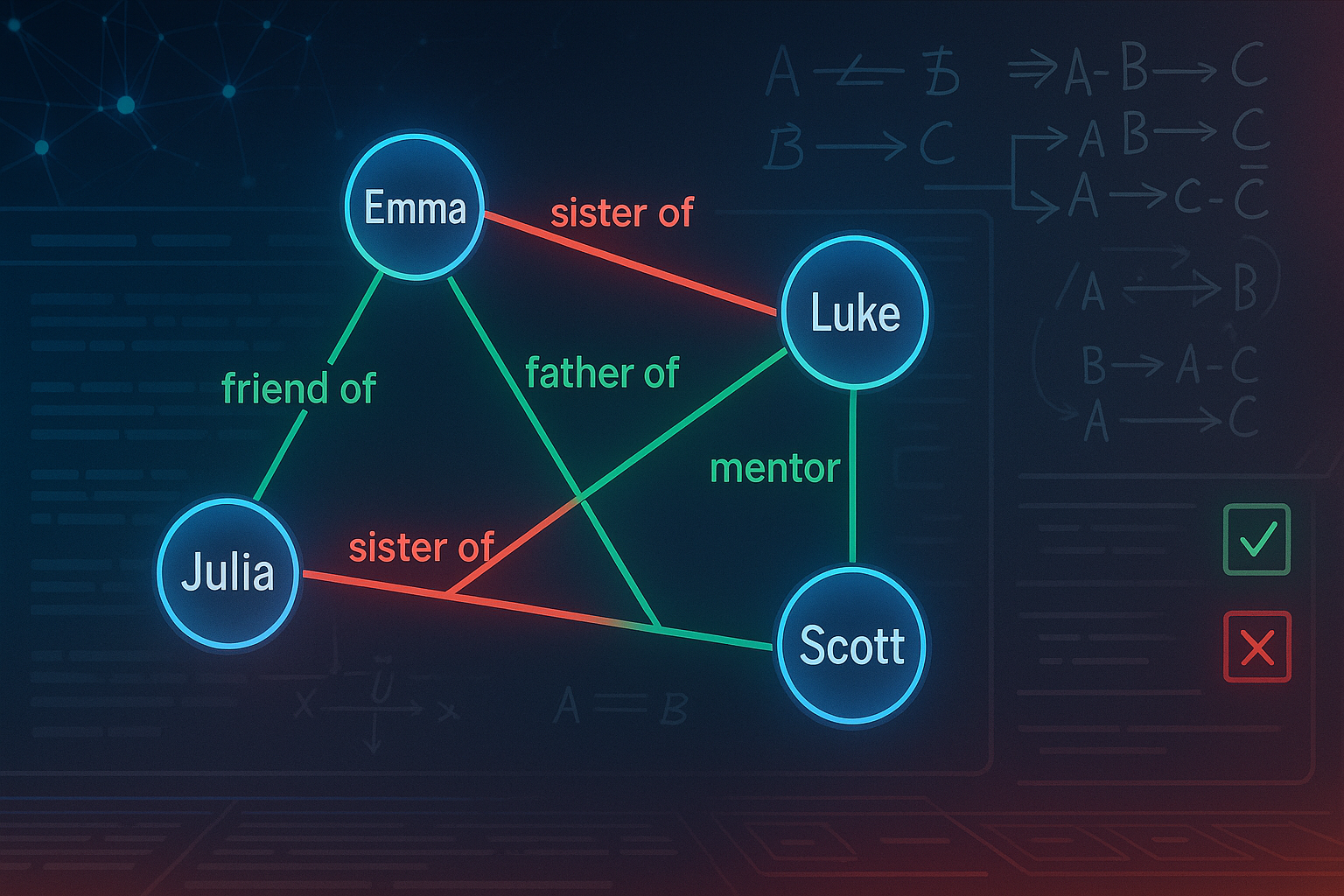
LLMs Meet Logic: SymbolicThought Turns AI Relationship Guesswork into Graphs

TL;DR for operators SymbolicThought1 is a useful reminder that relationship extraction is not a vibes problem. It is a graph problem wearing a language-model costume. The paper proposes a human-in-the-loop system for extracting character relationships from narrative text. The pipeline lets an LLM propose characters and relations, then applies symbolic rules to infer missing edges, detect contradictions, retrieve supporting evidence, and ask humans to confirm or correct what matters. That is the important mechanism: the LLM is not trusted as a final judge. It is treated as a noisy extractor inside a controlled annotation workflow. ...

July 12, 2025 · 15 min · Zelina
Cover image

Humans in the Loop, Not Just the Dataset

TL;DR for operators AI-assisted monitoring does not become trustworthy because a human occasionally clicks “wrong label.” It becomes useful when the whole product is designed to capture, validate, resolve, and redeploy human judgement. The paper behind this article studies an open-source Telegram monitoring tool being developed with civil society organisations, using conspiracy-theory classification as the working scenario.1 Its practical contribution is a workflow: Telegram posts are classified, CSO users review labels during their normal monitoring work, their feedback is stored with metadata, and that accumulated feedback becomes a gold-standard dataset for model evaluation and refinement. ...

July 10, 2025 · 14 min · Zelina