Cover image

The Orchestrator Problem: When AI Meets Exascale Reality

A supercomputer is not impressed by a clever chatbot. That sounds rude, but it is also a useful starting point. Modern high-performance computing systems are built to run thousands of jobs in parallel, move data across specialized hardware, and tolerate the minor chaos of long simulation campaigns. A language model, by contrast, is very good at interpreting a request, proposing steps, and calling tools. Left alone, it often behaves like an overworked project manager with one phone line: think, call a tool, wait, think again, call the next tool, wait again. ...

April 11, 2026 · 16 min · Zelina
Cover image

Parallel Minds: How OMPILOT Redefines Code Translation for Shared Memory AI

Parallel Minds: How OMPILOT Redefines Code Translation for Shared Memory AI Backlogs are where technical debt goes to become architecture. Somewhere inside a simulation company, an engineering team knows that a large body of C++ could run faster if more of it used shared-memory parallelism. The CPUs are already multicore. The workload already begs for concurrency. The obstacle is not theory. It is the miserable little detail that correct OpenMP is easy to write incorrectly. ...

November 9, 2025 · 14 min · Zelina
Cover image

Provenance, Not Prompts: How LLM Agents Turn Workflow Exhaust into Real-Time Intelligence

Logs are where teams go after the dashboard has already failed. A pipeline stalls. A model run produces nonsense. A compute job quietly burns budget on the wrong node. Someone opens three dashboards, two notebooks, and one ancient SQL snippet named final_debug_v3_really_final.sql. Then the archaeology begins. The paper LLM Agents for Interactive Workflow Provenance: Reference Architecture and Evaluation Methodology proposes a more interesting answer: do not ask an LLM to “understand the workflow” in the abstract. Give it live provenance metadata, a compact schema, query guidelines, and tools that execute structured queries on its behalf.1 In other words, stop treating the model as a psychic dashboard. Treat it as a controlled interface to workflow exhaust. ...

October 1, 2025 · 17 min · Zelina
Cover image

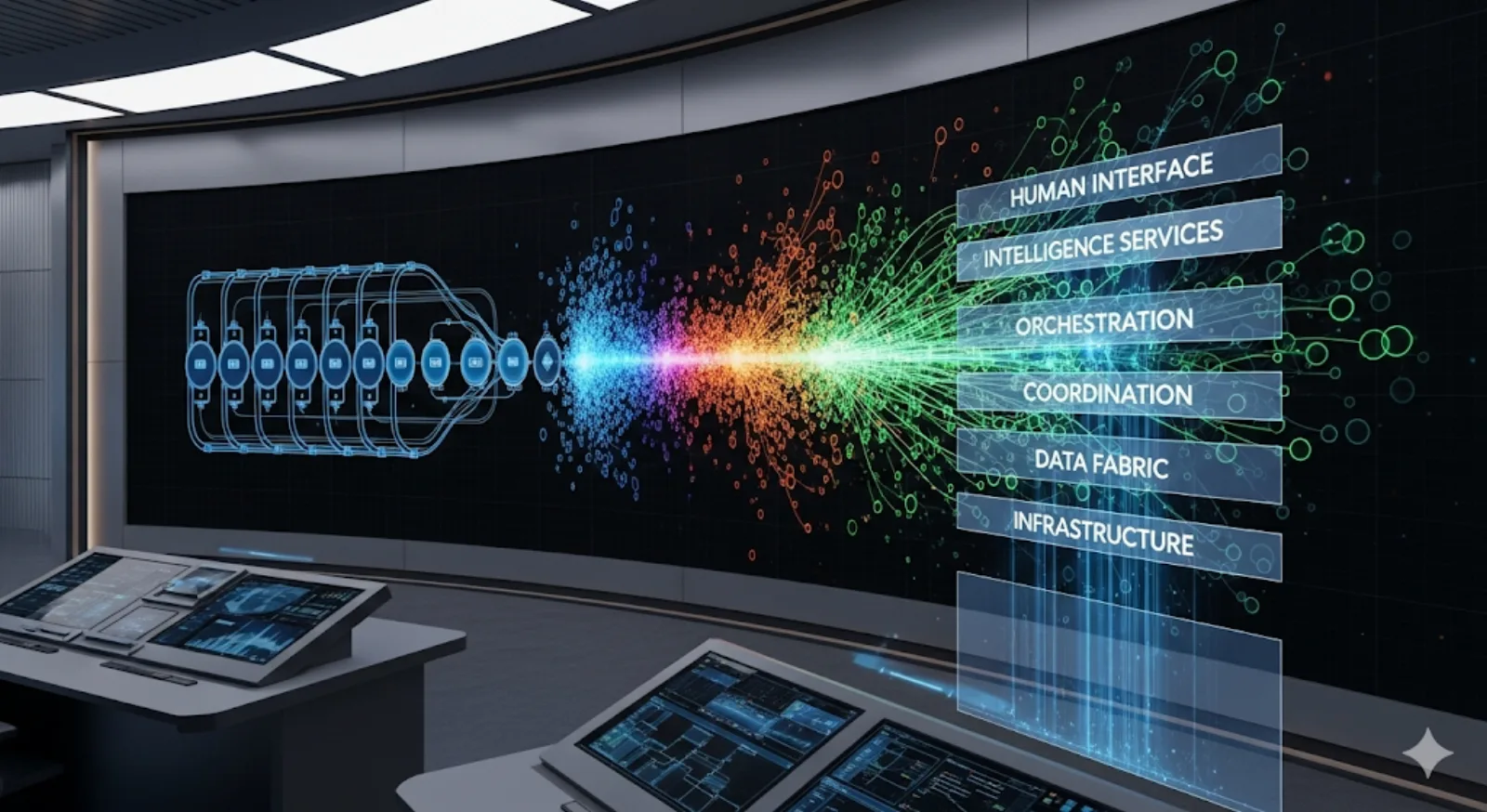
From DAGs to Swarms: The Quiet Revolution of Agentic Workflows

Queue. That is still the hidden operating model of much modern science. Queue for the instrument. Queue for the simulation. Queue for the data transfer. Queue for a human to inspect the result, change the parameters, approve the next run, and remind three systems with incompatible interfaces that they are supposed to be part of the same experiment. The glamour version is “AI for discovery.” The operational version is a researcher quietly becoming a logistics coordinator with a PhD. ...

September 19, 2025 · 17 min · Zelina
Cover image

Seeing is Retraining: How VizGenie Turns Visualization into a Self-Improving AI Loop

TL;DR for operators VizGenie is not another “type a prompt, get a chart” system. It is a research prototype for scientific visualization where the hard problem is not drawing a bar chart, but helping users explore complex volumetric datasets without manually tuning every slice, isovalue, opacity map, colour map, and feature query like it is a sacred ritual. ...

August 2, 2025 · 17 min · Zelina