Cover image

The Rule Is the Model: DEM’s Case for Bedside Anomaly Detection Without Explainer Theatre

Alerts are cheap; trusted alerts are not A hospital monitor that screams without explaining itself is not a decision-support system. It is a very expensive doorbell. That is the practical problem behind Singh, Roy, Bose, and Hota’s Distilled Explanation Model, or DEM, for physiological anomaly detection in wireless body area networks.1 The paper is nominally about clinical sensor data: heart rate, oxygen saturation, blood pressure, temperature, stress signals, sensor dropouts, and ICU monitoring. But the more interesting argument is architectural. DEM is not trying to make a black-box model more charming after it has already made a decision. It is trying to make the explanation part of the decision itself. ...

June 14, 2026 · 17 min · Zelina
Cover image

Wired for Symbiosis: How AI Turns Wearables Into Health Allies

Wearables already know how to count steps, estimate sleep, flash warnings, and occasionally shame their owners into standing up. Useful, yes. Symbiotic, not quite. The gap is not that today’s devices lack sensors. The gap is that most wearable health systems still behave like polite data loggers: they collect signals, process them through fairly rigid pipelines, and hand the user an output that may or may not survive contact with sweat, movement, noise, ageing, illness, mood, medication, and the small inconvenience that humans are not factory-calibrated machines. ...

November 18, 2025 · 15 min · Zelina
Cover image

Noisy but Wise: How Simple Noise Injection Beats Shortcut Learning in Medical AI

X-rays look clinical. To a neural network, they can also look like stationery. A hospital name in the corner. A scanner signature. A compression pattern. A familiar positioning marker. A slightly different way of cropping the lung field. None of these is pneumonia. None of these is COVID-19. Yet a deep learning model trained on small medical datasets can treat them as wonderfully convenient diagnostic evidence, because machines are very good at passing exams and less naturally committed to understanding what the exam is about. ...

November 9, 2025 · 15 min · Zelina
Cover image

Knows the Facts, Misses the Plot: LLMs’ Knowledge–Reasoning Split in Clinical NLI

TL;DR for operators A model that can answer clinical fact-checking questions is not necessarily a model that can reason clinically. That is the inconvenient result of The Knowledge-Reasoning Dissociation: Fundamental Limitations of LLMs in Clinical Natural Language Inference, which introduces CTNLI, a controlled clinical NLI benchmark paired with Ground Knowledge and Meta-Level Reasoning Verification probes.1 ...

August 18, 2025 · 19 min · Zelina
Cover image

From Chaos to Care: Structuring LLMs with Clinical Guidelines

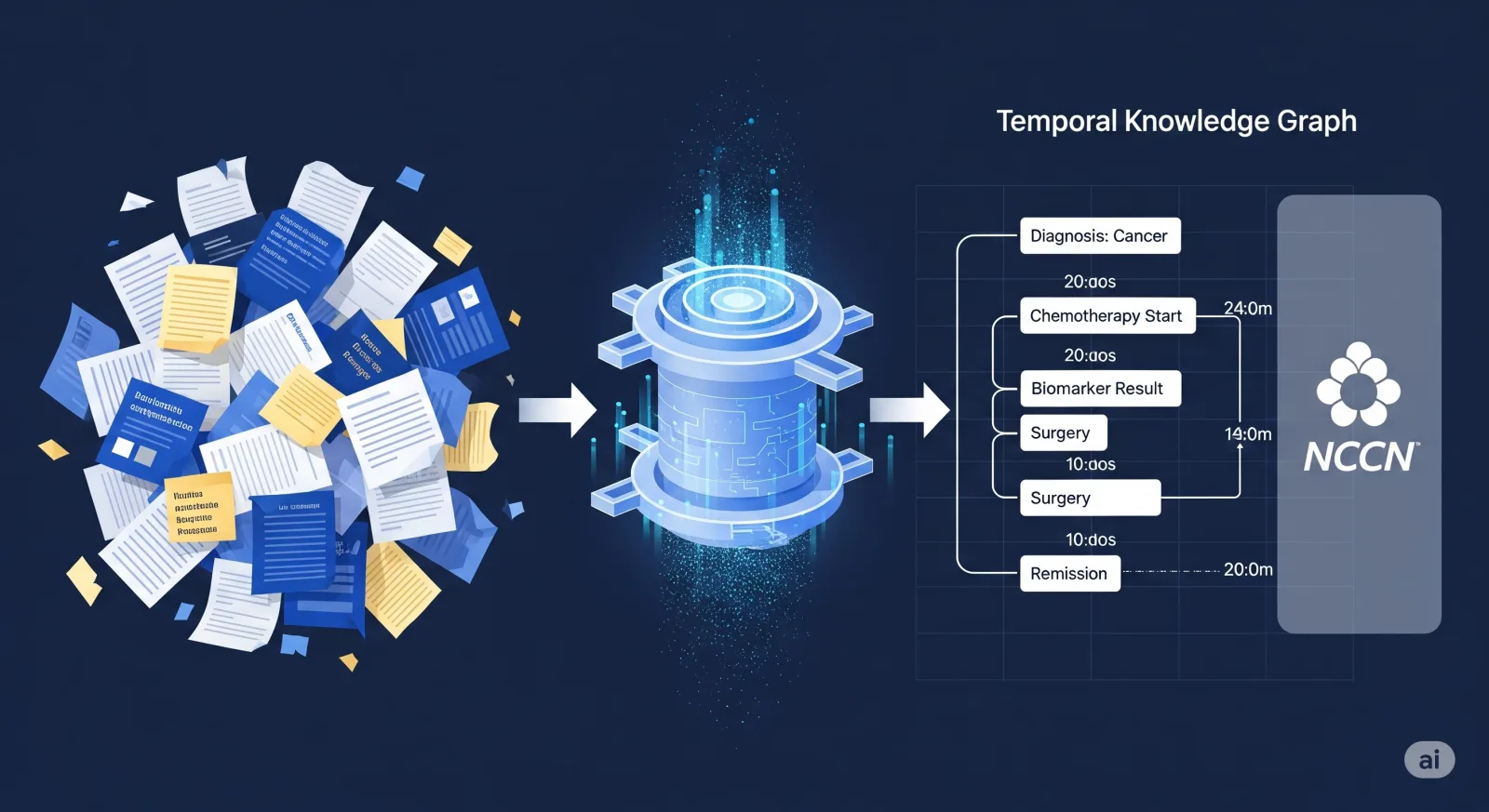
TL;DR for operators Patient records are not just long documents. They are timelines with consequences. CliCARE, the framework proposed in the paper, attacks that problem by turning longitudinal cancer EHRs into patient-specific temporal knowledge graphs, then aligning those patient trajectories with clinical guideline knowledge graphs before asking an LLM to generate a clinical summary and recommendation.1 That sounds architectural because it is. The useful lesson is not that “AI can help doctors,” a phrase now so overused it should probably be placed in quarantine. The lesson is that clinical AI improves when the model is given a structured representation of disease progression and a normative map of what should happen next. ...

July 31, 2025 · 16 min · Zelina