Cover image

Logos, Metron, and Kratos: Forging the Future of Conversational Agents

TL;DR for operators Conversational agents are moving from polite text boxes into operational systems: booking, triaging, recommending, retrieving, judging, escalating, and occasionally making a confident mess with impressive formatting. The useful lesson from these two papers is simple: enterprise agents cannot be trusted just because they can reason, remember, or call tools. Those are necessary capabilities, not sufficient safeguards. A serious agent needs a fourth layer: a way to evaluate whether its own decisions and judgments deserve to be used. ...


April 27, 2025 · 17 min · Zelina
Cover image

Remember Like an Elephant: Unlocking AI's Hippocampus for Long Conversations

TL;DR for operators Long-context windows are useful. They are also an expensive way to pretend that memory is just a bigger clipboard. The HEMA paper argues for a more operationally realistic design: keep a compressed summary of the conversation always visible, store detailed past exchanges outside the prompt, and retrieve only the details that matter for the current turn.1 That gives the model two different memory behaviours: continuity from Compact Memory and factual recall from Vector Memory. ...

April 25, 2025 · 18 min · Zelina
Cover image

The Crossroads of Reason: When AI Hallucinates with Purpose

TL;DR for operators Do not ask, “Can the model do the task?” Ask, “Does the model use the capabilities it already has when the task becomes messy?” Hallucination is not one thing. In a medical, legal, financial, or investment workflow, it is a defect. In a labelled creative mode, it can be a feature. Revolutionary stuff: context matters. Goal-directedness is also not one thing. More goal pursuit can improve execution, but it also raises safety and governance questions. The sensible business pattern is not “deploy an autonomous AI analyst and hope it behaves”. It is mode governance: separate factual, creative, and decision-support modes with different metrics, interfaces, and controls. High-stakes workflows need scaffolding: memory, rule extraction, refinement loops, ensemble checks, scoring, audit trails, and humans who can edit policy rather than merely admire the model’s prose. AI products are currently being sold with a suspiciously convenient promise: one conversational interface will reason, search, write, create, decide, advise, analyse, and maybe spiritually support the quarterly planning meeting if procurement approves the invoice. ...

April 18, 2025 · 16 min · Zelina
Cover image

The AI Buffet: Why One Supermodel Might Rule the Menu, But Specialty Dishes Still Sell

TL;DR for operators The AI market is not choosing between “one model to rule them all” and “a thousand specialist flowers blooming politely in a procurement spreadsheet.” It is choosing by workload. GPT-4o’s native image generation matters because it folds visual production into the same conversational workspace where users already brainstorm, rewrite, code, and revise. That is not just a model upgrade. It is a distribution upgrade. The GPT-4o system card describes an omni model trained across text, vision, and audio, with stronger multimodal capability and lower API cost than GPT-4 Turbo in OpenAI’s own framing.1 OpenAI’s March 2025 image-generation release then pushed that logic into visual work: generate, critique, revise, and regenerate without leaving the chat.2 ...

April 8, 2025 · 12 min · Zelina
Cover image

The CoRAG Deal: RAG Without the Privacy Plot Twist

TL;DR for operators CoRAG is not “RAG, but with more documents.” It is a way to let multiple organizations train a shared retrieval-augmented model while keeping their labeled question-answer data local. That matters because labels are usually the expensive, sensitive, commercially revealing part. Market documents, manuals, policies, public reports, and technical references are often easier to share than the annotations that say which answer was correct, for whom, and under what business condition. Tiny distinction. Large legal bill avoided. ...

April 3, 2025 · 15 min · Zelina
Cover image

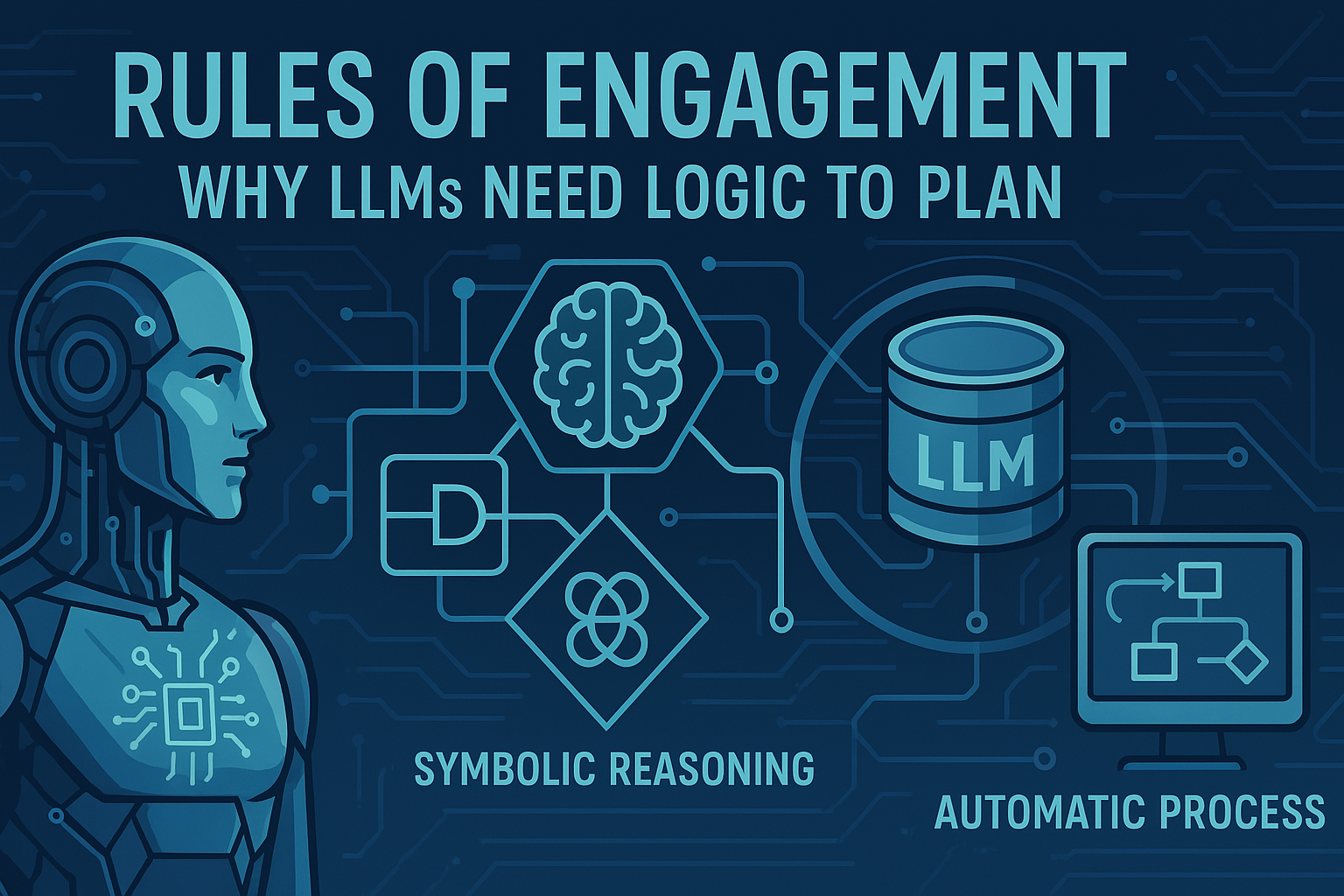
Rules of Engagement: Why LLMs Need Logic to Plan

TL;DR for operators Enterprise agents fail less like philosophers and more like junior coordinators with access to the wrong dropdown menu. They propose actions that are not currently possible. They miss actions that are possible. They forget that an action changes the world. They treat impossible future states as if determination will somehow make them available. They add redundant steps, skip mandatory subgoals, or pick a next move that feels plausible but does not reduce the distance to the goal. ...

April 2, 2025 · 18 min · Zelina
Cover image

How Ultra-Large Context Windows Challenge RAG

TL;DR for operators Ultra-large context windows are not a ceremonial funeral for retrieval-augmented generation. They are a price renegotiation. If your task is to analyse a bounded, self-contained document set — a contract bundle, diligence folder, policy manual, code repository, or technical appendix — a long-context model may now be the cleaner first option. The main benefit is not that it “knows more”. It is that it can inspect more of the original evidence without depending on a retriever to guess which passages matter. ...

March 29, 2025 · 12 min · Zelina
Cover image

Break-Even the Machine: Strategic Thinking in the Age of High-Cost AI

TL;DR for operators The real AI cost question is not “Which model is cheapest?” It is “Which workflow delivers acceptable outcomes at the lowest verified total cost?” Token price is only the most visible line item. The less photogenic costs are retries, review, integration, monitoring, compliance, vendor lock-in, and the small corporate tragedy known as “we saved money on inference and spent it all on fixing nonsense.” ...

March 27, 2025 · 13 min · Zelina
Cover image

The Slingshot Strategy: Outsmarting Giants with Small AI Models

TL;DR for operators Most organisations do not have an AI capability problem. They have an AI allocation problem. They send too many routine, repetitive, low-risk tasks to large frontier models because the demo looked impressive and the invoice arrived later. The slingshot strategy is the opposite instinct: break a workflow into smaller decisions, assign the cheap and reliable parts to specialised models or rules, and escalate only the uncertain or high-value cases to stronger LLMs. The point is not to worship small models. That would be merely replacing one superstition with a smaller, cheaper superstition. The point is to allocate model capacity like an operating resource. ...

March 26, 2025 · 13 min · Zelina
Cover image

Beyond the AI Hype: The Real Direction of AI Development

TL;DR for operators Enterprise AI is not becoming valuable because every company can now bolt a chatbot onto its website and call it “transformation.” That is transformation in the same way repainting a warehouse is supply-chain optimisation. The useful direction is narrower and harder: AI systems are becoming business intelligence layers that connect customer signals, workflow execution, financial planning, and strategic decisions. For a cross-border e-commerce company already using tools such as Duoke for customer service, translation, comment-context analysis, order follow-up, data visualisation, and logistics search, the next step is not “more AI features.” It is AI that improves profitability, cash-flow predictability, and market expansion decisions. ...

March 17, 2025 · 17 min · Zelina