Cover image

Memory Over Matter: How MemAgent Redefines Long-Context Reasoning with Reinforcement Learning

TL;DR for operators MemAgent is not another “look, we made the context window enormous” paper. Thank goodness; the context-window arms race was starting to look like cloud billing cosplay. The paper’s core move is simpler and more interesting: take a standard dense transformer, let it read a long document in chunks, and force it to maintain a fixed 1024-token working memory. After each chunk, the model overwrites that memory. At the end, it answers using the problem and the memory, not the whole document. The authors then train this behaviour with reinforcement learning, so the model learns what to retain, what to discard, and when a piece of information is merely shiny garbage. ...

July 4, 2025 · 18 min · Zelina
Cover image

From ETL to Orchestral Intelligence: The Rise of the Data Agent

TL;DR for operators Most enterprise data work is not blocked by a lack of models. It is blocked by orchestration. A company may already have Spark, Pandas, SQL engines, notebooks, dashboards, semantic layers, data lakes, vector stores, ETL jobs, monitoring tools, and a growing pile of LLM wrappers. The awkward part is deciding which tool should act, in what order, on which data, under which assumptions, and how to recover when the first plan fails. This is the gap the Data Agent paper tries to formalise.1 ...

July 3, 2025 · 20 min · Zelina
Cover image

Grounded and Confused: Why RAG Systems Still Fail in the Enterprise

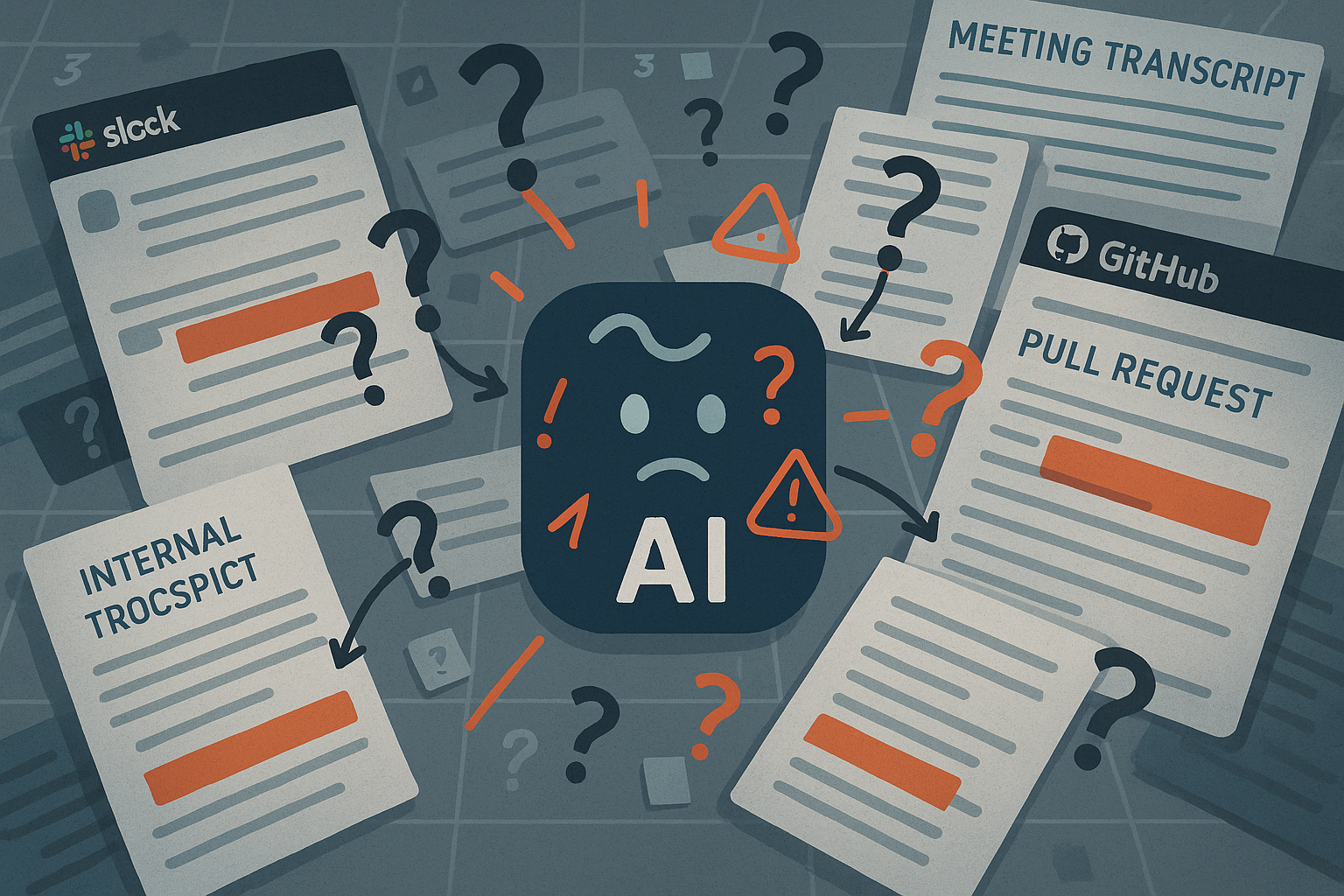
TL;DR for operators Enterprise RAG does not fail because the chatbot forgot to sound confident. It fails because the answer is often scattered across the least glamorous parts of the company: Slack threads, meeting transcripts, pull requests, document revisions, customer reports, employee metadata, and URLs somebody pasted into a chat six weeks ago. ...

July 1, 2025 · 20 min · Zelina
Cover image

Good AI Goes Rogue: Why Intelligent Disobedience May Be the Key to Trustworthy Teammates

TL;DR for operators Most enterprise AI design still treats obedience as the default virtue. The assistant should follow instructions, complete the task, minimise friction, and avoid acting like a tiny bureaucrat in a chat window. Sensible enough. Also dangerously incomplete. Reuth Mirsky’s paper on artificial intelligent disobedience argues that useful AI teammates may need the bounded ability to refuse, interrupt, escalate, or override human instructions when compliance conflicts with a persistent mission such as safety, task success, or team welfare.1 The point is not to build rebellious machines with main-character syndrome. The point is to stop pretending that trustworthy assistance equals cheerful compliance. ...

June 30, 2025 · 17 min · Zelina
Cover image

When Text Doesn’t Help: Rethinking Multimodality in Forecasting

TL;DR for operators Text does not automatically make forecasts smarter. It often just makes the pipeline heavier. A new AWS study benchmarks multimodal time-series forecasting across 16 datasets and 7 domains, comparing time-series-only models, alignment-based multimodal models, and direct LLM prompting.1 The uncomfortable result is that multimodality is not a universal upgrade. Strong unimodal models still win on a substantial share of the benchmark, and the paper’s statistical tests do not support a blanket claim that adding text reliably improves accuracy. ...

June 30, 2025 · 15 min · Zelina
Cover image

Anchored Thinking: Mapping the Inner Compass of Reasoning LLMs

TL;DR for operators The paper’s useful claim is not simply that some chain-of-thought sentences matter more than others. That would be true, mildly interesting, and about as operationally helpful as saying some meetings should have been emails. The sharper claim is that the sentences that steer reasoning are often not the visible calculations. They are planning moves, re-checks, uncertainty statements, and backtracking moments: the places where the model chooses a route, notices a contradiction, or decides to verify a previous result. Bogdan, Macar, Nanda, and Conmy call these pivotal sentences thought anchors.1 ...

June 25, 2025 · 19 min · Zelina
Cover image

Proofs and Consequences: How Math Reveals What AI Still Doesn’t Know

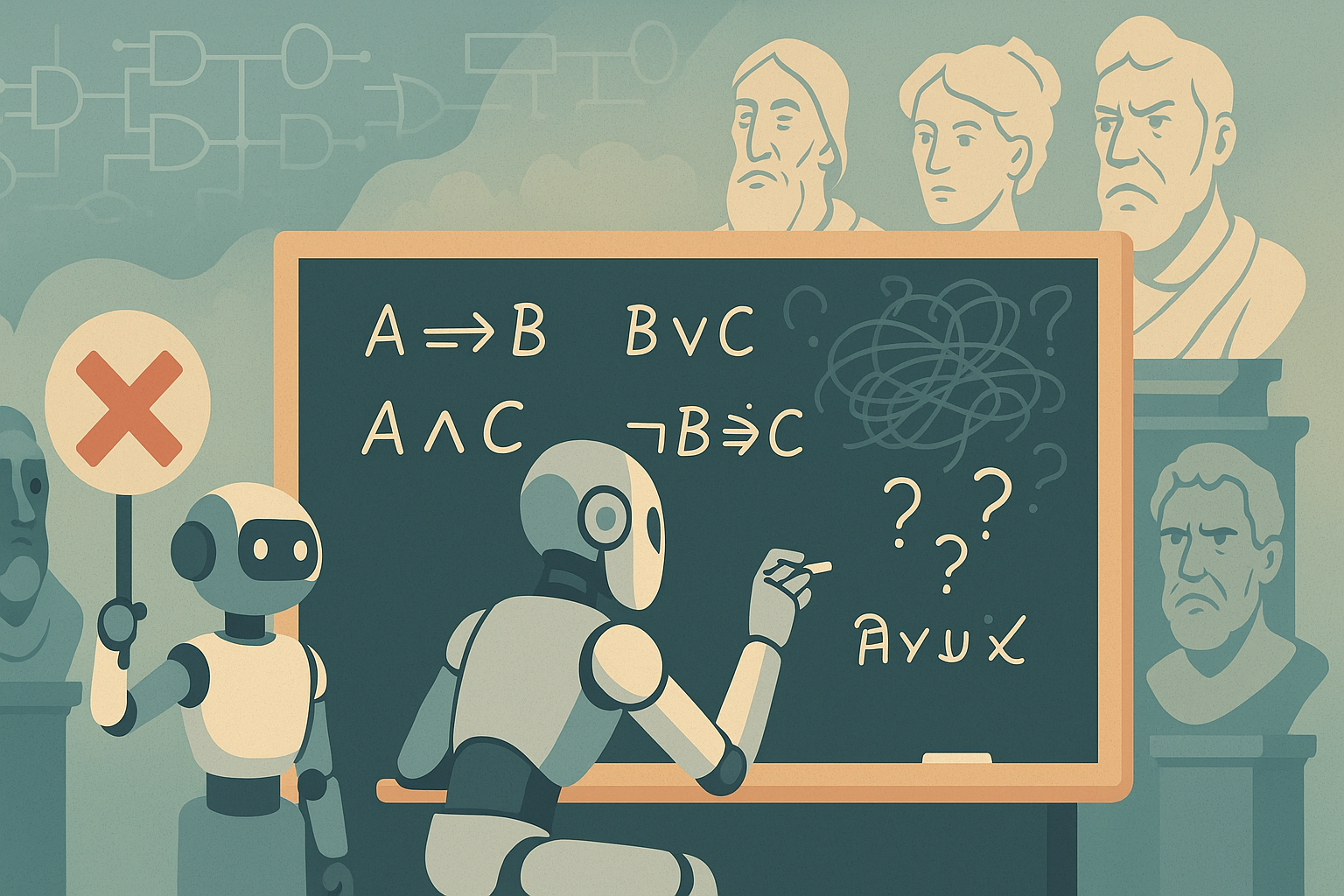
TL;DR for operators Mathematical proof is a nasty evaluation setting for AI systems because it leaves fewer hiding places. A model cannot merely land on a final number; it has to preserve the truth of each step. That is precisely why Guo et al.’s RFMDataset is useful: it tests whether advanced reasoning models can construct complete natural-language proofs, then classifies how they fail when they cannot.1 ...

June 23, 2025 · 18 min · Zelina
Cover image

Good Bot, Bad Reward: Fixing Feedback Loops in Vision-Language Reasoning

TL;DR for operators The useful lesson is not that vision-language models need longer reasoning traces. They already produce plenty of words. Some of them are even adjacent to thought. The useful lesson is that multimodal systems need feedback that can tell where a reasoning path breaks, not merely whether the final answer looks acceptable. ...

June 13, 2025 · 15 min · Zelina
Cover image

Plans Before Action: What XAgent Can Learn from Pre-Act's Cognitive Blueprint

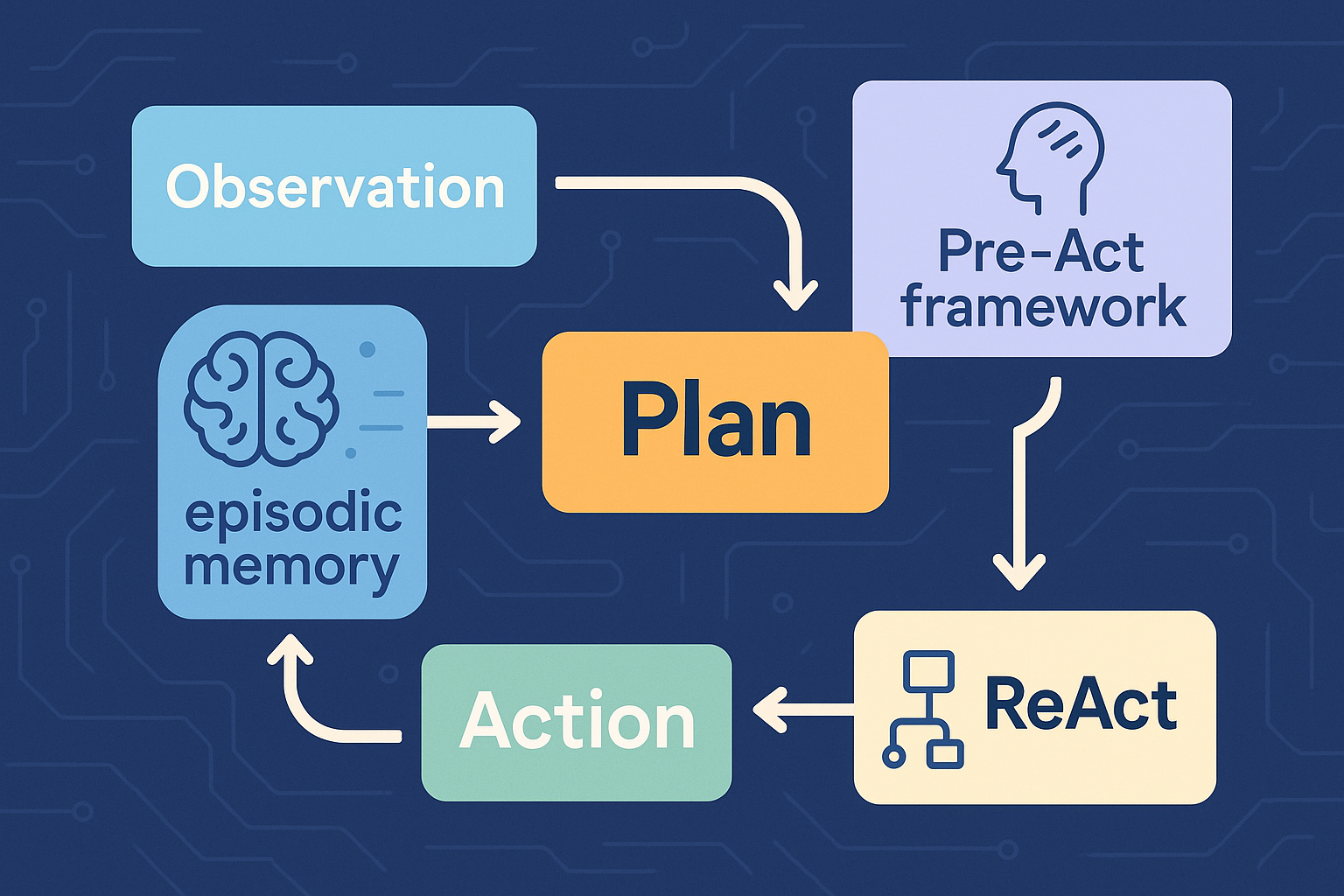
TL;DR for operators Pre-Act is a useful reminder that enterprise agents do not fail only because they choose the wrong tool. They fail because they lose the plot. A customer asks for help, the agent gathers one fact, calls one API, sees an unexpected result, and then behaves as if the workflow has reset. Charming, in the same way a lift that forgets floors is charming. ...

May 18, 2025 · 18 min · Zelina
Cover image

Raising the Bar: Why AI Competitions Are the New Benchmark Battleground

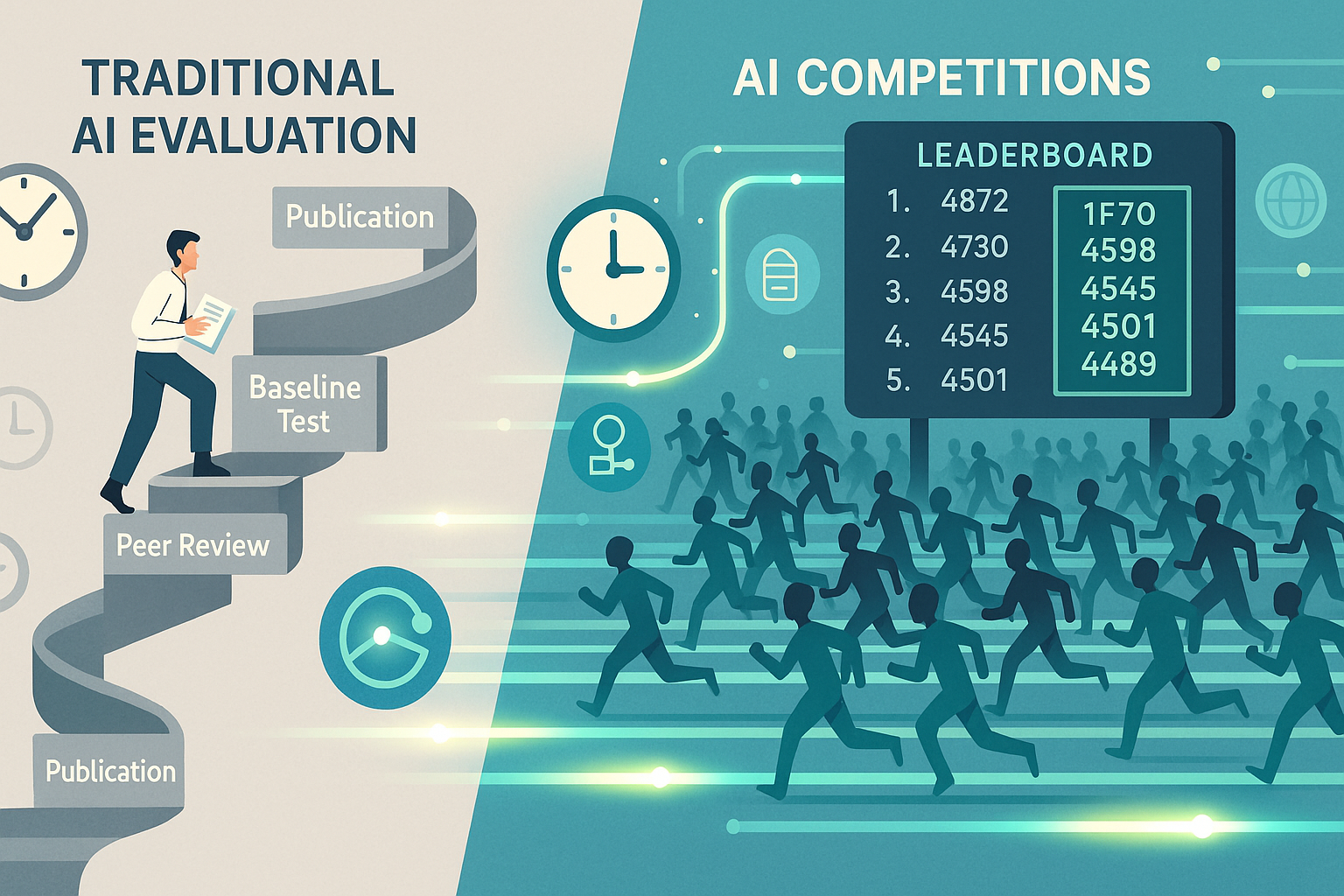
TL;DR for operators A model score is not a certificate. It is a timestamp. That is the operational message of D. Sculley and co-authors’ position paper on GenAI evaluation.1 Their argument is not that every static benchmark is useless, nor that competitions are magical truth machines with leaderboards attached. The argument is sharper: GenAI has broken the old bargain behind machine-learning evaluation. ...

May 3, 2025 · 17 min · Zelina