Cover image

Uncertainty, But Make It Clinical: How MedBayes‑Lite Teaches LLMs to Say 'I Might Be Wrong'

A hospital does not need a chatbot that sounds certain. It needs a system that knows when certainty would be irresponsible. That sounds obvious until one remembers how most AI demos behave: fluent answer first, caveat somewhere after the damage has already put on shoes. In clinical decision support, this is not a stylistic defect. It is an operating risk. A model can be wrong in many ways, but the most dangerous version is the confidently wrong one: the triage answer that should have been escalated, the medication suggestion that should have been checked, the risk score that looks clean only because the system has no vocabulary for doubt. ...

November 22, 2025 · 16 min · Zelina
Cover image

Filling the Gaps: How Bayesian Networks Learn to Guess Smarter in Intensive Care

ICU data has a habit of disappearing exactly when analysts would prefer it to behave. A blood gas is not measured. A pressure reading arrives late. A neurological score is absent because the patient is sedated, unstable, transferred, or simply surrounded by humans doing triage instead of satisfying a data scientist’s spreadsheet fantasies. Then, after the ward has produced this imperfect record, a model is asked to infer how the patient’s physiology evolved over time. ...

November 8, 2025 · 15 min · Zelina
Cover image

Knows the Facts, Misses the Plot: LLMs’ Knowledge–Reasoning Split in Clinical NLI

TL;DR for operators A model that can answer clinical fact-checking questions is not necessarily a model that can reason clinically. That is the inconvenient result of The Knowledge-Reasoning Dissociation: Fundamental Limitations of LLMs in Clinical Natural Language Inference, which introduces CTNLI, a controlled clinical NLI benchmark paired with Ground Knowledge and Meta-Level Reasoning Verification probes.1 ...

August 18, 2025 · 19 min · Zelina
Cover image

From Chaos to Care: Structuring LLMs with Clinical Guidelines

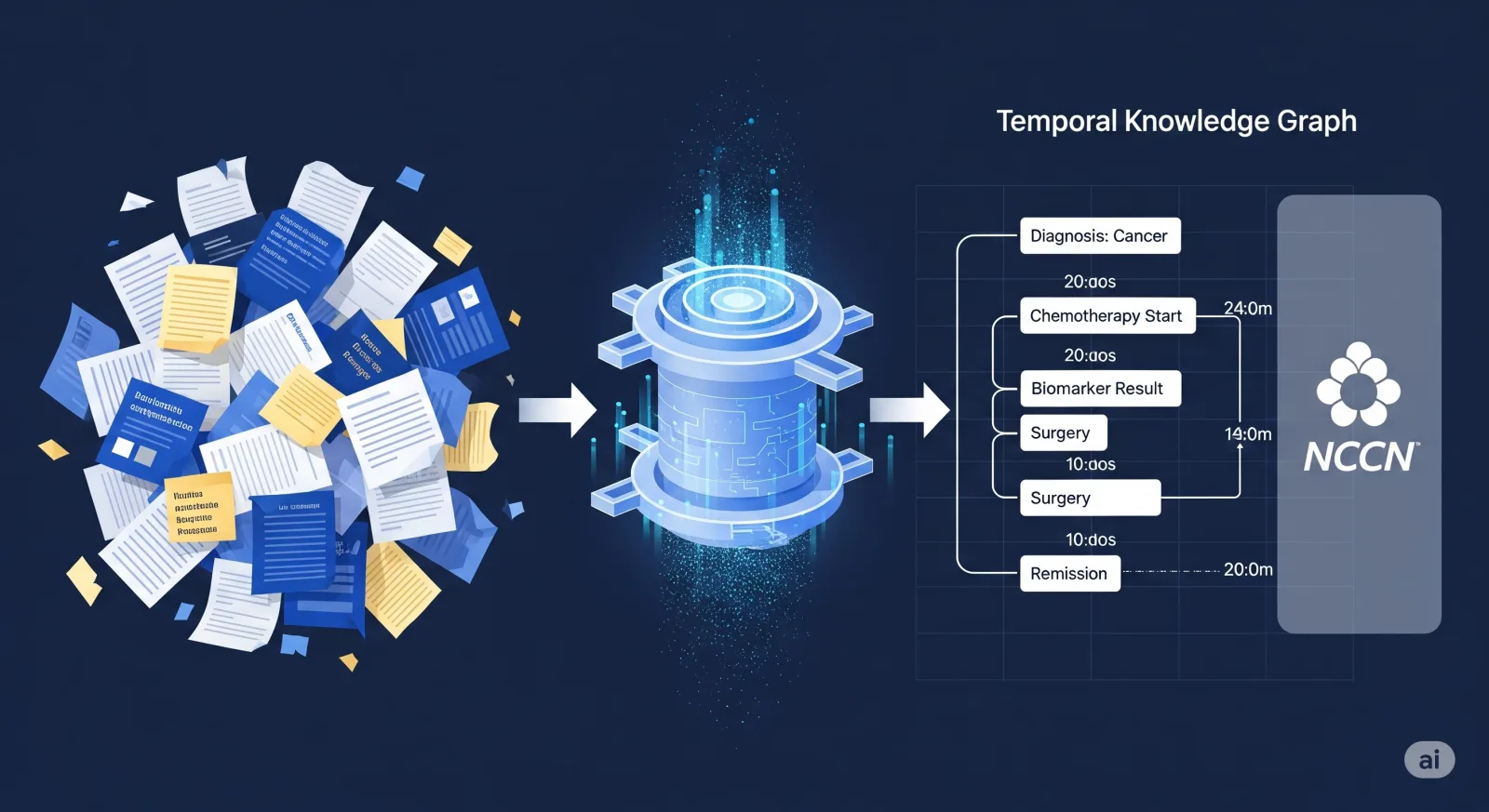
TL;DR for operators Patient records are not just long documents. They are timelines with consequences. CliCARE, the framework proposed in the paper, attacks that problem by turning longitudinal cancer EHRs into patient-specific temporal knowledge graphs, then aligning those patient trajectories with clinical guideline knowledge graphs before asking an LLM to generate a clinical summary and recommendation.1 That sounds architectural because it is. The useful lesson is not that “AI can help doctors,” a phrase now so overused it should probably be placed in quarantine. The lesson is that clinical AI improves when the model is given a structured representation of disease progression and a normative map of what should happen next. ...

July 31, 2025 · 16 min · Zelina