Cover image

The Two Minds of Finance: Testing LLMs for Divergence and Discipline

TL;DR for operators Finance teams do not ask AI systems to do one kind of thinking. They ask them to imagine plausible futures, extract investable implications, choose between similar explanations, and avoid being seduced by the prettiest narrative. Those are not the same task. A model can be fluent, plausible, and still strategically dull. Finance has a long tradition of rewarding that, but we do not need to automate the habit. ...
July 25, 2025 · 17 min · Zelina
Cover image

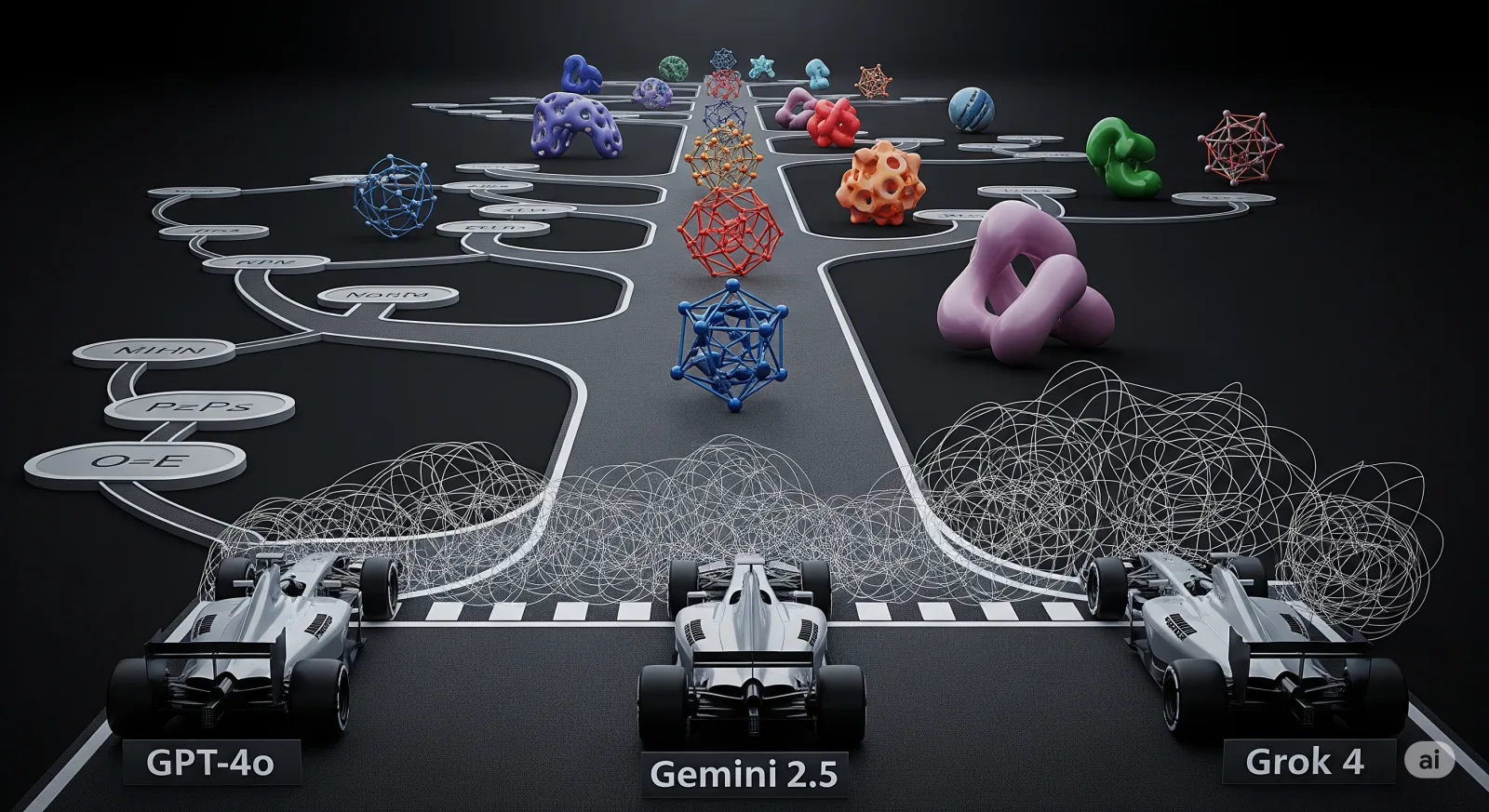
Red Flag on the Track: Why LLMs Still Struggle with Real Algorithmic Reasoning

TL;DR for operators FormulaOne is a useful red flag because it tests something many businesses quietly assume LLMs already possess: the ability to design deep algorithms, not merely write plausible code around familiar patterns.1 The benchmark contains 120 hard dynamic-programming problems on tree-like graphs, plus 100 easier FormulaOne-Warmup problems. The hard tasks are generated from Monadic Second-Order logic, come with verifiable evaluation, and sit near the kind of combinatorial reasoning used in routing, scheduling, network design and other optimisation-heavy domains. ...

July 18, 2025 · 17 min · Zelina
Cover image

Beyond Stack Overflow: CodeAssistBench Exposes the Real Gaps in LLM Coding Help

TL;DR for operators Coding assistants look much better when the task is a clean question than when the task is a messy software support conversation. That is the inconvenient point of CodeAssistBench, or CAB, a benchmark that turns resolved GitHub issues into multi-turn, project-grounded conversations where a model must behave like a maintainer, not a code-snippet vending machine.1 ...

July 16, 2025 · 17 min · Zelina
Cover image

Memory Games: The Data Contamination Crisis in Reinforcement Learning

TL;DR for operators A model that improves after training on random rewards has not necessarily discovered a secret route to reasoning. It may simply be remembering the exam. The paper behind this article investigates a strange result in reinforcement learning for large language models: Qwen2.5 models appeared to improve on public math benchmarks even when the reward signal was random, inverted, or based on wrong majority-voted answers.1 That sounds exciting, in the same way that a finance team “beating forecast” after seeing next quarter’s numbers is exciting. Technically impressive, commercially dangerous, and not something one should build governance around. ...

July 15, 2025 · 15 min · Zelina
Cover image

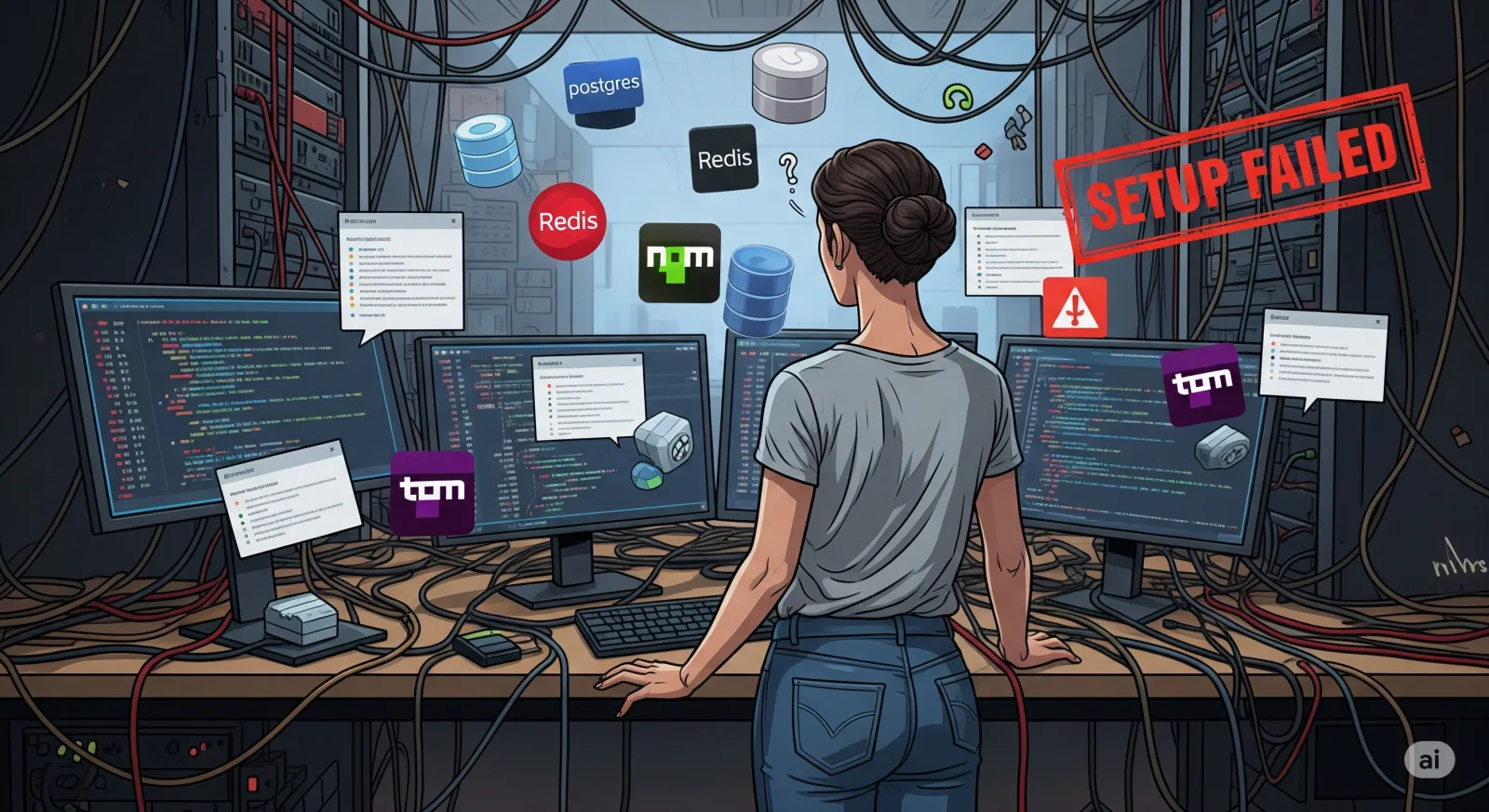
The First Hurdle: Why Coding Agents Struggle with Setup

TL;DR for operators Setup is where many AI coding-agent promises meet the concrete floor. The SetupBench paper introduces a 93-task benchmark that asks software engineering agents to do something less glamorous than writing a clever patch: start from a bare Linux sandbox, install what is missing, resolve dependency conflicts, initialise databases, configure services, and prove the environment works through a deterministic validation command.1 ...

July 15, 2025 · 16 min · Zelina
Cover image

Passing Humanity's Last Exam: X-Master and the Emergence of Scientific AI Agents

TL;DR for operators Benchmark wins usually arrive wrapped in the usual fog machine: bigger model, more data, more parameters, more destiny. The X-Master paper is more interesting because it is not mainly a bigger-model story.1 It is a systems story. The researchers take DeepSeek-R1-0528, a strong open-source reasoning model, and make it behave more like an agent by giving it a disciplined way to call tools during its own reasoning process. The key design choice is simple: use Python code as the interaction language. When the model needs to search, parse a paper, compute a value, or validate a hypothesis, it emits executable code; the system runs it; the result is inserted back into the context; the model continues reasoning. ...

July 8, 2025 · 16 min · Zelina
Cover image

Ping, Probe, Prompt: Teaching AI to Troubleshoot Networks Like a Pro

TL;DR for operators A network outage is not a single question. It is a sequence: probe reachability, inspect counters, compare paths, refine the hypothesis, ask for better telemetry, and decide whether to act. That sequence is exactly where static LLM benchmarks become rather ornamental. A model that can answer a configuration question offline is not necessarily an agent that can diagnose a live fault while the network keeps misbehaving. ...

July 6, 2025 · 16 min · Zelina
Cover image

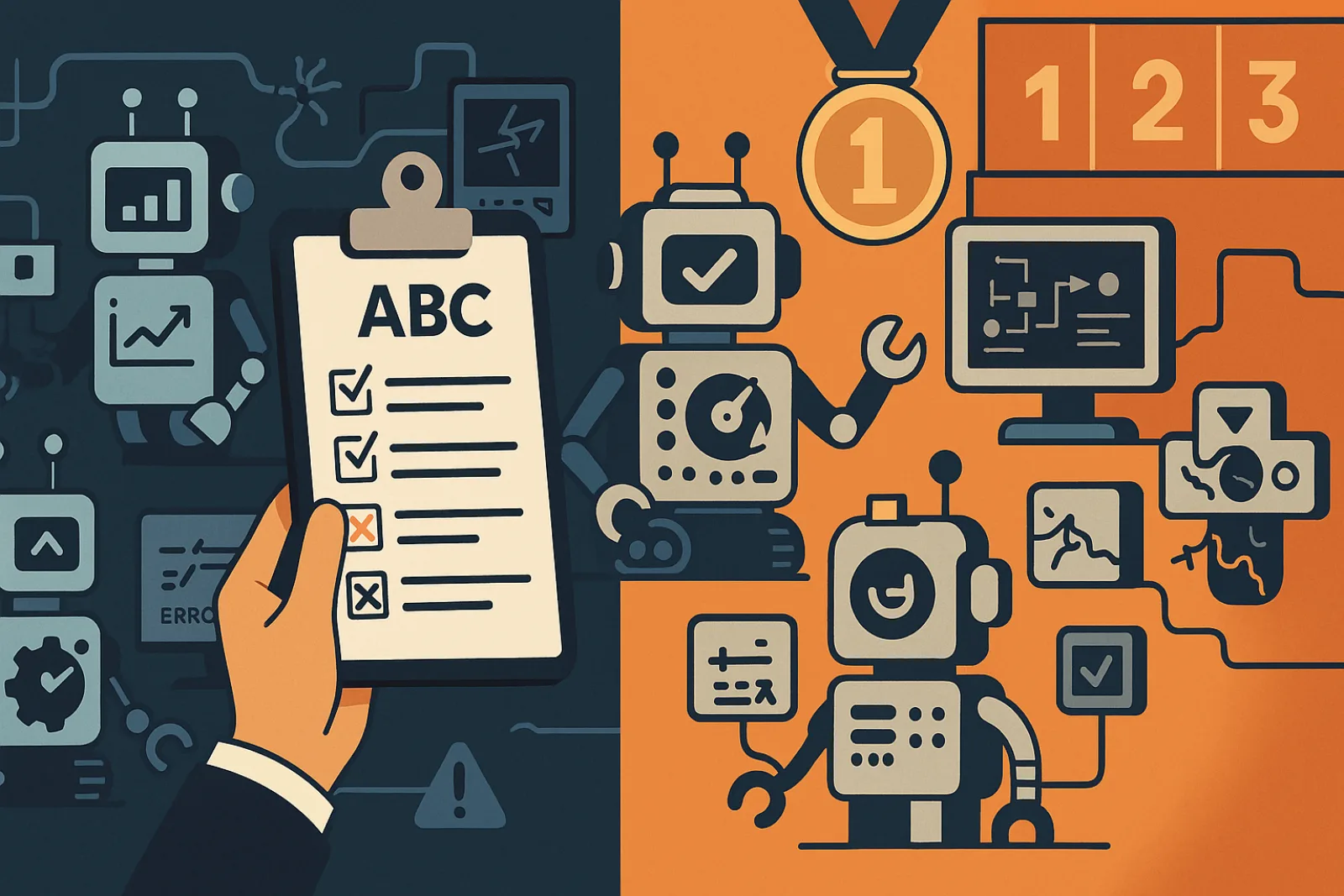
Mind the Gap: Fixing the Flaws in Agentic Benchmarking

TL;DR for operators Agent benchmark scores are starting to function like procurement documents. They appear in model cards, vendor decks, research claims, and internal build-versus-buy decisions. The awkward finding in this paper is that some of those scores do not measure what buyers think they measure. Zhu et al. introduce the Agentic Benchmark Checklist, or ABC, to audit whether an agentic benchmark has valid tasks, valid outcome grading, and adequate reporting.1 Applying it to ten widely used agentic benchmarks, they find task-validity flaws in seven, outcome-validity flaws in seven, and reporting limitations in all ten. ...

July 4, 2025 · 15 min · Zelina
Cover image

Mind the Context: How ContextAgent Listens, Sees, and Acts Before You Ask

TL;DR for operators ContextAgent is not interesting because it imagines an assistant that talks before the user does. We already have enough software that talks before anyone asks. The interesting part is more disciplined: it tries to decide when an assistant should remain silent, when it should intervene, and which external tools it should call when intervention is justified. ...

May 21, 2025 · 17 min · Zelina
Cover image

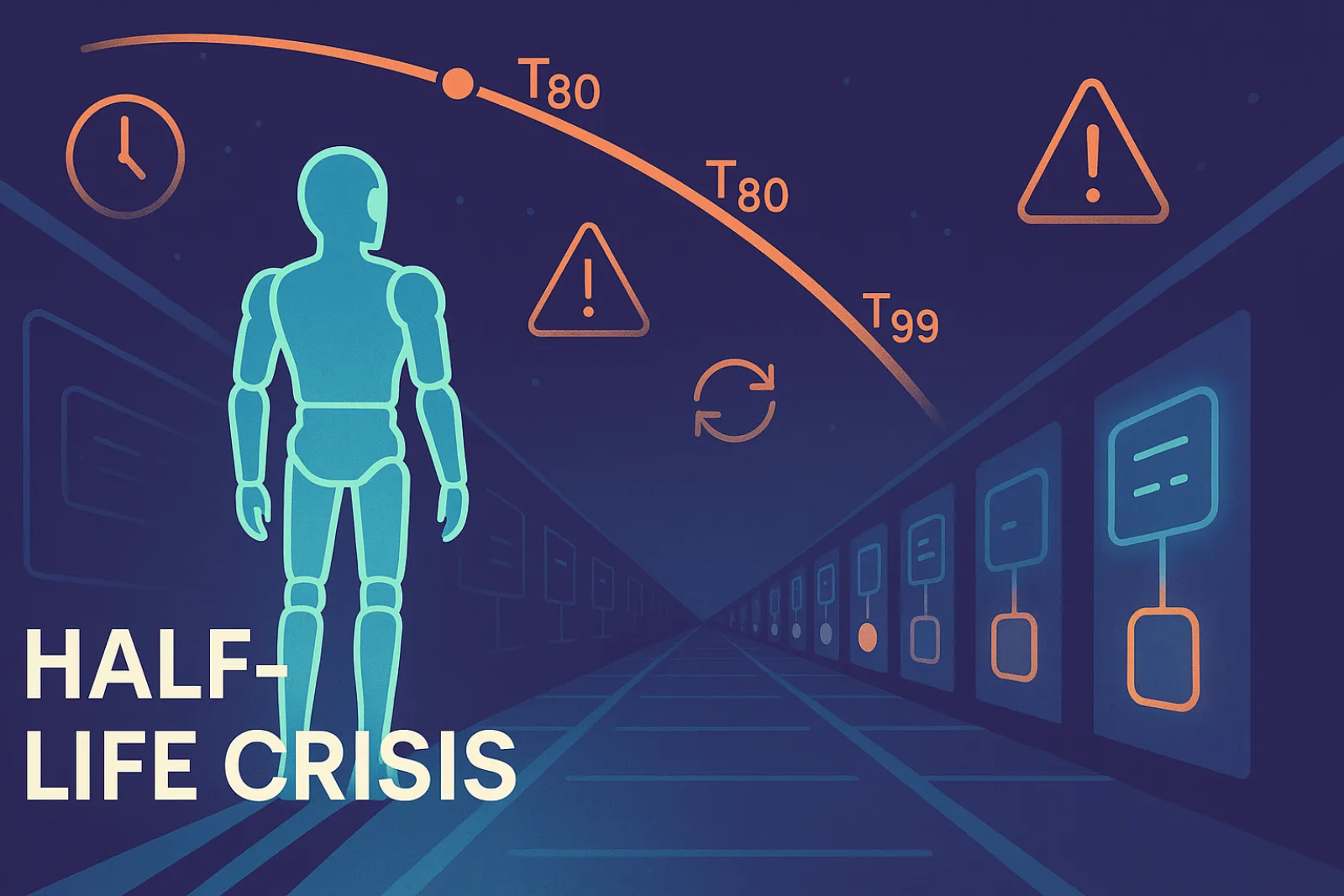
Half-Life Crisis: Why AI Agents Fade with Time (and What It Means for Automation)

TL;DR for operators AI agents may not simply “get worse” on longer tasks. A better mental model is that every additional unit of human-equivalent task time adds another chance for the agent to fail. If that chance is roughly constant, success falls exponentially. That turns a cheerful benchmark number into a much less cheerful deployment number. Under Toby Ord’s constant-hazard interpretation of METR’s long-task data, an agent’s 50% success time horizon is its “half-life”: the point where half of attempts still succeed and half have already failed.1 The awkward part is what happens when a business needs 80%, 90%, or 99% reliability rather than a coin toss with better branding. ...

May 11, 2025 · 17 min · Zelina