Cover image

Replan, Rethink, Repeat: Why Vision-Language Models Make Better Closed‑Loop Planners

Opening — Why this matters now Robotics is rediscovering an old truth: it’s not the plan that matters, it’s the replanning. As more companies experiment with Vision-Language Model (VLM)-driven robotic agents—from warehouse pickers to home-assistance prototypes—a quiet tension is emerging. These models can generate impressively detailed symbolic plans, but their reasoning occasionally drifts into the surreal. You can’t ship a robot that confidently places lemons after oranges simply because the model had an off day. ...


November 16, 2025 · 5 min · Zelina
Cover image

Scalpels, Agents, and Orchestrators: When Surgery Meets Autonomous Workflows

Opening — Why this matters now Hospitals are quietly becoming some of the most data-intensive environments on Earth. Yet the operating room remains one of the few places where critical information is abundant—but largely inaccessible—precisely when stakes are highest. Surgeons performing minimally invasive procedures sit at a robotic console, hands occupied, attention locked. The information is there—CT scans, clinical notes, 3D reconstructions—but the surgeon can’t reach for it without breaking flow. ...

November 16, 2025 · 4 min · Zelina
Cover image

Think Outside the Bounding Box: How SpatialThinker Reinforces 3D Reasoning

Opening — Why this matters now The AI industry keeps celebrating multimodal models that can “see.” But ask them a simple spatial question—Is the red mug behind the laptop or in front of it?—and many crumble. Spatial reasoning is the next frontier for practical AI. Without it, robots misgrasp objects, AR systems misalign overlays, and autonomous agents fail at even basic physical tasks. The paper SpatialThinker enters precisely at this choke point, offering an approach that doesn’t demand billion-sample training pipelines or proprietary data oceans. Instead, it asks a deceptively simple question: What if we incentivize models to think spatially the way humans do? ...

November 16, 2025 · 4 min · Zelina
Cover image

When Noisy Data Talks Back: The Fragile Art of Learning Under Infinite Contamination

Opening — Why this matters now Modern AI systems are built on oceans of scraped text that are, to put it politely, not curated with monastic discipline. Spam, boilerplate, low‑quality rewrites, synthetic junk, and mislabeled data quietly seep into training sets. And as frontier models balloon, so does the question that engineers, policymakers, and CFOs are all equally allergic to: ...

November 16, 2025 · 5 min · Zelina
Cover image

When Videos Grow Hands: How PhysWorld Teaches Robots to Stop Hallucinating Physics

Why This Matters Now The robotics world has spent years fantasizing about a shortcut: take a generative video model, tell it “pour the tomatoes into the plate,” and somehow—magically—the robot just… does it. But there’s a quiet problem no one likes to admit. Videos are visually plausible, not physically correct. A model can show a tomato pour; it cannot guarantee the tomato isn’t clipping through the pan in frame six. ...

November 16, 2025 · 4 min · Zelina
Cover image

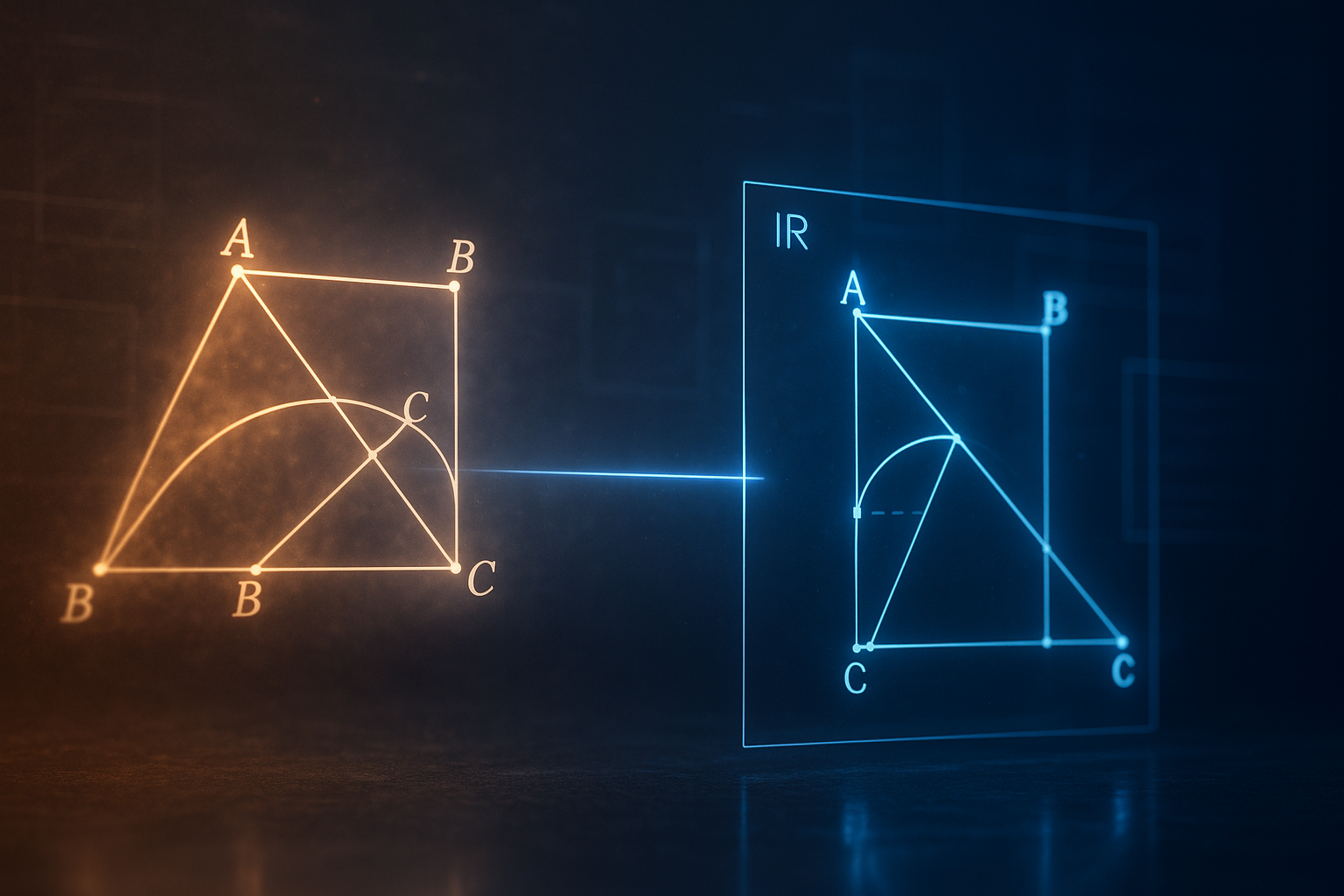
Back to the Drawing Board: How DiagramIR Quietly Fixes Math Diagrams for AI

Opening — Why this matters now Educational AI is racing ahead, but one of its most persistent blind spots is strangely analog: diagrams. Students rely on visuals—triangles, prisms, angles, proportions—yet most AI systems still operate as if the world is text-only. When LLMs do attempt diagram generation, the experience often feels like asking a cat to do architectural drafting. ...

November 15, 2025 · 4 min · Zelina
Cover image

Charts Without Tears: When AI Starts Cleaning Your Data So You Don’t Have To

Opening — Why This Matters Now Data may be the new oil, but most organizations are still trying to refine it with spoons. Teams drown in CSVs, dashboards multiply like rabbits, and decision‑making grinds through bottlenecks built from spreadsheets, error‑prone preprocessing, and overly optimistic interns. The paper under review suggests a different trajectory: AI systems that handle the cleaning, outlier detection, feature selection, and chart generation without waiting for humans to fiddle with every cell. This is not about flashy dashboards; it’s about compressing hours of wrangling into seconds—and scaling it across organizations that desperately need analytic leverage. ...

November 15, 2025 · 4 min · Zelina
Cover image

GraphRAG Gone Modular: Why Multi-Agent Cypher Matters More Than You Think

Opening — Why this matters now Graph‑shaped data has been sitting quietly in the corner while the rest of the AI world obsesses over vector embeddings and trillion‑token training sets. Yet businesses increasingly live inside graphs: supply chains, asset registries, compliance rules, building models, workflows, cybersecurity logs—none of them look like tidy paragraphs. Meanwhile, the tools we use to query that information remain stubbornly technical. Cypher, GQL, RDF… all precise, all powerful, all impenetrable for anyone who doesn’t dream in arrow‑shaped parentheses. ...

November 15, 2025 · 4 min · Zelina
Cover image

Heads Up: Why Sensitivity Matters in Many‑Shot Multimodal ICL

Opening — Why this matters now Multimodal models are finally catching up to the messy, image‑heavy real world. But as enterprises push them into production, a simple bottleneck keeps resurfacing: context length. You can throw 2,000 text examples at a language model, but try fitting 100 image‑text demonstrations into an 8K token window and you’re effectively stuffing a suitcase with a refrigerator. ...

November 15, 2025 · 4 min · Zelina
Cover image

Hiring Intelligence: How JobSphere Turns Bureaucracy into a Career Copilot

Opening — Why this matters now Government digital services are notoriously labyrinthine. They promise opportunity, yet often deliver friction: slow navigation, monolingual interfaces, and support tools that feel somewhere between outdated and absent. As AI reshapes private‑sector hiring at breakneck speed, the public sector risks drifting into irrelevance if it cannot match this acceleration. ...

November 15, 2025 · 4 min · Zelina