Cover image

Jolting Ahead: Why AI’s Acceleration Is Accelerating

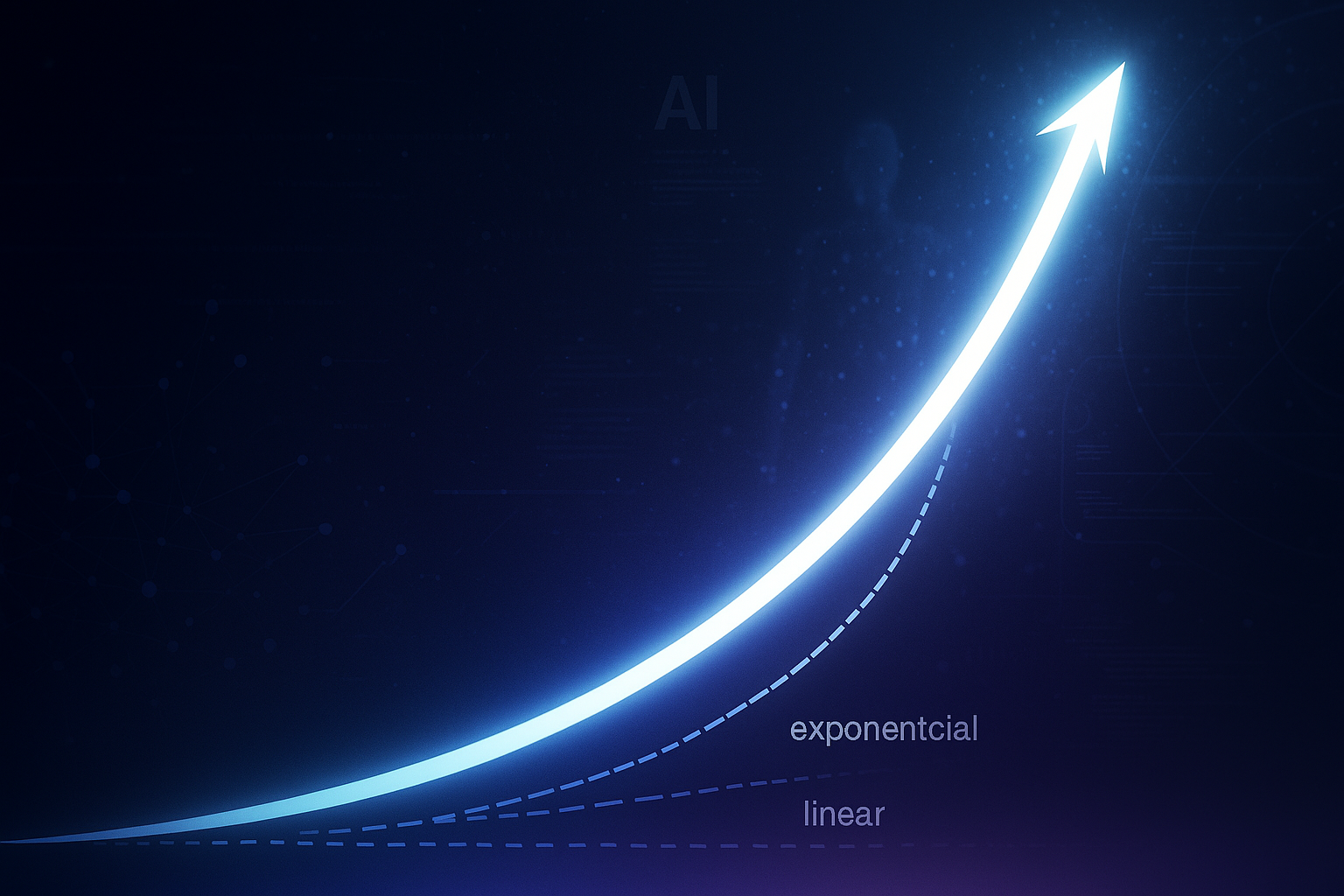
TL;DR for operators Dashboards are good at telling you where performance is today. They are worse at telling you whether the rate of improvement is itself accelerating. That is the useful business translation of David Orban’s paper on “jolting” AI capabilities: do not only monitor model scores; monitor the shape of improvement. ...
July 10, 2025 · 17 min · Zelina
Cover image

The Invisible Hand in the Machine: Rethinking AI Through a Collectivist Lens

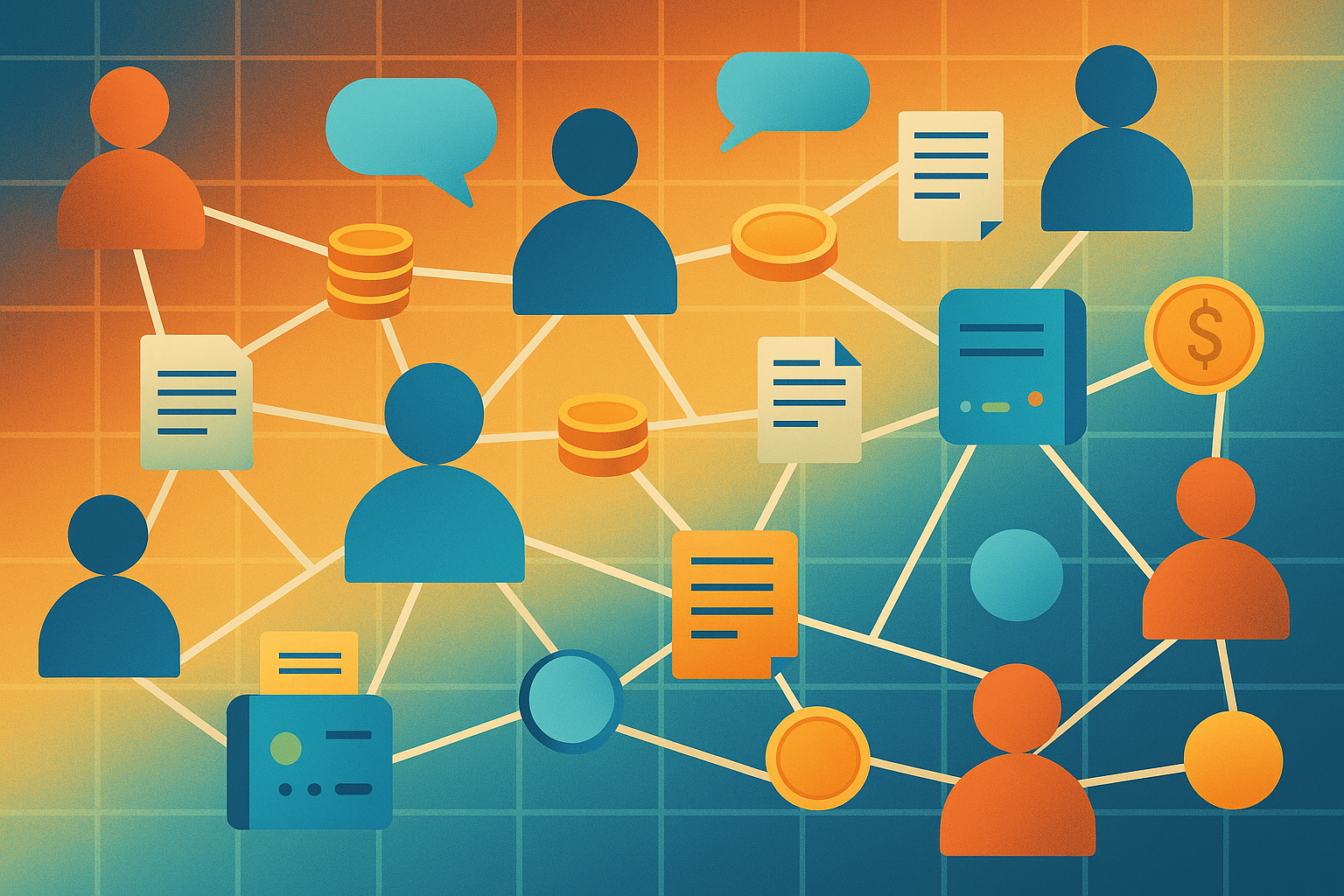
TL;DR for operators Users do not experience an AI product as a theorem. They experience it as a bargain. They give data, attention, labour, trust, prompts, feedback, documents, creative work, behavioural traces, and sometimes money. In return, they expect useful output, lower friction, safer decisions, visibility, compensation, privacy, or at least not being quietly turned into unpaid infrastructure. The bargain may be explicit. More often, because apparently we enjoy building planetary-scale systems on implied consent and vibes, it is not. ...

July 10, 2025 · 17 min · Zelina
Cover image

Collapse to Forget: Turning Model Collapse into a Privacy Feature for LLMs

TL;DR for operators When an LLM leaks sensitive, copyrighted, or otherwise forbidden information, the obvious repair is to fine-tune it away from the bad answer. That sounds sensible until you notice the small operational comedy: the remediation process keeps using the very answer it is supposed to remove. The paper behind this article proposes Partial Model Collapse (PMC), a machine unlearning method that avoids directly optimising on ground-truth forget answers. Instead, PMC asks the model the sensitive question, samples multiple responses from the model itself, selects a response that is less like the model’s original answer, and fine-tunes on that self-generated response while also training on retain data to preserve general utility.1 ...

July 8, 2025 · 16 min · Zelina
Cover image

Secret Handshakes at Scale: How LLM Agents Learn to Collude

TL;DR for operators Autonomous agents do not need a smoke-filled room to coordinate. A message channel, persistent memory, a profit-maximising objective, and repeated market interaction can be quite enough. Charming, really. The paper behind this article studies LLM buyers and sellers in a simulated continuous double auction: five buyers, five sellers, 30 rounds, sellers costing each lot at $80, buyers valuing each lot at $100, and a competitive equilibrium at $90.1 Sellers can set asks, buyers can set bids, and trades occur when bids meet asks. The authors then vary the conditions around the agents: whether sellers can message each other, which model powers the sellers, and whether sellers face oversight or CEO-style urgency. ...

July 7, 2025 · 17 min · Zelina
Cover image

Mind the Gap: Fixing the Flaws in Agentic Benchmarking

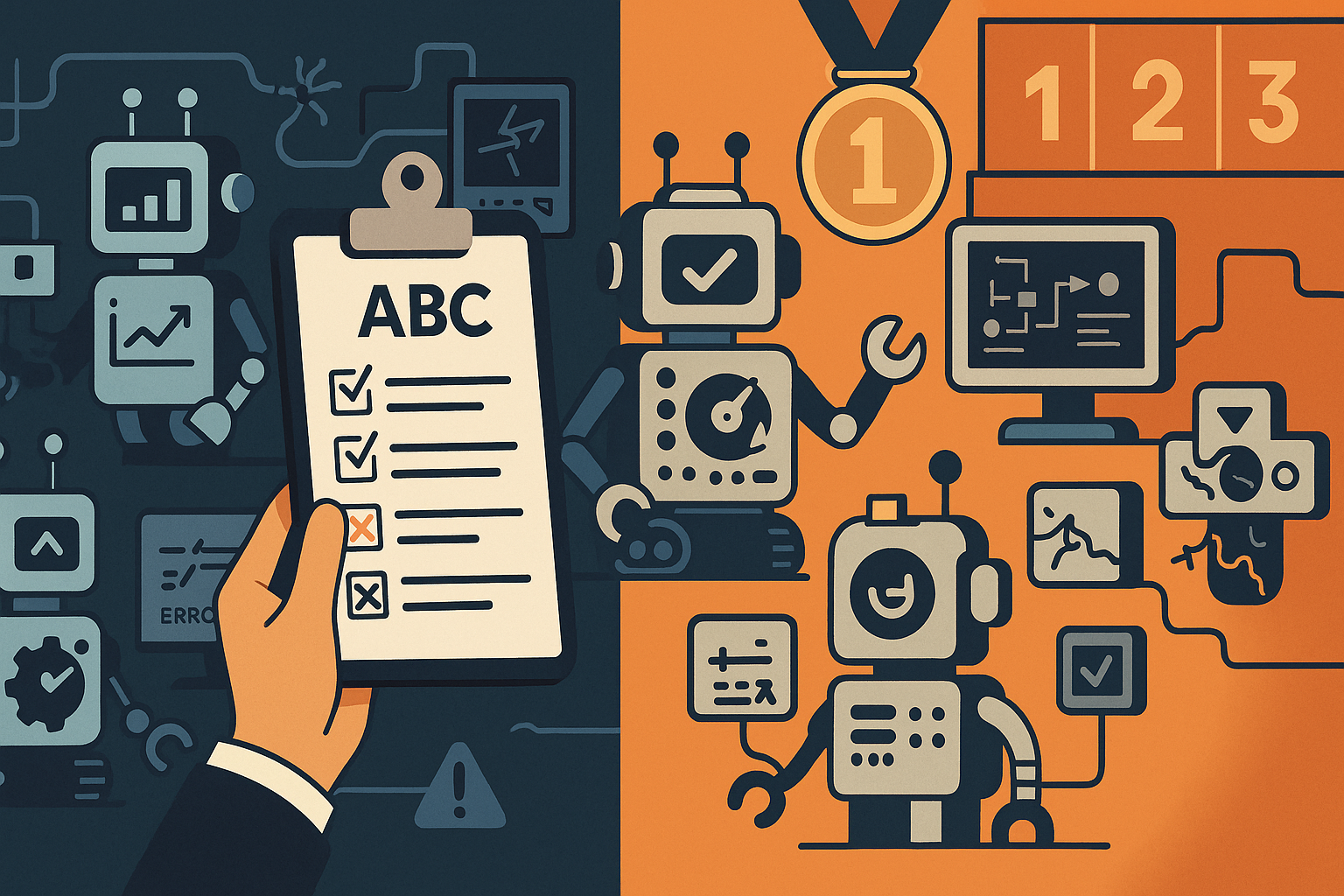
TL;DR for operators Agent benchmark scores are starting to function like procurement documents. They appear in model cards, vendor decks, research claims, and internal build-versus-buy decisions. The awkward finding in this paper is that some of those scores do not measure what buyers think they measure. Zhu et al. introduce the Agentic Benchmark Checklist, or ABC, to audit whether an agentic benchmark has valid tasks, valid outcome grading, and adequate reporting.1 Applying it to ten widely used agentic benchmarks, they find task-validity flaws in seven, outcome-validity flaws in seven, and reporting limitations in all ten. ...

July 4, 2025 · 15 min · Zelina
Cover image

ChatGPT and the Death of Effort: Is AI Turning Students into Lazy Thinkers?

TL;DR for operators ChatGPT did not fail the writing task in this study. The humans did something more interesting: when allowed to use it, they reported doing less of the mentally expensive work. The paper randomly assigned 40 participants to write a short argumentative essay either with ChatGPT 3.5 or without assistance. After the task, participants completed a four-item cognitive engagement scale covering deep understanding, effortful thinking, sustained attention, and exploration of alternative approaches. The ChatGPT group scored lower: 2.95 versus 4.19 on a five-point scale, with a statistically significant group effect. ...

July 2, 2025 · 15 min · Zelina
Cover image

The Grammar and the Glow: Making Sense of Time-Series AI

TL;DR for operators Time-series AI is getting better at recognising patterns across domains: energy demand, ECG signals, traffic sensors, weather readings, equipment logs, and other data streams that behave nothing like nice, polite spreadsheets. Two recent arXiv papers point to a useful combined thesis. The first argues that time-series foundation models work because they learn a kind of “language of time”: recurring temporal patches become motif tokens; motif frequencies follow long-tail patterns; motif sequences show grammar-like constraints.1 The second tackles the adoption problem: even if a model is accurate, people still need to know why it raised a diagnosis, forecast, alarm, or recommendation. It proposes a hybrid ResNet–Transformer system that fuses local Grad-CAM heatmaps with global attention, then turns salient regions into natural-language explanations.2 ...

July 2, 2025 · 14 min · Zelina
Cover image

Agents Under Siege: How LLM Workflows Invite a New Breed of Cyber Threats

TL;DR for operators A support agent reads a customer email. It checks a CRM record. It calls a refund API. It writes a note into long-term memory. It asks another agent to verify policy. Somewhere in that chain, a malicious instruction hides inside a message, document, issue tracker entry, retrieved snippet, schema, or tool response. The model does not need to become “evil”. It only needs to be helpful in the wrong direction. ...

July 1, 2025 · 16 min · Zelina
Cover image

Swiss Cheese for Superintelligence: How STACK Reveals the Fragility of LLM Safeguards

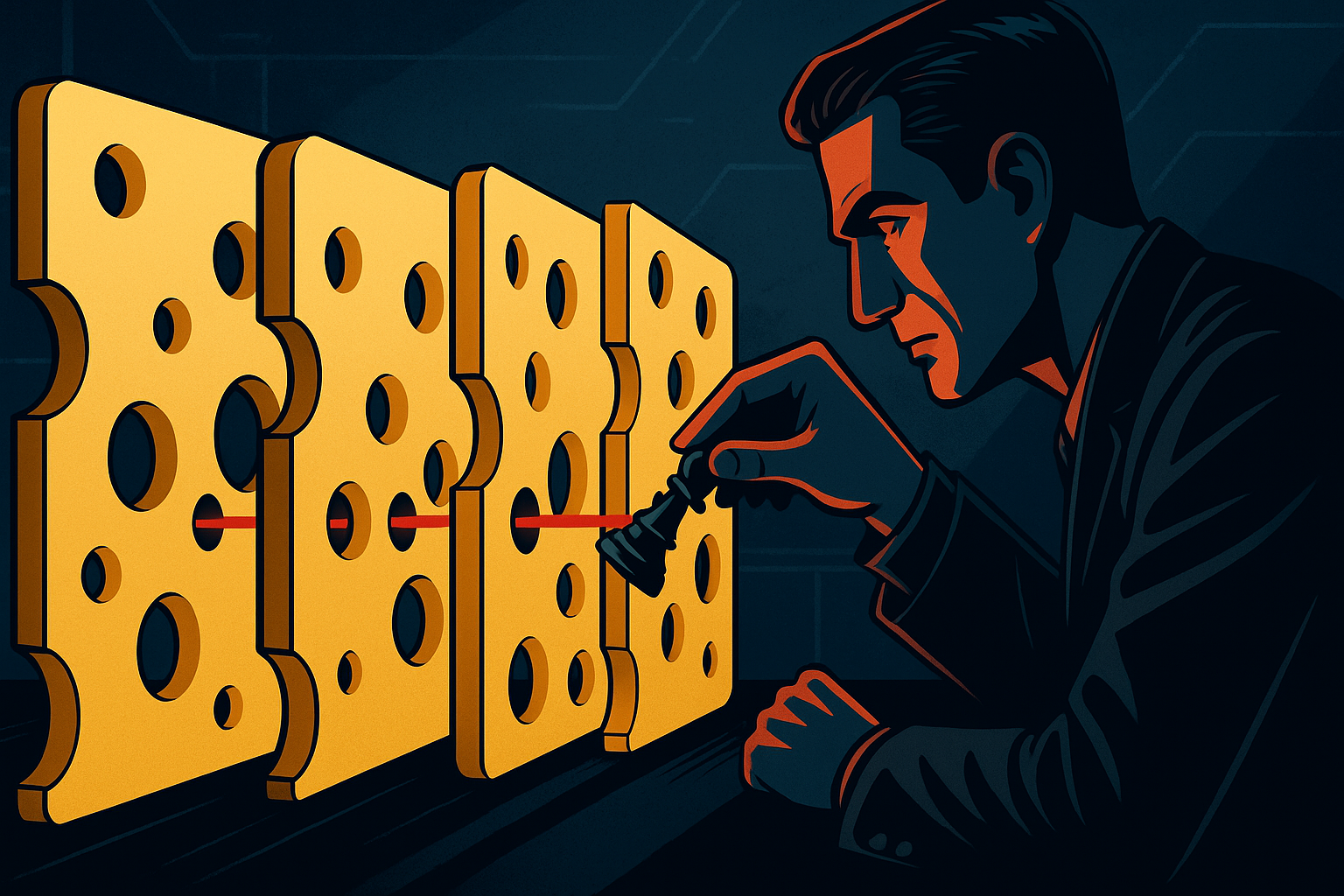
TL;DR for operators Layered safeguards are useful. They are not magic. This paper shows both points, which is inconvenient because the industry prefers safety conclusions that fit on procurement slides. The authors build and evaluate an open-source defence-in-depth pipeline for LLMs: an input classifier screens the user query, a target model produces an answer, and an output classifier screens the answer before the user sees it. Against ordinary black-box jailbreaks, the best version of this pipeline looks strong. A few-shot-prompted Gemma 2 classifier reduces attack success to 0% on ClearHarm, a dataset focused on clearly harmful catastrophic-misuse queries. That is the good news.1 ...

July 1, 2025 · 20 min · Zelina
Cover image

Inked in the Code: Can Watermarks Save LLMs from Deepfake Dystopia?

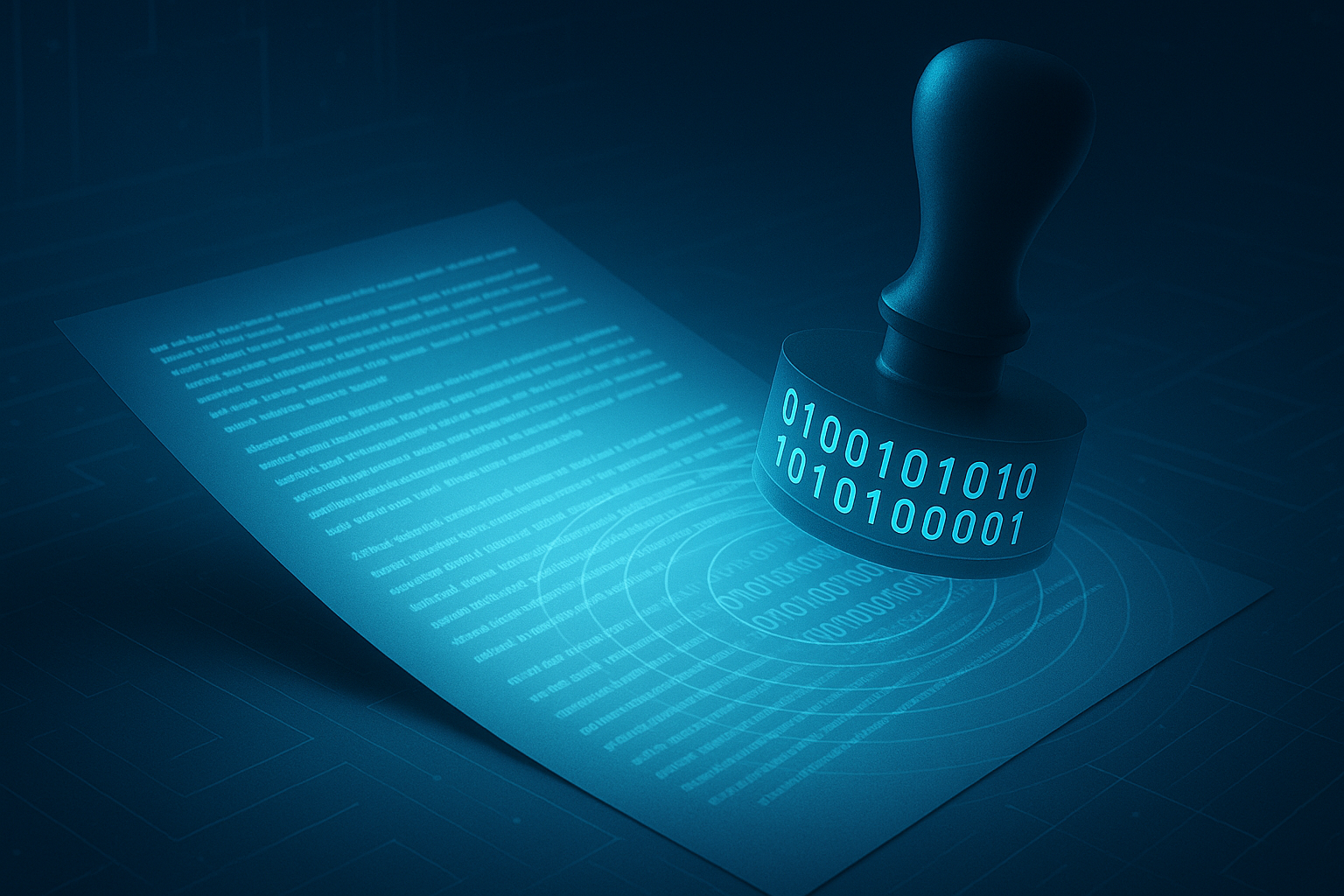
TL;DR for operators BiMark is a proposed watermarking method for large language models that tries to solve a practical trilemma: keep generated text quality intact, detect the watermark without access to the original model, and embed more than a yes/no signal.1 The important part is not that it “detects AI text.” That is the shallow version, beloved by procurement decks and policy panels that have never met a paraphraser. The more useful claim is that BiMark can encode provenance-like metadata—model identity, timestamp, source label, policy context—inside the token sampling process, then recover that information later using statistical evidence and the right secret key. ...

June 30, 2025 · 16 min · Zelina