Cover image

Causality in Stereo: How Multi-Band Granger Unveils Frequency-Specific Influence

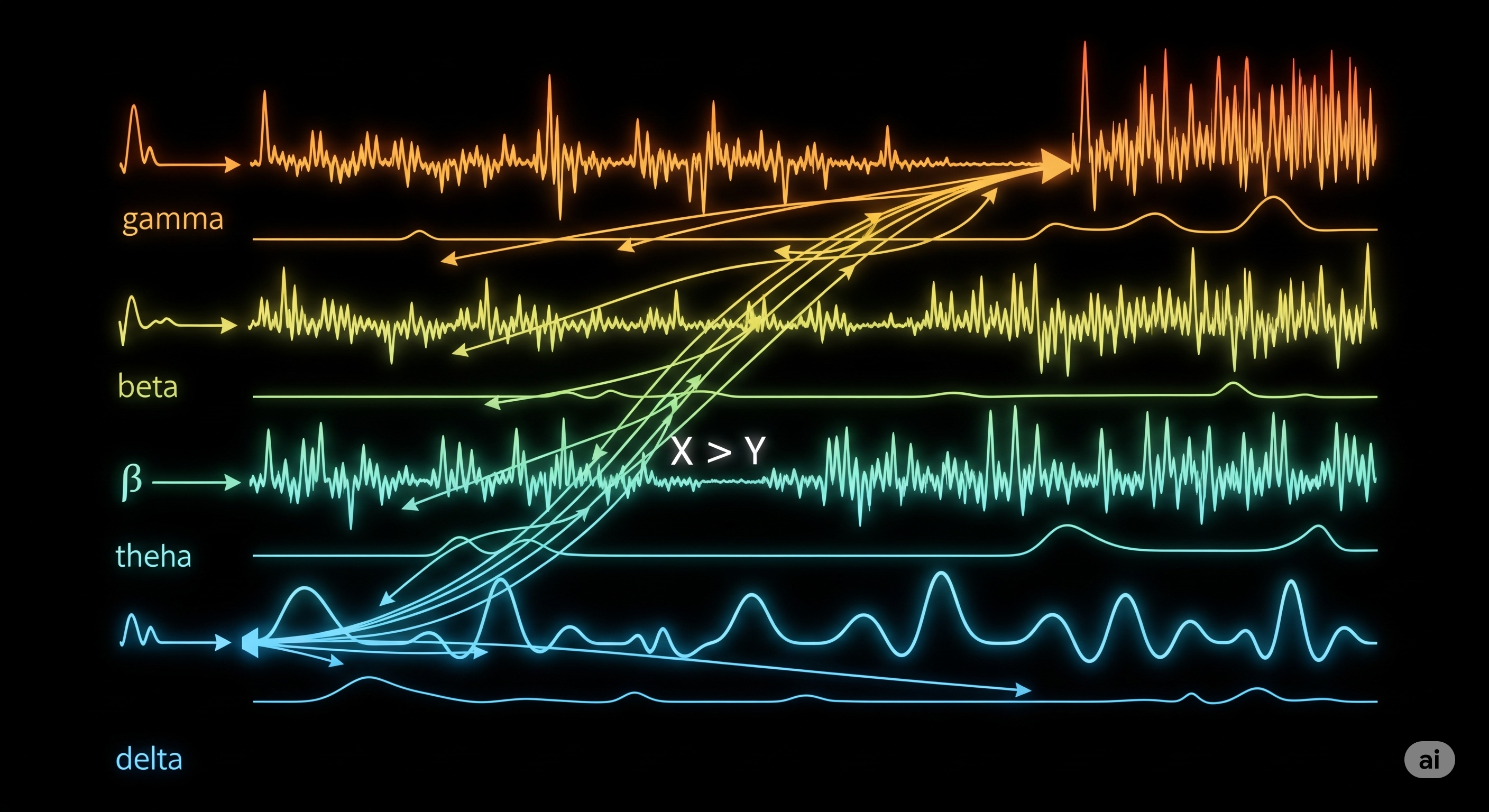
Causality is rarely one-size-fits-all—especially in the dynamic world of time series data. Whether you’re analyzing brainwaves, financial markets, or industrial processes, the timing of influence and the frequency at which it occurs both matter. Traditional Granger causality assumes a fixed temporal lag, while Variable-Lag Granger Causality (VLGC) brings some flexibility by allowing dynamic time alignment. But even VLGC falls short of capturing frequency-specific causal dynamics, which are ubiquitous in complex systems. ...


August 4, 2025 · 4 min · Zelina
Cover image

Forkcast: How Pro2Guard Predicts and Prevents LLM Agent Failures

If your AI agent is putting a metal fork in the microwave, would you rather stop it after the sparks fly—or before? That’s the question Pro2Guard was designed to answer. In a world where Large Language Model (LLM) agents are increasingly deployed in safety-critical domains—from household robots to autonomous vehicles—most existing safety frameworks still behave like overly cautious chaperones: reacting only when danger is about to occur, or worse, when it already has. This reactive posture, embodied in rule-based systems like AgentSpec, is too little, too late in many real-world scenarios. ...

August 4, 2025 · 4 min · Zelina
Cover image

From Autocomplete to Autonomy: How LLM Code Agents are Rewriting the SDLC

The idea of software that writes software has long hovered at the edge of science fiction. But with the rise of LLM-based code agents, it’s no longer fiction, and it’s certainly not just autocomplete. A recent survey by Dong et al. provides the most thorough map yet of this new terrain, tracing how code generation agents are shifting from narrow helpers to autonomous systems capable of driving the entire software development lifecycle (SDLC). ...

August 4, 2025 · 4 min · Zelina
Cover image

From Tadpole to Titan: How DEVFT Grows LLMs Like a Brain

If federated fine-tuning feels like trying to teach calculus to a toddler on a flip phone, you’re not alone. While the privacy-preserving benefits of federated learning are clear, its Achilles’ heel has always been the immense cost of training large models like LLaMA2-13B across resource-starved edge devices. Now, a new method—DEVFT (Developmental Federated Tuning)—offers a compelling paradigm shift, not by upgrading the devices, but by downgrading the expectations. At least, at first. ...

August 4, 2025 · 3 min · Zelina
Cover image

Many Minds Make Light Work: Boosting LLM Physics Reasoning via Agentic Verification

If you think AI models are getting too good at math, you’re not wrong. Benchmarks like GSM8K and MATH have been largely conquered. But when it comes to physics—where reasoning isn’t just about arithmetic, but about assumptions, abstractions, and real-world alignment—the picture is murkier. A new paper, PhysicsEval: Inference-Time Techniques to Improve the Reasoning Proficiency of Large Language Models on Physics Problems, makes a bold stride in this direction. It introduces a massive benchmark of 19,609 physics problems called PHYSICSEVAL and rigorously tests how frontier LLMs fare across topics from thermodynamics to quantum mechanics. Yet the real breakthrough isn’t just the dataset—it’s the method: multi-agent inference-time critique. ...

August 4, 2025 · 3 min · Zelina
Cover image

Thinking Without Talking: How SynAdapt Lets LLMs Reason in Silence

When large language models (LLMs) reason step-by-step using Chain-of-Thought (CoT) prompting, they think out loud. That verbosity improves accuracy—but it’s also a luxury many applications can’t afford. From real-time voice assistants to robotics, excessive token generation slows everything down. The result is a fundamental bottleneck: performance versus efficiency. The paper SynAdapt: Learning Adaptive Reasoning in Large Language Models via Synthetic Continuous Chain-of-Thought offers a clever solution. Rather than generating verbose natural language steps, SynAdapt trains LLMs to reason silently, using internal vectors called synthetic continuous CoT (CCoT). And for harder problems—where silence isn’t enough—it smartly reroutes the model back into verbal reasoning mode. This hybrid, adaptive strategy achieves the best of both worlds. ...

August 4, 2025 · 4 min · Zelina
Cover image

Agents of Allocation: Crypto Portfolios Meet Crew AI

In the volatile world of crypto, the only constant is change. This makes portfolio optimization a challenge — especially for traditional strategies that assume stability over time. A new study by Castelli, Giudici, and Piergallini offers a compelling solution: build your investment pipeline out of agents. Using a modular Multi-Agent System (MAS) framework implemented in Crew AI, the authors compare two crypto portfolio strategies over the 2020–2025 period: one static and one adaptive. The system orchestrates specialized agents to ingest, clean, analyze, optimize, and report on daily crypto prices — all in a transparent and auditable way. ...

August 3, 2025 · 3 min · Zelina
Cover image

Bottleneck or Breakout? Modeling the Compute Barrier to AI's Intelligence Explosion

Is artificial intelligence on the brink of recursively improving itself into superintelligence? The theoretical path—recursive self-improvement (RSI)—has become a cornerstone of AGI forecasting. But one inconvenient constraint looms large: compute. Can software alone drive an intelligence explosion, or will we hit a hardware ceiling? A new paper by Whitfill and Wu (2025) tackles this with rare empirical rigor. Their key contribution is estimating the elasticity of substitution between research compute and cognitive labor across four major AI labs (OpenAI, DeepMind, Anthropic, and DeepSeek) over the past decade. The result: the answer depends on how you define the production function of AI research. ...

August 3, 2025 · 3 min · Zelina
Cover image

Causality Is Optional: Rethinking Portfolio Efficiency Through Predictive Lenses

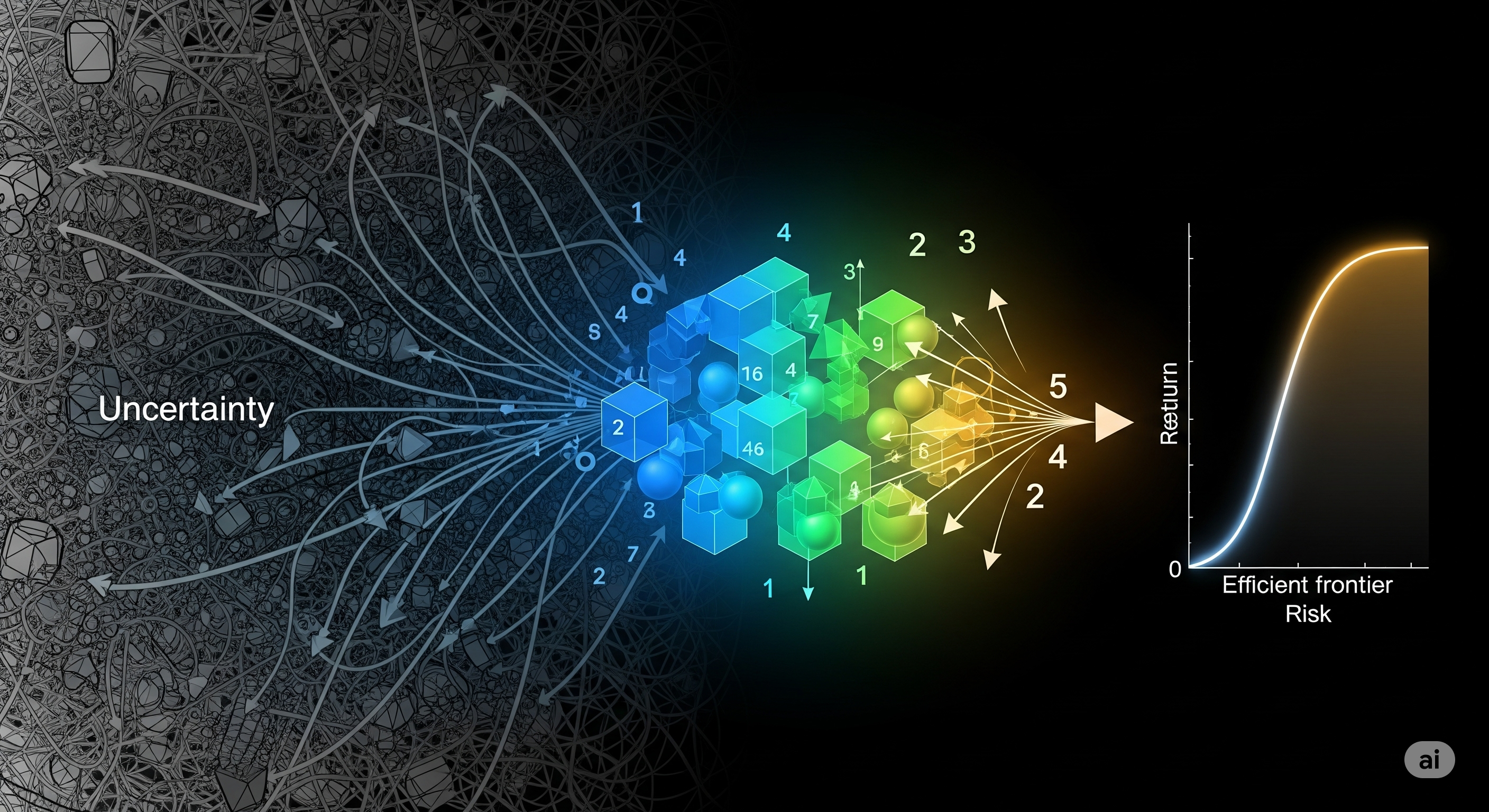
In asset management, few debates are more charged than the tug-of-war between causal purity and predictive utility. For years, a growing number of voices in empirical finance have argued that causal factor models are a necessary condition for portfolio efficiency. If a model omits a confounder, the logic goes, directional failure and Sharpe ratio collapse are inevitable. But what if this is more myth than mathematical law? A recent paper titled “The Myth of Causal Necessity” by Alejandro Rodriguez Dominguez delivers a sharp counterpunch to this orthodoxy. Through formal derivations and simulation-based counterexamples, it exposes the fragility of the causal necessity argument and makes the case that predictive models can remain both viable and efficient even when structurally misspecified. ...

August 3, 2025 · 3 min · Zelina
Cover image

Cleaning the Book: How Structural Filtering Sharpens High-Frequency Signals

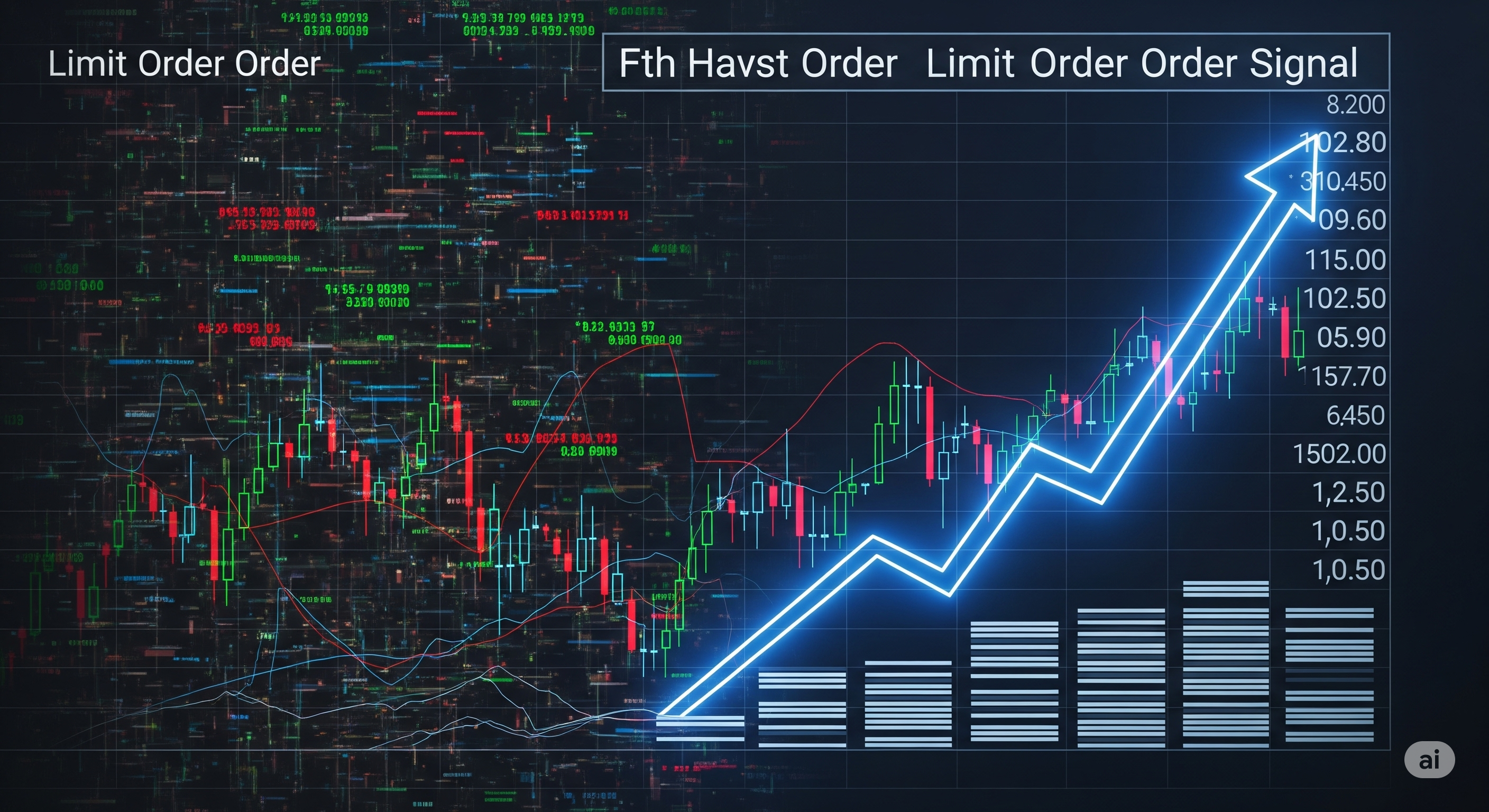
In modern markets, speed kills signal. High-frequency trading (HFT) has flooded the limit order book (LOB) with millisecond-scale activity: orders that flash in and out without intention to execute. These “flickering quotes”—the strategic residue of market makers, latency arbitrageurs, and spoofers—inject enormous noise into directional indicators like Order Book Imbalance (OBI). For firms trying to build real-time trading signals, the result is a muddied picture: imbalance measures that correlate weakly with returns, and worse, mislead causally. ...

August 3, 2025 · 3 min · Zelina