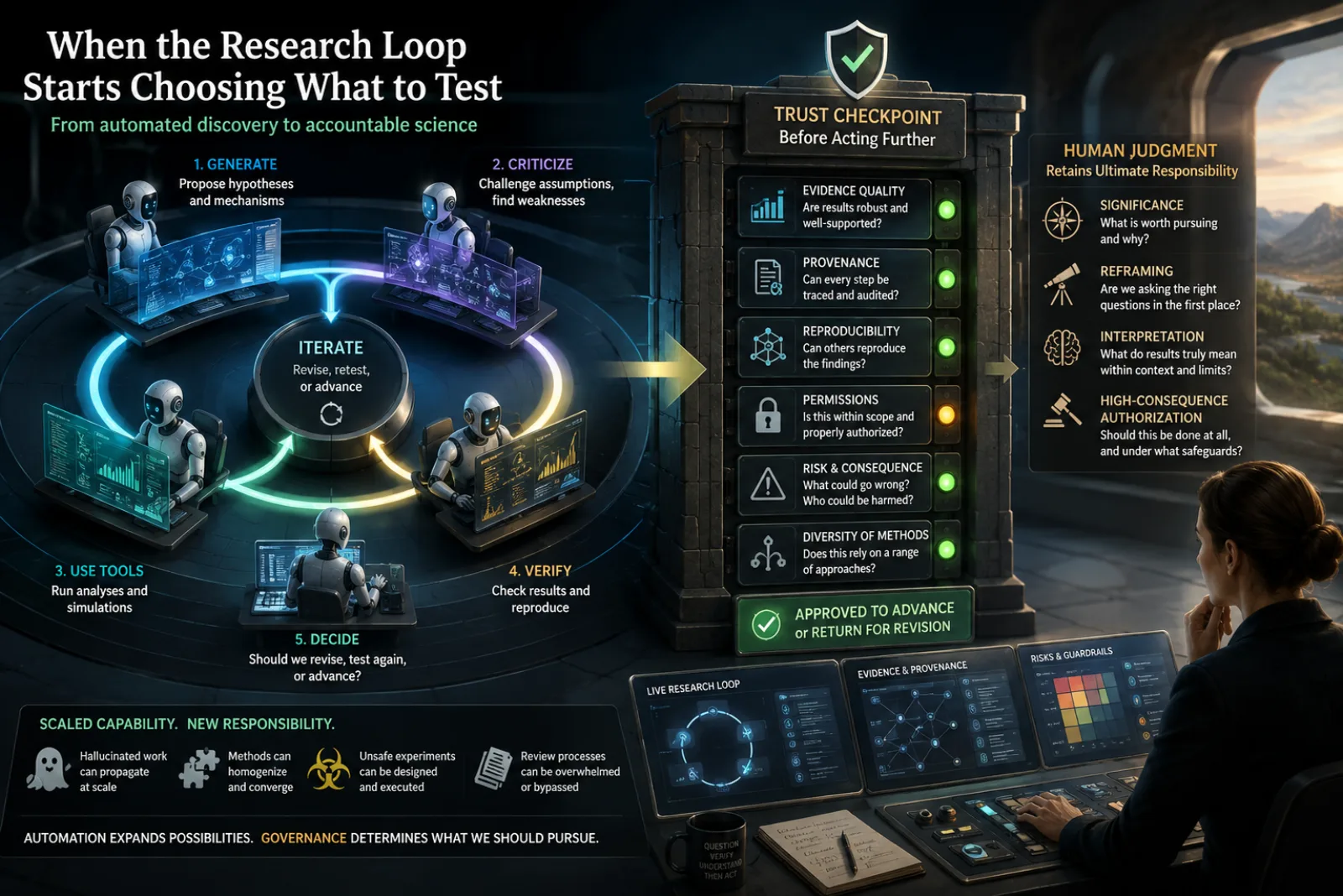
When the Research Loop Starts Choosing What to Test
AI-scientist systems change the R&D governance problem from tool adoption to deciding which scientific actions machines may initiate, verify, and advance.
AI-scientist systems change the R&D governance problem from tool adoption to deciding which scientific actions machines may initiate, verify, and advance.

Sim2Reason shows how a trusted physics simulator can become a renewable source of verifiable post-training data—but only when synthetic questions are designed for transfer rather than volume.

Brain Researcher shows why audit-heavy agent systems need controls over claim promotion and memory, not just better tool routing.

A benchmark suggests scientific agents may rank candidate hypotheses more effectively from intrinsic model confidence than from an explicit LLM judge—but the reliable signal depends heavily on the model.
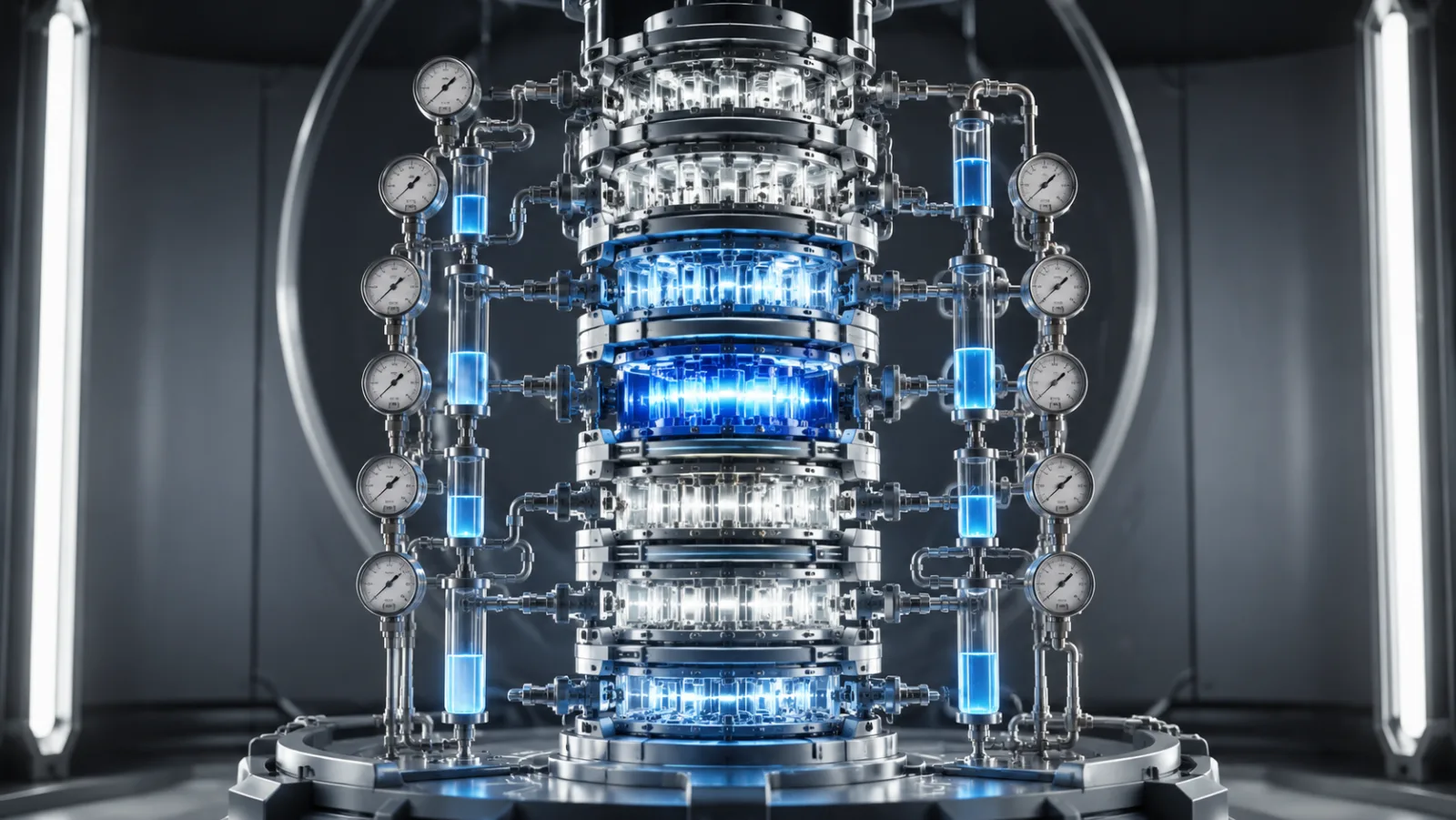
RippleKV shows that long-context quality can improve when a fixed KV-cache budget is allocated according to model-specific layer sensitivity rather than divided uniformly or by depth.

Scientific agents become operationally useful when retrieval is connected to real execution, verification, approval controls, and replaceable infrastructure.

EviReform shows that multi-hop retrieval improves when observed evidence changes what the system searches for next, with graph propagation serving as a secondary consolidation step.

MIND shows that the harder problem in scientific agents is not launching simulations, but deciding when computational evidence is sufficient to justify a conclusion.

A scientific AI pipeline becomes more useful when it can reconcile conflicting representations without stripping away the provenance and conditions that make a measurement meaningful.

A 105-paper audit shows why robotics teams should evaluate language by the responsibility it carries, not by readable reasoning or whole-system task success.