Cover image

The Missing Link: How AI Maps Hidden Properties in Materials Science

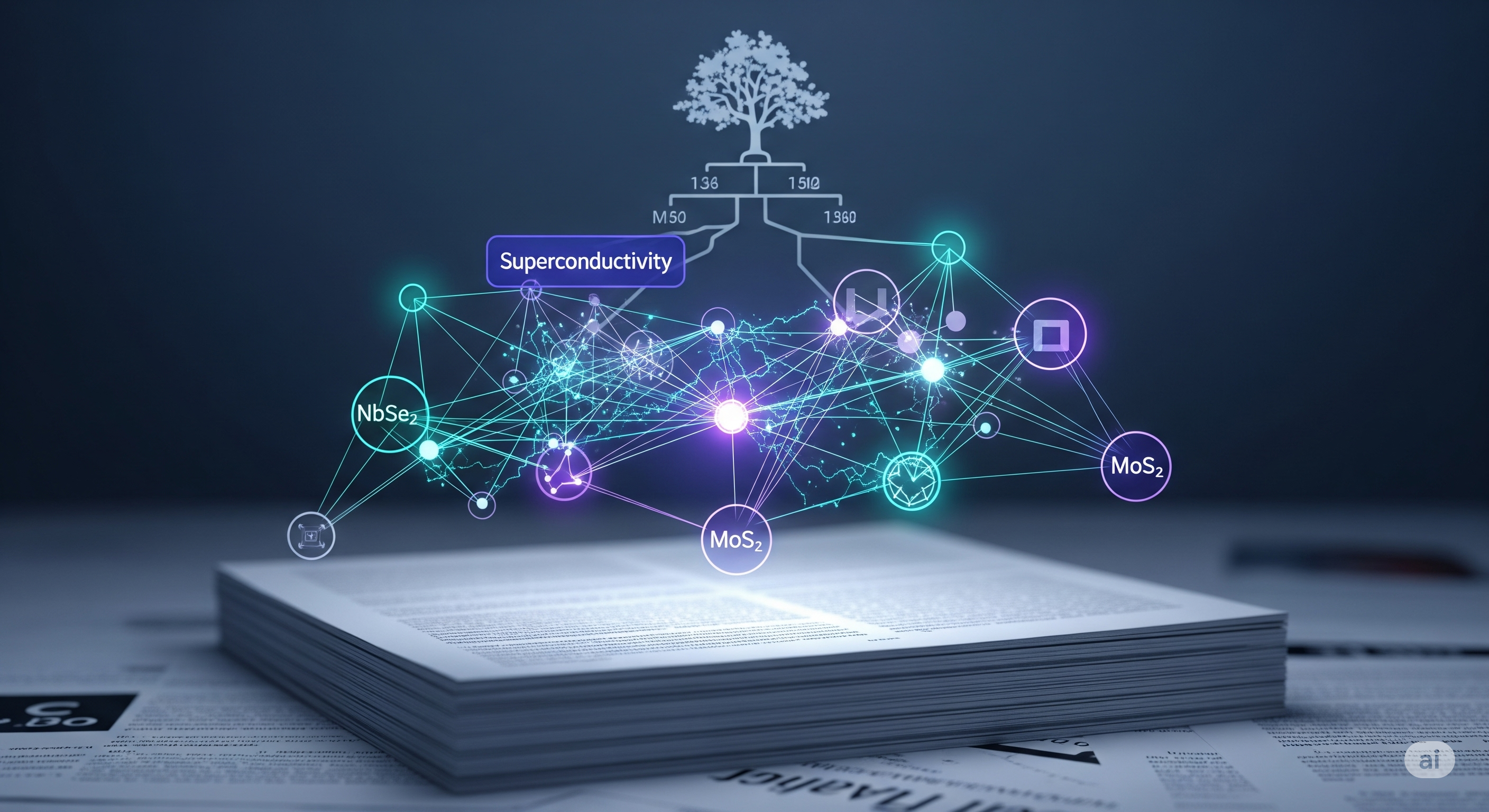
The search for new superconductors, energy materials, and exotic compounds often begins not in a lab—but in a database. Yet despite decades of digitization, scientific knowledge remains fragmented across millions of papers, scattered ontologies, and uncharted connections. A new study from Los Alamos National Laboratory proposes an AI-driven framework that doesn’t just analyze documents—it predicts the next breakthrough. From Papers to Properties: A Three-Tiered Approach At the heart of this method is a clever ensemble pipeline that combines interpretability with predictive power. The authors start by mapping over 46,000 papers on transition-metal dichalcogenides (TMDs)—a key class of 2D materials—into a matrix of latent topics and material mentions. Then they apply a hierarchical modeling approach: ...
July 13, 2025 · 3 min · Zelina
Cover image

The Rise of the Self-Evolving Scientist: STELLA and the Future of Biomedical AI

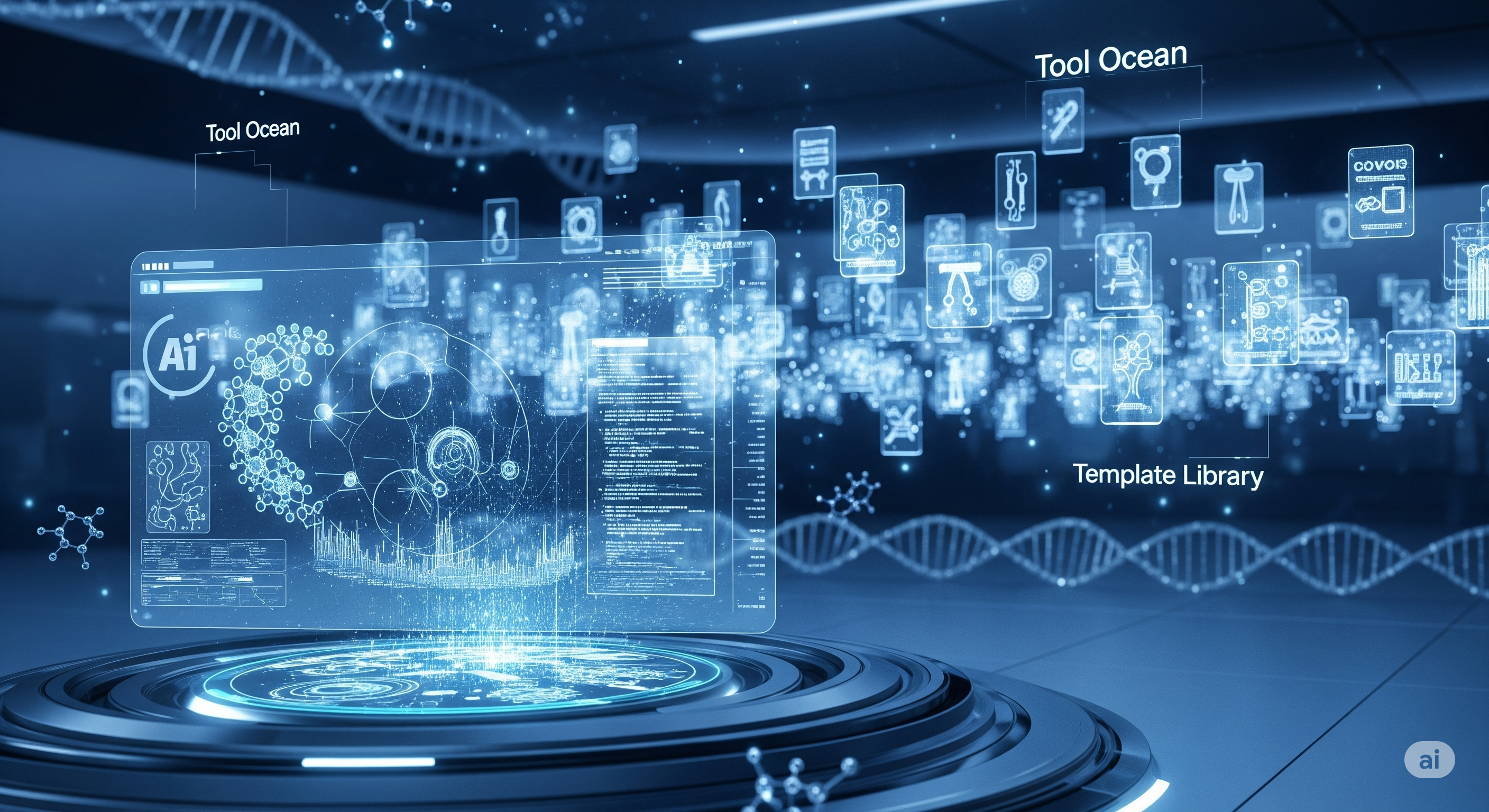
When was the last time a machine truly surprised you—not with a quirky ChatGPT poem or a clever image generation, but with scientific reasoning that evolved on its own? Meet STELLA, an AI agent for biomedical research that doesn’t just solve problems—it gets better at solving them while solving them. The Static Curse of Smart Agents Modern AI agents have shown promise in navigating the labyrinth of biomedical research, where each inquiry might require cross-referencing papers, running custom bioinformatics analyses, or interrogating molecular databases. But the vast majority of these agents suffer from a fatal limitation: they rely on static, pre-installed toolkits and hard-coded logic trees. Like a PhD student who memorized a textbook but never updated it, they can’t adapt to new tasks or new knowledge without human intervention. ...

July 13, 2025 · 3 min · Zelina
Cover image

What LLMs Remember—and Why: Unpacking the Entropy-Memorization Law

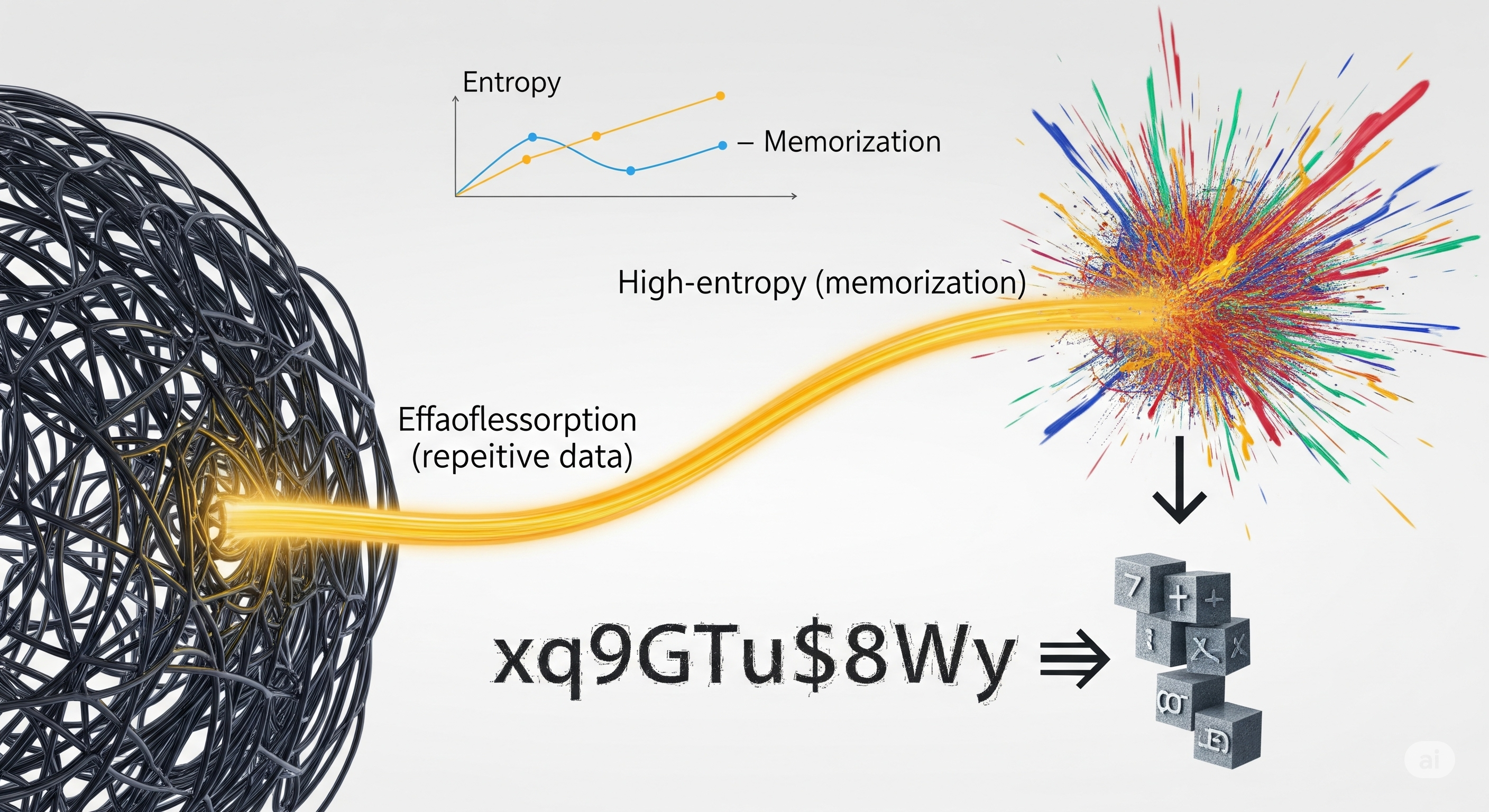
The best kind of privacy leak is the one you can measure. A recent paper by Huang et al. introduces a deceptively simple but powerful principle—the Entropy-Memorization Law—that allows us to do just that. It claims that the entropy of a text sequence is strongly correlated with how easily it’s memorized by a large language model (LLM). But don’t mistake this for just another alignment paper. This law has concrete implications for how we audit models, design prompts, and build privacy-aware systems. Here’s why it matters. ...

July 13, 2025 · 4 min · Zelina
Cover image

LLMs Meet Logic: SymbolicThought Turns AI Relationship Guesswork into Graphs

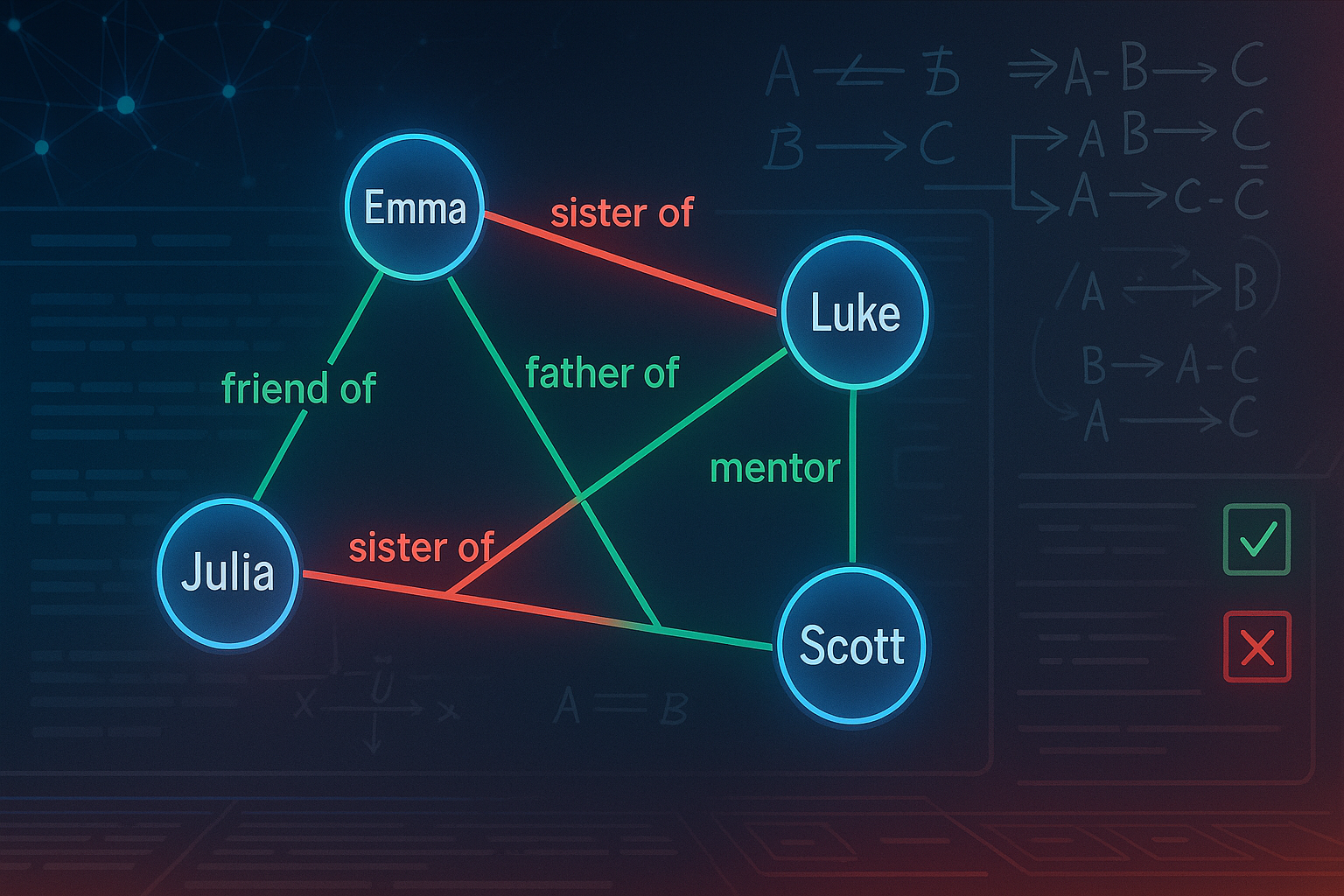
If AI is going to understand people, it first has to understand relationships. But when it comes to parsing character connections from narrative texts — whether news articles, biographies, or novels — even state-of-the-art language models stumble. They hallucinate links, miss cross-sentence cues, and often forget what they’ve just read. Enter SymbolicThought, a hybrid framework that gives LLMs a logic-boosted sidekick: symbolic reasoning. Developed by researchers at King’s College London and CUHK, the system doesn’t just extract character relationships from text; it builds editable graphs, detects logical contradictions, and guides users through verification with a smart, interactive interface. ...

July 12, 2025 · 3 min · Zelina
Cover image

Peering Through the Fog: A Hierarchy of Causal Identifiability Without Full Graphs

“In the absence of perfect knowledge, how do we still reason causally?” This paper tackles a profound and practical dilemma in causal inference: what if we don’t know the full causal graph? In real-world settings — whether in healthcare, finance, or digital platforms — complete causal diagrams are rare. Practitioners instead rely on causal abstractions: simplified, coarse-grained representations that preserve partial causal knowledge. But this raises a fundamental question: Which causal queries can still be identified under such abstraction? ...

July 12, 2025 · 4 min · Zelina
Cover image

Residual Entanglement: How ResQuNNs Fix Gradient Flow in Quantum Neural Networks

Residual Entanglement: How ResQuNNs Fix Gradient Flow in Quantum Neural Networks In classical deep learning, residual connections revolutionized the training of deep networks. Now, a similar breakthrough is happening in quantum machine learning. The paper “ResQuNNs: Towards Enabling Deep Learning in Quantum Convolution Neural Networks” introduces a method to overcome a fundamental bottleneck in Quantum Convolutional Neural Networks (QuNNs): the inability to train multiple quantum layers due to broken gradient flow. ...

July 12, 2025 · 4 min · Zelina
Cover image

The Meek Shall Compute It

The Meek Shall Compute It For the past five years, discussions about AI progress have centered on a simple formula: more data + more compute = better models. This scaling paradigm has produced marvels like GPT-4 and Gemini—but also entrenched a new aristocracy of compute-rich players. Is this inequality here to stay? According to a provocative new paper from MIT CSAIL, the answer may be: not for long. The authors argue that due to the laws of diminishing returns, the performance gap between state-of-the-art (SOTA) models and smaller, cheaper “meek” models will shrink over time. If true, this reframes the future of AI as one not of centralized supremacy, but of widespread, affordable competence. ...

July 12, 2025 · 4 min · Zelina
Cover image

Threading the Needle: How GRAFT Reinvents Document Translation with DAGs and LLM Agents

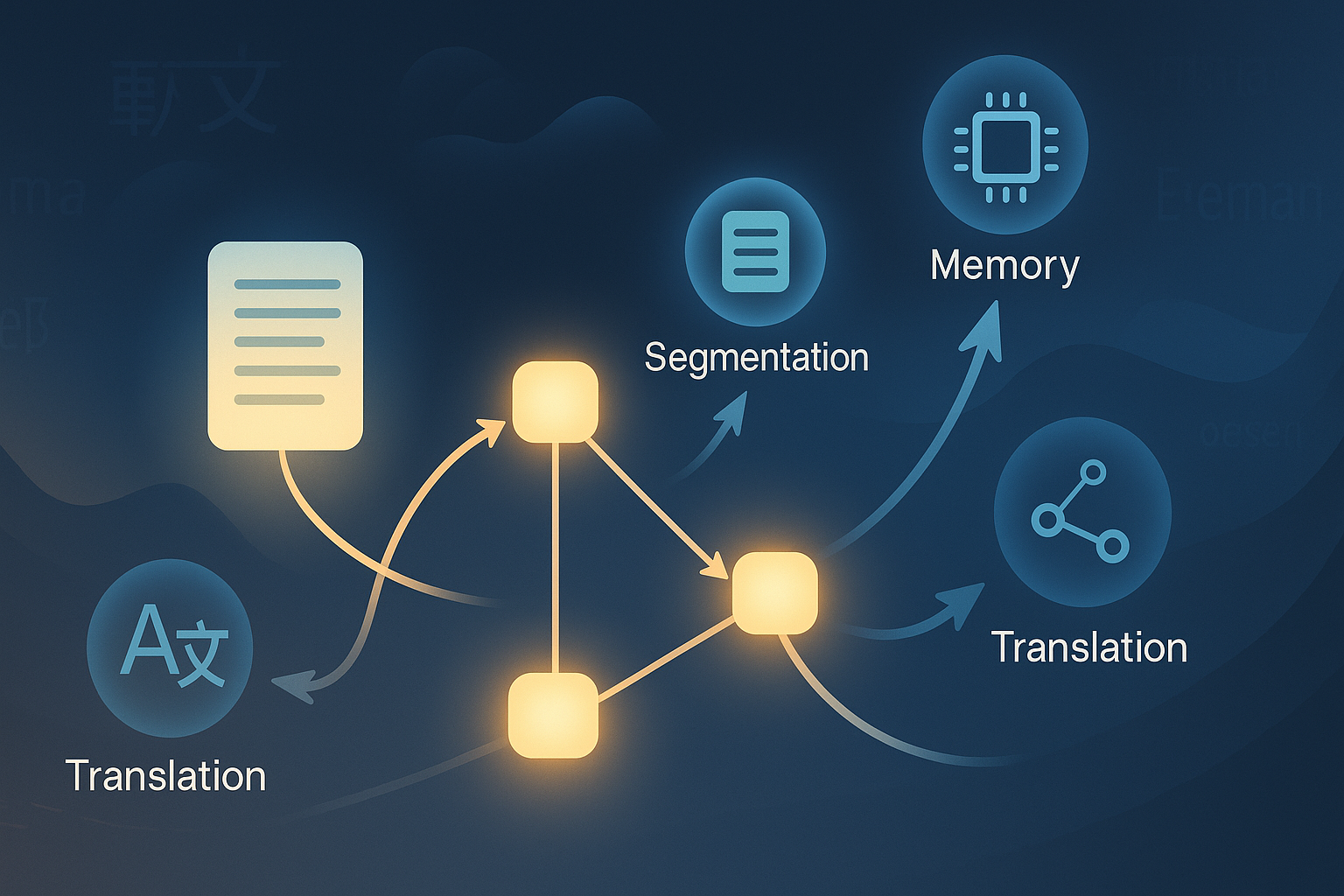
Document-level machine translation (DocMT) has long been riddled with a paradox: while LLMs can translate fluent paragraphs and even simulate discourse, they often falter at stitching meaning across paragraphs. Pronouns go adrift, tenses waver, and terminology mutates like a broken telephone game. The new paper GRAFT: A Graph-based Flow-aware Agentic Framework for Document-level Machine Translation proposes an ambitious fix: treat a document not as a sequence, but as a graph — and deploy a team of LLM agents to navigate it. ...

July 12, 2025 · 4 min · Zelina
Cover image

Copilot at Work: How Generative AI is Quietly Rewriting Job Descriptions

When the AI revolution hits your job, will it help or replace you? Microsoft’s new study, analyzing 200,000 real-world conversations between users and Bing Copilot, offers the most grounded answer to date. Rather than speculating what LLMs could do, this research asks what users are actually doing with them — and how often those interactions overlap with real occupational tasks. The key innovation? The authors distinguish between user goals (what users ask AI to help with) and AI actions (what the AI does in response). This split allows them to track when Copilot acts as a coach, co-pilot, or full-on doer of tasks — a nuance missing from many economic forecasts. ...

July 11, 2025 · 5 min · Zelina
Cover image

Echo Chamber in a Prompt: How Survey Bias Creeps into LLMs

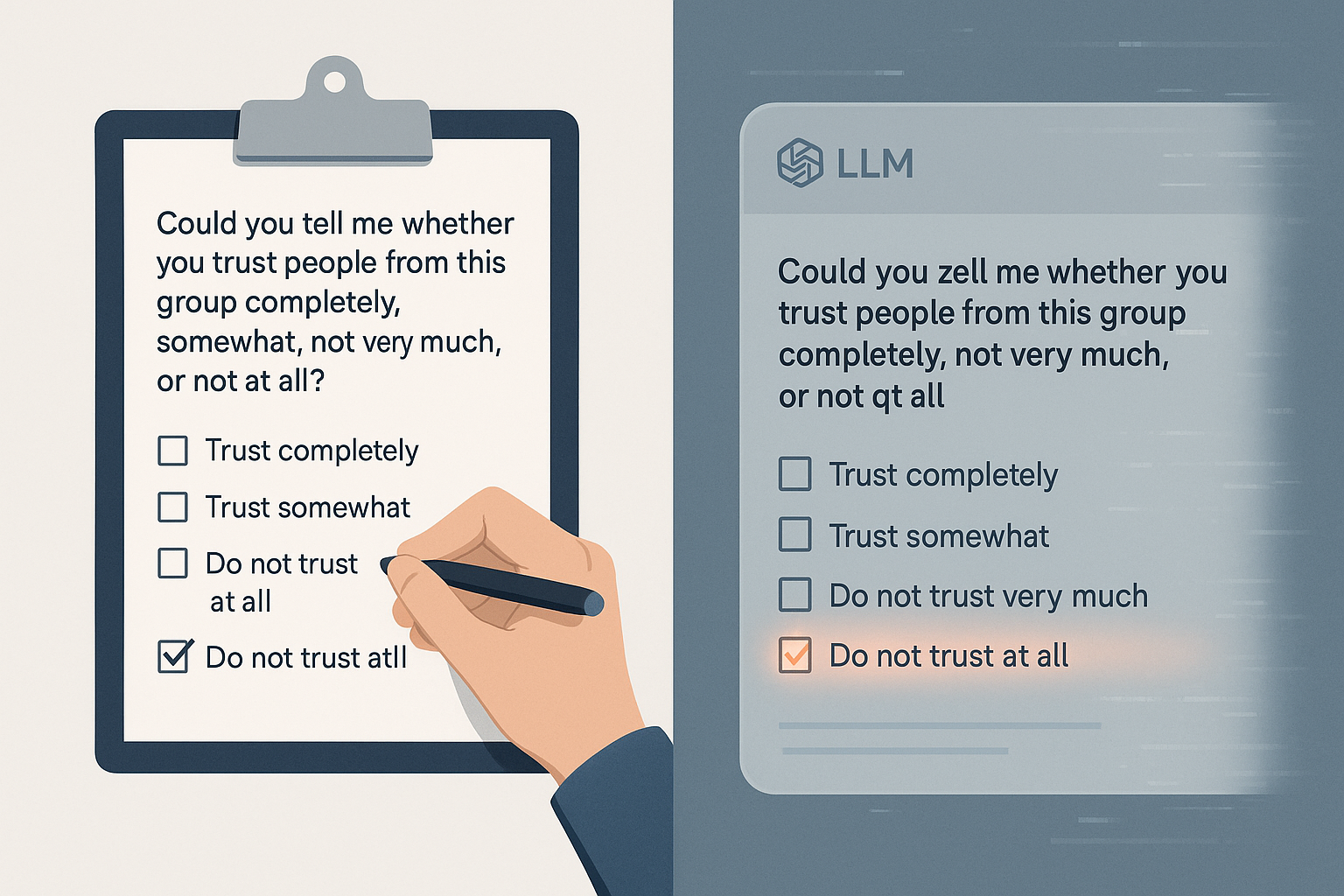
Large Language Models (LLMs) are increasingly deployed as synthetic survey respondents in social science and policy research. But a new paper by Rupprecht, Ahnert, and Strohmaier raises a sobering question: are these AI “participants” reliable, or are we just recreating human bias in silicon form? By subjecting nine LLMs—including Gemini, Llama-3 variants, Phi-3.5, and Qwen—to over 167,000 simulated interviews from the World Values Survey, the authors expose a striking vulnerability: even state-of-the-art LLMs consistently fall for classic survey biases—especially recency bias. ...

July 11, 2025 · 3 min · Zelina