Cover image

Game of Prompts: How Game Theory and Agentic LLMs Are Rewriting Cybersecurity

In today’s threat landscape, cybersecurity is no longer a battle of scripts and firewalls. It’s a war of minds. And with the rise of intelligent agents powered by Large Language Models (LLMs), we are now entering a new era where cyber defense becomes not just technical but deeply strategic. The paper “Game Theory Meets LLM and Agentic AI” by Quanyan Zhu provides one of the most profound frameworks yet for understanding this shift. ...


July 16, 2025 · 4 min · Zelina
Cover image

Homo Silicus Goes to Wall Street

As AI systems step into the boardroom and brokerage app, a new question arises: How do they think about money? In a world increasingly shaped by large language models (LLMs) not just answering questions but making decisions, we need to ask not just whether AI is accurate—but what kind of financial reasoner it is. A recent study by Orhan Erdem and Ragavi Pobbathi Ashok tackles this question head-on by comparing the decision-making profiles of seven LLMs—including GPT-4, DeepSeek R1, and Gemini 2.0—with those of humans across 53 countries. The result? LLMs consistently exhibit a style of reasoning distinct from human respondents—and most similar to Tanzanian participants. Not American, not German. Tanzanian. That finding, while seemingly odd, opens a portal into deeper truths about how these models internalize financial logic. ...

July 16, 2025 · 4 min · Zelina
Cover image

Inside Out: How LLMs Are Learning to Feel (and Misfeel) Like Us

When Pixar’s Inside Out dramatized the mind as a control room of core emotions, it didn’t imagine that language models might soon build a similar architecture—on their own. But that’s exactly what a provocative new study suggests: large language models (LLMs), without explicit supervision, develop hierarchical structures of emotions that mirror human psychological models like Shaver’s emotion wheel. And the larger the model, the more nuanced its emotional understanding becomes. ...

July 16, 2025 · 4 min · Zelina
Cover image

Thoughts, Exposed: Why Chain-of-Thought Monitoring Might Be AI Safety’s Best Fragile Hope

Imagine debugging a black box. Now imagine that black box occasionally narrates its thoughts aloud. That’s the opportunity—and the fragility—presented by Chain-of-Thought (CoT) monitoring, a newly emergent safety paradigm for large language models (LLMs). In their recent landmark paper, Korbak et al. argue that reasoning traces generated by LLMs—especially those trained for explicit multi-step planning—offer a fleeting yet powerful handle on model alignment. But this visibility, they warn, is contingent, brittle, and already under threat. ...

July 16, 2025 · 3 min · Zelina
Cover image

Causality Pays: A Smarter Take on Volatility-Based Trading

In the noisy world of algorithmic trading, volatility is often treated as something to manage or hedge against. But what if it could be a signal generator? Ivan Letteri’s recent paper proposes a novel trading framework that does just that: it treats mid-range volatility not as a nuisance, but as the key to unlocking directional causality between assets. From Volatility to Causality: The 4-Step Pipeline This is not your standard volatility arbitrage. The author introduces a four-stage pipeline that transforms volatility clusters into trading signals: ...

July 15, 2025 · 3 min · Zelina
Cover image

Memory Games: The Data Contamination Crisis in Reinforcement Learning

Reinforcement learning (RL) has recently emerged as the favored path to boost large language models’ reasoning abilities. The latest headline-grabbing claim? That even random or incorrect reward signals can help models like Qwen2.5 become better reasoners. But a new paper, “Reasoning or Memorization?”, cuts through the hype—and it does so with scalpel-like precision. It reveals that what we thought were signs of emergent reasoning in Qwen2.5 might, in fact, be a textbook case of data contamination. If true, the implications are serious: much of what we thought we knew about RL-driven reasoning gains could be little more than sophisticated memory retrieval. ...

July 15, 2025 · 3 min · Zelina
Cover image

Personas with Purpose: How TinyTroupe Reimagines Multiagent Simulation

If you’ve ever tried to simulate user behavior using LLMs, you’ve probably noticed the same frustrating pattern: the agents are too polite, too helpful, and too similar. They lack the kind of quirks, inconsistencies, and contextually grounded views that make real people interesting—and unpredictable. Enter TinyTroupe, Microsoft’s new open-source toolkit that flips the script on LLM-agent design. Instead of building yet another task-oriented assistant or collaborative workflow bot, TinyTroupe takes the form of a behavioral simulation laboratory. It invites us to think of agents not as obedient coworkers, but as idiosyncratic personas—each with their own backstories, beliefs, and sometimes maddening biases. ...

July 15, 2025 · 4 min · Zelina
Cover image

Reasoning at Scale: How DeepSeek Redefines the LLM Playbook

If GPT-4 was the apex of pretraining, DeepSeek might be the blueprint for what comes next. Released in two families—DeepSeek-V3 and DeepSeek-R1—this Chinese open-source model series isn’t just catching up to frontier LLMs. It’s reshaping the paradigm entirely. By sidestepping traditional supervised fine-tuning in favor of reinforcement learning (RL), and coupling it with memory-efficient innovations like Multi-head Latent Attention (MLA) and cost-efficient training techniques like FP8 mixed precision and fine-grained MoE, DeepSeek models demonstrate how strategic architectural bets can outpace brute-force scale. ...

July 15, 2025 · 3 min · Zelina
Cover image

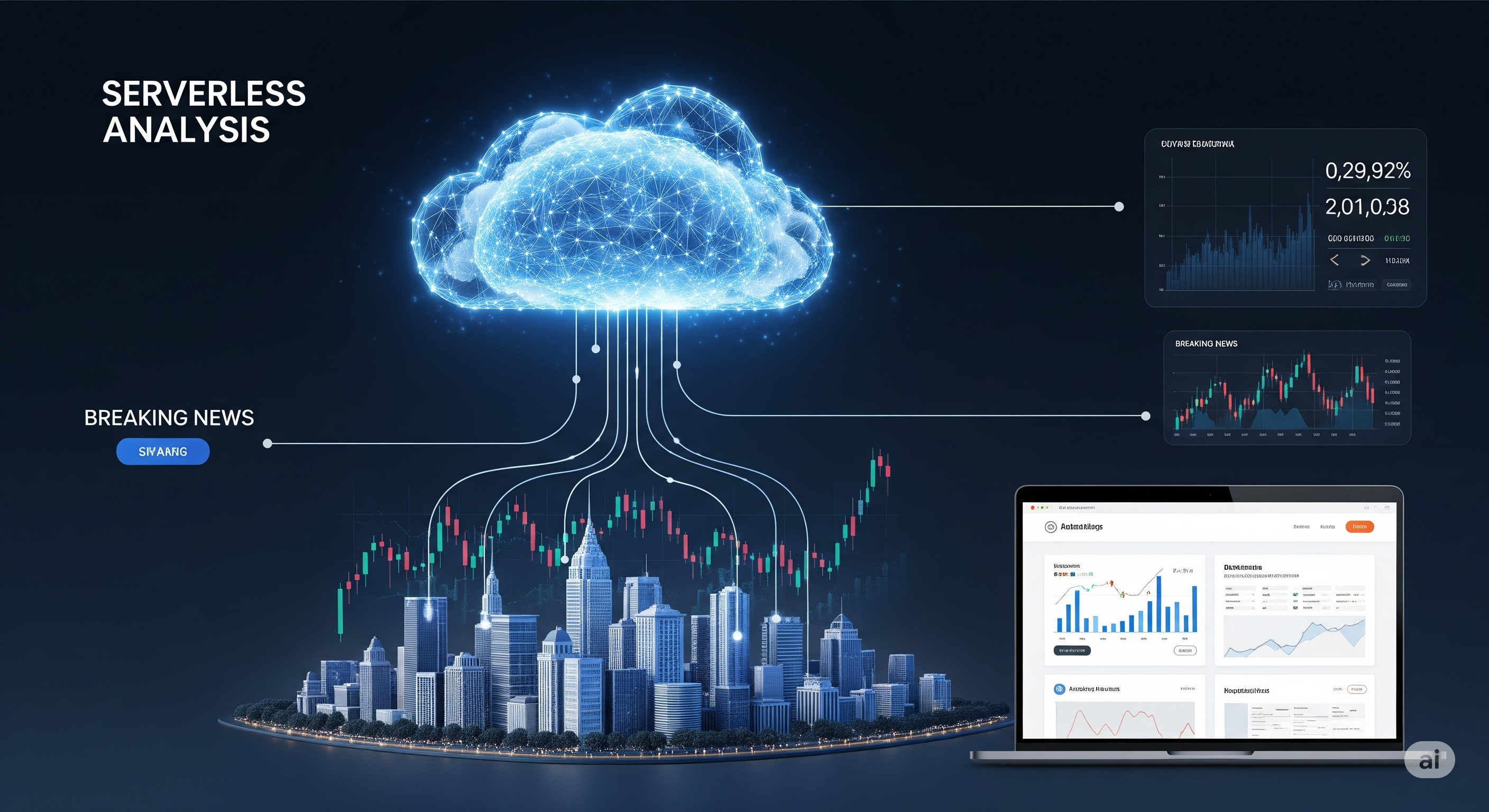
Serverless Bulls and Bears: How One Developer Built a Real-Time Stock Analyst with Zero Infrastructure

Most real-time financial systems rely on deep stacks of infrastructure, from custom APIs to cloud VMs and high-frequency data ingestion pipelines. But what if a single developer could deploy a daily-updating, AI-powered stock analysis engine without a single server? That’s exactly what Taniv Ashraf set out to do — and accomplished — in his recent case study on a fully serverless architecture using Google Gemini, GitHub Actions, and static web hosting. The result is an elegantly simple yet conceptually powerful demonstration of how qualitative LLM analysis and automation tools can replace entire categories of financial tooling — if wielded strategically. ...

July 15, 2025 · 4 min · Zelina
Cover image

Tables Turned: Why LLM-Based Table Agents Are the Next Big Leap in Business AI

When most people think of AI today, they picture text generation, image synthesis, or copilots answering emails. But beneath the surface of digital transformation lies an often-overlooked backbone of enterprise work: tables. Spreadsheets, databases, and semi-structured tabular documents are still where critical operations happen — from finance to health records to logistics. A recent survey paper, Toward Real-World Table Agents, pushes us to rethink how AI interacts with tabular data. Instead of treating tables as static inputs, the authors argue that tables are evolving into active data canvases — and LLM-based Table Agents are poised to become their intelligent orchestrators. ...

July 15, 2025 · 4 min · Zelina