Cover image

Fake News Feels Different: How SEER Uses Emotion and Semantics to Spot Deception

The latest advancement in fake news detection doesn’t just analyze what is said—it also looks at how it feels. The SEER model (Semantic Enhancement and Emotional Reasoning Network) introduces an innovative approach that harnesses emotional reasoning and semantic depth to surpass existing benchmarks in multimodal fake news detection. 🧠 Beyond Consistency: The Emotional Gap in Fake News Traditionally, models focus on image-text consistency: does the photo match the caption? But this misses the forest for the trees. Fake news isn’t just mismatched—it’s emotionally manipulative. ...


July 21, 2025 · 3 min · Zelina
Cover image

Latent Brilliance: Turning LLMs into Creativity Engines

What if we stopped asking language models to “be creative”—and instead let them explore creativity the way humans brainstorm: by remixing ideas, nudging boundaries, and iterating through meaningful variations? That’s exactly what Large Language Models as Innovators proposes: a novel framework that leverages the latent embedding space of ideas—not prompts—to drive controlled, domain-agnostic creativity. Rather than relying on handcrafted rules or complex prompting tricks, the authors show how LLMs can generate original and relevant ideas by interpolating between known concepts, evaluating results, and refining outputs over time. ...

July 21, 2025 · 3 min · Zelina
Cover image

Tunnel Vision: Why Vision-Language Models Still Miss the Bigger Picture

It’s no secret that Vision-Language Models (VLMs) have dazzled us with their prowess—excelling at image captioning, chart understanding, and even medical diagnostics. But beneath the glitter of benchmark wins, a deeper flaw lurks: these models often suffer from what Berman and Deng (Princeton) have sharply diagnosed as “tunnel vision.” Their new paper, VLMs Have Tunnel Vision, introduces a battery of tasks that humans can breeze through but that leading VLMs—from Gemini 2.5 Pro to Claude Vision 3.7—fail to solve even marginally above chance. These tasks aren’t edge cases or contrived puzzles. They simulate basic human visual competencies like comparing two objects, following a path, and making discrete visual inferences from spatially distributed evidence. The results? A sobering reminder that state-of-the-art perception doesn’t equate to understanding. ...

July 21, 2025 · 4 min · Zelina
Cover image

Beyond the Mean: Teaching RL to Price the Entire Option Distribution

In financial engineering, pricing exotic options often boils down to estimating one number: the expected payoff under a risk-neutral measure. But what if we’re asking the wrong question? That’s the provocative premise of a recent study by Ahmet Umur Özsoy, who reimagines option pricing as a distributional learning problem, not merely a statistical expectation problem. By combining insights from Distributional Reinforcement Learning (DistRL) with classical option theory, the paper offers a fresh solution to an old problem: how do we properly account for tail risk and payoff uncertainty in path-dependent derivatives like Asian options? ...

July 20, 2025 · 4 min · Zelina
Cover image

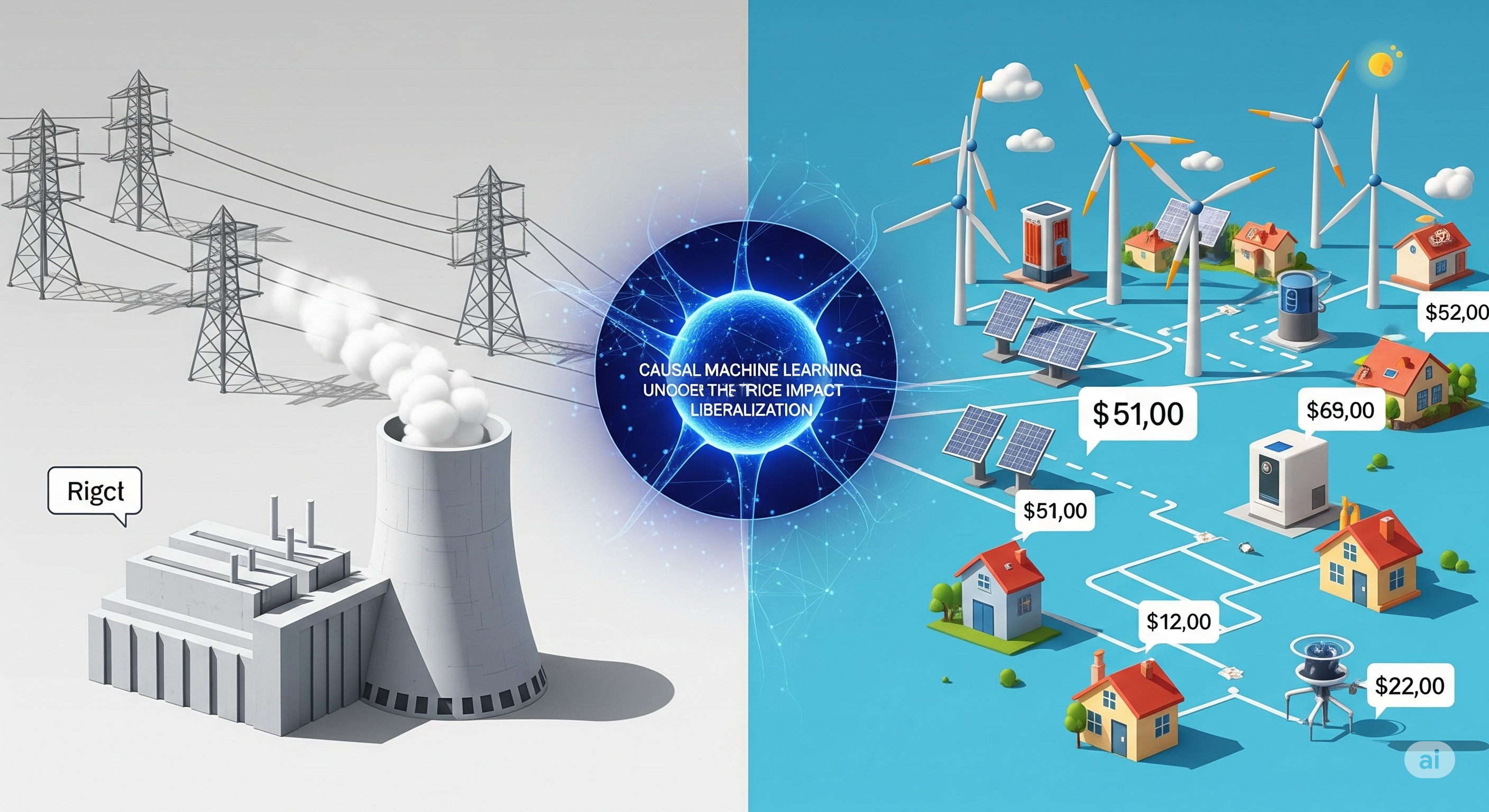
Price Shock Therapy: Causal ML Reveals True Impact of Electricity Market Liberalization

When electricity markets were deregulated across many U.S. states in the 1990s, economists and policymakers hoped competition would lower consumer prices. But for decades, the results remained ambiguous—until now. A new paper, Causality analysis of electricity market liberalization on electricity price using novel Machine Learning methods, offers the most precise evaluation yet. Using cutting-edge causal machine learning models, the authors demonstrate that liberalization led to a 7% decrease in residential electricity prices in the short term—a finding with major implications for regulatory policy and infrastructure reform. ...

July 20, 2025 · 3 min · Zelina
Cover image

Signals & Sentiments: How GPT-2 and FinBERT Beat Buy-and-Hold on the S&P 500

When it comes to trading the S&P 500, tradition says: trust the chart. But a new study from UCLA researchers proposes a smarter compass—one that listens not only to price momentum but also to the tone of the news. By merging language model-powered sentiment scores with technical indicators and time-series forecasting, the authors build a hybrid strategy that outperforms a buy-and-hold baseline during a volatile 3-month window. ...

July 20, 2025 · 3 min · Zelina
Cover image

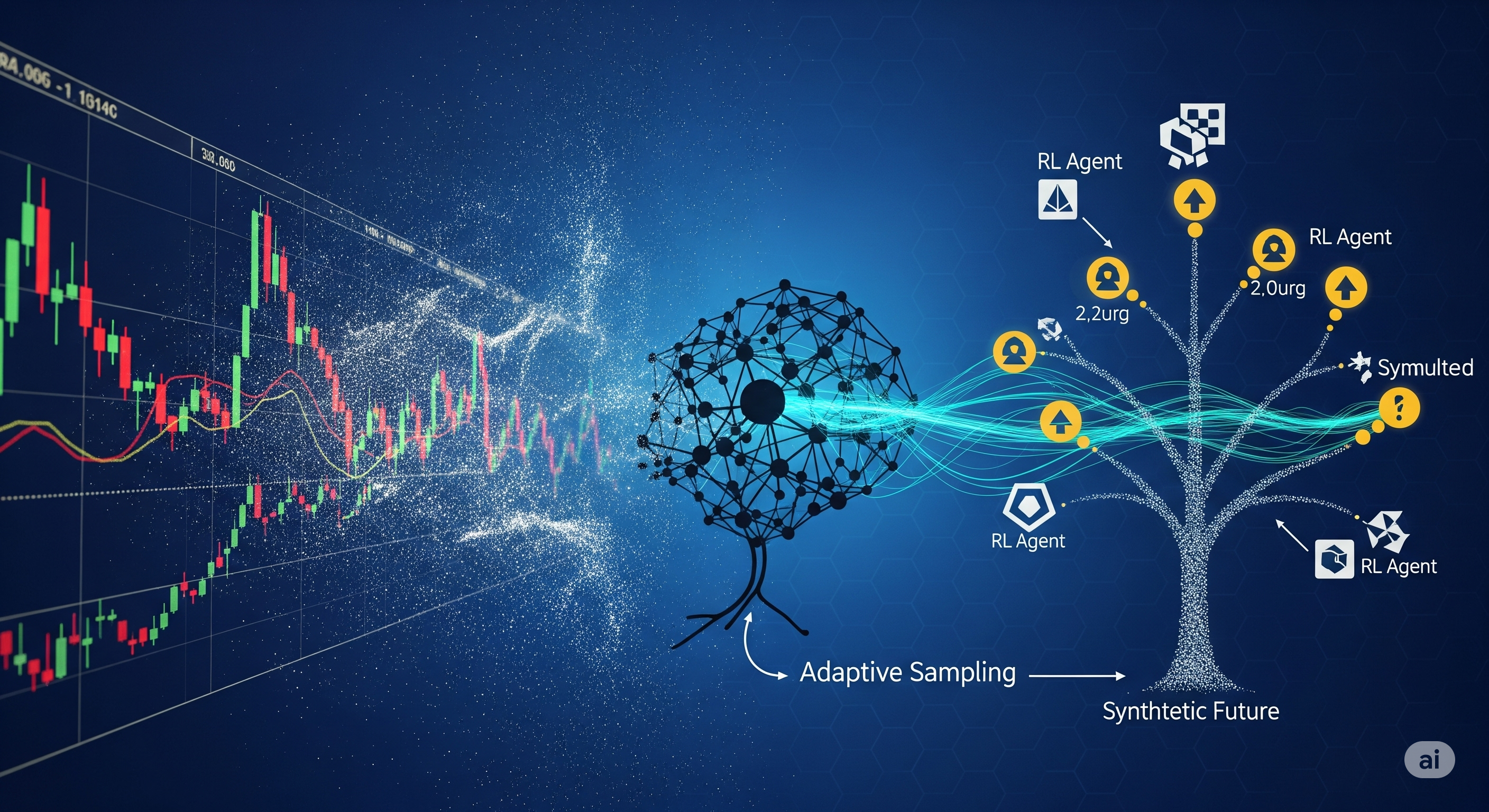
Simulate First, Invest Later: How Diffusion Models Are Reinventing Portfolio Optimization

What if you could simulate thousands of realistic futures for the market, all conditioned on what’s happening today—and then train an investment strategy on those futures? That’s the central idea behind a bold new approach to portfolio optimization that blends score-based diffusion models with reinforcement learning, and it’s showing results that beat classic benchmarks like the S&P 500 and traditional Markowitz portfolios. ...

July 20, 2025 · 4 min · Zelina
Cover image

Trading on Memory: Why Markov Models Miss the Signal

Classic finance assumes that the past doesn’t matter — only the present state of the market matters for decisions. But in a new paper from researchers at Imperial College and Oxford, a kernel-based framework for trading strategy design exposes how this assumption leads to suboptimal choices. Their insight: memory matters, and modern tools can finally make use of it. ...

July 20, 2025 · 3 min · Zelina
Cover image

Adding Up to Nothing: Coarse Reasoning and the Vanishing St. Petersburg Paradox

The St. Petersburg paradox has long been a thorn in the side of rational decision theory. Offering an infinite expected payout but consistently eliciting modest real-world bids, the game exposes a rift between mathematical expectation and human judgment. Most solutions dodge this by modifying utility functions, imposing discounting, or resorting to exotic number systems. But what if we change the addition itself? ...

July 19, 2025 · 3 min · Zelina
Cover image

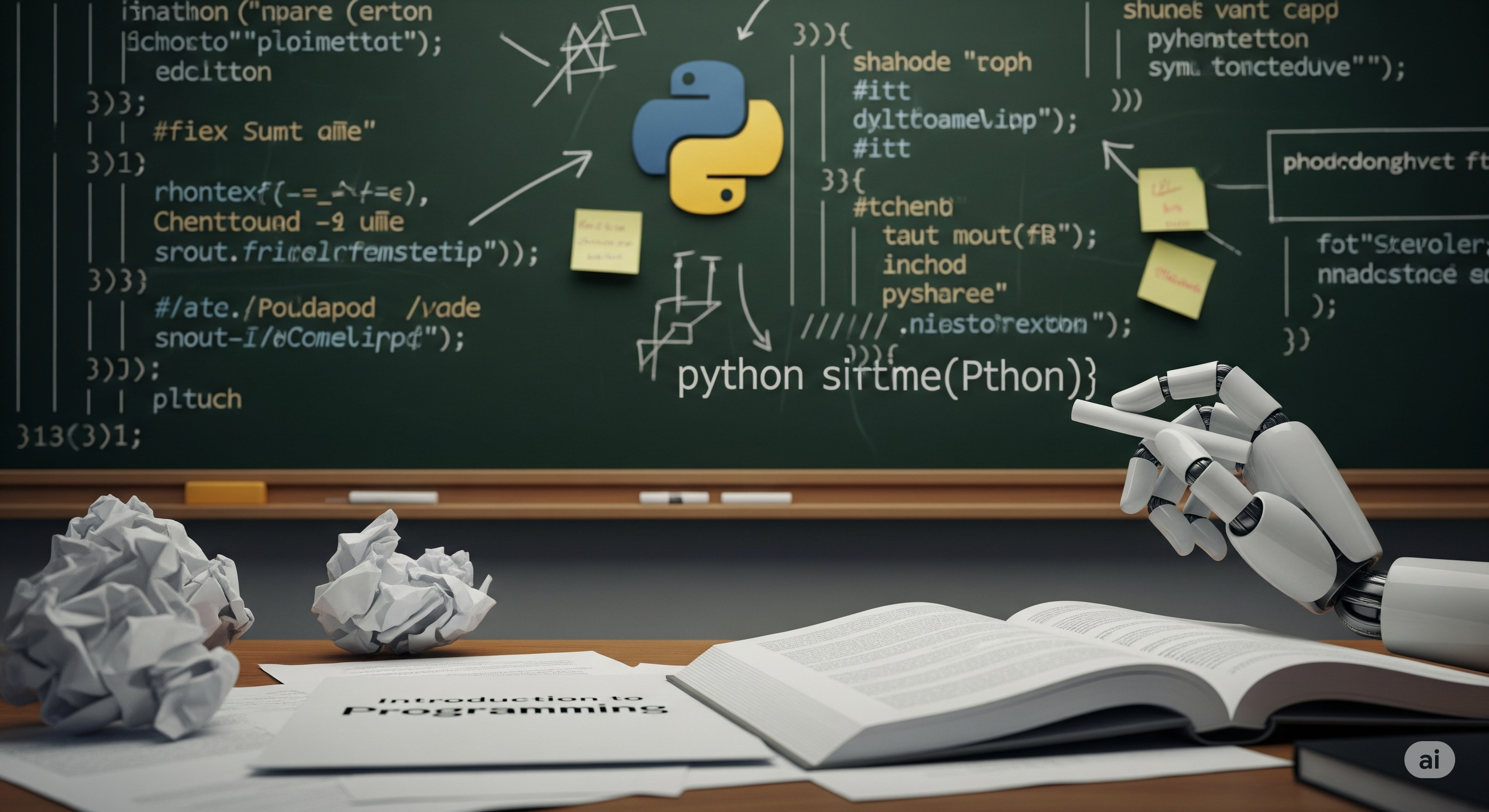
Learning to Struggle: Teaching LLMs to Code Like Real Students

What makes code feel like it was written by a student? Not just errors, but how they evolve. Not just style, but how it diverges from the polished norms. This week’s standout paper, ParaStudent, tackles a refreshingly underexplored challenge: teaching LLMs to generate code that learns like a student — messy, iterative, full of hiccups and growth. Instead of building yet another high-performing code assistant, the authors fine-tune LLMs to mimic real students in an introductory CS class at UC Berkeley. They call their framework ParaStudent. The goal: replace idealized solutions with something plausibly human — an LLM that stumbles, recovers, and grows in fidelity to how novices actually write code. ...

July 19, 2025 · 3 min · Zelina