TL;DR for operators
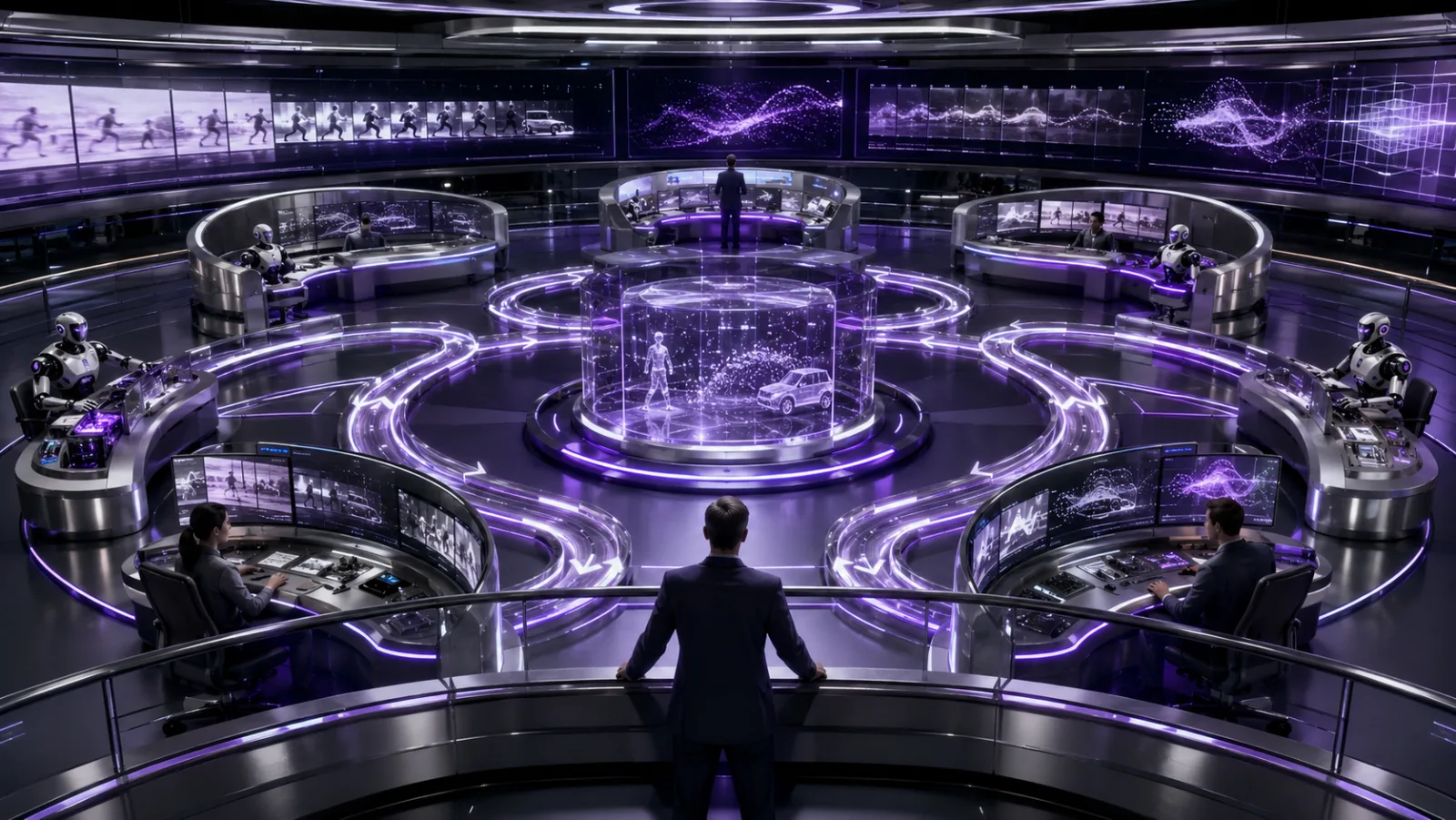
Video-generation systems are becoming expensive enough that inference optimization is no longer optional. But optimizing them is not a simple matter of switching on quantization, caching a few activations, and congratulating the infrastructure team.
The safest acceleration recipe changes with the model, hardware, resolution, denoising schedule, precision format, and serving configuration. Sol Video Inference Engine addresses this problem by assigning different optimization techniques to specialized agents, then using an integrator to compose them into a deployment-specific stack.
The reported result is commercially meaningful: across three very different video models, the optimized stacks reduce SGLang latency by roughly 2.27–2.77× while retaining similar aggregate VBench quality.
The awkward part arrives after the speedup.
Sol still requires humans to determine whether the combined approximations have introduced unacceptable blur, jitter, degraded motion, or physically implausible behavior. Aggregate scores can remain reassuring while a generated object casually violates continuity, gravity, or the modest expectation that matter should not disappear without explanation.
PhysMRV points toward one part of the missing assurance layer. It converts physical plausibility from an open-ended “does this look wrong?” judgment into a structured verification task: describe the scene, represent the physical events, retrieve precedents governed by similar rules, and inspect the current video for positive and negative cues.
The larger operating lesson is not that PhysMRV can replace Sol’s human validators. It cannot, at least not on the evidence available. The lesson is that production video AI needs two loops:
- an optimization loop that searches for cheaper inference configurations; and
- an assurance loop composed of specialized validators that constrain how far the optimizer may go.
A fast pipeline without an adequate validator is not optimized. It is merely harder to inspect at scale.
Video AI has moved from model problem to operating problem
The early economics of generative AI encouraged a fairly uncomplicated strategy: acquire the strongest model available, provide enough compute, and accept that impressive outputs would be expensive.
Video makes that strategy age particularly badly.
A video diffusion system repeats expensive computation across denoising steps, processes long spatial-temporal token sequences, and frequently surrounds large matrix operations with a swarm of smaller memory-bound operations. Increase duration, resolution, frame rate, or model size, and the serving bill becomes less of an engineering detail and more of a business model.
The tempting response is to search for a universal acceleration recipe. Use lower precision. Reuse features between steps. Remove unimportant tokens. Replace dense attention with sparse attention. Fuse kernels. Deploy.
Unfortunately, each of those instructions hides a collection of configuration choices and failure modes.
A cache schedule that behaves well under one sampler can accumulate drift under another. Sparse attention that preserves a short, low-resolution clip can damage long-range motion at a higher resolution. Quantization that performs well on one GPU may offer little benefit—or introduce visible artifacts—on another. Token pruning may remove genuine redundancy in one layer and motion-critical detail in the next.
This is the problem addressed by Sol Video Inference Engine, an agent-native framework for assembling deployment-specific acceleration stacks.1 Its important contribution is not another isolated speed trick. It is the recognition that video inference optimization is a recurring search problem.
The deployment target is better understood as a tuple:
where:
- $m$ is the model and its numerical or architectural sensitivities;
- $h$ is the hardware and its available precision formats, memory hierarchy, and kernel throughput; and
- $c$ is the serving configuration, including resolution, duration, frame rate, batching, sampler, and denoising schedule.
The best acceleration stack is therefore not simply $a^\ast$.
It is:
subject to the output remaining inside an acceptable quality envelope.
That last clause is where the second paper becomes relevant.
The first control loop: search for computational waste
Sol divides video inference redundancy into several layers.
At the diffusion-algorithm level, adjacent denoising steps often perform similar computations on slowly changing latent states. Cross-step caching can reuse or estimate intermediate results rather than recomputing every step.
At the model level, not every token or attention connection contributes equally. Sparse attention reduces the number of attention interactions, while token pruning reduces the active sequence itself.
At the numerical and systems levels, quantization moves suitable operations into lower precision, while kernel fusion reduces memory traffic and launch overhead around matrix multiplications.
These methods are related, but they are not independent.
A cache policy changes the inputs seen by later operations. Token pruning changes tensor shapes and may alter where kernel fusion remains useful. Quantization noise that is acceptable by itself may become damaging after sparse attention and caching have already introduced approximation error.
Sol therefore uses a local-to-global agent workflow.
| Stage | Responsibility | Why it is separated |
|---|---|---|
| Skill agents | Optimize caching, sparse attention, token pruning, quantization, and kernel fusion independently | Local search is easier to parallelize and debug |
| Agent integrator | Combine candidate techniques and retune their interactions | Individually optimal techniques may conflict or accumulate error |
| Human validator | Inspect representative outputs and judge whether quality remains acceptable | Aggregate numerical metrics do not fully represent deployment quality |
This structure is more important than the fashionable presence of “agents.” The useful design decision is decomposition.
Instead of asking one general-purpose agent to navigate every model, system, and quality interaction at once, Sol gives bounded search spaces to specialized agents. The integrator then handles the less pleasant reality that local improvements do not multiply neatly.
Five techniques each delivering a small isolated gain do not automatically produce a safe five-technique stack. Approximation errors have a social life. They meet, interact, and occasionally form a committee.
The speedups are real—and distinctly instance-specific
Sol evaluates three video-generation models on NVIDIA B200 GPUs:
- Cosmos3-Super, a 64-billion-parameter model with a Mixture-of-Transformers architecture;
- LTX-2.3, a 22-billion-parameter, two-stage audio-video diffusion model; and
- SANA-Video, a 2-billion-parameter model using linear attention.
The resulting stacks are not copies of one another.
Cosmos3-Super relies heavily on cross-step caching, selective low-precision execution, and kernel optimization. The first and final denoising steps remain in higher precision because early steps shape global structure and later steps refine fine detail.
LTX-2.3 uses a different cache schedule because its second-order sampler does not fit policies designed around Euler-style trajectories. Sparse attention and token pruning are concentrated in its high-resolution refinement stage, where token counts make those interventions more valuable.
SANA-Video already uses an efficiency-oriented linear-attention architecture, leaving less model-level redundancy to remove. Its gains come primarily from caching, lower-precision linear-attention execution, merged projections, compilation, and fusion.
The end-to-end results are substantial:
| Deployment | SGLang latency | Sol latency | Speedup |
|---|---|---|---|
| Cosmos3-Super | 99.6 s | 43.9 s | 2.27× |
| LTX-2.3 | 97.8 s | 41.0 s | 2.38× |
| SANA-Video | 29.4 s | 10.6 s | 2.77× |
The business interpretation is straightforward. A company does not necessarily need to retrain its foundation model to achieve material serving improvements. Significant waste can remain in the inference trajectory, precision allocation, token processing, and kernel path.
The less convenient interpretation is that these gains are not portable as a static checklist.
Sol’s reusable asset is not one configuration. It is the machinery for producing configurations.
That distinction matters for any organization expecting its deployment environment to change. A new GPU generation, a higher-resolution product tier, a longer default clip, or a modified sampler can move the bottleneck. Yesterday’s optimized stack becomes tomorrow’s slightly mysterious technical debt.
“Near-lossless” is a constraint, not a score
Sol reports that its accelerated pipelines retain VBench scores close to their unaccelerated baselines. Average-score changes range from a small improvement for Cosmos3-Super to modest declines for LTX-2.3 and SANA-Video.
That is reassuring evidence. It is not a certificate.
The paper is unusually clear about the remaining evaluation problem. Pixel-oriented or similarity-based measures can penalize harmless visual differences while overlooking blur, high-frequency noise, temporal jitter, degraded motion coherence, or physically implausible movement.
This is not merely an academic objection to imperfect metrics.
It creates a control problem.
The optimizer receives clear feedback on latency:
But “quality” is not one equally legible scalar. It is a bundle of constraints:
A deployment candidate should be accepted only when the relevant dimensions remain above their thresholds:
An average score can conceal a failure in one critical dimension. A video may be aesthetically polished and temporally smooth while depicting an object passing through a solid barrier. The average is not impressed by the distinction. A customer may be.
Sol resolves this gap pragmatically: humans inspect a fixed validation set, redefine the acceptable quality envelope, and redirect the agent search when automatic metrics fail.
That works, but it limits scale.
Every time the model, hardware, configuration, or optimization stack changes, the organization may need another validation cycle. The optimization loop can become increasingly autonomous while the assurance loop remains stubbornly artisanal.
This is where PhysMRV enters the logic chain.
The second control loop: verify the event, not the vibe
PhysMRV—Physical Memory Retrieval and Verification—targets physical-plausibility reasoning in frozen video-language models.2 It does not generate videos, accelerate diffusion models, or evaluate Sol’s outputs.
Its contribution is narrower and, for that reason, operationally interesting.
PhysMRV starts from the observation that a video-language model can correctly recognize objects and actions while still failing to determine whether the event is physically possible. Object recognition does not guarantee object permanence. Action recognition does not establish that motion changes have a visible cause.
Directly prompting a VLM to judge plausibility is particularly unreliable because models inherit a strong prior toward normality. Most video-language training material describes scenes that obey ordinary physics. When evidence is ambiguous, the model often assumes that the world behaved itself.
PhysMRV changes the task from free-form inference to evidence-centered verification.
Its memory bank contains three levels:
| Memory level | Question answered |
|---|---|
| Scene caption | What is visibly present? |
| Physical-event graph | What objects, states, interactions, and transitions occur? |
| Rule and cue layer | Which physical principle applies, and what evidence would support or violate it? |
The authors construct this memory from 3,482 TRAVL training videos containing 19,708 question-answer examples. Each memory is assigned to one of 15 physical rule families spanning phenomena such as support, force, collision, continuity, fluid behavior, thermal behavior, optics, and causality.
At inference time, PhysMRV follows a coarse-to-fine process.
First, it combines the current scene caption and question into a semantic query and retrieves the top 50 candidate memories.
Second, it reranks those candidates using physical-event graphs rather than relying only on textual or visual resemblance. The graph representation records elements such as objects, state transitions, temporal phases, and causal relations.
Third, it selects three anchors from different rule families. This diversity constraint is designed to prevent the verifier from seeing three near-duplicates of the same explanation.
Finally, the frozen VLM receives the current video representation plus compact verification records containing physical rules, positive cues, and negative cues. It is asked to compare the current evidence with those criteria and return a constrained answer.
The architectural shift is subtle but important:
Do not ask the model whether the video seems plausible. Ask it which relevant constraints apply and whether the observed event satisfies them.
That is a more auditable decision procedure.
Retrieval helps because physical similarity is not visual similarity
The retrieval mechanism deserves attention because it reflects a broader production lesson.
Two videos can contain the same visible objects and verbs while obeying different physical rules. A ball moving behind a block and later reappearing may demonstrate ordinary occlusion. A yellow ball disappearing and a white ball emerging may indicate an identity-continuity violation. Surface semantics remain similar; the physical event does not.
Visual similarity has the same weakness. Two clips may look alike while differing in support, contact, trajectory, or causality.
PhysMRV’s ablations suggest that the selected precedent matters. Rule-matched memories outperform random demonstrations, and event-graph reranking is more consistent than text-only semantic retrieval or visual-frame matching.
This makes sense beyond physics.
Retrieval systems often optimize for topical resemblance because embeddings make topical resemblance easy. But a validator needs examples that share the relevant failure mechanism.
For a compliance system, that might be the same obligation rather than the same industry vocabulary. For a financial system, it might be the same causal exposure rather than the same asset name. For a manufacturing system, it might be the same failure mode rather than the same machine appearance.
A verifier does not need the example that looks most familiar. It needs the precedent governed by the same constraint.
PhysMRV improves judgment, but not enough to become the physics department
Across ImplausiBench, IntPhys2, and GRASP Level 2, PhysMRV generally improves performance for Qwen3-VL, Cosmos-Reason-2, and InternVL3.5-8B. The largest reported gain is 9.6 percentage points for Qwen3-VL on GRASP Level 2, rising from 0.4836 to 0.5798.
The more revealing result appears in the class-conditional analysis.
Direct VLMs show a severe tendency to label events plausible. On GRASP Level 2, Qwen3-VL identifies only 2.20% of implausible events under direct prompting, while InternVL3.5-8B identifies 1.32%. Their plausible-event accuracy is near ceiling.
PhysMRV sharply improves detection of implausible events:
| Backbone on GRASP L2 | Direct plausible accuracy | Direct implausible accuracy | PhysMRV plausible accuracy | PhysMRV implausible accuracy |
|---|---|---|---|---|
| Qwen3-VL | 0.9453 | 0.0220 | 0.6636 | 0.4961 |
| InternVL3.5-8B | 0.9814 | 0.0132 | 0.4990 | 0.6440 |
This is not a clean calibration victory.
Qwen3-VL remains somewhat positive-biased after correction. InternVL3.5-8B crosses toward a negative bias. LLaVA-OneVision-2 receives only marginal benefits and fails to improve on one benchmark.
The evidence therefore supports three modest conclusions:
- structured physical memories can materially improve plausibility judgments;
- retrieving the right precedents is better than adding generic examples; and
- the final operating point still depends heavily on the backbone.
It does not support the conclusion that PhysMRV is a production-ready replacement for human video review.
The experiments evaluate classification on physical-reasoning benchmarks. They do not test an acceptance gate attached to an accelerated video-generation service. They do not measure false rejection costs for creative content. They do not determine whether the framework can operate reliably across the wider range of artifacts introduced by caching, pruning, quantization, and sparse attention.
PhysMRV is best interpreted as a validator design pattern, not a completed quality-control product.
The combined architecture: optimization inside assurance
Neither paper builds the system implied by reading them together.
Sol optimizes generation but retains human validation. PhysMRV verifies physical plausibility but does not optimize or evaluate a generation stack.
The useful conclusion therefore belongs to system architecture rather than reported experimental fact.
A scalable video-AI service could separate the operating process into two loops.
Loop 1: deployment optimization
The first loop searches the configuration space:
- cache policy and schedule;
- sparse-attention scope;
- token-pruning ratio and timing;
- layer- and timestep-specific precision;
- kernel fusion and compilation;
- hardware-specific execution paths.
Its objective is to reduce latency, cost, or memory use.
Loop 2: output assurance
The second loop evaluates candidate outputs through specialized gates:
- perceptual artifact detection;
- temporal-coherence checks;
- physical-plausibility verification;
- prompt-adherence evaluation;
- identity and object-consistency checks;
- safety and policy review;
- brand- or domain-specific acceptance criteria.
The optimizer should not directly decide whether its own outputs are acceptable. It should propose candidates to an independent assurance layer.
A simplified acceptance rule might be:
where $V_k$ represents a specialized validator rather than one universal quality score.
This is the practical synthesis of the two papers: optimization should operate inside an explicit boundary defined by validators.
Not all validators need equal authority. A mild aesthetic decline may be acceptable in a low-cost draft tier. A continuity violation may be unacceptable in an industrial simulation. Prompt drift may matter more in advertising than in visual ideation. Physics may be central to robotics data generation and largely irrelevant to surrealist animation.
The quality envelope is a product decision before it is an evaluation decision.
What operators should build first
The obvious temptation is to begin by training a grand unified video-quality model. That would produce a large project, several pleasing architecture diagrams, and no guarantee that the resulting score corresponds to an operational decision.
A more disciplined approach is narrower.
1. Define failure classes before selecting metrics
List the defects that would cause an output to be rejected in the actual product.
For example:
- visible temporal jitter;
- inconsistent subject identity;
- object disappearance;
- impossible contact or support;
- prompt-critical attribute loss;
- unsafe content;
- unacceptable latency.
Do not begin with “overall quality.” Overall quality is where unspecified requirements go to avoid being managed.
2. Separate invariant checks from preference checks
Some failures are comparatively rule-like. An object passing through a solid surface may be a clear physical violation.
Others are preference-dependent. A customer may accept a stylized motion discontinuity that a realism benchmark rejects.
Rule-like failures are better candidates for hard or semi-hard gates. Preference-sensitive failures may require scoring, ranking, or human review.
3. Validate each optimizer intervention independently
Before composing techniques, estimate which failure classes each one tends to introduce.
Caching may create trajectory drift. Token pruning may remove detail or destabilize motion. Quantization may produce high-frequency artifacts. Sparse attention may weaken long-range interactions.
This creates a causal map between optimization choices and validators. The assurance layer can then concentrate effort where the candidate stack is most exposed.
4. Run validators in shadow mode
A physics verifier should first score outputs without blocking them.
Compare its judgments with expert reviews, customer complaints, and known failure sets. Measure false acceptances and false rejections by content category.
PhysMRV’s backbone-dependent calibration is a warning: an average improvement can still conceal an inconvenient operating threshold.
5. Preserve abstention
A validator should be allowed to say that the evidence is insufficient.
Forcing every ambiguous clip into “plausible” or “implausible” recreates the same overconfidence problem in a more elaborate pipeline. Uncertain and high-impact cases should remain eligible for human review.
6. Feed diagnostic evidence back to the optimizer
A binary rejection is less useful than a structured failure report.
“Quality declined” gives an optimization agent little direction.
“Continuity violation after aggressive stage-two token pruning” gives it something to work with.
PhysMRV’s rule-and-cue representation is valuable here. Even where its final classification is imperfect, its structure suggests how a validator might return evidence tied to object states, contacts, transitions, and trajectories.
The business case is a constrained-search system
The combined business opportunity is easy to mislabel.
It is not simply “agentic video acceleration.” That describes the first loop.
It is not simply “AI-based physics evaluation.” That describes one possible validator.
The more defensible product is a constrained-search system that repeatedly finds cheaper deployment configurations while enforcing an auditable quality envelope.
That architecture creates several practical advantages.
First, optimization becomes repeatable. New hardware or serving configurations can trigger a new search rather than a full manual engineering project.
Second, quality governance becomes modular. A company can add or replace validators as its use cases change.
Third, failures become more diagnosable. Instead of learning that a candidate stack has a lower composite score, operators can see which constraint was violated and which intervention likely caused it.
Fourth, human review becomes more selective. Reviewers can focus on uncertain cases, new failure classes, and threshold governance instead of manually inspecting every candidate iteration.
The economics depend on the distribution of outputs. A validator portfolio that costs almost as much as generation would be an elegant method for moving the bottleneck. The assurance loop therefore needs its own routing policy: cheap checks first, expensive checks only when risk or uncertainty justifies them.
Even quality control requires quality control. Production architecture is inconsiderate that way.
What these papers do not establish
The synthesis should not be mistaken for a joint experimental result.
The papers do not show that:
- PhysMRV detects artifacts caused by Sol’s acceleration stack;
- physical-memory retrieval can replace Sol’s human validators;
- VBench-preserving acceleration necessarily preserves physical plausibility;
- physics verification covers aesthetic, temporal, safety, or prompt-adherence failures;
- one verifier can generalize across every video model, content style, and deployment domain; or
- the two-loop architecture is already commercially validated.
Sol demonstrates that an agent-native workflow can assemble materially faster, model-specific inference stacks with limited aggregate quality degradation.
PhysMRV demonstrates that structured physical precedent retrieval can improve frozen VLMs on several plausibility benchmarks, while exposing serious baseline bias and incomplete post-correction calibration.
The closed optimization-and-assurance loop is the business interpretation produced by placing those findings in sequence.
It is a plausible architectural direction. It remains work.
Faster is useful. Verified faster is deployable.
Video-generation economics will continue to reward aggressive optimization. Large models, long clips, and higher resolutions leave too much computational redundancy untouched for serving teams to ignore.
But the optimizer’s success makes the evaluator more important, not less.
As systems become better at finding cache schedules, sparsity patterns, token budgets, precision assignments, and kernel fusions, they will explore operating points that human engineers would not manually test. That expands the attainable efficiency frontier. It also expands the number of ways a pipeline can remain numerically respectable while becoming visibly absurd.
Sol shows how to automate the search for speed.
PhysMRV shows how one narrow category of judgment can be turned into retrieval, structure, evidence, and verification.
The production lesson is to keep those functions separate and connected: let one system propose cheaper execution, and let another decide whether the proposal still deserves to reach the customer.
The winning video stack will not be the one that renders fastest.
It will be the one that can prove—within clearly defined limits—that the saved computation was actually redundant.
Cognaptus: Automate the Present, Incubate the Future.
-
Yitong Li et al., “Sol Video Inference Engine: Agent-Native Full-Stack Acceleration Framework for Efficient Video Generation,” arXiv:2606.23743, 2026. https://arxiv.org/abs/2606.23743 ↩︎
-
Wenyuan Wang et al., “PhysMRV: Physical Memory Retrieval and Verification for Physics Plausibility Reasoning,” arXiv:2607.10190, 2026. https://arxiv.org/abs/2607.10190 ↩︎