Memory sounds like a storage problem. Give the agent a longer context window, let it keep the full conversation, and the work should become easier. This is the kind of solution that looks obvious until it meets a real software repository, a failing test suite, a long terminal log, and a model that now has to find one important clue buried somewhere in the middle of its own autobiography.
That is the problem SWE-AGILE is trying to solve.1 The paper is framed as a software engineering agent framework, but its more interesting contribution is a memory architecture: keep recent detailed reasoning available as working memory, compress older reasoning into structured per-step digests, and train the model under the same visibility constraints it will face at inference time.
The common misconception is simple: agent memory is mainly a long-context problem. It is not. Long context gives an agent more room to store material. It does not guarantee that the agent will retrieve, prioritize, or use that material well. In long-horizon tasks, full memory can become noise with prestige.
SWE-AGILE’s answer is not “think less.” It is closer to: think deeply when the task requires it, but do not preserve every piece of thinking as permanent context. A human developer does not keep a transcript of every private hypothesis while debugging. She keeps the current line of investigation alive, writes down the useful conclusion, and discards the dead branches. Charming, really: humans invented working memory before transformer context windows made it expensive.
The paper’s real problem is cognitive continuity under compression
Software engineering agents operate across many turns. They inspect files, search repositories, edit code, run commands, read test failures, revise hypotheses, and eventually submit a patch. These steps are not independent. The agent’s next action depends on what it has already inferred.
The difficulty is that reasoning has two incompatible properties in this setting.
First, reasoning is useful. Deep, explicit reasoning helps the model analyze ambiguous bugs, connect a stack trace to source code, and decide whether a change fixes the underlying issue rather than merely silencing a symptom.
Second, reasoning is bulky. If every turn keeps its full reasoning trace, the context grows quickly. The paper calls out two costs: attention dilution, including the familiar “Lost-in-the-Middle” problem, and the computational burden of processing very long sequences. In software tasks, the context is already crowded by file contents, tool outputs, execution logs, and repository navigation. Adding full reasoning history on top of that is not disciplined memory management. It is hoarding with a GPU budget.
This gives three bad baseline patterns:
| Pattern | What it preserves | Why it is attractive | Why it fails |
|---|---|---|---|
| Shallow thinking | Short thoughts and actions | Cheap context | Weak on complex diagnosis |
| Full interleaved thinking | Full reasoning history | Preserves deep reasoning | Context explosion and attention dilution |
| Current-step thinking | Only present reasoning | Keeps context manageable | Forces repeated re-analysis |
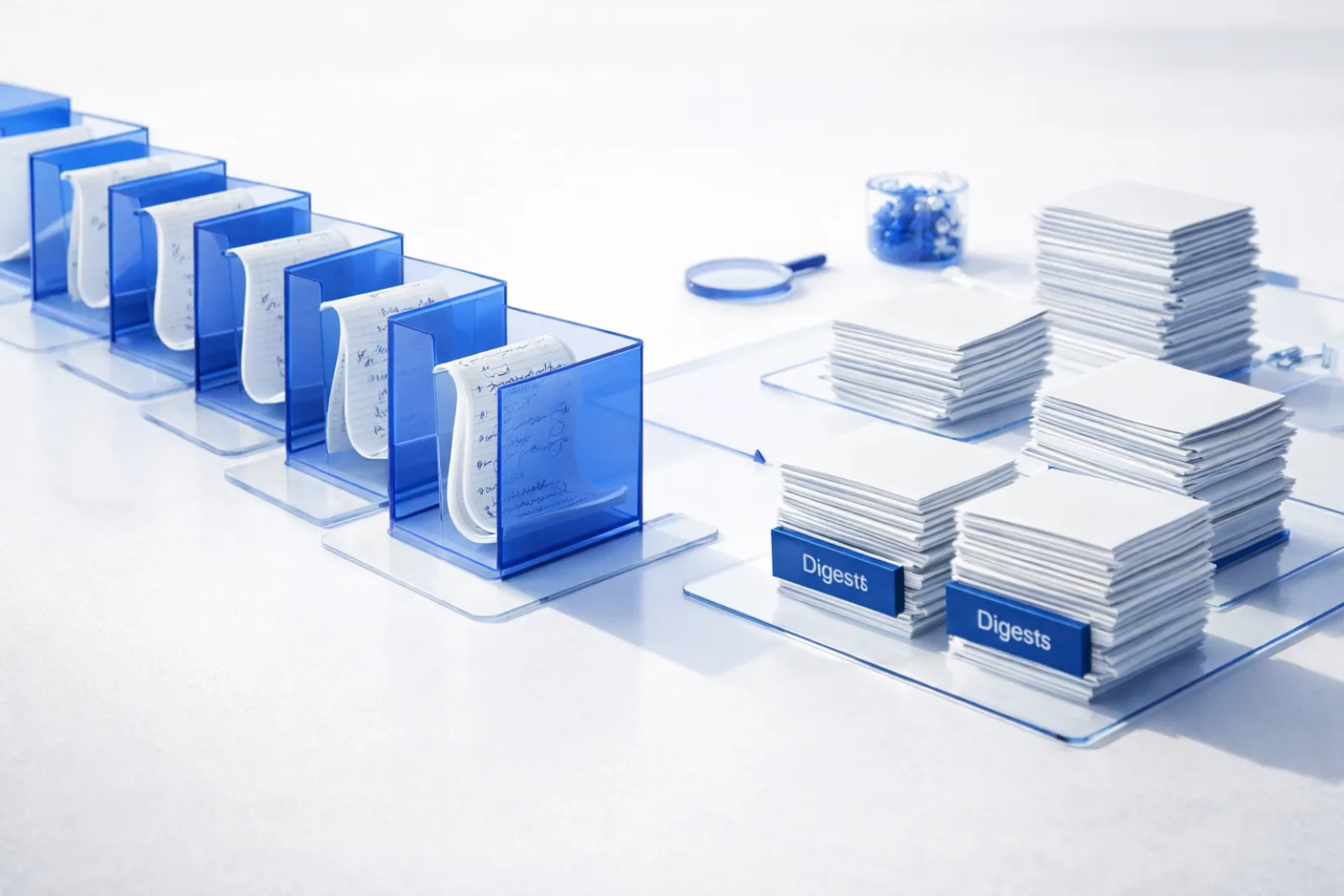
SWE-AGILE tries to avoid the false choice. It keeps environmental history — observations, actions, tool results — while treating reasoning itself as a dynamic object. Recent reasoning remains detailed. Older reasoning becomes a digest.
The paper’s Figure 1 captures this as a “sawtooth” context pattern. Context grows while the agent reasons, then drops when older reasoning is compressed, then grows again. The point is not aesthetic. The sawtooth pattern is the mechanism that lets an agent maintain continuity without paying the full cost of full-history reasoning.
SWE-AGILE separates active thought from durable memory
At each step $t$, SWE-AGILE asks the model to produce three ordered components:
Here $r_t$ is detailed reasoning, $d_t$ is a concise reasoning digest, and $a_t$ is the executable action. The important move is not just adding a summary. The important move is deciding which layer gets to persist.
The runtime context has two zones:
Old steps:
(o_i, d_i, a_i)      reasoning is compressed into digests

Recent N steps:
(o_j, r_j, d_j, a_j) reasoning remains visible in detail

Current step:
o_t                  new observation to act on
This is why SWE-AGILE is more precise than ordinary conversation summarization. A generic memory buffer tends to compress the whole dialogue into a growing paragraph. SWE-AGILE compresses reasoning traces specifically. It does not erase the tool history. It does not merge all earlier conclusions into one fragile blob. It preserves per-step digests as modular records.
That design matters because software agents need different kinds of memory at different times:
| Memory layer | SWE-AGILE representation | Operational role |
|---|---|---|
| Raw environment | Observations, actions, tool outputs | Keeps the factual execution trail available |
| Working reasoning | Recent $r_t$ traces inside the sliding window | Maintains local continuity across adjacent steps |
| Durable reasoning memory | Per-step $d_t$ digests | Preserves conclusions without carrying every token of analysis |
| Next action | $a_t$ | Edits, searches, commands, or submission |
The phrase “reasoning digest” can sound like a minor formatting detail. It is not. It is the paper’s proposed interface between transient cognition and persistent context. SWE-AGILE is not asking the model to remember everything it thought. It is asking the model to remember what its earlier thinking is allowed to become.
Snapshot training fixes a training-inference mismatch most agent systems quietly create
The mechanism would be incomplete if it only changed inference. Standard supervised fine-tuning and reinforcement learning often train on full contiguous trajectories. That means the model can attend to historical reasoning traces during training that will not be available during deployment. The model learns with one kind of memory, then acts with another.
This is a quiet source of fake competence. The model appears to learn long-horizon behavior, but part of that behavior depends on information visibility that disappears at runtime. A system like that has not learned robust memory management. It has learned in a luxury apartment and then been deployed in a storage closet.
SWE-AGILE addresses this with trajectory snapshot training. Instead of treating a full trajectory as one continuous sequence, it decomposes the trajectory into step-level snapshots. Each snapshot represents the agent’s actual world view at that step:
| Snapshot component | Visibility | Loss treatment | Purpose |
|---|---|---|---|
| Compressed old context | Visible | Masked from loss | Simulates inference-time memory |
| Recent reasoning window | Visible | Masked when part of context | Preserves local continuity |
| Current $r_t \oplus d_t \oplus a_t$ | Generated target | Optimized | Teaches the model to reason, compress, and act |
This matters more than it may first appear. The model is trained to operate under the same dynamic context policy it will use later. Every reasoning trace is generated and optimized once, then later appears only through its compressed digest when it falls outside the sliding window.
The result is not merely “more training examples.” It is a structural alignment between learning and runtime memory. That is the part many quick summaries of this paper will underweight, because benchmark numbers are easier to screenshot.
Hindsight backfilling is controlled data construction, not magic reasoning powder
The paper’s training data problem is familiar: many software engineering trajectories contain actions and shallow thoughts, but not the kind of explicit System-2 reasoning that SWE-AGILE wants the agent to learn.
So the authors use hindsight backfilling. A stronger reasoning model augments successful trajectories by generating detailed reasoning and digests for each step. The synthesizer sees three inputs: the ground-truth future action, the original shallow thought as a semantic hint, and the dynamic context that simulates SWE-AGILE’s inference-time visibility.
That sounds suspicious if read carelessly. If a model sees the future action, is it merely rationalizing? In a sense, yes — and that is exactly the point of the data construction. The purpose is not to prove that the backfilled reasoning was the historical cause of the action. The purpose is to create format-compliant, context-aware training data that teaches a smaller model how to produce the “reasoning → digest → action” pattern under dynamic memory constraints.
This is why the backfilling pipeline should be interpreted as implementation evidence, not philosophical evidence. It supports the framework by making the training distribution feasible. It does not prove that the synthesized reasoning is uniquely faithful. The paper is about building a better agent policy, not conducting a forensic investigation into the original trajectory’s soul.
The authors also give practical reasons for this choice. Some steps are reflexive: run a command, inspect a file, continue a known plan. Other steps are deliberative: interpret a confusing failure, infer the right abstraction boundary, decide whether a code edit is safe. Backfilling lets the training data reflect this uneven reasoning demand. Directly collecting new successful trajectories under the full paradigm would be expensive, especially when environment execution is slow and success rates are low.
Compression-aware RL makes efficiency subordinate to correctness
After supervised fine-tuning, SWE-AGILE adds reinforcement learning with verifiable rewards. The paper’s compression reward is designed carefully enough to deserve attention.
The compression rate is defined globally over a trajectory:
Here $L_{full}$ is the hypothetical context size if all reasoning history were retained, and $L_{hybrid}$ is the actual context size under SWE-AGILE’s dynamic policy.
The reward then gates compression by success:
This is the right ordering. Correctness comes first. Compression is rewarded only on successful trajectories. The clipping threshold also prevents a dumb loophole: the model should not inflate detailed reasoning just to make compression look impressive. Apparently even artificial agents need anti-bureaucracy rules.
The paper also chooses a global trajectory-level compression rate rather than averaging step-wise compression ratios. That is not a mathematical footnote. It reflects the heterogeneous nature of software tasks. For simple reflexive steps, the reasoning and digest may be similarly short. A step-wise reward could tempt the model to pad simple reasoning just to create a larger compression gap. A global metric focuses the incentive where it matters: deliberative steps with substantial reasoning content.
This is the deeper design principle: SWE-AGILE does not reward short thinking. It rewards successful thinking whose permanent memory footprint is small.
The main results support a small-model agent framework, not a universal frontier claim
The paper evaluates SWE-AGILE mainly on SWE-Bench-Verified, using Qwen3 models and an R2E-Gym-based scaffold. The headline result is strong for the 7B/8B class: Qwen3-8B starts at 15.83%, SWE-AGILE with SFT reaches 21.45%, and SWE-AGILE with SFT plus RL reaches 24.05% in the paper text, rounded to 24.1% in the comparison table.
The 14B result is also notable: Qwen3-14B with SWE-AGILE SFT reaches 30.06%. The authors did not run full RLVR for the 14B model because of compute constraints.
| System | Base model | Training / data note | SWE-Bench-Verified success rate |
|---|---|---|---|
| Qwen3 baseline | Qwen3-8B | No SWE-AGILE training | 15.83% |
| SWE-AGILE | Qwen3-8B | SFT on 2.2k backfilled trajectories | 21.45% |
| SWE-AGILE | Qwen3-8B | SFT + RLVR on 896 tasks | 24.05% / 24.1% rounded |
| SWE-AGILE | Qwen3-14B | SFT only | 30.06% |
The proper interpretation is not that SWE-AGILE beats frontier coding agents. It does not. The paper’s own table shows closed-weight and very large open-weight systems far above these numbers. OpenHands with GPT-5 and Claude 4 Sonnet are around the low 70s; Qwen3-Coder-480B is reported at 69.6%.
The more precise claim is narrower and more useful: within small and mid-sized open models, a memory-and-training framework can unlock meaningful gains without relying only on brute-force model scale. That is a business-relevant claim because many enterprise deployments will not use the largest frontier model for every internal agent loop. Cost, latency, privacy, and deployment control still exist, despite what keynote slides imply.
The SWE-Bench Lite result points in the same direction: SWE-AGILE-8B reaches 14.77%, above the comparable baselines cited by the authors, including SWE-smith-7B at 11.7% and R2E-Gym at 11.0%. Useful, but still a software-agent benchmark result. It should not be casually generalized to procurement workflows, financial research agents, or customer-support automation without additional testing.
The ablations answer three different questions
The paper’s ablation table is more informative than the headline table because it separates mechanism from scoreboard. The tests should not all be read as “more proof of performance.” They serve different roles.
| Evidence item | Likely purpose | What it supports | What it does not prove |
|---|---|---|---|
| Interleaved Thinking: 12.42% vs Current-Step Thinking: 15.83% | Context-management ablation | Keeping full reasoning history can hurt this Qwen3-8B agent setting despite richer context | That long context is always bad across all models and scaffolds |
| Standard SFT without backfilling: 14.83% | Data-quality ablation | Training on shallow SWE traces can suppress the base model’s reasoning potential | That all SFT on software trajectories is harmful |
| SWE-AGILE SFT: 21.45% | Main mechanism evidence | Backfilled reasoning plus dynamic context training improves the 8B agent | The individual contribution of every subcomponent in isolation |
| Standard SFT+RL: 16.03% vs SWE-AGILE SFT+RL: 24.05% | Training-paradigm comparison | RLVR works better when the agent is trained and optimized under the dynamic reasoning context | That RLVR alone is sufficient |
| SWE-AGILE RL without compression reward: 23.45% vs with compression reward: 24.05% | Compression-reward ablation | Compression reward preserves comparable accuracy while improving digest compactness | That the accuracy gain from compression reward is large |
| Figure 3 token decomposition | Efficiency analysis | SWE-AGILE reduces repeated active reasoning and digest length | Full end-to-end latency or infrastructure cost savings |
The most striking ablation is the comparison between full interleaved thinking and current-step thinking. Interleaved Thinking keeps the full reasoning history but reaches only 12.42%, while Current-Step Thinking reaches 15.83%. The richer memory performs worse. That is the paper’s anti-naive-memory result.
But it should be read carefully. The authors themselves note that the degradation may partly relate to Qwen3 post-training. So the result is not a universal law that full reasoning history always damages all agents. It is evidence that in this setting, more retained reasoning is not automatically better. That is already enough to break the lazy “just increase context” argument.
The shallow-SFT result is also useful. Standard SFT on the original 2.2k SWE-Dev trajectories reaches 14.83%, below the base Qwen3-8B result of 15.83%. The authors interpret this as shallow reasoning traces constraining the model instead of eliciting its deeper problem-solving capability. For businesses, the lesson is unpleasant but familiar: more training data can make a system worse if the data teaches the wrong cognitive style. Data is not nutrition. Sometimes it is junk food with labels.
The efficiency result is about redundant diagnosis
Figure 3 gives the clearest operational intuition. Current-Step Thinking produces about 1,075.2 active reasoning tokens per step. SWE-AGILE with SFT+RL reduces that to about 819.6 tokens per step, a reduction the paper reports as roughly 28%.
That is not merely “shorter output.” The authors interpret it as less redundant state reconstruction. When the model lacks access to enough recent reasoning, it must repeatedly rebuild the situation from raw observations. SWE-AGILE’s sliding window and digests act as a cognitive cache. The agent can continue a line of reasoning instead of rediscovering the same bug narrative every few turns like a forgetful detective in a prestige drama.
The compression reward has a smaller but cleaner efficiency role. Without the compression reward, the average textual summary length is 41.0 tokens. With the reward, it falls to 27.3 tokens, a 33.4% reduction, while success remains comparable: 23.45% without compression reward and 24.05% with it.
The magnitude matters. Saving 13.7 tokens per step in the digest is not a dramatic infrastructure story by itself. The paper is honest enough to make that visible. The larger implication is architectural: once reasoning digests and tool outputs are both treated as compressible memory layers, long-horizon agents can preserve more interaction turns before hitting context constraints.
So the business interpretation should be phrased carefully. SWE-AGILE does not directly prove a full production cost reduction curve. It shows a plausible mechanism for reducing redundant reasoning and permanent memory footprint while maintaining or improving task success in a software engineering benchmark.
That distinction is small only to people who confuse demos with operations.
For business agents, the transferable idea is layered memory policy
The paper directly shows results for software engineering agents. Cognaptus can infer broader lessons for business agents, but those inferences need boundaries.
The direct finding is this: in multi-turn code repair, dynamic reasoning context plus aligned training improves small Qwen3-based agents on SWE-Bench-Verified and reduces redundant reasoning tokens.
The business inference is this: enterprise agents that perform long workflows should not treat context as a flat transcript. They need an explicit memory policy: what remains raw, what remains detailed only temporarily, what becomes a durable digest, and what is discarded.
| Business workflow | Directly supported by paper? | Reasonable Cognaptus inference | Boundary |
|---|---|---|---|
| Internal coding copilots | Strongest support | Use sliding reasoning windows and digests for repository debugging loops | Still benchmark-based; production repos vary |
| IT operations agents | Partial inference | Compress old diagnostic reasoning while retaining logs and commands | Needs evaluation on incident workflows |
| Compliance or audit workflow agents | Conceptual inference | Preserve evidence trail separately from reasoning summaries | Must avoid losing legally material reasoning or approvals |
| Research assistants | Conceptual inference | Keep recent analysis detailed; summarize older hypotheses modularly | Risk of compressing nuance too aggressively |
| Trading or market-monitoring agents | Weak inference | Separate transient analysis from persistent thesis notes | Market feedback, risk controls, and data freshness dominate |
The strongest business use case is not “buy fewer tokens.” The stronger use case is cheaper diagnosis. In many enterprise workflows, the expensive failure mode is not one long answer. It is repeated re-analysis: the agent reads the same logs again, reinterprets the same document again, regenerates the same plan again, and then charges you for the privilege of déjà vu.
A SWE-AGILE-like design suggests a better production pattern:
- Preserve raw evidence where auditability matters.
- Keep only recent reasoning in full detail.
- Store older reasoning as structured, per-step digests.
- Train or prompt the agent under the same memory policy used at runtime.
- Reward successful compression only after task success, not instead of it.
That last point matters. Enterprises should be especially suspicious of agents optimized for brevity before correctness. A concise wrong agent is not efficient. It is just wrong at a discount.
Implementation details reveal what would be needed in production
The appendices are not glamorous, but they are useful. The scaffold follows R2E-Gym and uses four tools: file editing, search, bash execution, and submission. The authors also supplement SWE-Dev trajectories because SWE-Dev lacks the search tool. This is implementation detail, but it affects interpretation. SWE-AGILE is evaluated in a particular tool environment, not in an abstract “agent universe.”
The paper also uses XML-based tool calling rather than standard JSON. The reason is practical: code snippets inside JSON often create escaping problems, especially for smaller models. This is a small reminder that agent reliability often depends on boring interface choices. Everyone wants to discuss reasoning. Then the model breaks because a quote mark inside a patch was escaped badly. Reality remains committed to slapstick.
The hyperparameters also show the system’s shape. During evaluation, the maximum number of steps is 60 and the context limit is 65,536 tokens. During SFT, the sliding reasoning window size is randomly sampled in the range $[2,5]$. During RLVR, the response limit is 4,096 tokens, partly to prevent overly verbose reasoning.
These details point to a production checklist. A company adapting this architecture would need not only prompts, but also a memory compiler: a component that decides when reasoning moves from full trace to digest, how digests are validated, how tool outputs are compressed, and how downstream actions can still be audited.
The main boundary: SWE-AGILE proves a mechanism, not a universal agent doctrine
The paper’s limitations are not fatal, but they are important.
First, the evaluation domain is software engineering. SWE tasks are unusually suitable for verifiable rewards because patches can be tested. Many business workflows do not have such clean success signals. A procurement negotiation, compliance review, or market commentary task cannot always be reduced to “tests passed.”
Second, the main experiments use Qwen3-based models and an R2E-Gym-style scaffold. The full-history degradation observed with Interleaved Thinking may vary with model architecture, post-training, context length, retrieval behavior, and scaffold design.
Third, the sliding window size is not deeply analyzed. The paper uses a random integer in $[2,5]$ across backfilling, SFT, RLVR, and inference, and explicitly notes that more analysis of window size remains unexplored. This is not a minor tuning curiosity. In production, the best window size may depend on task length, tool verbosity, failure mode, and the cost of losing fine-grained reasoning.
Fourth, the compression reward mainly compresses reasoning digests. The authors suggest extension to tool output compression, but that is not the same as demonstrating a full tool-output compression system. For enterprise agents, tool outputs are often the heaviest context component. Logs, PDFs, spreadsheets, email threads, and database results can dwarf reasoning traces.
Fifth, backfilled reasoning is useful training material, but it is synthesized from successful trajectories with future action visibility. That is a practical technique, not proof that the generated reasoning exactly mirrors causal decision-making. For safety-critical settings, durable memory may require stronger validation than “the synthesizer wrote a plausible digest.”
These boundaries do not weaken the paper’s core contribution. They keep it in its proper category: a strong mechanism-first framework for dynamic reasoning context in software agents, with promising but still unproven transfer to broader enterprise automation.
The article version of the result
SWE-AGILE is best understood as a memory policy for agents that think across time.
Its central insight is that reasoning has two lives. In the moment, reasoning should be rich enough to solve the problem. After the moment, reasoning should become compact enough to remain useful without crowding the future. That separation — active thought versus durable digest — is the paper’s real contribution.
The benchmark gains matter: 21.45% after SFT for Qwen3-8B, 24.05% after SFT plus RLVR, and 30.06% for Qwen3-14B with SFT. But the numbers are not the only story, and not even the most portable one. The portable lesson is that agent memory should be designed, trained, and optimized as an operational system.
For business users, the temptation will be to read this as another reason to deploy AI coding agents. Fine. But the deeper lesson is more general: long-horizon agents need disciplined forgetting. Not careless forgetting. Not lossy summarization sprayed over everything. Disciplined forgetting: raw evidence retained where needed, recent reasoning kept alive, older reasoning distilled into modular memory, and compression rewarded only when the task succeeds.
In other words, the future of agent intelligence may not be a heroic model thinking forever.
It may be a modestly sized model that knows when to stop carrying its old thoughts around.
Cognaptus: Automate the Present, Incubate the Future.
-
Shuquan Lian, Juncheng Liu, Yazhe Chen, Yuhong Chen, and Hui Li, “SWE-AGILE: A Software Agent Framework for Efficiently Managing Dynamic Reasoning Context,” arXiv:2604.11716, 2026. ↩︎