
Cover image

When Trains Meet Snowstorms: Turning Weather Chaos into Predictable Rail Operations

A delayed train is easy to complain about and surprisingly hard to explain. The passenger sees one number: five minutes late, twelve minutes late, cancelled, chaos. The operator sees a messier object. Was the train already late when it entered the station? Did the station itself add delay? Was the delay caused by snow, low visibility, wind, passenger boarding, a single-track bottleneck, equipment failure, or simply the accumulated sins of every previous station on the route? ...

January 26, 2026 · 20 min · Zelina
Cover image

Crossing the Line: Teaching Pedestrian Models to Reason, Not Memorize

Crosswalks look simple from a spreadsheet. A pedestrian either crosses at the intersection or crosses mid-block. The model sees age group, gender, lane count, lighting, weather, signal timing, maybe a bus stop nearby, and then predicts the choice. Very civilized. Very tabular. Very likely to fail when the same logic is moved to a different road. ...

January 5, 2026 · 16 min · Zelina
Cover image

Preference Chains of Command: Making LLM Agents Pick Like People

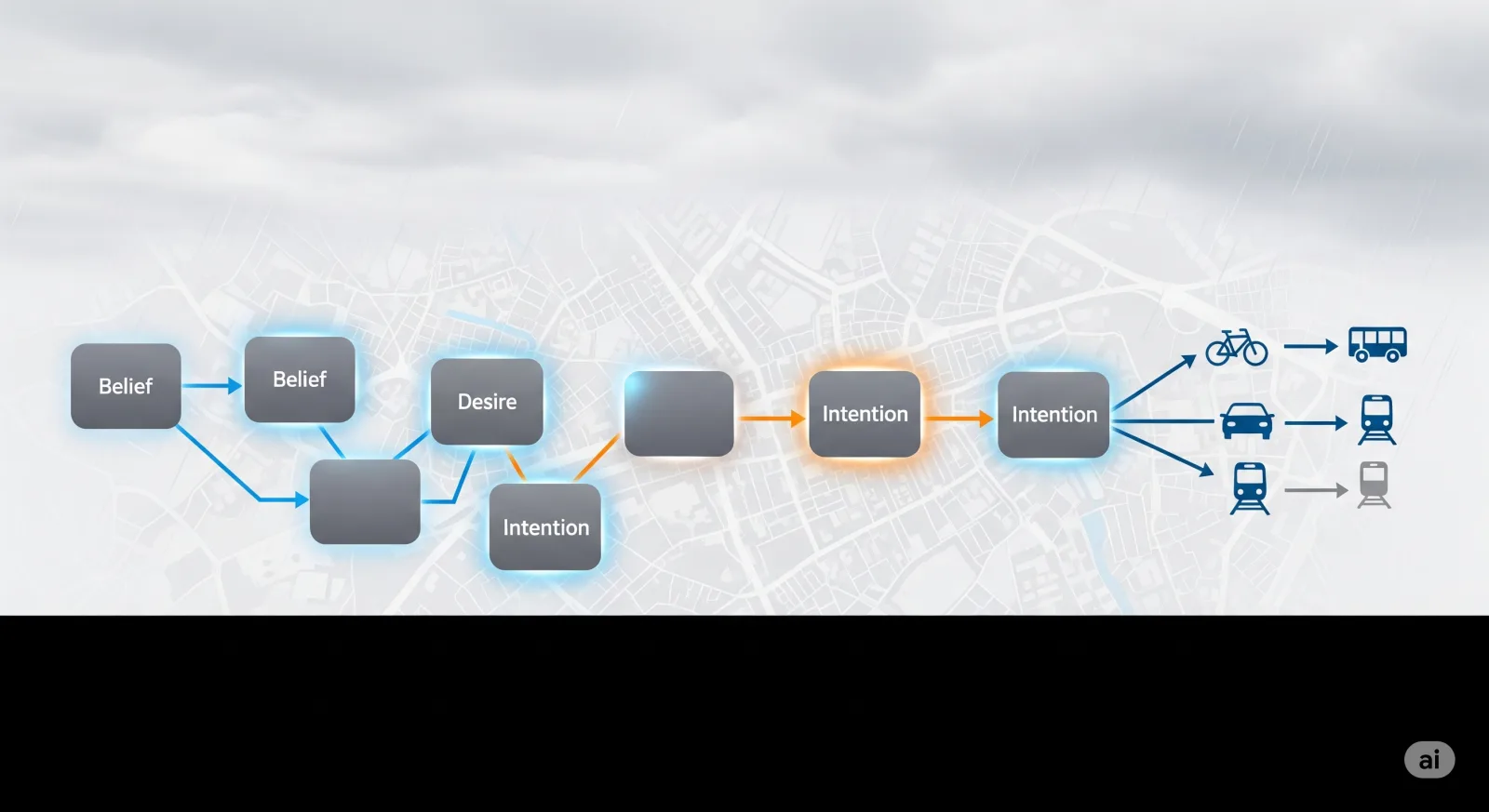
TL;DR for operators Cities rarely wait for perfect data. A new district still needs a transit plan, a campus still needs a shuttle model, and a developer still wants to know whether people will walk, drive, or quietly defeat the entire urban-design deck by ordering a car. The paper behind this article introduces Preference Chain, a method that uses a small sample of behavioural mobility data to guide an LLM agent’s transport choices.1 The important bit is not that it “adds Graph RAG” to an LLM. That phrase now covers everything from serious retrieval systems to someone throwing a Neo4j logo onto a slide. The real mechanism is narrower and more useful: Preference Chain turns sparse human travel records into structured priors over likely choices, then lets the LLM adjust those priors for context. ...

August 25, 2025 · 21 min · Zelina