Cover image

Stop at 30k: How Hermes 4 Turns Long Chains of Thought into Shorter Time‑to‑Value

TL;DR for operators Reasoning models are not expensive because they are philosophical. They are expensive because they can keep thinking long after the business value has stopped arriving. The Hermes 4 Technical Report is easiest to misread as another open-weight leaderboard announcement. That is the least useful reading. The more useful reading is that Hermes 4 is a build manual for making open reasoning models behave like deployable systems: generate diverse synthetic data, verify what can be verified, preserve general instruction-following, control runaway reasoning length, and evaluate with enough logging to know whether the model failed or the benchmark harness sneezed.1 ...
August 26, 2025 · 18 min · Zelina
Cover image

Therapy, Explained: How Multi‑Agent LLMs Turn DSM‑5 Screens into Auditable Logic

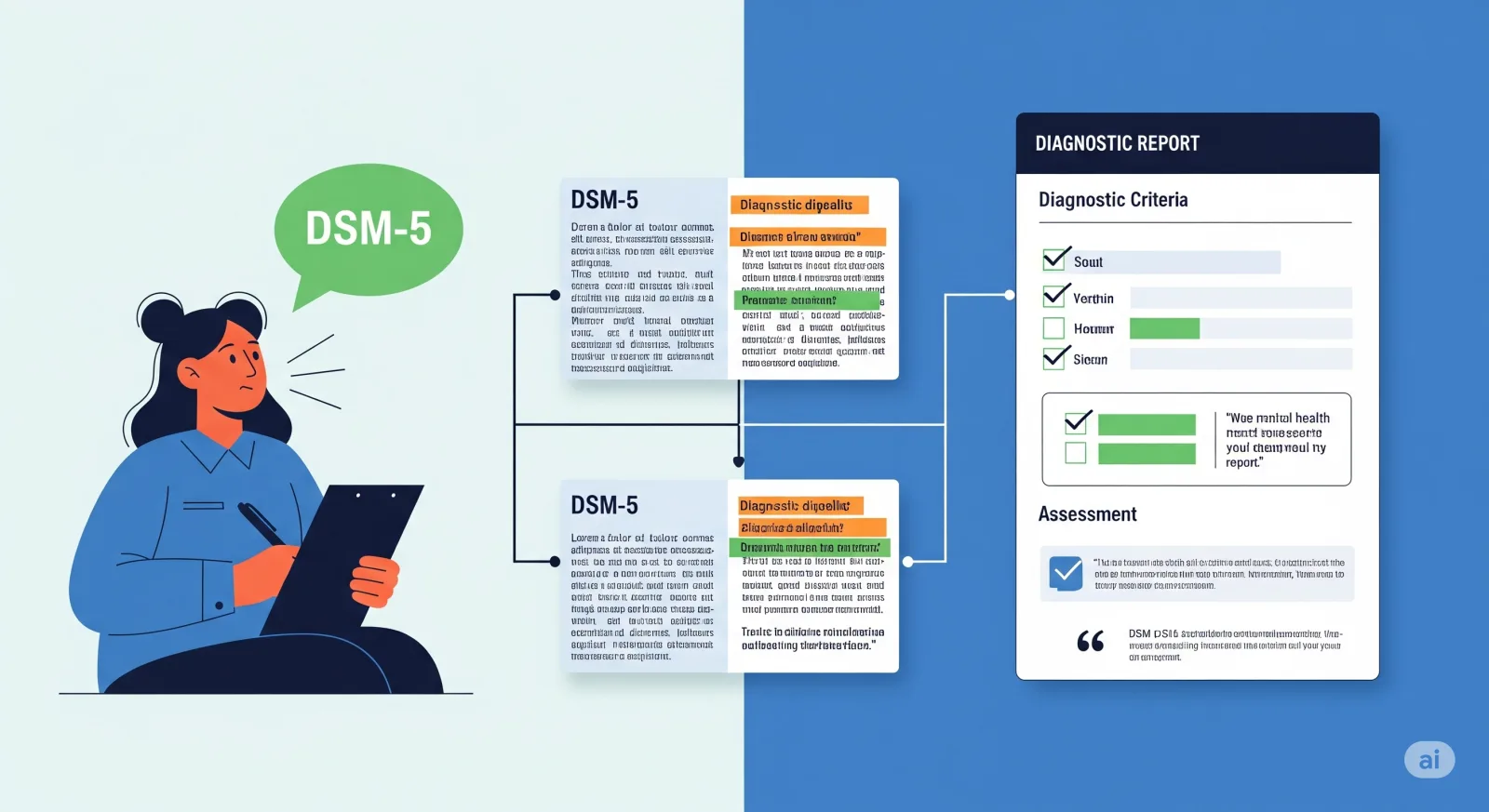
TL;DR for operators DSM5AgentFlow is not a paper about an AI therapist replacing a clinician. That would be the loud interpretation, and therefore the least useful one. The paper introduces a three-agent workflow that turns DSM-5 Level-1 screening into a structured conversation, then converts the transcript into a provisional diagnosis with evidence-linked reasoning.1 ...

August 18, 2025 · 17 min · Zelina
Cover image

Synthetic Defenders: How Generative AI Reinvents Smart Grid Security

TL;DR for operators A digital substation does not need an AI poet. It needs a detector that notices when a GOOSE message behaves just wrong enough to matter. The paper behind this article makes two claims that should be kept separate. First, it proposes Advanced Adversarial Traffic Mutation, or AATM, as a way to generate synthetic IEC61850 GOOSE datasets that are more balanced and more protocol-realistic than a conditional GAN baseline. Second, it evaluates a GenAI-based task-oriented dialogue anomaly detection system, implemented with Anthropic Claude Pro, against FNN, RNN, and SVM baselines on 5,000 AATM-generated GOOSE datasets.1 ...

August 13, 2025 · 14 min · Zelina
Cover image

From Zero to Reasoning Hero: How R-Zero Teaches Itself Without Human Data

TL;DR for operators R-Zero is a self-evolving training framework for reasoning LLMs that starts with one base model, splits it into two roles, and lets them co-train: a Challenger generates difficult questions, while a Solver learns to answer them.1 The useful business takeaway is not “models no longer need data.” That is the sort of sentence that should be handled with tongs. R-Zero removes the need for external task datasets and human labels in its training loop, but it still depends on engineered reward signals, majority-vote pseudo-labels, answer-format discipline, filtering, and objective correctness checks. “Zero data” here means zero external tasks and labels, not zero structure. ...

August 8, 2025 · 15 min · Zelina
Cover image

Thinking in Circles: How Self-Questioning LLMs Learn Without Labels

TL;DR for operators Self-Questioning Language Models, or SQLM, tests a tempting idea: can a language model improve its reasoning ability without being handed a curated training set of questions and answers? The answer in this paper is: partly, in narrow settings, if the training loop is engineered carefully enough.1 The mechanism is not mystical self-awareness. A model is split into two roles. One role proposes questions from a single topic prompt. The other tries to solve them. Reinforcement learning then updates the system using proxy rewards: majority-vote agreement for arithmetic and algebra, and proposer-generated unit tests for coding. The proposer is rewarded for problems that are not too easy and not too hard; the solver is rewarded for answers that pass the available proxy. ...

August 6, 2025 · 17 min · Zelina
Cover image

Quantum Bulls and Tensor Tails: Modeling Financial Time Series with QGANs

TL;DR for operators Financial institutions do not suffer from a shortage of market ticks in the abstract. They suffer from a shortage of repeated histories. There is only one realised S&P 500 path, one realised liquidity crisis, one realised volatility regime sequence. Synthetic data is attractive because it promises more examples of rare-but-important behaviour without waiting politely for the next crisis to arrive. ...

August 3, 2025 · 17 min · Zelina
Cover image

Noisy by Nature: Rethinking Financial Time Series Generation with GBM-Inspired Diffusion

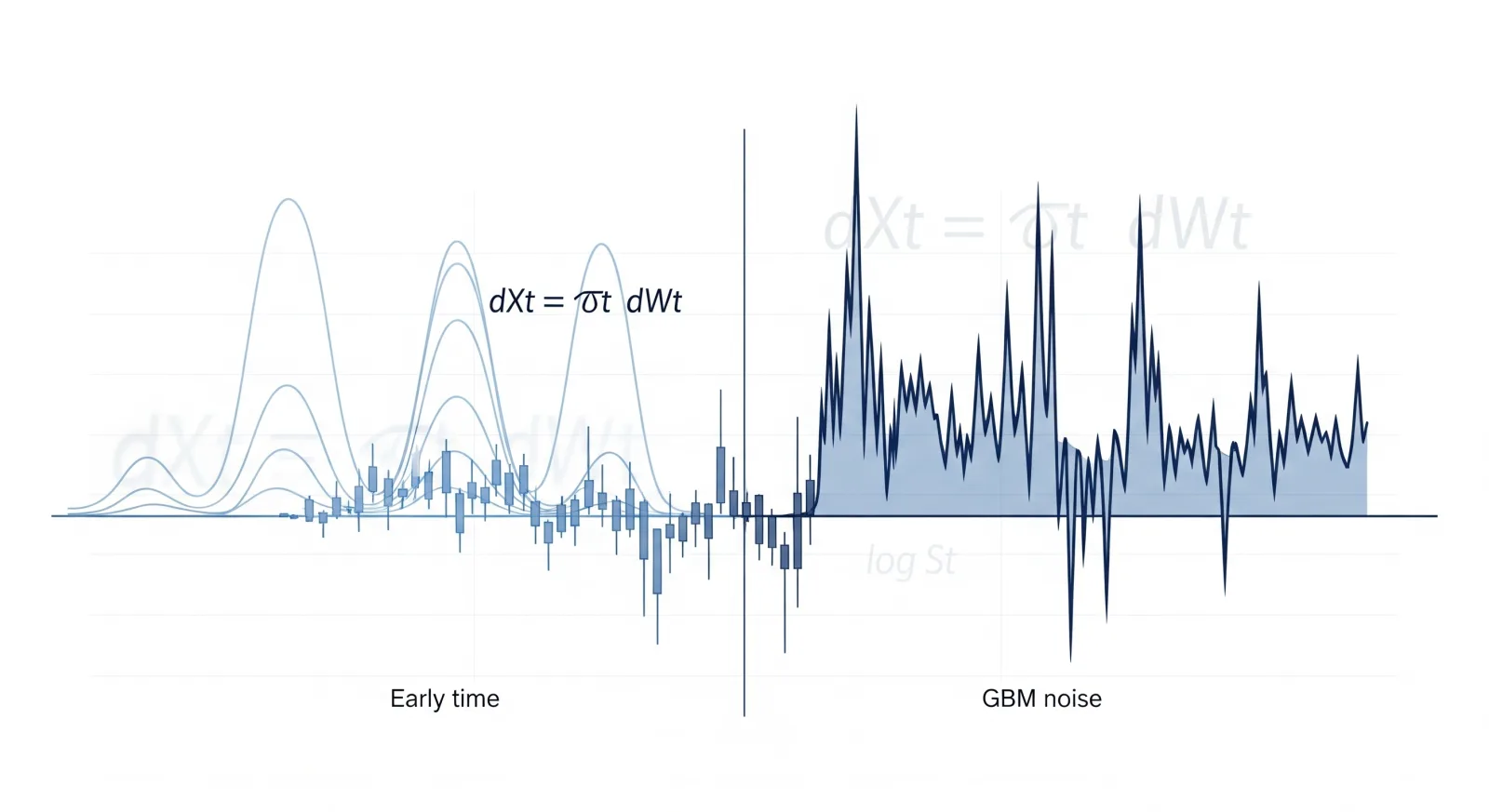
TL;DR for operators Financial time series generation has a surprisingly basic problem: many models corrupt market data as if prices were pixels. Add Gaussian noise, train a neural network to remove it, admire the architecture, and then wonder why the generated series behave like polite laboratory specimens rather than markets. Kim, Choi, and Kim’s paper proposes a more finance-native diffusion design: use geometric Brownian motion (GBM) as an inductive bias in the forward noising process.1 The point is not to revive Black–Scholes as a complete market simulator. The point is narrower and more useful: make the noising process respect the fact that asset prices move multiplicatively and volatility scales with price level. ...

August 2, 2025 · 16 min · Zelina
Cover image

Latent Brilliance: Turning LLMs into Creativity Engines

TL;DR for operators Creative AI systems usually fail in a painfully familiar way: ask for ten ideas, and by idea four the model is politely repainting the same wall. Change the temperature, give it a persona, ask a panel of agents to “debate,” and the system may sound busier, but the semantic spread often remains narrow. The paper behind this article argues that this is not merely a prompt-design inconvenience. It is a structural limitation of how LLMs are conditioned. ...

July 21, 2025 · 18 min · Zelina
Cover image

Echo Chamber in a Prompt: How Survey Bias Creeps into LLMs

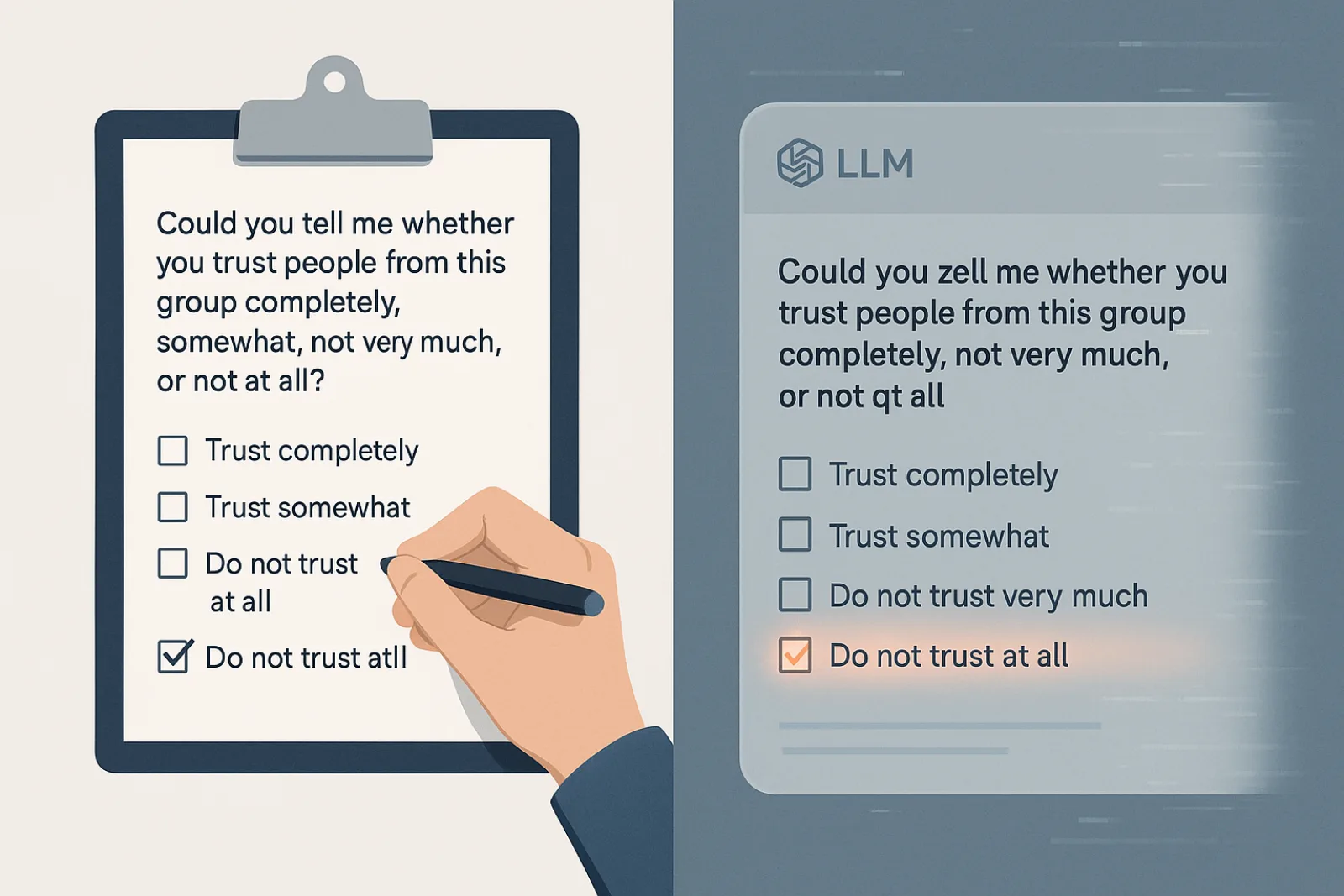
TL;DR for operators LLM survey panels are cheap, fast, and extremely willing to give you numbers. That is exactly why they are dangerous. A recent paper by Jens Rupprecht, Georg Ahnert, and Markus Strohmaier stress-tests nine instruction-tuned LLMs on World Values Survey-style questions and finds that small prompt changes can materially alter synthetic survey responses.1 The study runs 167,400 simulated interviews across 62 normative survey questions, 25 repeated runs per model-question-condition, and a battery of perturbations covering answer-order reversal, refusal-option removal, odd/even scale changes, priming text, typos, synonyms, paraphrases, and a combined paraphrase-plus-reversal condition. ...

July 11, 2025 · 18 min · Zelina
Cover image

Backtrack to the Future: How ASTRO Teaches LLMs to Think Like Search Algorithms

TL;DR for operators ASTRO is not another paper saying “make the model think longer” and then acting surprised when token bills become a lifestyle choice. It is more specific: the authors train a non-reasoner Llama model to imitate the procedure of search. The model is taught to explore a wrong path, notice uncertainty, backtrack, and continue from an earlier step — all inside one generated answer. ...

July 7, 2025 · 18 min · Zelina