Cover image

Green Lights, Smarter Cities: How Multi‑Agent Reinforcement Learning Is Rewiring Urban Traffic

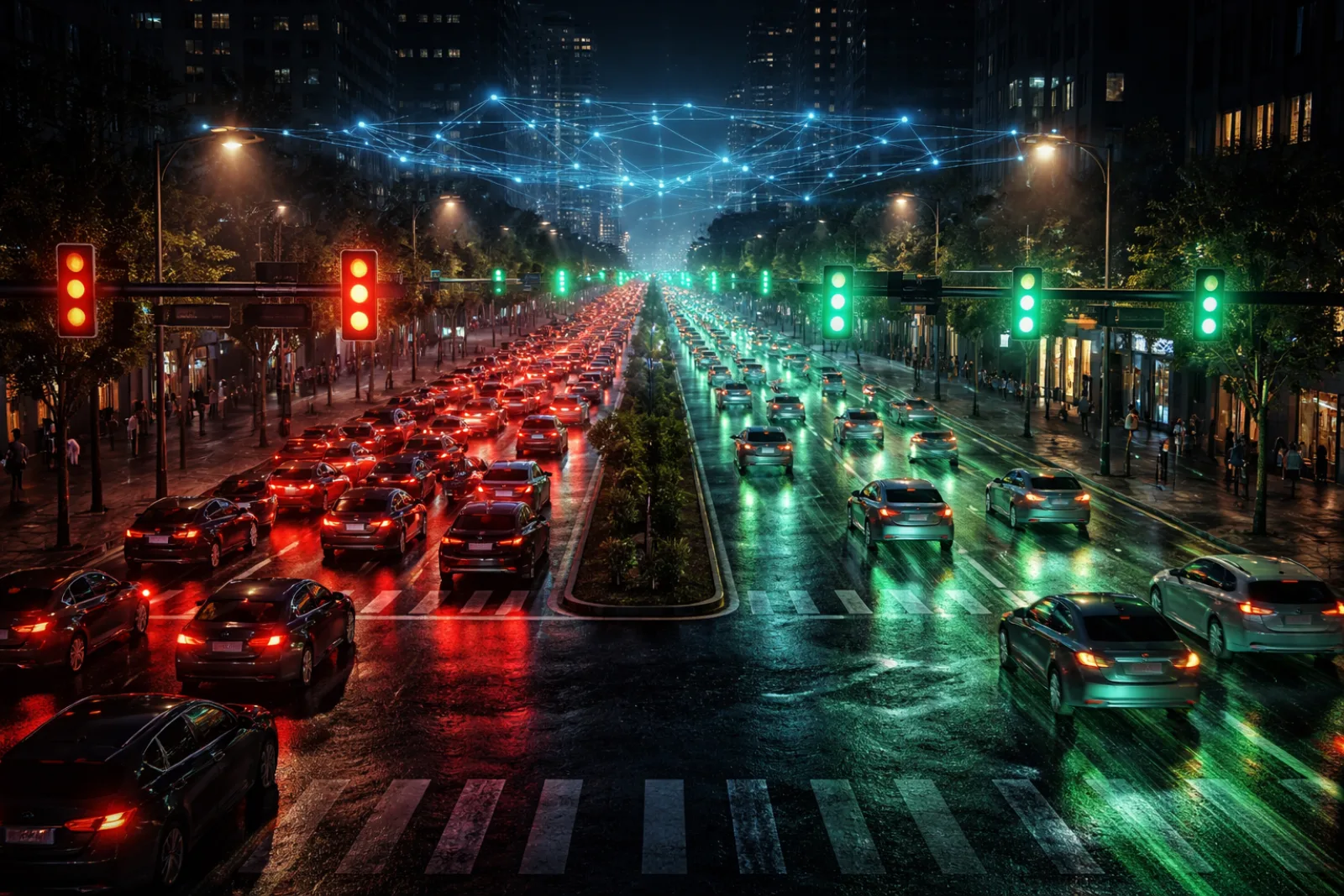
Traffic lights are not stupid. They are obedient. That is the problem. A fixed-time signal does exactly what it was told to do: hold this green for this long, clear the junction, move to the next phase, repeat. It does not care that one lane is empty, another is spilling backward, and a third has just received a platoon of vehicles from the previous intersection. It is not being malicious. It is merely following a plan designed for a world that stopped changing five minutes ago. ...


March 14, 2026 · 17 min · Zelina
Cover image

Jerk Matters: Teaching Reinforcement Learning Some Mechanical Manners

A thermostat can be annoying in a very ordinary way. It does not need to fail dramatically. It only needs to keep switching equipment on and off, chasing tiny temperature deviations as if every small fluctuation were a crisis. The room stays mostly comfortable. The dashboard may even show acceptable performance. But behind the polite control signal, compressors cycle, dampers move, energy bills creep upward, and maintenance teams inherit the consequences. ...

January 6, 2026 · 14 min · Zelina
Cover image

Crossing the Line: Teaching Pedestrian Models to Reason, Not Memorize

Crosswalks look simple from a spreadsheet. A pedestrian either crosses at the intersection or crosses mid-block. The model sees age group, gender, lane count, lighting, weather, signal timing, maybe a bus stop nearby, and then predicts the choice. Very civilized. Very tabular. Very likely to fail when the same logic is moved to a different road. ...

January 5, 2026 · 16 min · Zelina
Cover image

Cities That Think: Reasoning AI for the Urban Century

Zoning is where optimism goes to meet the municipal code. A proposed housing site may look perfect on a dashboard: good transport access, strong demand, reasonable land cost, favourable development projections. Then the real planning work begins. Height restrictions appear. Environmental buffers interfere. Community priorities conflict. A flood-risk layer changes the cost-benefit story. A transport engineer likes the site. A housing officer likes the urgency. A neighbourhood group likes neither the density nor the traffic. The question is no longer “what is likely to happen?” It is “what should be allowed, under which constraints, with what trade-offs, and who can justify that decision in public?” ...

November 10, 2025 · 15 min · Zelina
Cover image

Less is Flow: How Sparse Sensing Rethinks Urban Flood Monitoring

A city drainage engineer rarely gets to choose between perfect data and bad data. The real choice is more annoying: a few sensors in the right places, a few sensors in the wrong places, or a procurement request large enough to frighten everyone in finance. Urban flood monitoring has always had this observability problem. Storm sewers are spatial systems. Water does not politely report its location from one convenient manhole. It moves through a network of subcatchments, conduits, junctions, slopes, storage, bottlenecks, and hydraulic thresholds. Full visibility would mean dense instrumentation across the network. That is expensive to install, maintain, power, calibrate, secure, and occasionally rescue from the weather doing exactly what it was installed to measure. ...

November 7, 2025 · 16 min · Zelina
Cover image

Policies with Purpose: How PPO Powers Smart Business Decisions

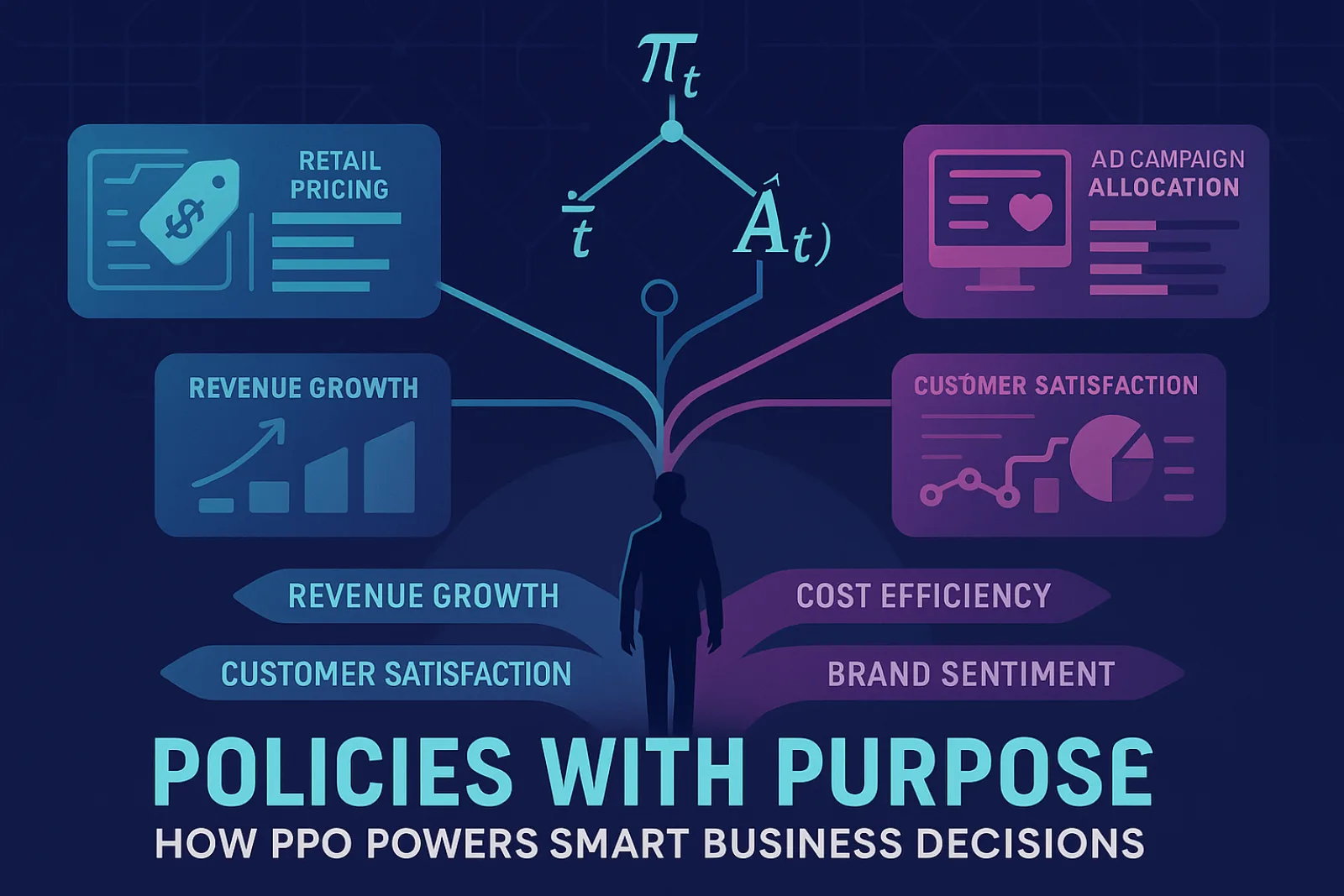
TL;DR for operators The paper is about air-purifying booth placement in Delhi, but the useful business lesson is broader: optimisation is rarely about chasing the loudest metric. In the study, a greedy strategy that targets the highest-AQI cells achieves the highest overall AQI improvement, at 25.76%. The PPO-based strategy is slightly lower on that headline number, at 25.39%, but much stronger on population impact and traffic impact, with zero green-space violations. ...

May 5, 2025 · 16 min · Zelina
Cover image

Urban Loops and Algorithmic Traps: How AI Shapes Where We Go

TL;DR for operators AI systems should not be judged only by whether they make each user happier, faster, or more “creative.” That is the easy dashboard. The harder question is whether millions of individually useful interactions reshape the whole market, city, or creative ecosystem in ways that concentrate attention and opportunity. Two recent arXiv papers form a useful chain. One models next-venue recommendation in cities and shows a sharp trade-off: recommenders can increase individual venue diversity while concentrating collective visits on already popular locations.1 The other argues that generative AI should be understood as an alternative form of cognition built from collective human knowledge, and that the practical path forward is human-AI synergy, broad access, and governance rather than endless trench warfare over authorship.2 ...

April 11, 2025 · 14 min · Zelina