Cover image

The Doctor Is In: How DR. WELL Heals Multi-Agent Coordination with Symbolic Memory

Meetings are annoying for humans because they turn action into conversation. For autonomous agents, the problem is worse. A group of agents can each be individually competent and still fail collectively because one starts too early, another waits in the wrong place, and a third confidently pushes the wrong object in the wrong direction. Intelligence, as usual, does not automatically include basic scheduling manners. ...


November 7, 2025 · 14 min · Zelina
Cover image

Teaching Safety to Machines: How Inverse Constraint Learning Reimagines Control Barrier Functions

Factory robots, drones, and autonomous vehicles do not usually fail because nobody cared about safety. They fail because “safe” is annoyingly difficult to write down. An operator may know that a drone should not scrape the ground, that a warehouse robot should not cut across a human worker’s path, or that an autonomous car should not tailgate even when the road is technically clear. But turning that judgement into a formal mathematical boundary is another matter. The physical system has dynamics. The controller has limits. The dangerous state may not be a simple wall or circle. And the difference between “safe enough” and “please do not put that in production” may live in patterns of behaviour rather than in a clean rule. ...

October 31, 2025 · 16 min · Zelina
Cover image

When the Lab Thinks Back: How LabOS Turns AI Into a True Co-Scientist

A laboratory is not a spreadsheet with a sink. That is the small but expensive fact many AI-for-science stories politely step around. Models can rank genes, design proteins, summarise papers, draft protocols, and produce the usual confident parade of mechanistic hypotheses. Then a human still has to seed the cells, choose the pipette, avoid contaminating the plate, notice that an incubation step was skipped, and remember the trick that never made it into the protocol because, apparently, civilisation runs on tacit knowledge and Post-it notes. ...

October 23, 2025 · 15 min · Zelina
Cover image

Talk is Flight: How RALLY Bridges Language and Learning in UAV Swarms

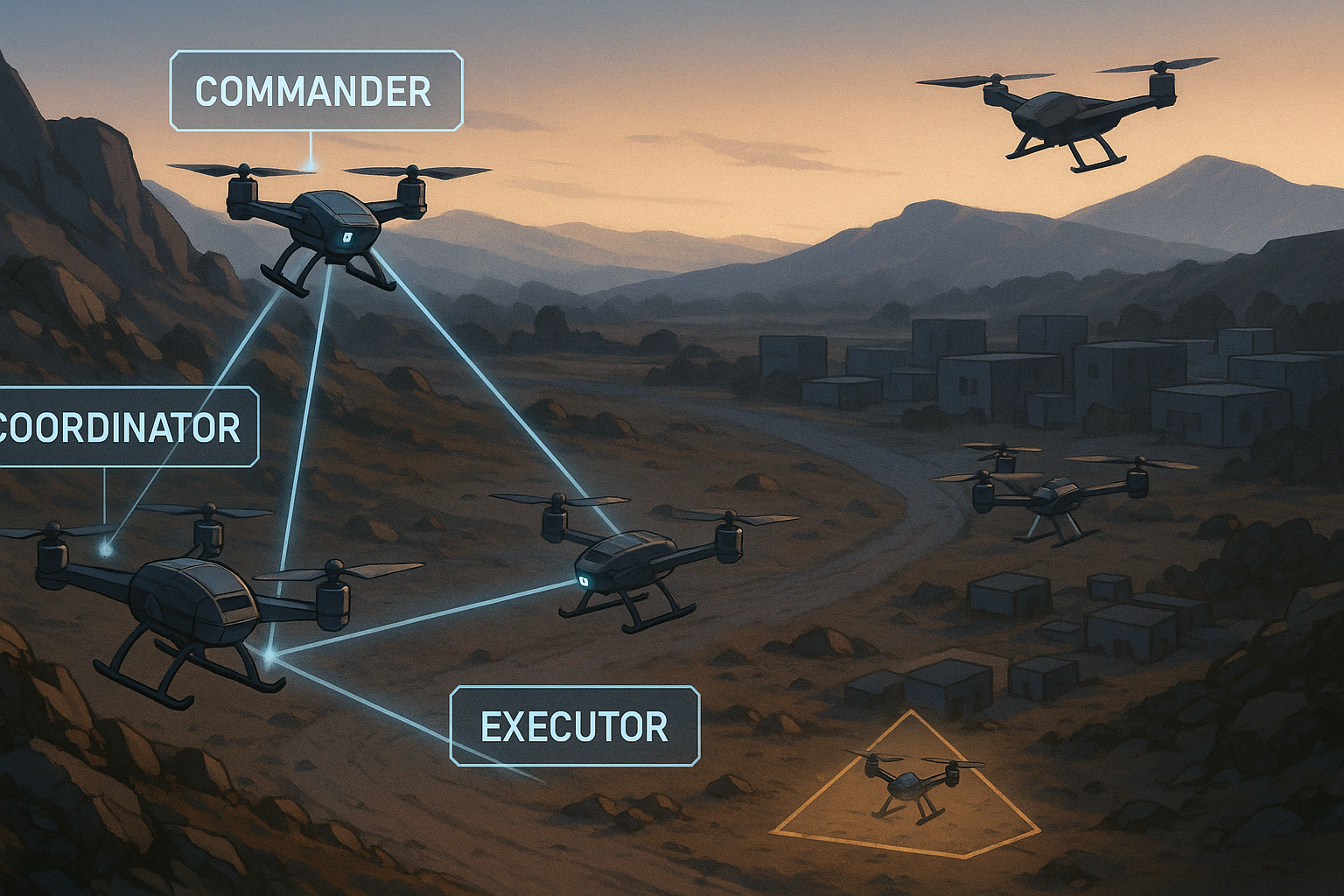
TL;DR for operators RALLY is not a chatbot with propellers. It is a hybrid control framework for UAV swarms where the LLM supplies structured semantic reasoning and the reinforcement-learning layer decides how agents should divide responsibility.1 The practical insight is the separation of labour. A drone swarm does not only need to know where to fly; it needs to agree who should lead, who should coordinate, who should follow, and when those roles should change. RALLY handles that by combining two-stage LLM consensus with RMIX, a role-value mixing network trained to assign Commander, Coordinator, and Executor roles under partial observability and limited communication. ...

July 7, 2025 · 16 min · Zelina
Cover image

Body of Proof: Why Embodied AI Needs More Than One Mind

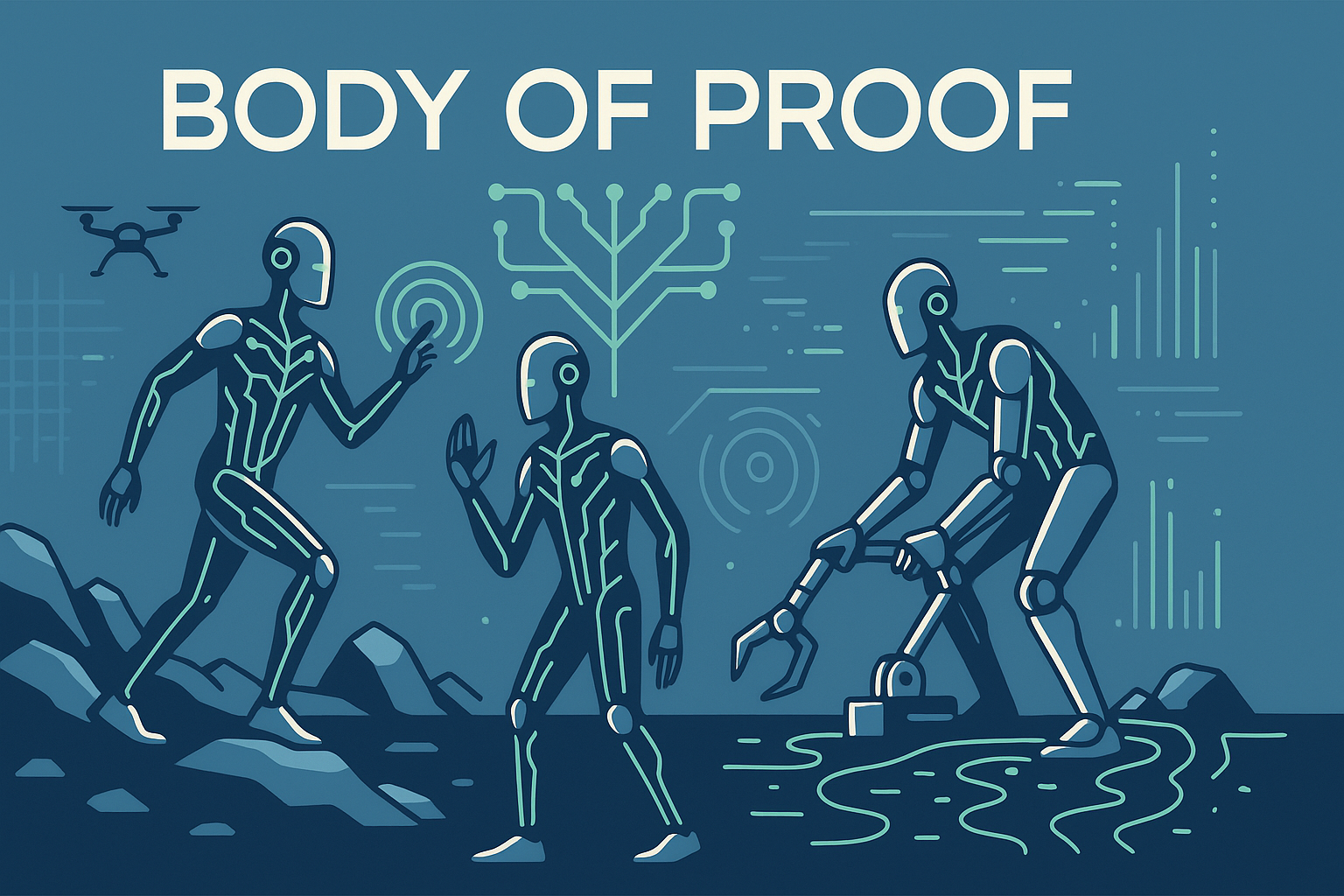
TL;DR for operators A robot that works alone is already expensive, brittle, and rude to your maintenance budget. A group of robots that must work together adds a different class of difficulty: timing, communication, role allocation, shared perception, physical interference, changing team composition, and the occasional human wandering into the scene with a clipboard. ...

May 9, 2025 · 15 min · Zelina
Cover image

Feeling Without Feeling: How Emotive Machines Learn to Care (Functionally)

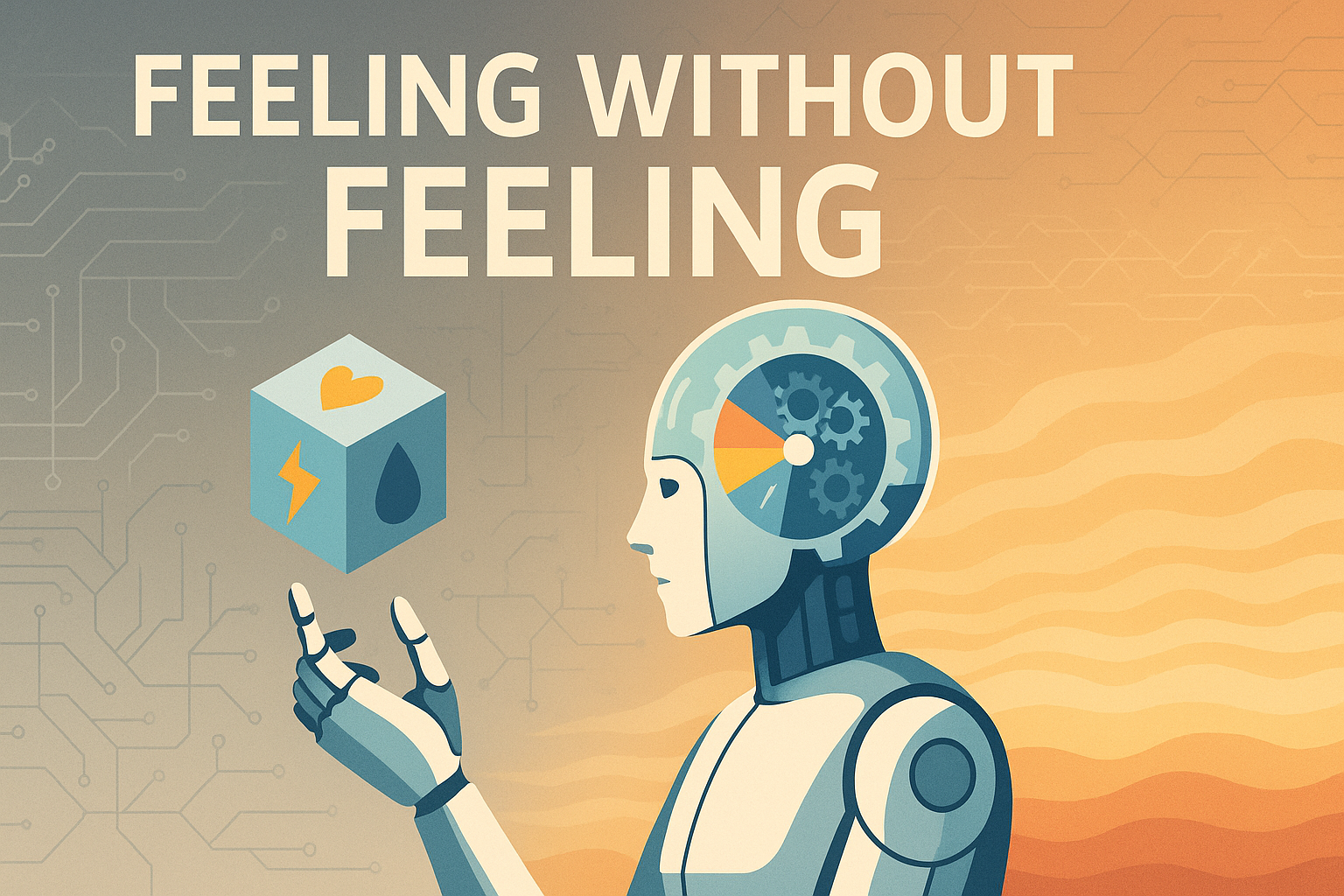
TL;DR for operators Emotion-like AI does not have to mean artificial suffering, digital joy, or a chatbot saying “I’m sad” with the theatrical subtlety of a bad intern. The useful idea in this paper is narrower: affect can be treated as a control layer that helps an agent decide what to do under uncertainty. ...

May 7, 2025 · 20 min · Zelina