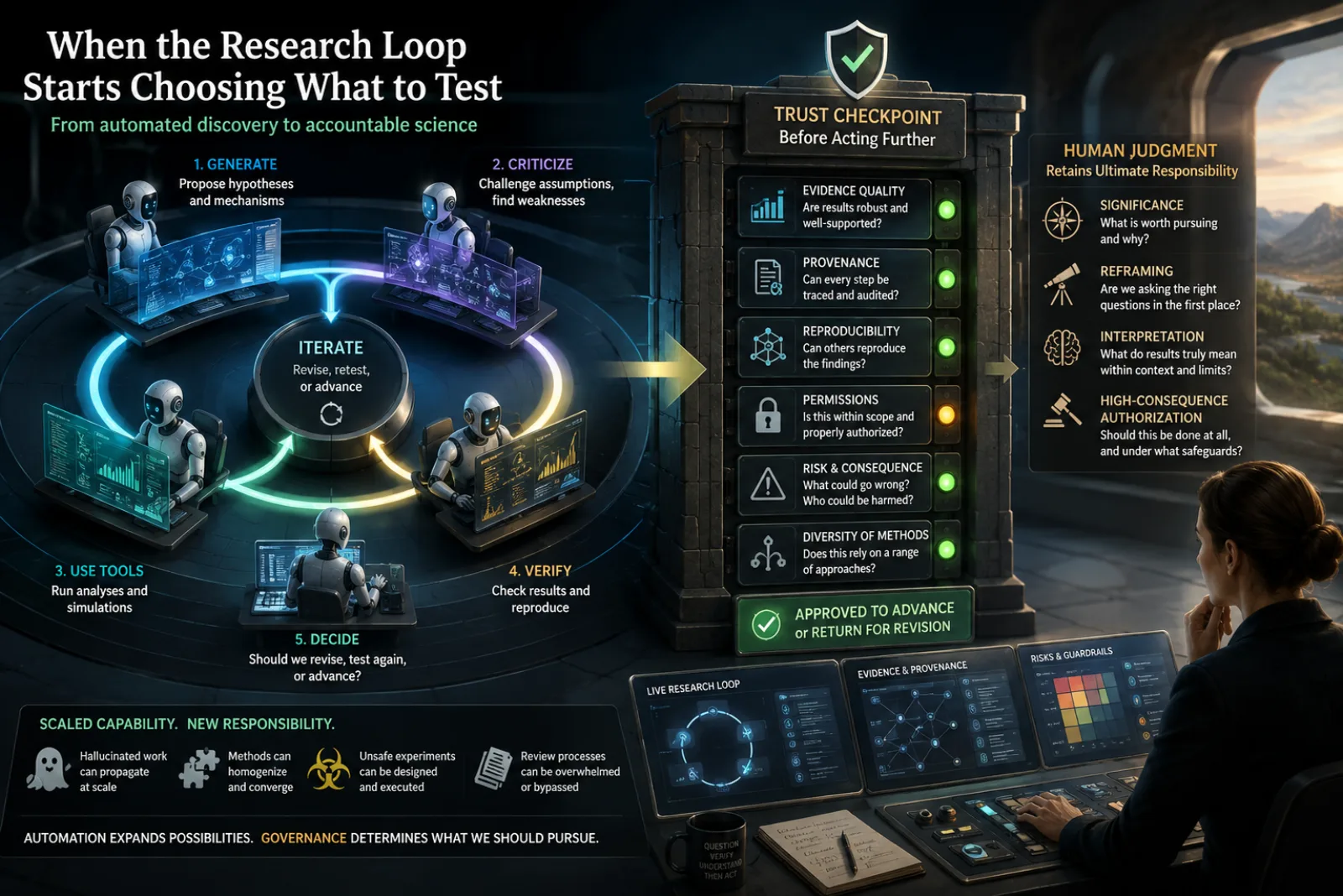
TL;DR for operators An analytical agent can select an appropriate tool, complete a computation, and return a plausible result while still being wrong at the point that matters operationally: deciding whether the result should be trusted, reported, stored, or used to launch further automated work.
Brain Researcher addresses that later decision by making the research episode—not the model response—the governed unit of work. It constrains available resources, records provenance, tests alternative defensible specifications, assigns explicit states to scientific claims, and controls which results are eligible to enter memory. The paper reports a large improvement in first-action tool routing, from 23.3% without the system to 93.6% with it. Yet verified evidence grounding reaches only 22.0%, and an automated scientific-review layer still missed a scoring error that required human detection.
...