Cover image

Mind the Middle: Why AI Reliability Lives Between the Data and the Answer

TL;DR for operators AI systems rarely fail only at the final answer. They fail earlier, in the quiet machinery that decides which evidence is seen, which records are aligned, which identity is protected, and which previous model behaviour is worth reusing. Three recent papers make that point from very different technical worlds. One improves few-shot object detection by correcting the imbalance between base-class and novel-class region proposals. One builds anonymous two-party gradient-boosted decision tree training so parties can align records without exposing shared identifiers. One maps the behavioural geometry of LLMs so jailbreak risk and defences can be predicted or transferred across model populations. ...


June 18, 2026 · 16 min · Zelina
Cover image

Noise Without Regret: How Error Feedback Fixes Differentially Private Image Generation

Photos are annoying data. They are useful because they contain details: the handle of a bag, the edge of a sleeve, the texture of a face, the faint classroom gesture that matters only after someone trains a model on it. They are risky for exactly the same reason. If a generated image looks too much like the real training data, it may quietly leak what the organization was trying not to reveal. If it is protected too aggressively, it becomes a blurry souvenir from a dataset that used to be useful. ...

January 22, 2026 · 14 min · Zelina
Cover image

Signal, Prototype, Repeat: Why Adaptive Aggregation May Be Wi‑Fi Sensing’s Missing Link

Rooms are stubborn. A model trained in a conference room may behave confidently in a hotel room, badly in a bus, and mysteriously in a classroom. The Wi-Fi signal does not merely reflect “how many people are present.” It reflects furniture, wall geometry, transmitter placement, receiver hardware, movement patterns, and every other physical nuisance that refuses to fit neatly into a spreadsheet. ...

November 30, 2025 · 16 min · Zelina
Cover image

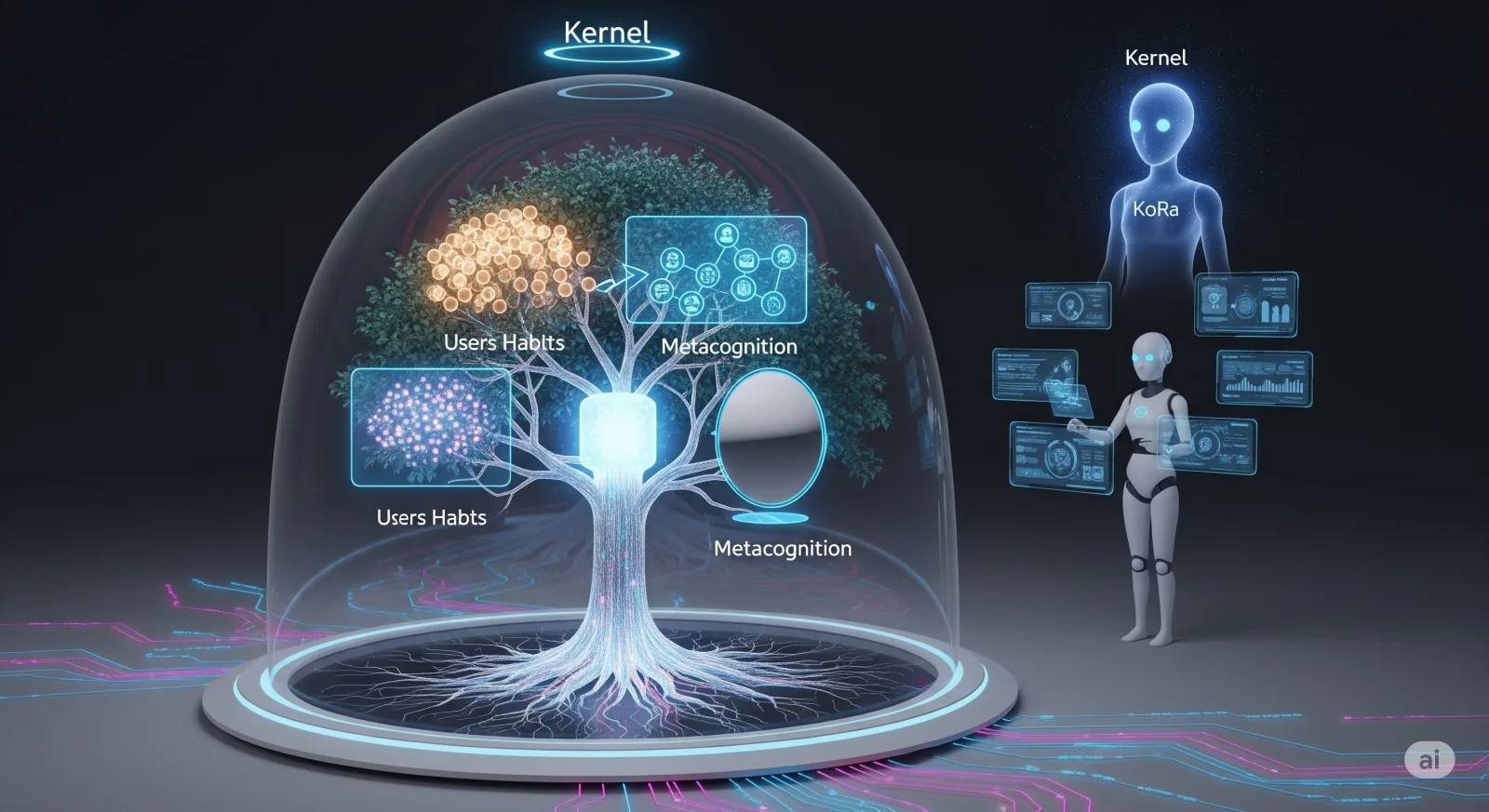
The Forest Within: How Galaxy Reinvents LLM Agents with Self-Evolving Cognition

TL;DR for operators Galaxy is best read as a design argument, not merely a new agent benchmark entry. The paper says personal agents cannot become genuinely useful by stacking tools under a chat window. They need a structured internal map of the user, their own capabilities, available environments, and the system logic behind those capabilities.1 ...

August 7, 2025 · 20 min · Zelina