Cover image

From Durations to Dynamics: Translating Temporal Planning into PDDL+

Schedules break in the small gaps. A delivery truck leaves at the right time, but the loading dock was not open yet. A watering pump arrives near the plant, but the tap is not being opened by the second worker at the same moment. A rescue boat reaches the correct coordinate, but after the deadline. In normal business language, these are “coordination issues.” In automated planning language, they are temporal constraints, numeric resources, durative actions, invariants, and interference rules. ...

March 14, 2026 · 18 min · Zelina
Cover image

Pruning the Planner: When LLMs Tame the Grounding Explosion

Planning looks innocent until the planner starts listing every possible thing that could happen. Move this object here. Move that object there. Load this package into that vehicle. Fly this aircraft between those cities. Refuel it at this level. Then do the same for every other object, location, vehicle, person, and intermediate state the model permits. Very quickly, the planner is not solving the business problem. It is drowning in its own imagination. ...

February 26, 2026 · 18 min · Zelina
Cover image

When Black Boxes Grow Teeth: Mapping What AI Can *Actually* Do

A green block, a yellow block, and a very small number Green on yellow. That is the task. A tabletop robot sees a green block, a yellow block, and a few other objects. It has low-level manipulation skills. It receives a high-level instruction: put the green block on top of the yellow block. This sounds like exactly the kind of small benchmark task that modern AI agents should now handle with theatrical confidence. ...

December 19, 2025 · 16 min · Zelina
Cover image

Plans, Tokens, and Turing Dreams: Why LLMs Still Can’t Out-Plan a 15-Year-Old Classical Planner

TL;DR for operators A new benchmark does not say that LLMs are hopeless at planning. That would be too easy, and also false. It says something more useful: frontier models are now strong enough to solve many formal planning tasks, but their competence still weakens when the task stops giving them semantically meaningful labels.1 ...

November 13, 2025 · 14 min · Zelina
Cover image

Who Sees What, Who Pays the Cost? Teaching Agents to See Through Others’ Eyes

TL;DR for operators The paper’s useful message is not “symbolic planners can teach LLM agents to reason socially.” That would be tidy, flattering, and mostly wrong. The useful message is narrower and more operational: planner-derived thought-action examples can scaffold some agent behaviour, especially local decision discipline, but they do not automatically create robust perspective-taking. In the tested Director–Matcher environment, agents do well when the task is basically “ignore what the other party cannot see.” They struggle when they must imagine what exists in another agent’s private view, or decide whether it is worth asking, moving, opening, or acting under uncertainty.1 ...

August 23, 2025 · 20 min · Zelina
Cover image

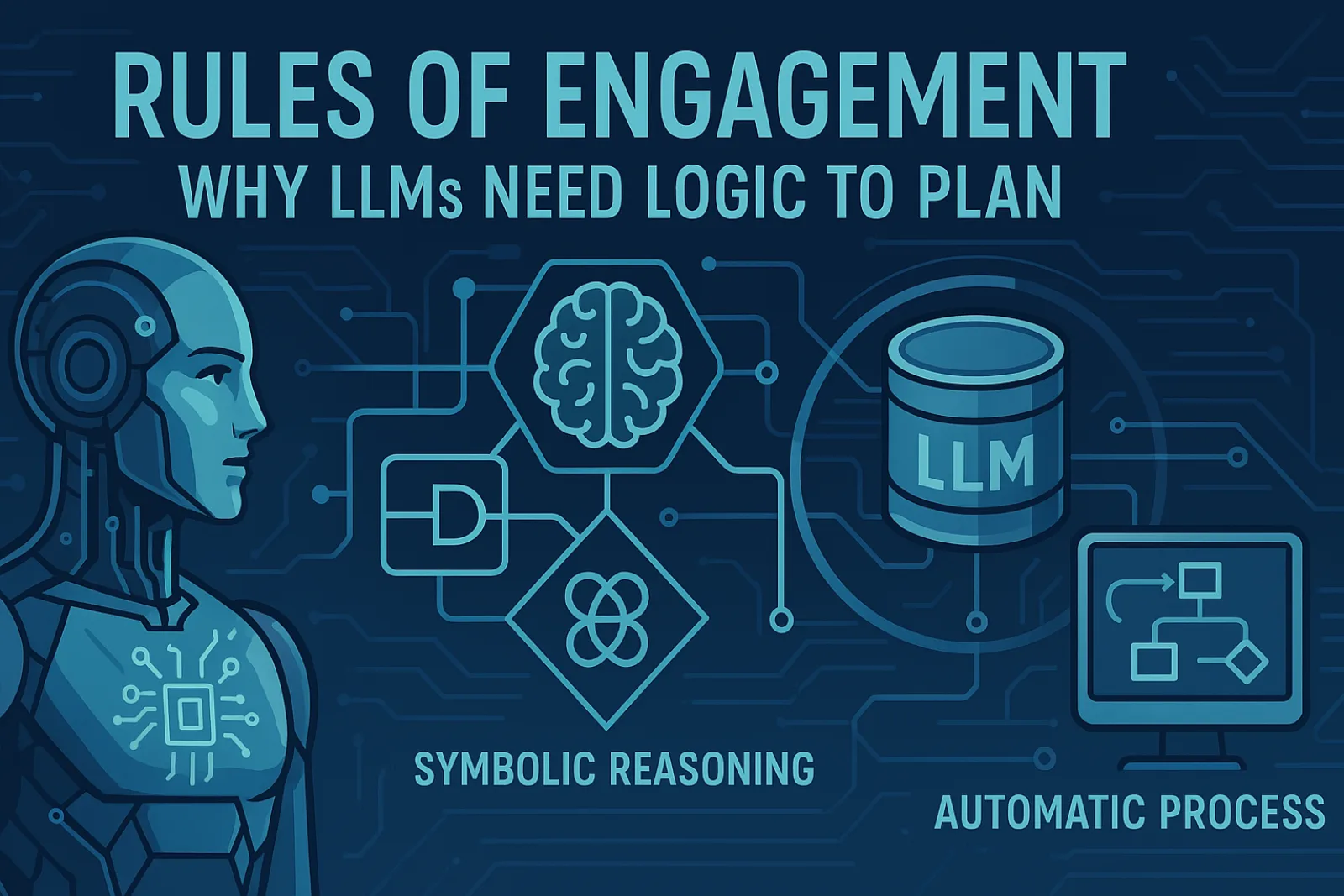
Rules of Engagement: Why LLMs Need Logic to Plan

TL;DR for operators Enterprise agents fail less like philosophers and more like junior coordinators with access to the wrong dropdown menu. They propose actions that are not currently possible. They miss actions that are possible. They forget that an action changes the world. They treat impossible future states as if determination will somehow make them available. They add redundant steps, skip mandatory subgoals, or pick a next move that feels plausible but does not reduce the distance to the goal. ...

April 2, 2025 · 18 min · Zelina