Build a Human-in-the-Loop Review Console
How to build a lightweight review console that lets humans approve, edit, reject, and escalate AI outputs without turning oversight into chaos.
How to build a lightweight review console that lets humans approve, edit, reject, and escalate AI outputs without turning oversight into chaos.
A medium-sized ship agency redesigned its port-call workflow around a shared event record and six specialist agents, shifting coordinators from manual information chasing to evidence-based exception management without automating regulatory, financial, provider, or safety-critical authority.
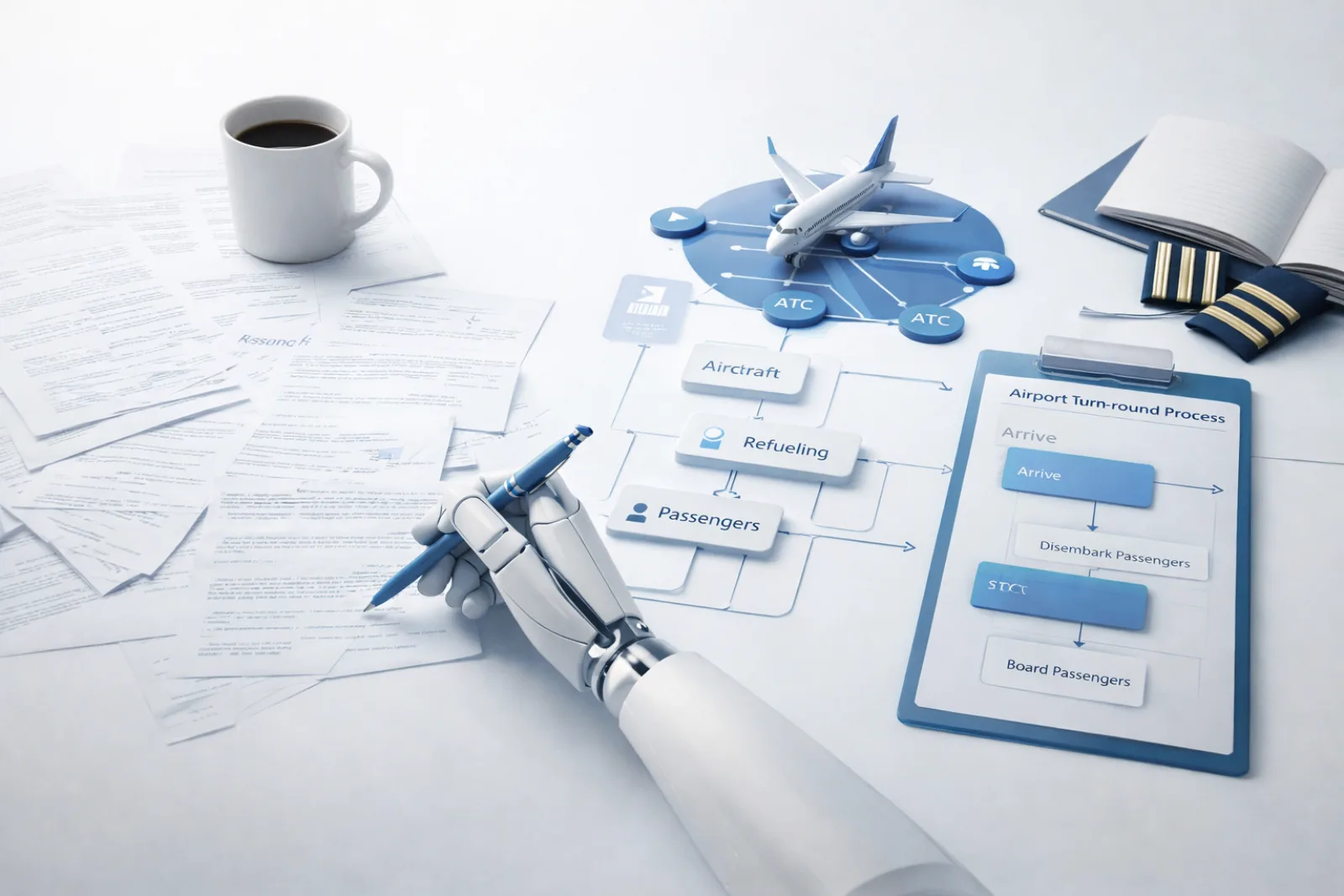
Airports are where ordinary corporate coordination problems go to become expensive. A delayed data update is not just an “alignment issue.” A vague handoff is not just “cross-functional friction.” A misunderstood phrase can move aircraft, ground crews, gates, passengers, baggage, and regulatory responsibility in the wrong order. Aviation has a talent for making management consultants’ favorite words suddenly physical. Very inconsiderate of it. ...

Inventory is the moment when a forecast stops being a spreadsheet exercise and starts costing money. A demand model can look elegant in validation. It can shave RMSE by a few decimals, win a leaderboard, and make the data science team briefly feel like civilization has advanced. Then the warehouse over-orders slow-moving stock, the store misses fast-moving items, and the finance team discovers that “better accuracy” is not the same thing as better cash flow. ...

Schedule three people, one car, two children, five afternoon activities, and several goals that quietly hate each other. Then ask a normal person to find the best plan. That is already a planning problem. Now ask the same person to understand why a plan failed, which goals caused the failure, what could be added without breaking the plan, and what must be sacrificed if one more constraint is enforced. ...
Factories rarely fail because a machine cannot work. They fail because the machine, the operator, the part, the fixture, the pallet, and the next free square meter of floor space refuse to arrive in the same universe at the same time. That is why a scheduling paper about pallets is more interesting than it sounds. ...
A regional delivery company moved from human-coordination-heavy breakdown response to an AI-agent-enabled fleet workflow that links driver logs, inspections, fuel data, and repair records into governed maintenance actions.
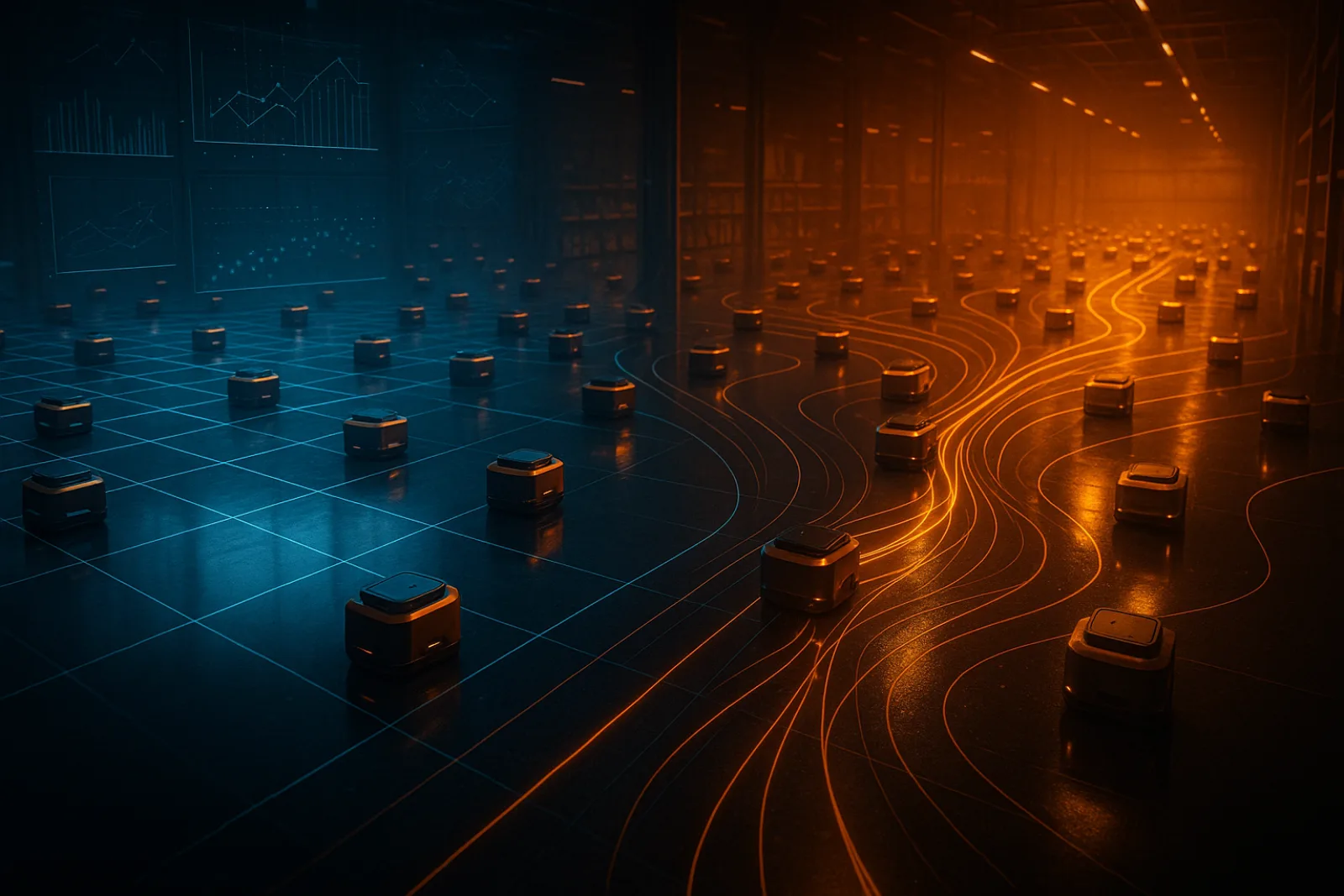
Robots do not move through warehouses as clean little dots on a grid. They rotate. They accelerate. They wait behind other robots. They lose time in corners. They obey controllers, not PowerPoint arrows. This is the small operational fact that makes a large amount of path-planning optimism look slightly overdressed. Multi-Agent Path Finding, or MAPF, usually asks a neat question: given many agents, each with a start and goal location, can we find collision-free paths for all of them? In the standard version, the world is a graph, time advances in discrete steps, and each robot either moves to a neighboring vertex or waits. It is elegant, measurable, and algorithmically productive. It is also not how a differential-drive robot actually behaves when squeezed through a congested warehouse aisle. ...

A supply chain rarely fails because one objective was neglected in a spreadsheet. It fails because the spreadsheet quietly pretended the objective would stay still. Yesterday the priority was margin. Today it is carbon exposure. Tomorrow a route becomes expensive, a supplier becomes unreliable, demand arrives in a pattern that looks suspiciously like a sine wave wearing a hard hat, and the “optimal” plan starts ageing like milk. ...

TL;DR for operators AIM-Bench is not another “which model is smartest?” leaderboard. It is a warehouse stress test for agentic LLMs asked to make replenishment decisions under uncertainty.1 The useful lesson is uncomfortable: inventory agents can look mathematically fluent while still behaving like biased managers. Most evaluated models show mean anchoring in the newsvendor task. All evaluated models show bullwhip amplification in the Beer Game. Some models over-order to avoid stockouts; others keep leaner inventory but accept higher shortage risk. In other words, the operational personality of the model matters. ...