
Cover image

The Answer Looked Clinical. The Critical Steps Were Missing.

TL;DR for operators A clinical assistant can follow instructions, produce a complete-looking answer, and read like expert work without performing the reasoning needed for a safe clinical decision. Those surface qualities may justify further evaluation, but they do not justify procurement or decision authority. Across five deliberately difficult tasks, the models satisfied 80–90% of the least consequential criteria but only 32.4–41.7% of the most clinically consequential criteria. All three models missed 56 of 108 critical requirements. The systems were therefore strongest where omissions mattered least and weakest on reasoning and safety steps most closely tied to harm. ...
August 1, 2026 · 9 min · Zelina
Cover image

From Chaos to Care: Structuring LLMs with Clinical Guidelines

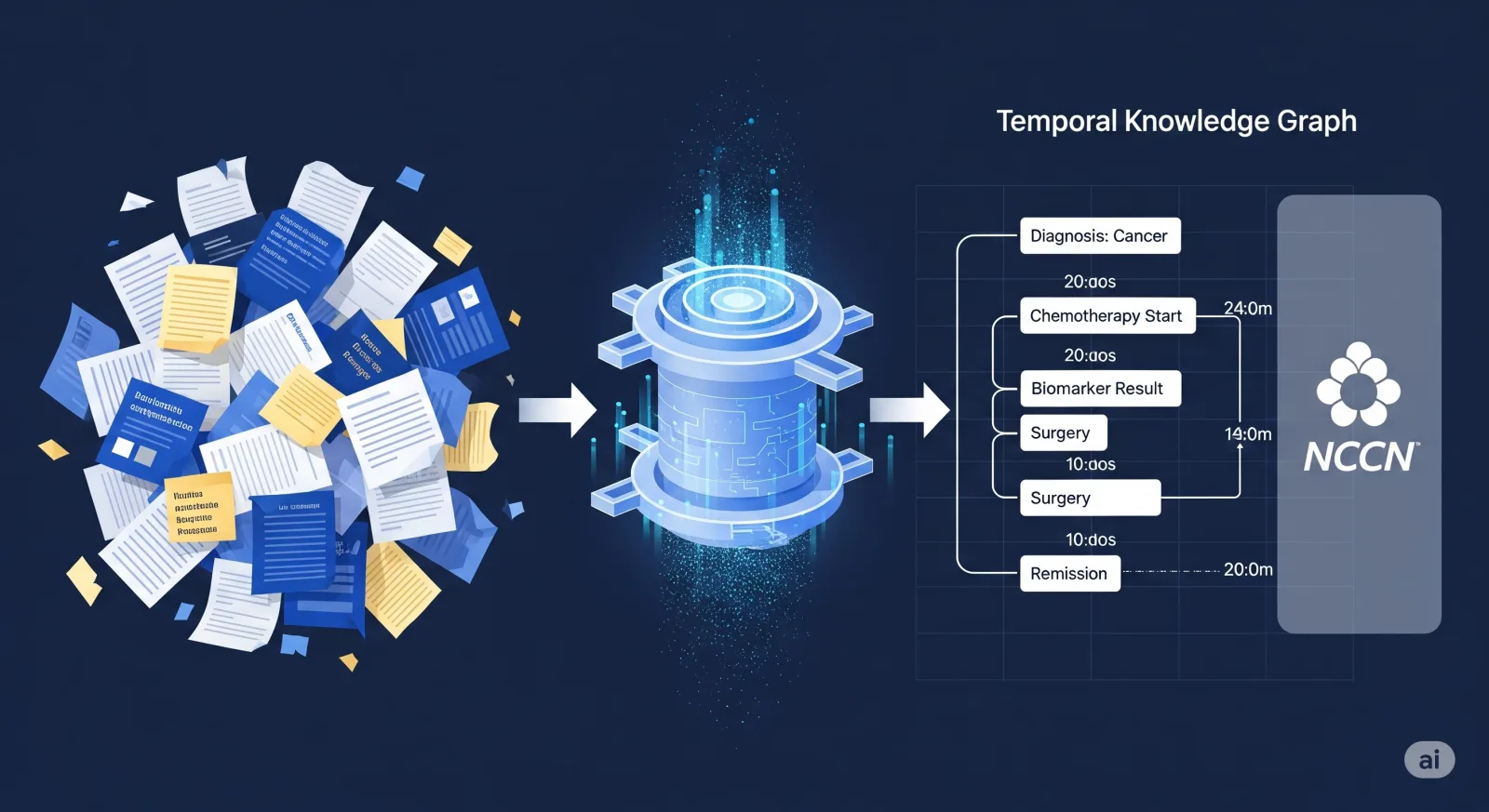
TL;DR for operators Patient records are not just long documents. They are timelines with consequences. CliCARE, the framework proposed in the paper, attacks that problem by turning longitudinal cancer EHRs into patient-specific temporal knowledge graphs, then aligning those patient trajectories with clinical guideline knowledge graphs before asking an LLM to generate a clinical summary and recommendation.1 That sounds architectural because it is. The useful lesson is not that “AI can help doctors,” a phrase now so overused it should probably be placed in quarantine. The lesson is that clinical AI improves when the model is given a structured representation of disease progression and a normative map of what should happen next. ...

July 31, 2025 · 16 min · Zelina